
The Soul of New York’s Seaside Playground

The moment my feet touched the weathered planks of the Coney Island boardwalk, I felt as though I had stepped into another version of New York. The wood creaked beneath me, warmed by the afternoon sun and worn smooth by generations of visitors, while the Atlantic stretched endlessly beyond the beach. There was something wonderfully contradictory about Coney Island: it was noisy and quiet, faded and alive, nostalgic and completely present. Seagulls circled overhead, children shouted with excitement, vendors called from their stands, and somewhere in the distance came the unmistakable rumble of a roller coaster. Coney Island has always been more than a beach. It is a piece of New York mythology, a place where ordinary people have come for extraordinary distractions for well over a century.



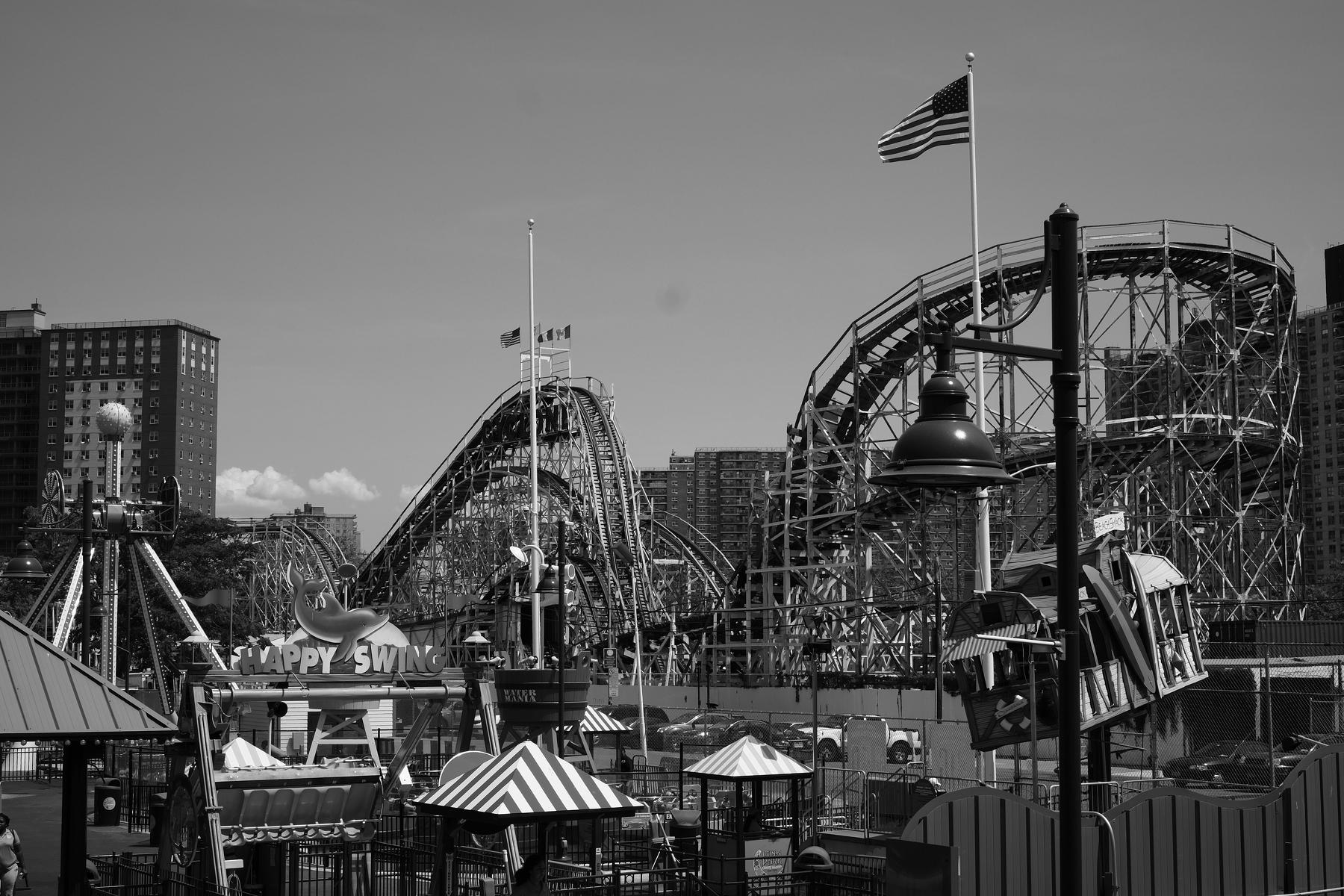

Walking along the boardwalk with my camera, I found myself particularly drawn to Coney Island’s imperfections. The faded signs, aging storefronts, peeling paint, wooden benches and slightly battered amusement rides seemed made for black-and-white photography. Removing the color somehow brought the place’s personality closer to the surface. Coney Island’s history stretches back much further than its amusement parks, however. The name is generally believed to derive from the Dutch Conyne Eylandt, meaning “Rabbit Island,” a reference to the rabbits that once populated the area. What began as a remote barrier island eventually became one of America’s great playgrounds, helped enormously by improved transportation that brought enormous numbers of New Yorkers out to the shoreline during the late nineteenth and early twentieth centuries.



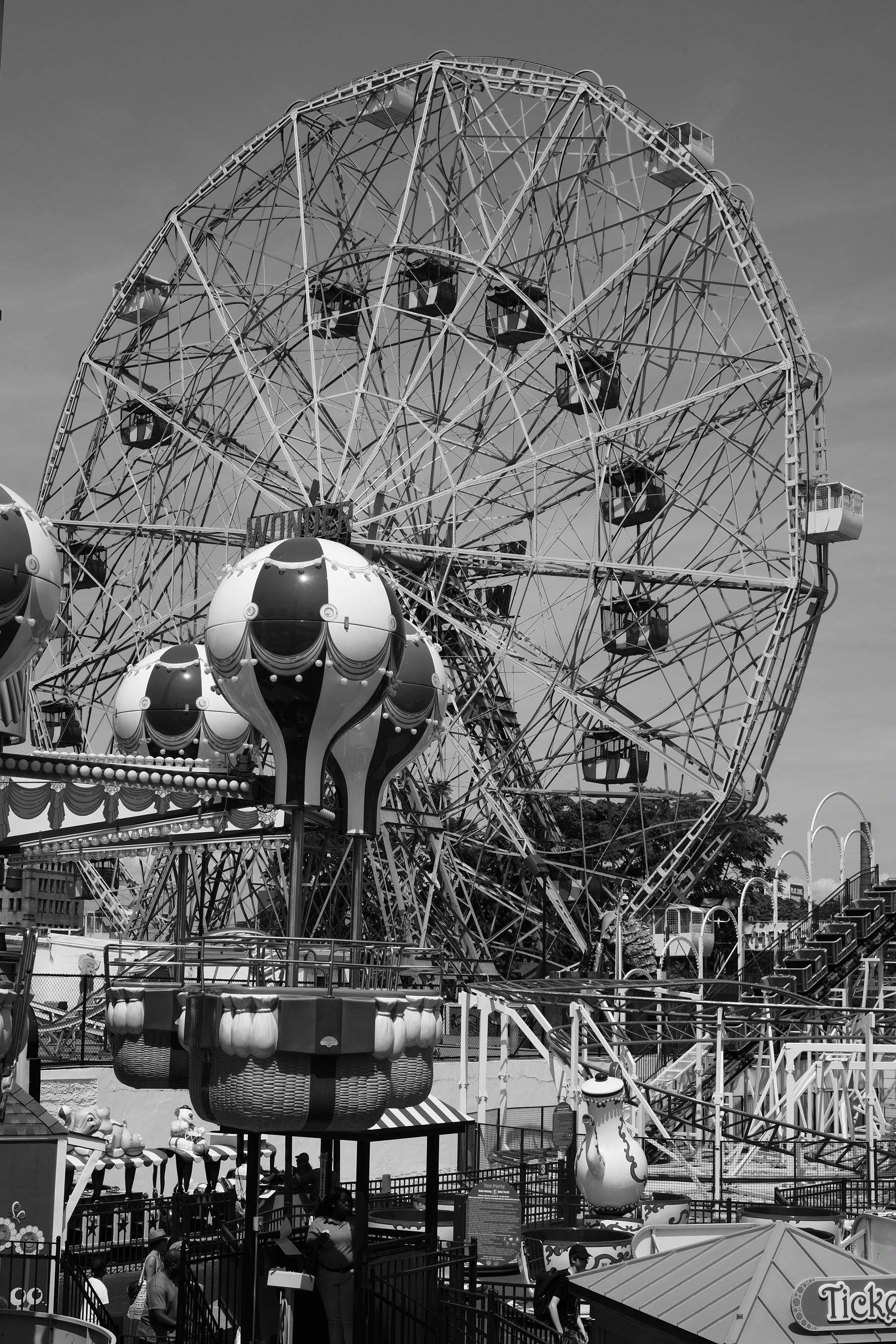

By the early 1900s, Coney Island had become synonymous with amusement and spectacle. Parks such as Steeplechase, Luna Park and Dreamland transformed the shoreline into an extraordinary landscape of towers, electric lights, theatrical attractions and elaborate rides. At the height of its popularity, millions of people came here, making Coney Island one of the most important amusement destinations in America and helping establish the modern amusement park as we know it. As I photographed the surviving pieces of that era, I could almost imagine the crowds arriving in their finest clothes, ready to spend a few hours escaping the pressures of city life. Much of the grandeur has disappeared, but the spirit of that escape remains.



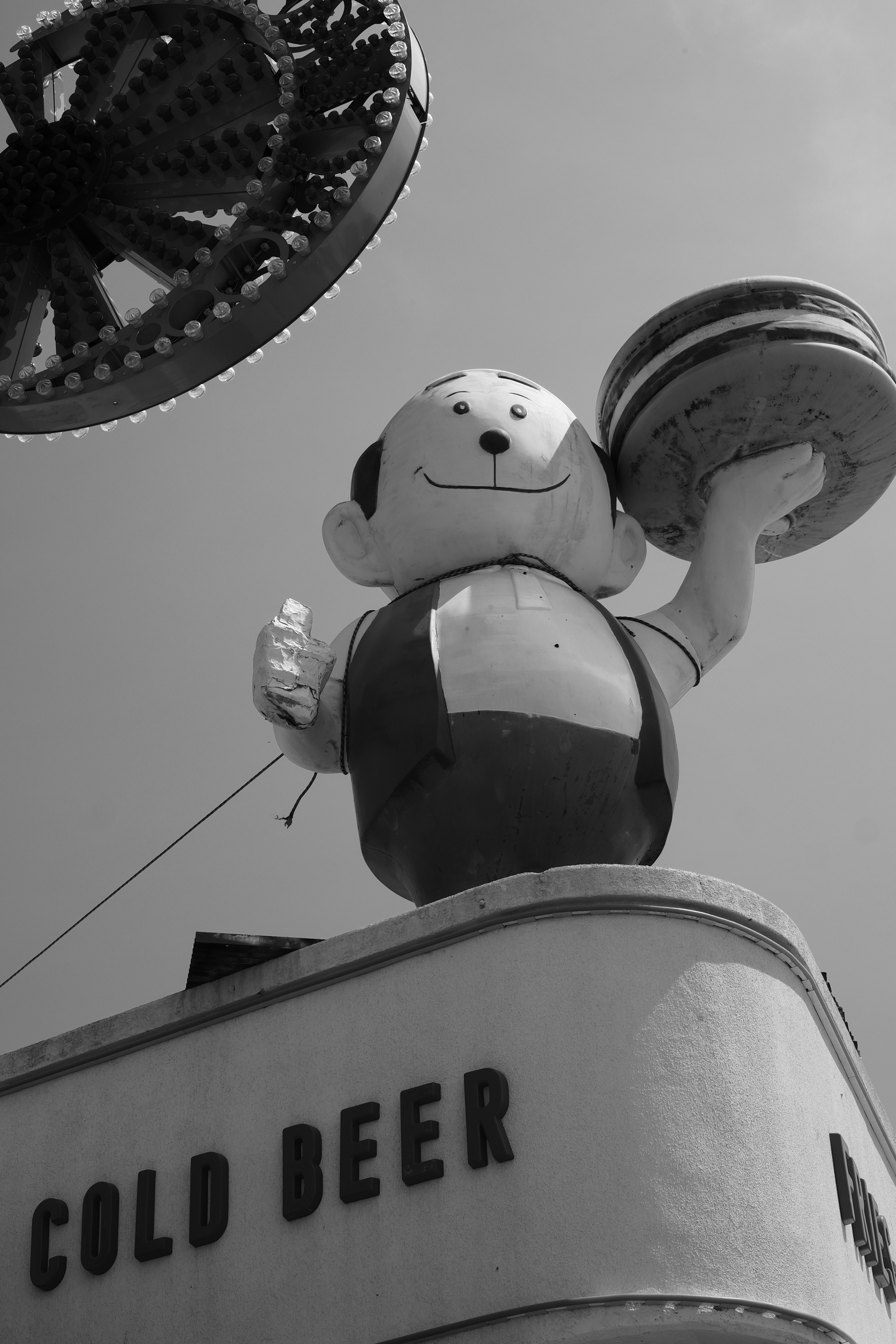


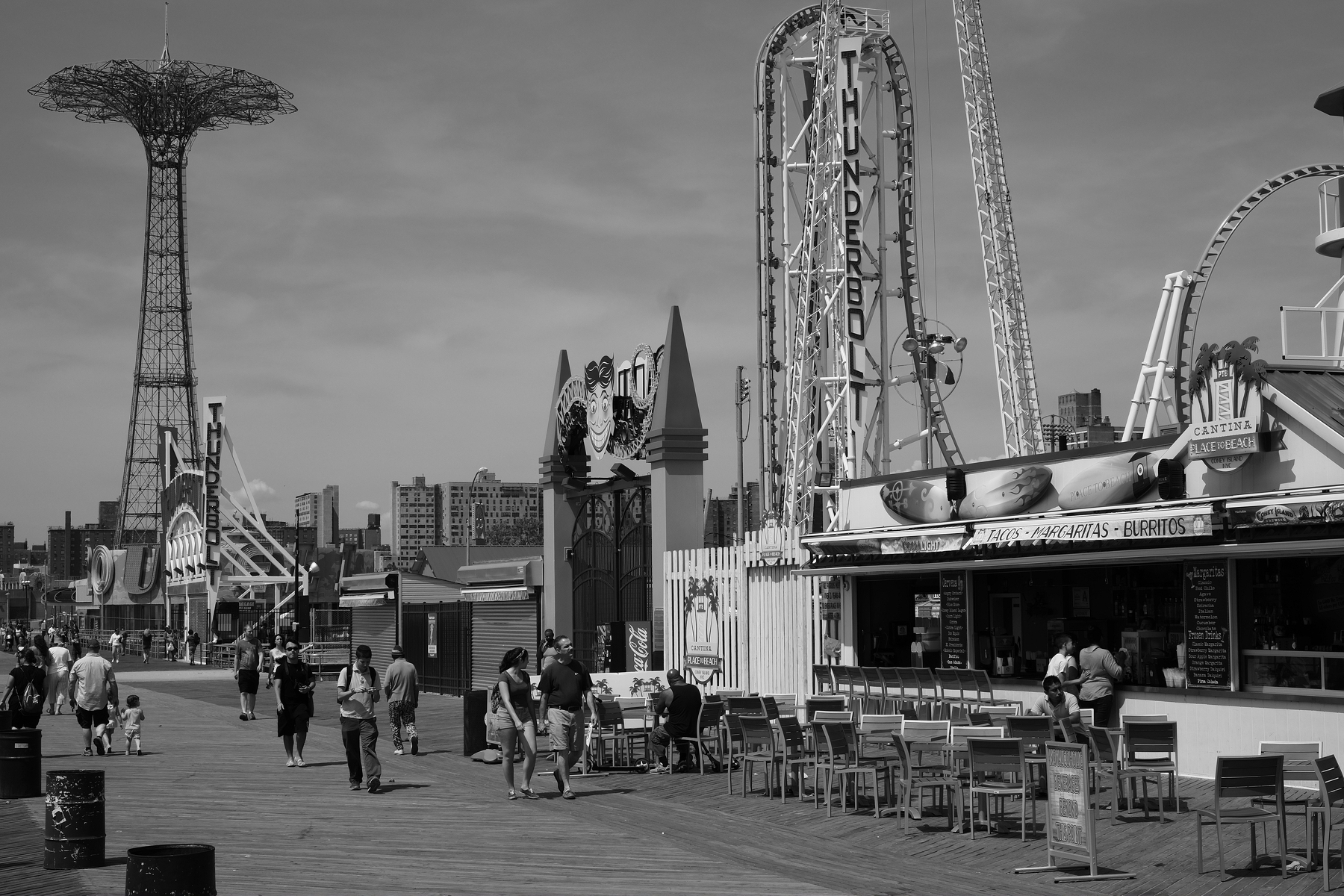
Then there is the Cyclone, perhaps the most recognizable symbol of Coney Island. Built in 1927, this wooden roller coaster is remarkably compact by modern standards, yet its reputation is enormous. From the boardwalk, I watched its wooden structure twist and rise against the sky, its tracks resembling the skeleton of some enormous creature. The Cyclone represents something increasingly rare: an attraction whose character comes partly from its age. Modern rides may be taller, faster and more technologically sophisticated, but the Cyclone’s appeal comes from the sensation that every turn connects the rider with generations of people who experienced the same thrill before them. Photographing it in monochrome made the structure look almost timeless.


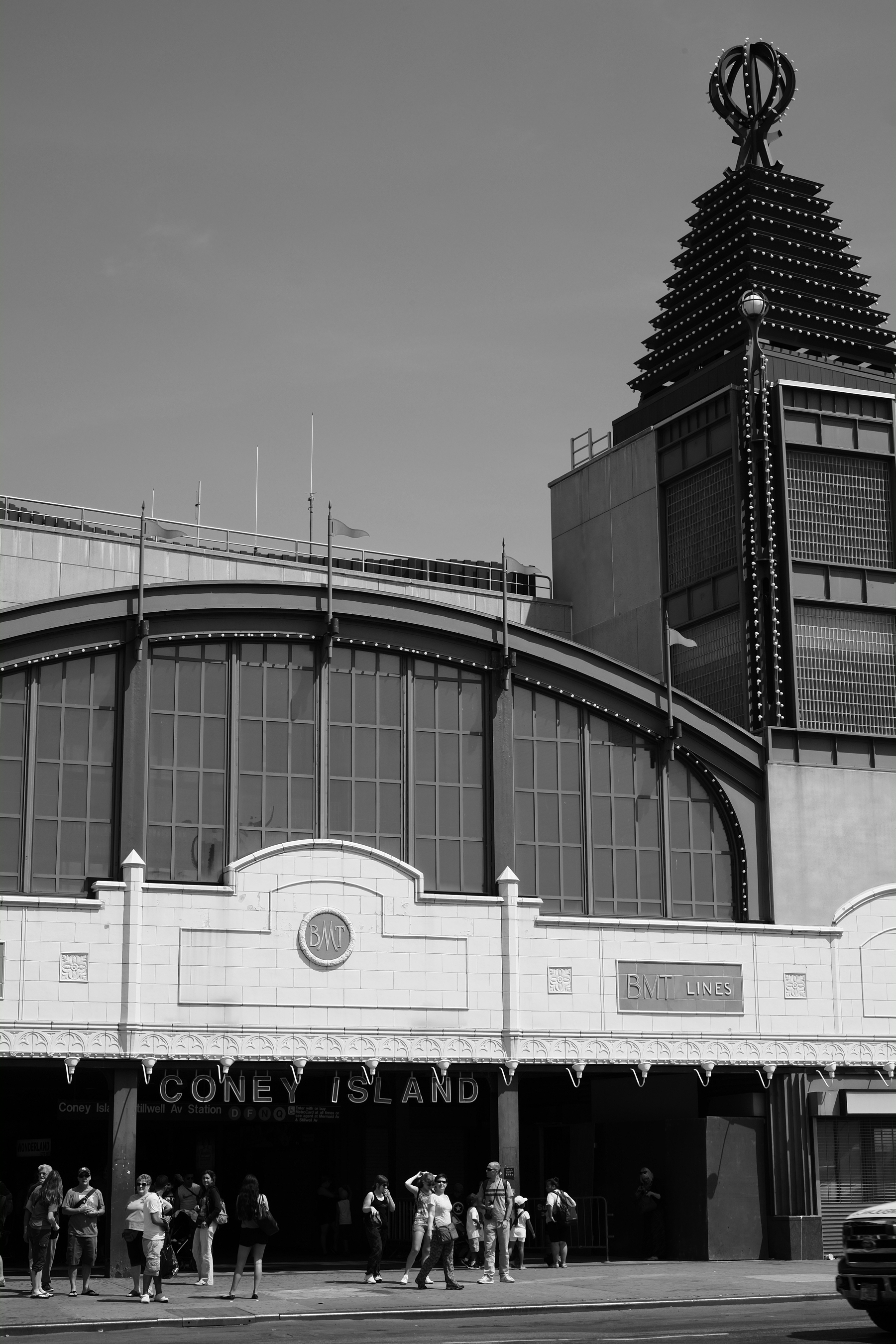


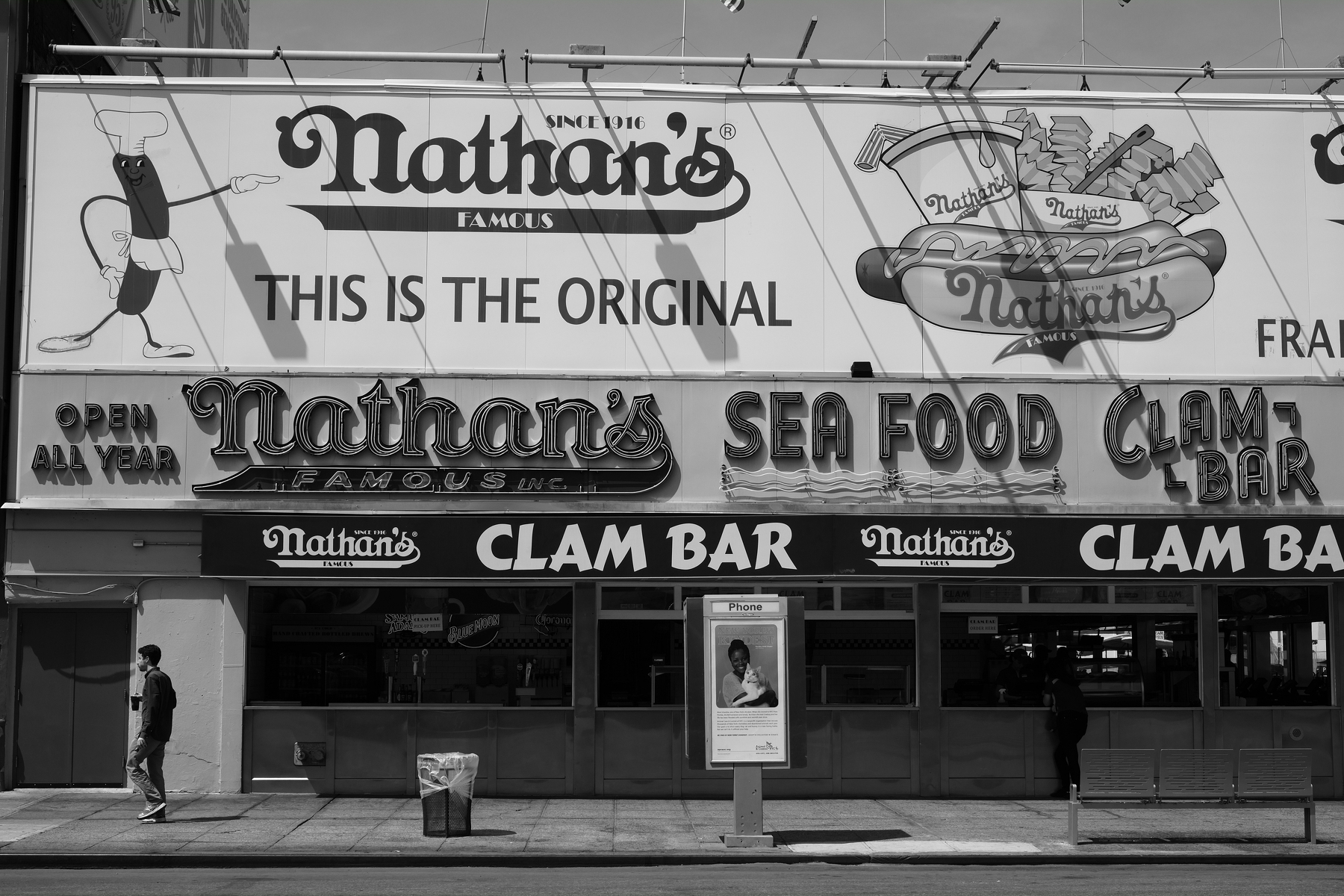
Food is another essential part of Coney Island’s story, and the boardwalk’s culinary history is almost as famous as its rides. Charles Feltman is traditionally credited with creating the modern hot dog here in the 1860s, selling sausages in a bun to make them easier for beachgoers to eat. Decades later, Nathan Handwerker opened the original Nathan’s Famous in 1916, establishing a business that would become inseparable from Coney Island’s identity. Even today, the humble hot dog feels like part of the landscape. I watched visitors eating at the stands, teenagers carrying arcade prizes, families moving toward the rides and older New Yorkers sitting quietly on benches, and I realized that Coney Island’s greatest attraction may simply be its ability to bring completely different generations into the same place.



But Coney Island is not only about crowds and spectacle. Away from the busiest sections, I found moments of surprising stillness. A fisherman stood alone at the water’s edge, his figure reduced to a dark silhouette against the Atlantic. Nearby, late-afternoon shadows stretched across an empty bench, turning an ordinary object into something almost cinematic. On the quieter northern side of the peninsula, Coney Island Creek offers another perspective entirely—a tidal waterway that feels worlds away from the amusement district. These quieter corners reminded me that Coney Island is also a coastal landscape, with wildlife, water and open skies competing with the neon and noise for attention.
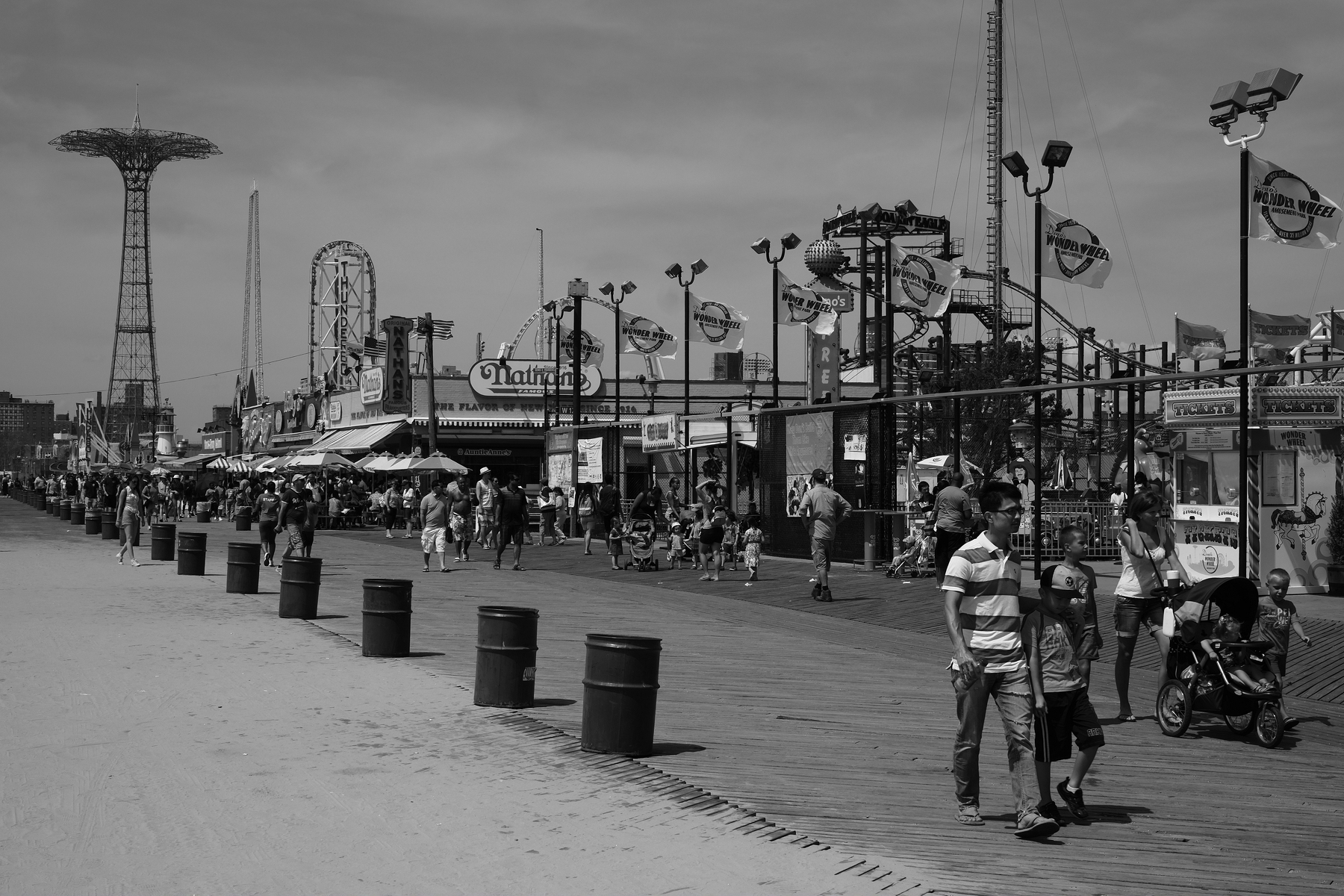
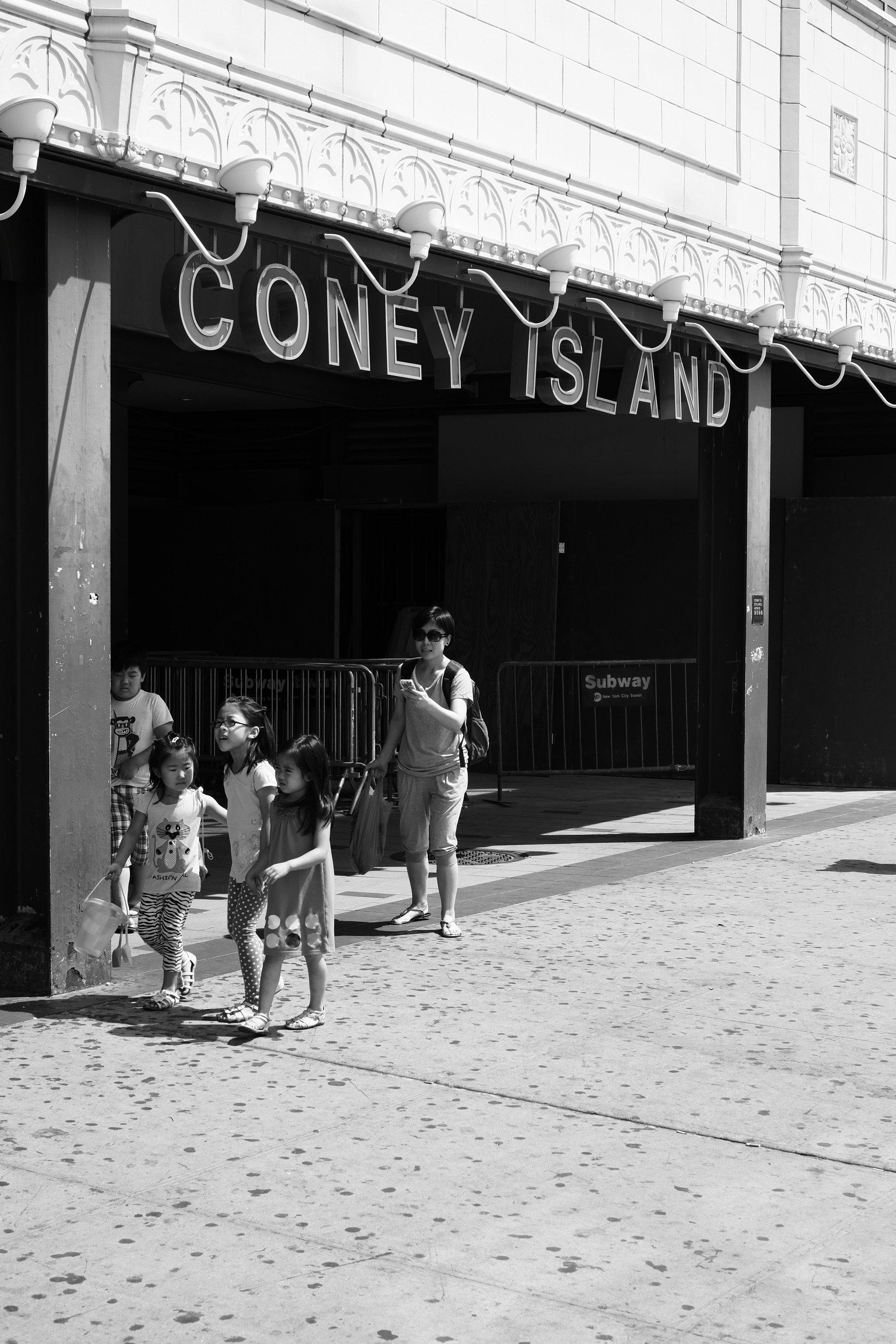
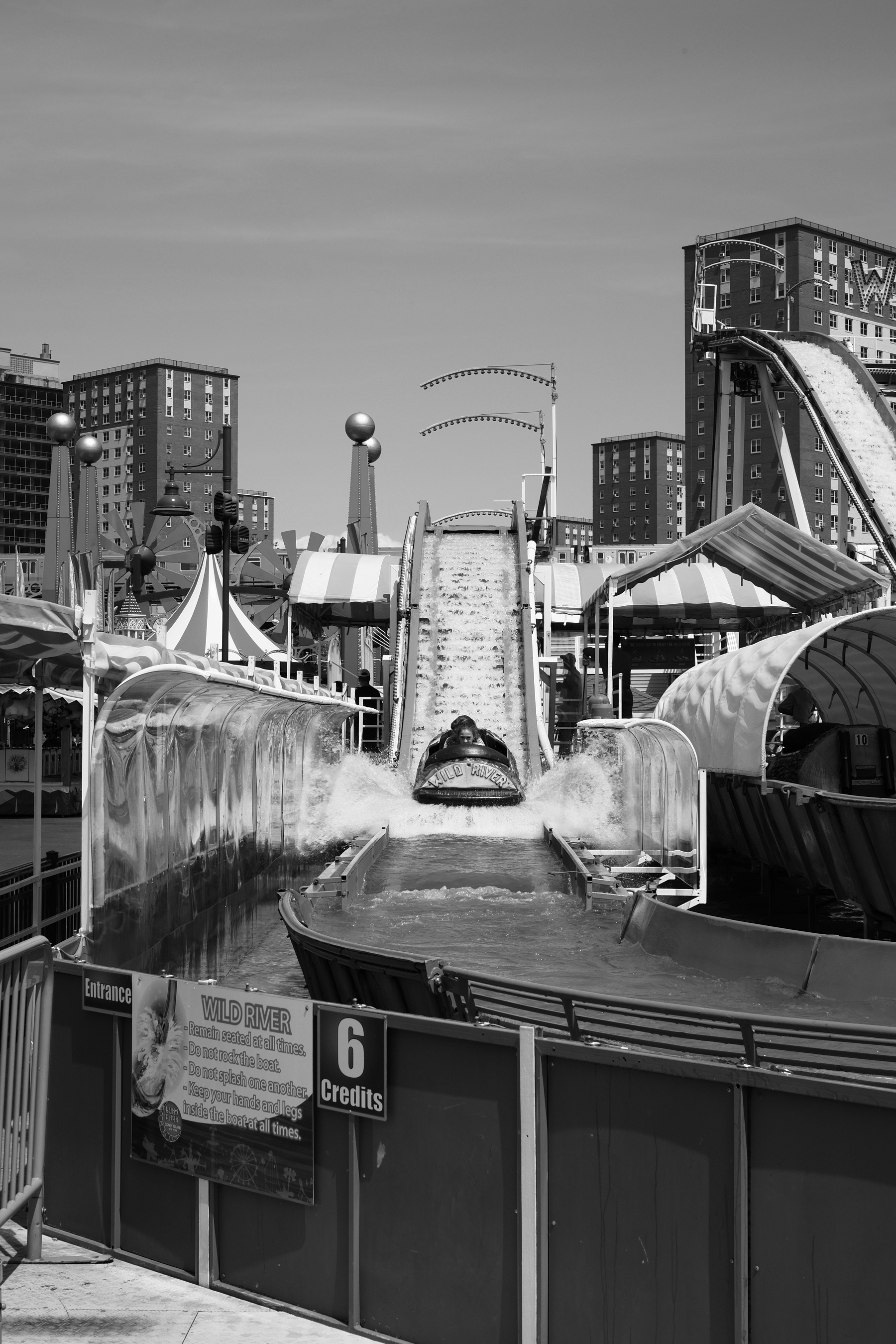

There are also traditions here that reveal just how deeply Coney Island is woven into New York culture. Every summer, the Mermaid Parade transforms the neighborhood into an exuberant celebration of costumes, art and eccentricity, continuing the area’s long tradition of spectacle. In winter, the Coney Island Polar Bear Club carries that spirit in an entirely different direction, with members taking part in icy ocean swims—a tradition dating back to the early twentieth century. Even the transportation infrastructure has its own history: the Stillwell Avenue station has long served as a dramatic gateway to the peninsula, delivering generations of New Yorkers directly to the waterfront. Coney Island has always been accessible, democratic and gloriously unconventional.
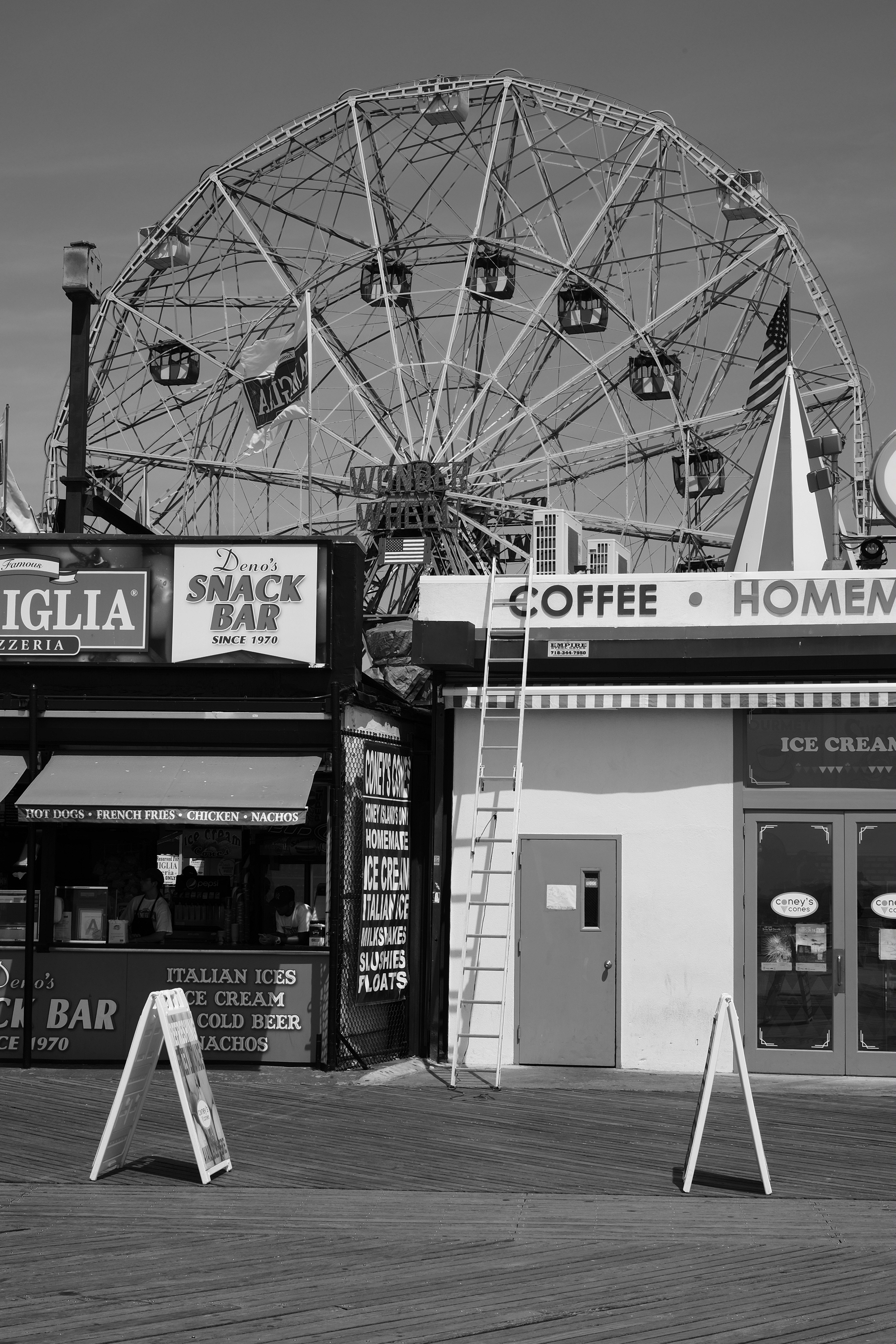



I also made time to look beyond the rides and the beach at the places preserving Coney Island’s memory. The Coney Island Museum, located near the boardwalk, contains artifacts and stories from the area’s extraordinary amusement history. Standing amid these reminders of vanished attractions, I thought about how many versions of Coney Island have existed over the decades. Some disappeared through fire, economic decline or changing tastes, while others survived against the odds. Yet the place never completely lost its ability to reinvent itself. That resilience is perhaps the most New York thing about Coney Island: it changes constantly, but somehow remains recognizable.
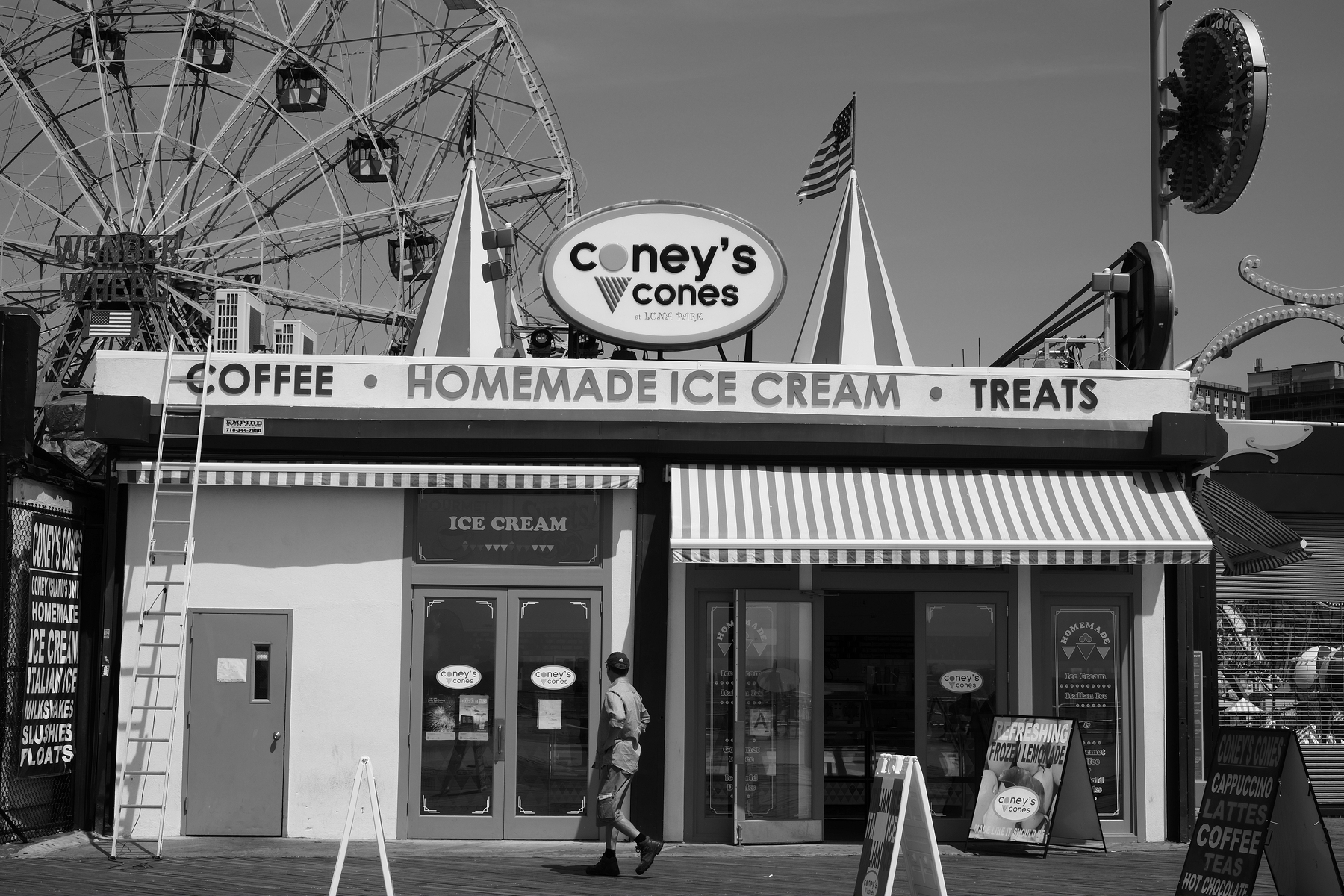


As the afternoon faded into evening, the light softened over the Atlantic and the boardwalk began to glow with a mixture of artificial light and lingering sunset. I put my camera away and simply walked, listening to the laughter, the ocean and the distant mechanical rhythm of the rides. Coney Island’s magic is not necessarily found in one spectacular attraction. It lives in the weathered boardwalk, the old Cyclone, the smell of hot dogs, the fisherman standing alone by the water, the eccentric traditions and the countless memories embedded in this small corner of Brooklyn. Walking away, I felt that I had not simply photographed a famous New York landmark. I had photographed a living piece of the city’s past—and a place that, despite everything time has thrown at it, still knows how to make people feel like children again.
#Photography #Photos #Images #Travel #Blog #Photoblog #ConeyIsland #ConeyIslandNewYork #Brooklyn #NewYorkCity #NewYorkTravel #BrooklynTravel #ConeyIslandBoardwalk #CycloneRollerCoaster #NathanFamous #NewYorkHistory #AmericanHistory #AmusementParks #ConeyIslandPhotography #BlackAndWhitePhotography #StreetPhotography #NewYorkPhotography #AtlanticOcean #MermaidParade #PolarBearClub #BrooklynHistory #VintageNewYork #HistoricNewYork #TravelNewYork #ExploreBrooklyn #NYC
Tracing Tokyo’s Pulse from Its Tower of Light

Tokyo at night is almost impossible to describe without sounding exaggerated. Neon signs flicker above crowded streets, trains glide through illuminated neighbourhoods, and skyscrapers stretch toward a sky that seems to disappear beneath the city’s glow. Yet among all that light, Tokyo Tower still manages to stand apart. As dusk settled over the city and the tower began glowing against the darkening sky, I found myself drawn toward it, curious to experience one of Japan’s most recognisable landmarks from the inside as well as from the street.

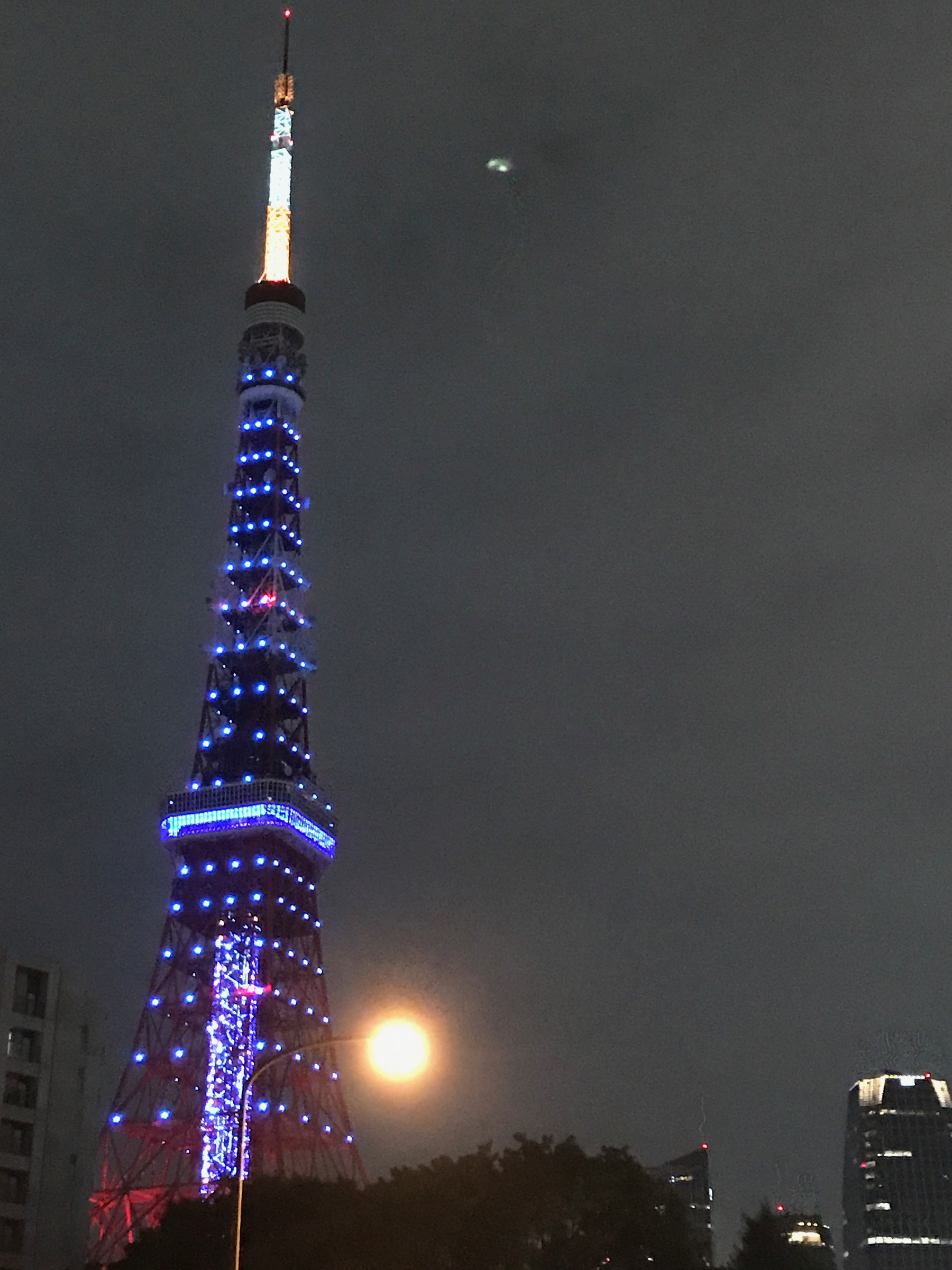

Completed in 1958, Tokyo Tower rises 333 meters above the city and was built primarily as a broadcasting tower. Its construction came during a remarkable period of post-war recovery, when Japan was rapidly rebuilding its infrastructure and transforming into a modern industrial power. The tower became a visible symbol of that transformation. Its design was inspired by the Eiffel Tower, but Tokyo Tower was adapted to Japan’s own architectural and engineering requirements. Its distinctive lattice structure and orange-and-white colouring soon became part of Tokyo’s identity.


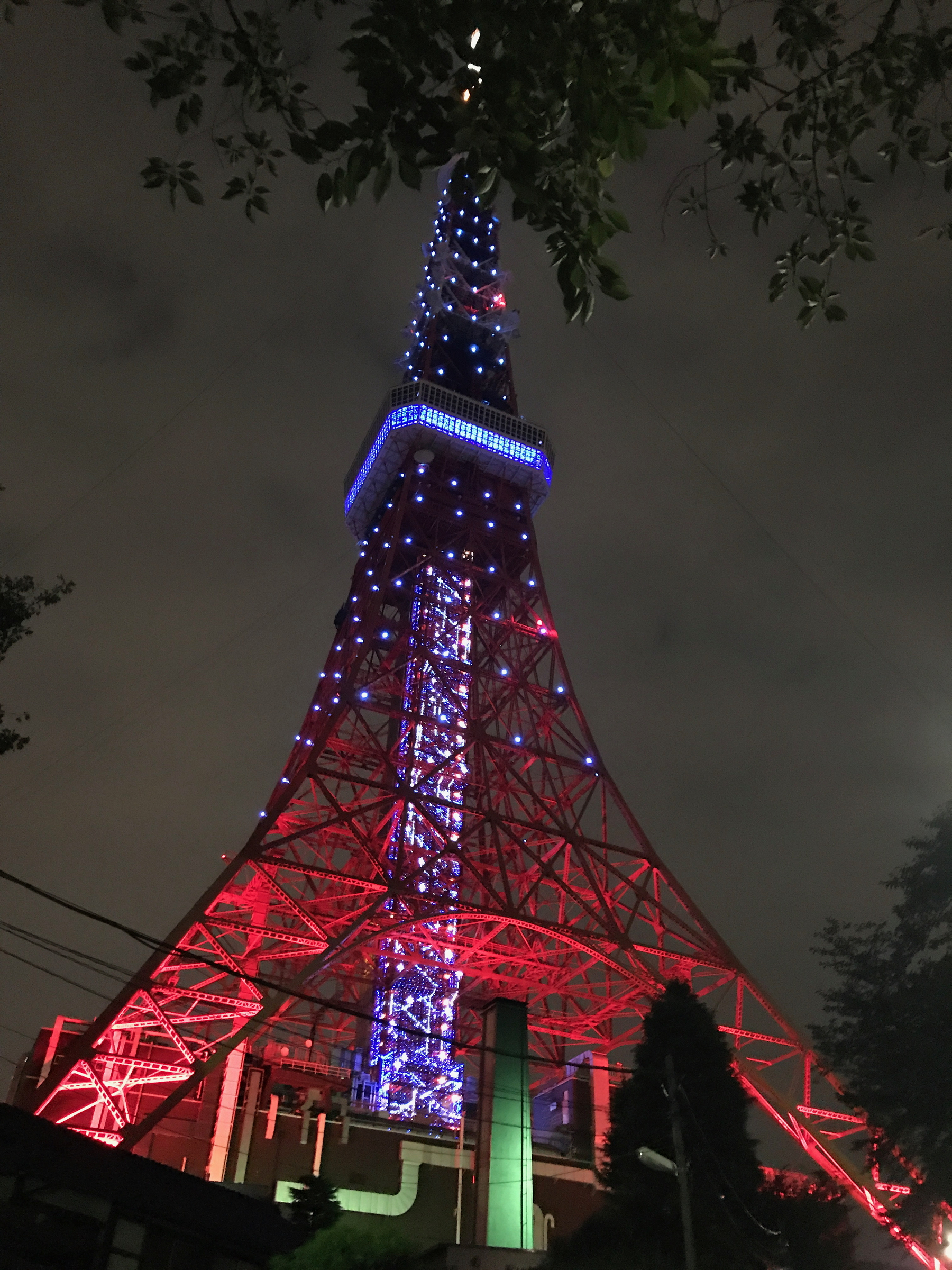
As I approached the tower that evening, its illuminated steel framework seemed almost to float above the surrounding buildings. It is easy to think of Tokyo Tower simply as a copy of the Eiffel Tower, but standing beneath it changed my perspective. Its proportions, location, color, and relationship with the surrounding city give it a character that is unmistakably Japanese. It feels less like an imitation and more like Japan taking an international architectural idea and turning it into something of its own.
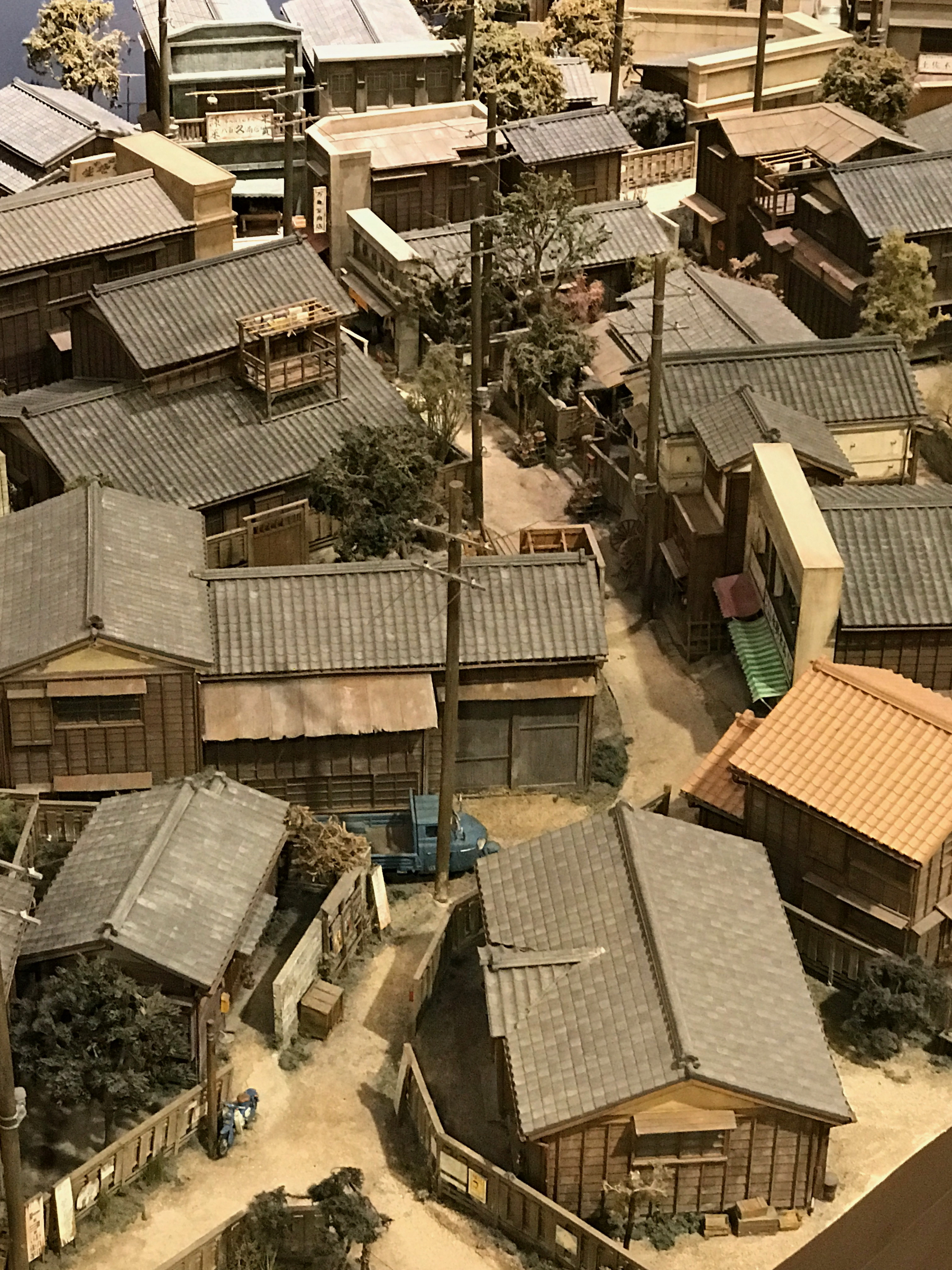

Inside, the atmosphere was completely different from the quiet streets around the tower. Visitors gathered from all over the world, speaking different languages and taking photographs as we made our way toward the elevators. Then the doors closed, and the city began to fall away beneath us. As the elevator climbed, Tokyo gradually transformed from a collection of streets and buildings into an enormous field of light stretching in every direction.

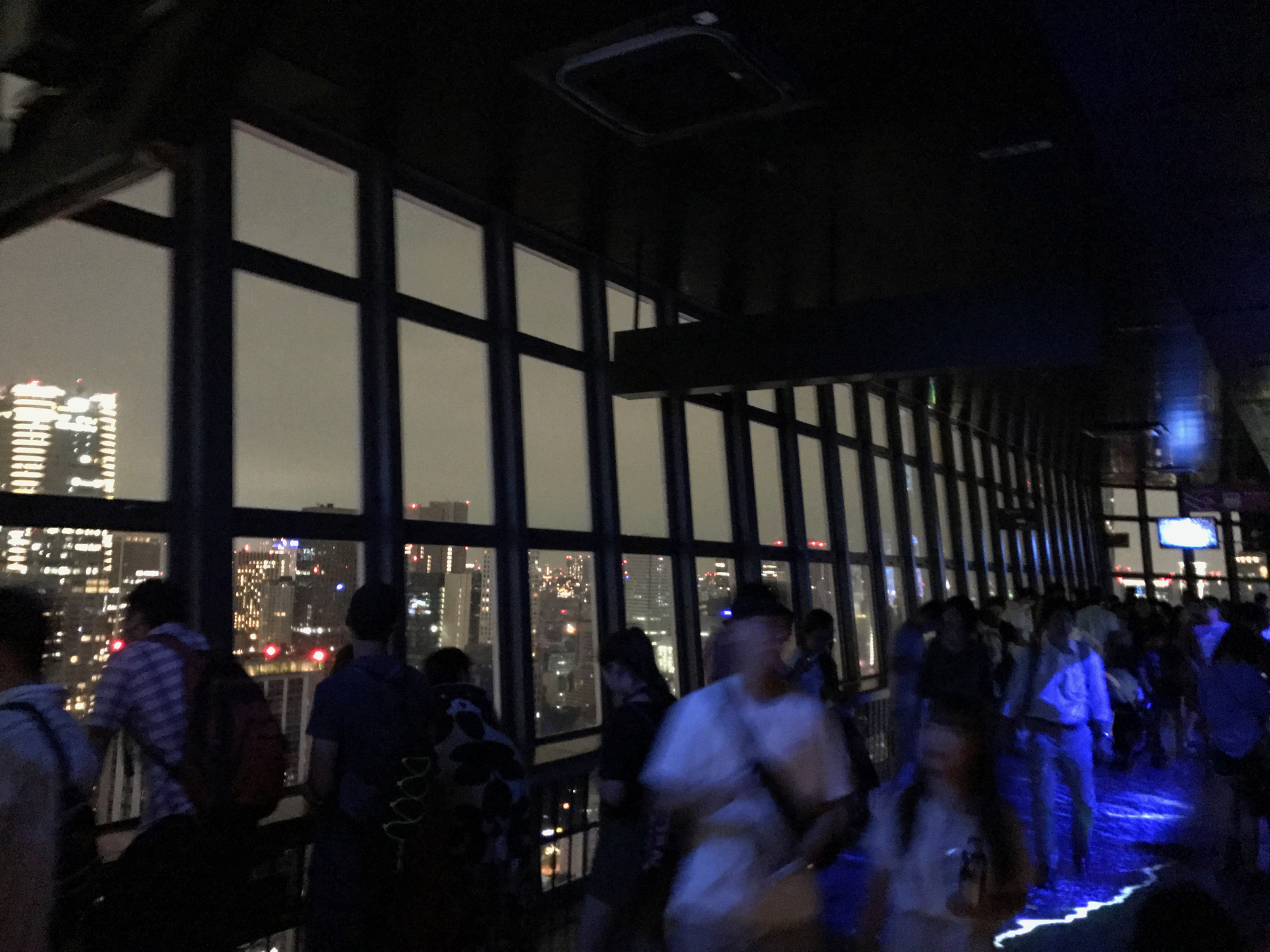
From the observation deck, I could pick out some of Tokyo’s most recognisable areas while the city’s boundaries seemed to disappear into the distance. Shinjuku and Shibuya were part of the enormous illuminated landscape, while Tokyo Bay reflected the lights of the metropolis farther away. On a clear evening, distant mountains can sometimes be visible beyond the urban horizon. What struck me most was the sheer scale. Tokyo didn’t look like a city from up there—it looked like an entire world.


But Tokyo Tower is more than a place for panoramic views. Its history is closely connected to Japan’s post-war transformation. When it opened, it was the tallest structure in Japan, and its height was chosen partly to meet the growing broadcasting needs of an expanding metropolis. Television was becoming an increasingly important part of Japanese life, and the tower helped transmit signals across the region. Its practical purpose and symbolic importance therefore developed together.

I was also fascinated by the engineering behind the structure. Tokyo is one of the world’s most earthquake-prone major cities, so a tower of this height required careful structural planning. Its design incorporated lessons from earthquake engineering, and the tower was constructed with considerable attention to flexibility and stability. The fact that such a tall steel structure could become both a broadcasting facility and an enduring landmark in Tokyo says a great deal about Japanese engineering and the country’s ability to build for difficult conditions.

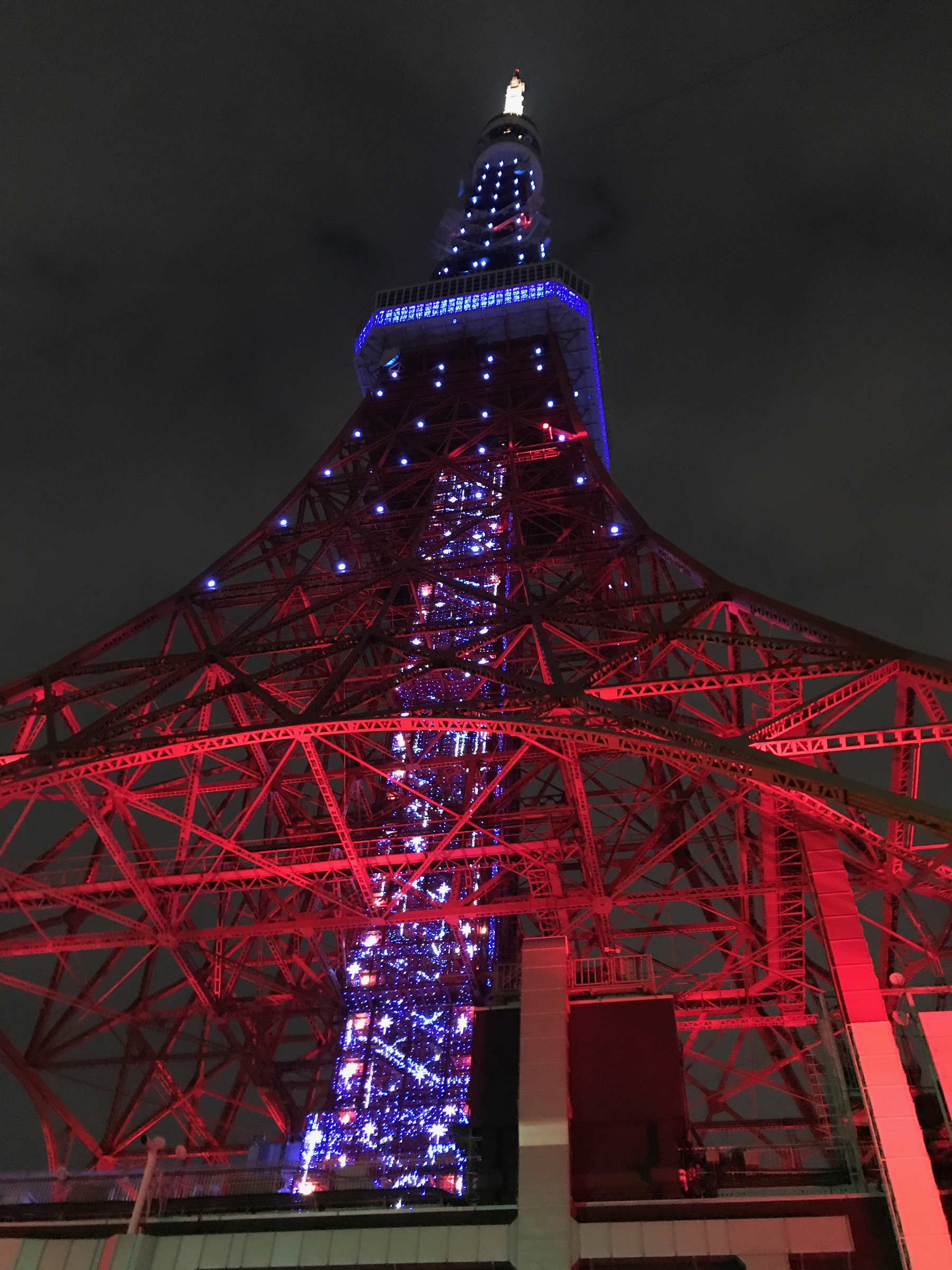
By the time I descended, night had completely taken over Tokyo. The tower’s lighting had become part of the surrounding cityscape, changing according to seasons, events, and special occasions. Looking up from street level, I realised that Tokyo Tower has another important quality: it provides orientation. In a city as enormous and visually overwhelming as Tokyo, that familiar orange-and-white silhouette offers a fixed point. This landmark helps turn an immense metropolis into something more understandable.

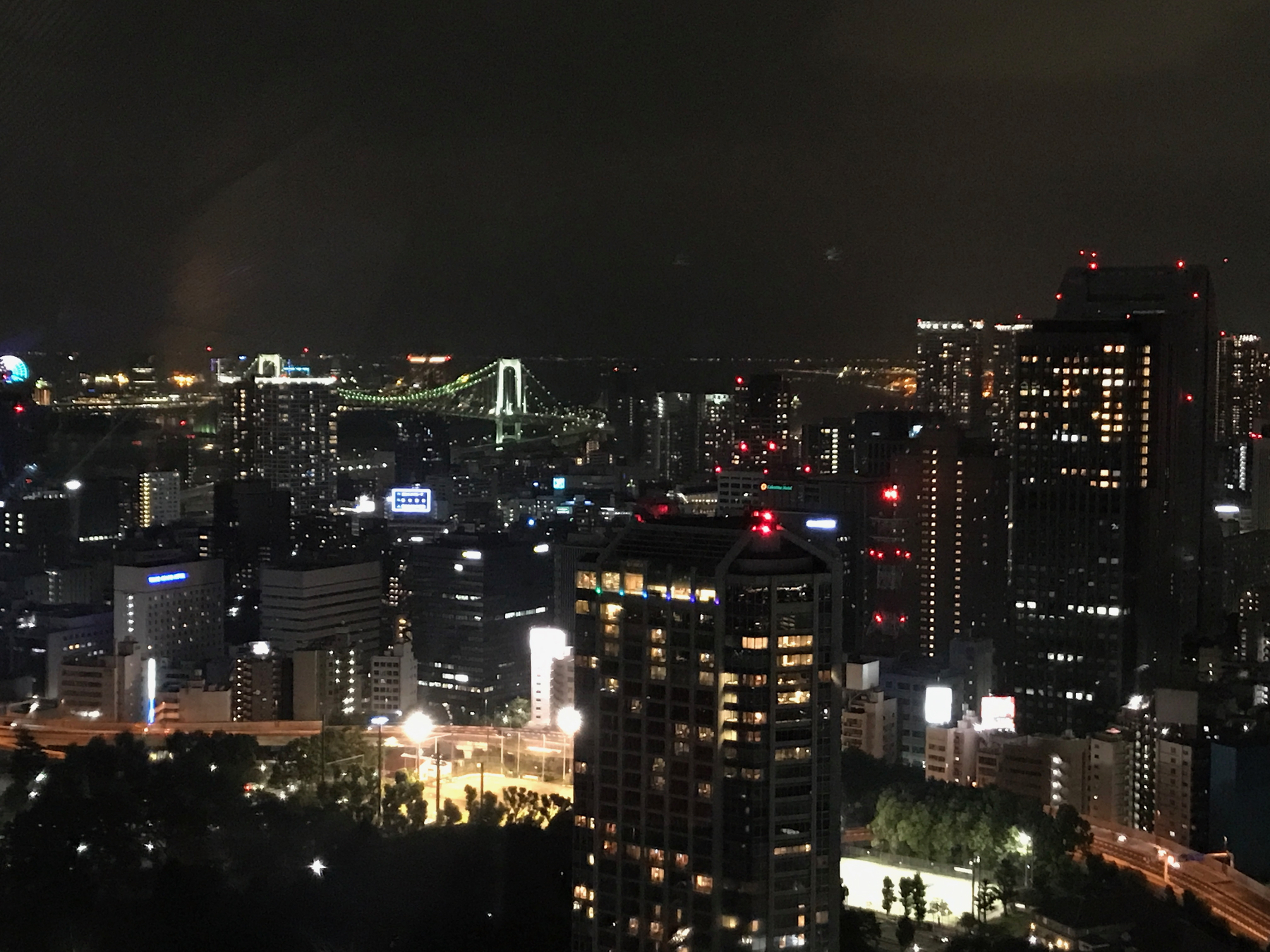
As I finally walked away, Tokyo Tower remained glowing above the buildings, looking remarkably graceful against the night sky. The experience reminded me that some landmarks matter not because they are the newest or tallest, but because they become woven into a city's identity. Tokyo Tower represents a particular moment when Japan was looking forward after an extraordinarily difficult period. More than six decades later, it still stands above Tokyo as a symbol of ambition, resilience, technology, and optimism. And beneath its lights, surrounded by one of the world’s most energetic cities, I understood why this tower continues to capture the imagination.
#Photography #Photos #Photoblog #Blog #TokyoTower #TokyoJapan #TokyoTravel #JapanTravel #TokyoAtNight #TokyoNightlife #TokyoSkyline #JapanPhotography #TokyoPhotography #JapaneseArchitecture #JapanHistory #TokyoLandmarks #TokyoObservationDeck #TokyoCityscape #VisitTokyo #ExploreTokyo #PostwarJapan #TokyoNightView #TravelJapan #JapanAdventure
From Sweltering Desert to Alpine Forests, on the Palm Springs Aerial Tramway

As the morning sun began illuminating the Coachella Valley, I made my way toward the Palm Springs Aerial Tramway, already intrigued by the idea of traveling from one of California’s hottest desert landscapes into the cool wilderness of the San Jacinto Mountains. From the valley floor, the mountains looked enormous, their rocky slopes rising dramatically above Palm Springs. What fascinated me most was that in less than an hour I could experience environments that normally seem separated by hundreds of miles.
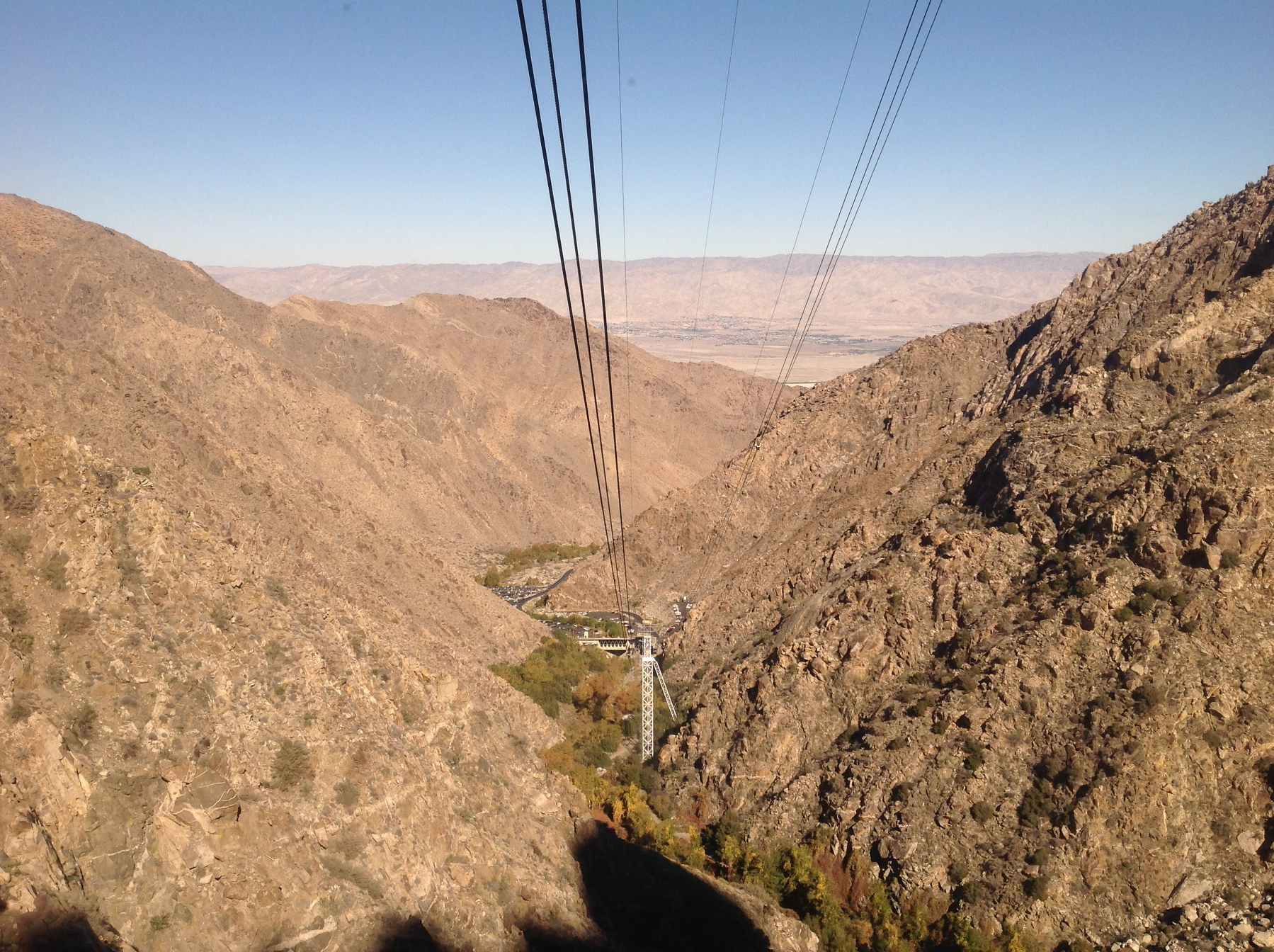


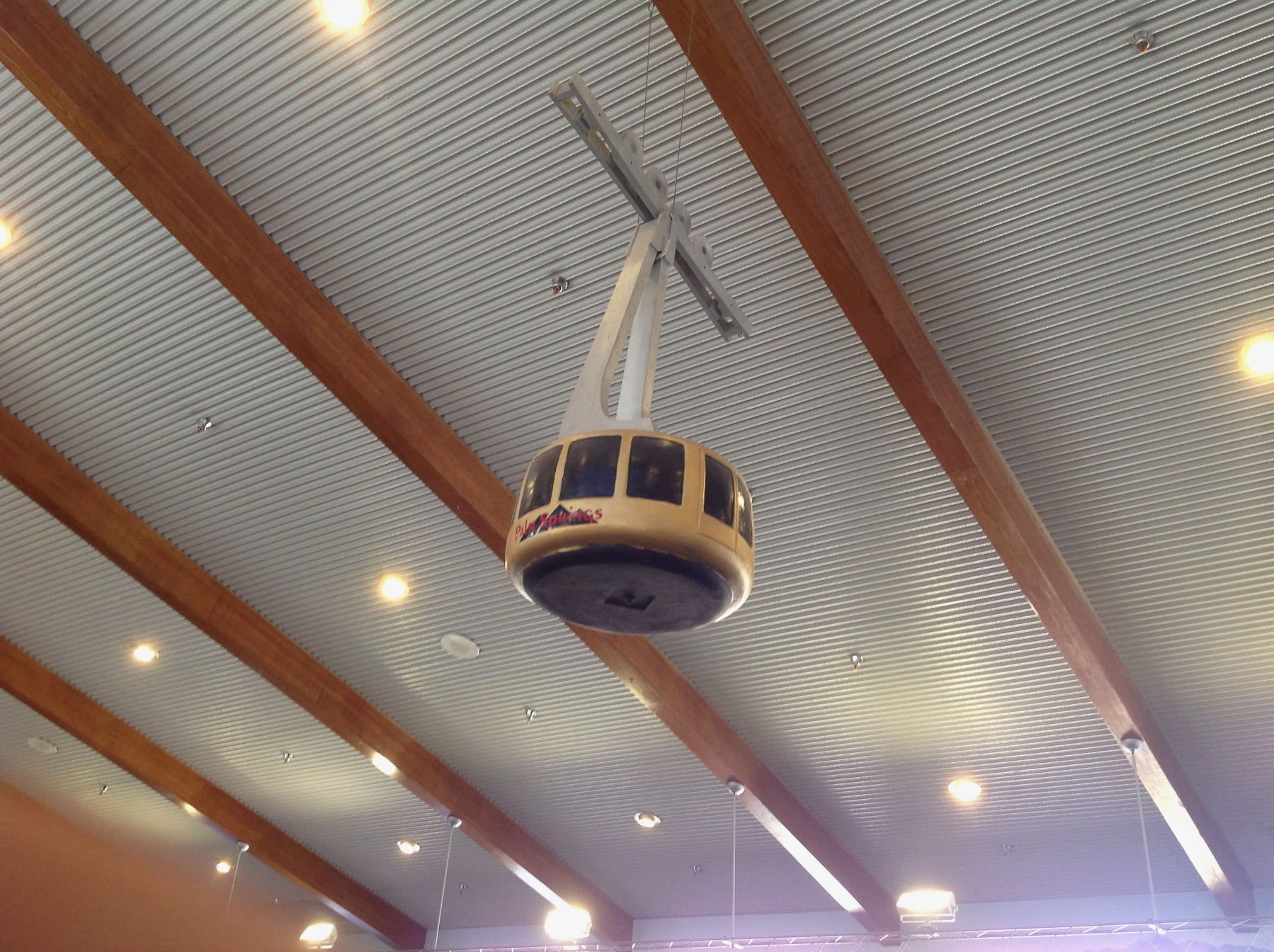
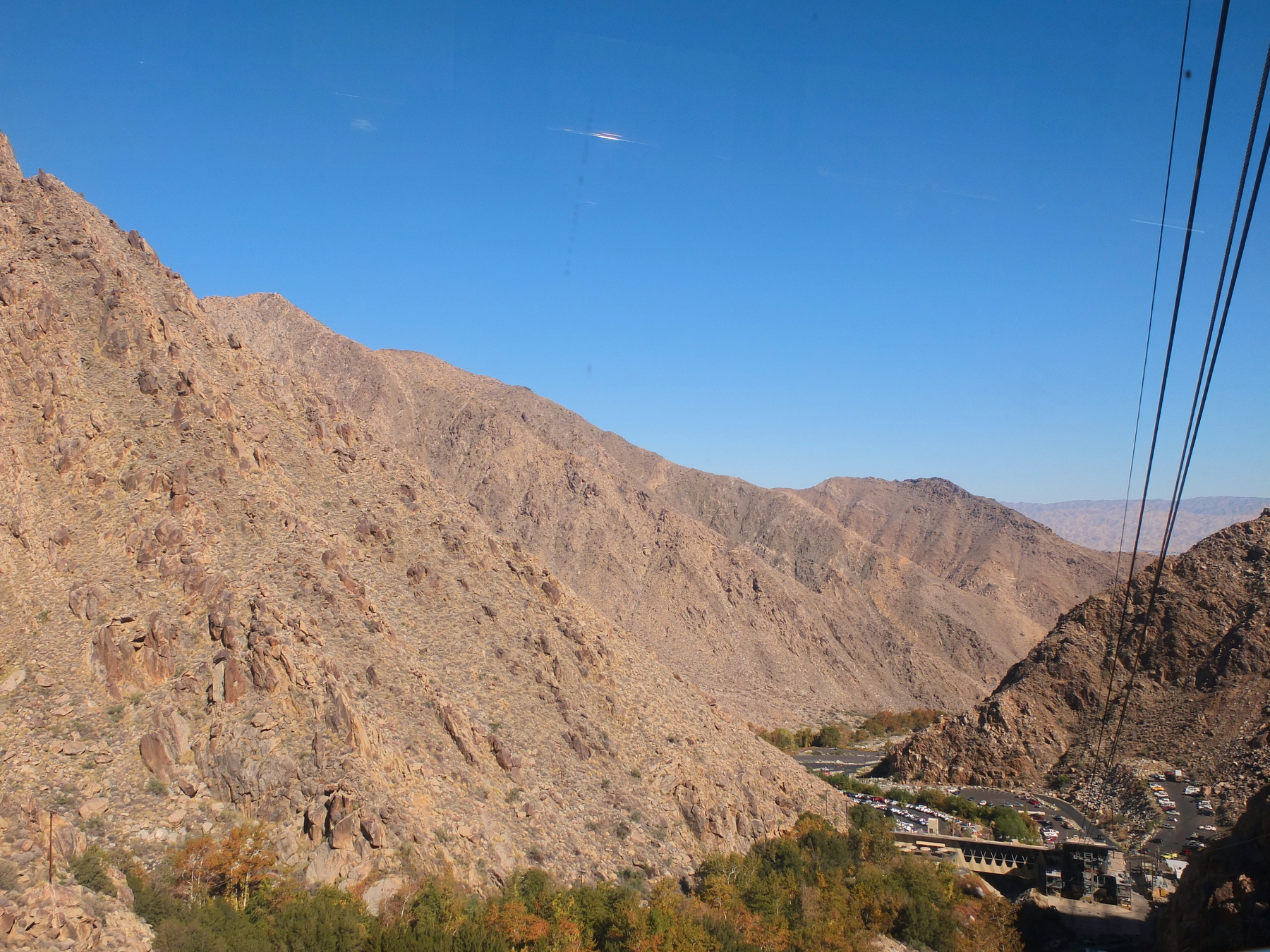
The journey begins at the Valley Station, where the contrast is immediate. Palm Springs sits in the Sonoran Desert region, surrounded by dry slopes, palm trees, and intense summer heat, while the mountain station lies high above in a dramatically cooler environment. The tram travels approximately 2.5 miles along the mountainside, climbing more than 8,500 feet in elevation from the valley station to the Mountain Station. The difference is astonishing. It isn’t simply a ride up a mountain; it is a journey through several ecological zones compressed into a single spectacular ascent.


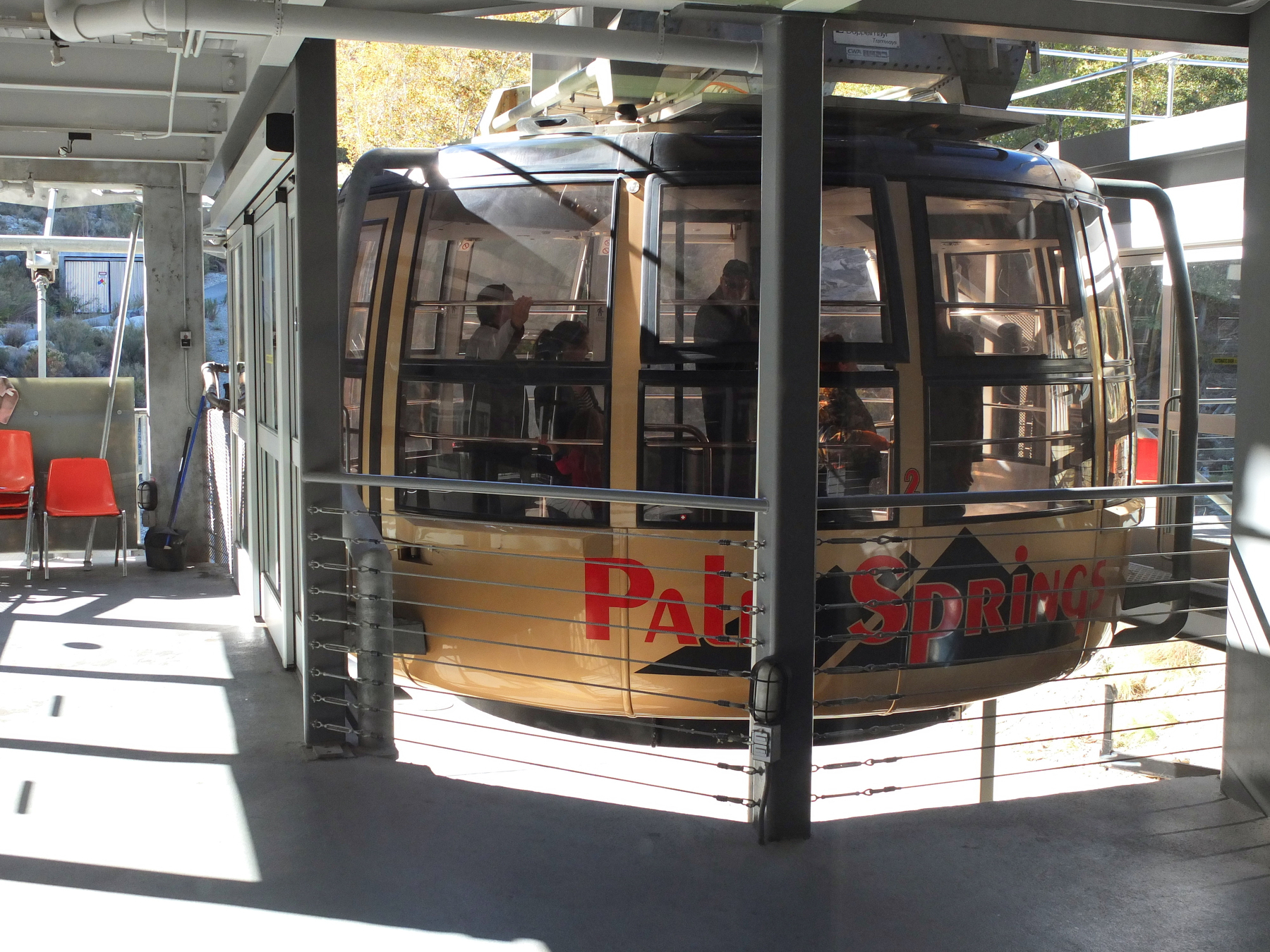
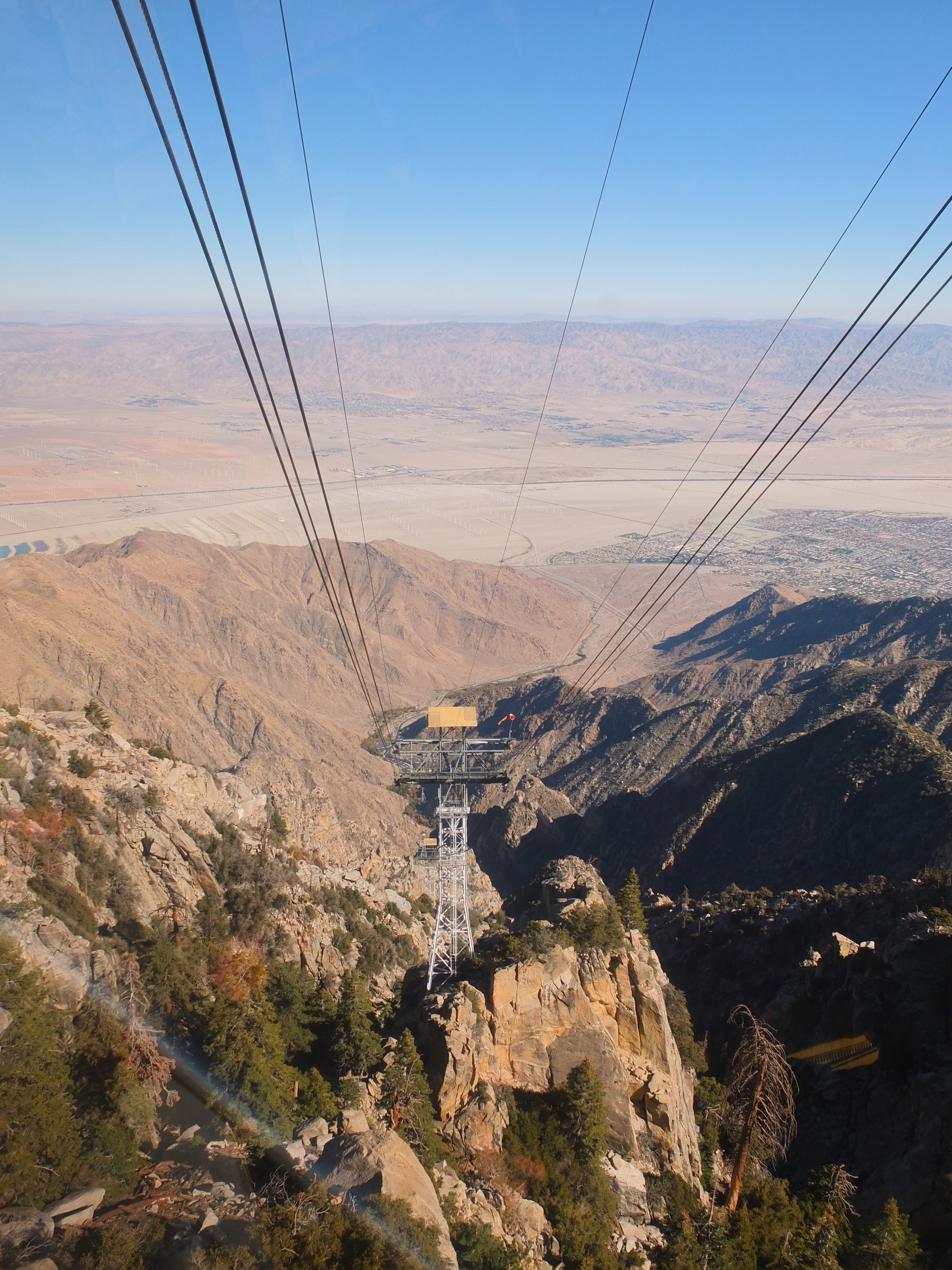
When the tram began moving, I watched Palm Springs gradually shrink beneath me. The most extraordinary part of the experience is that the cabins rotate as they travel, providing passengers with a constantly changing 360-degree view. The Coachella Valley stretched outward like an enormous map, while cliffs and rugged canyon walls appeared almost directly beneath us. The higher we climbed, the more dramatically the landscape changed, with vegetation becoming denser and the desert giving way to the forests of the San Jacinto Mountains.



The engineering behind the journey is almost as fascinating as the scenery. The original tramway opened in 1963, conceived as a way to provide access to the spectacular wilderness of Mount San Jacinto. The present rotating tramcars were introduced in 2000, replacing the original cabins. Their rotating floors mean that everyone gets an opportunity to see the surrounding landscape without having to fight for the best window. Looking down from the moving cabin, I couldn’t help appreciating the audacity of building such a system across terrain this steep and rugged.


As we approached the Mountain Station, the temperature had changed dramatically. Palm Springs might have been baking below, but the air here was crisp and distinctly alpine. I stepped outside and immediately felt as though I had arrived somewhere completely different. The desert had disappeared, replaced by tall pines, firs, rocky slopes, and mountain trails. The transformation was so sudden that it felt almost surreal. One moment I was looking across a desert valley; the next I was standing among trees.



From the Mountain Station, I began exploring the trails of Mount San Jacinto State Park. The landscape here is remarkably wild considering how close it is to Palm Springs. The sound of the wind moving through the trees replaced the noise of the city, while birds and the occasional rustle in the undergrowth became the soundtrack of my walk. The higher elevation also brought a sense of physical freshness that made every breath feel different. I understood why this mountain has long been regarded as a refuge from the heat of the desert below.


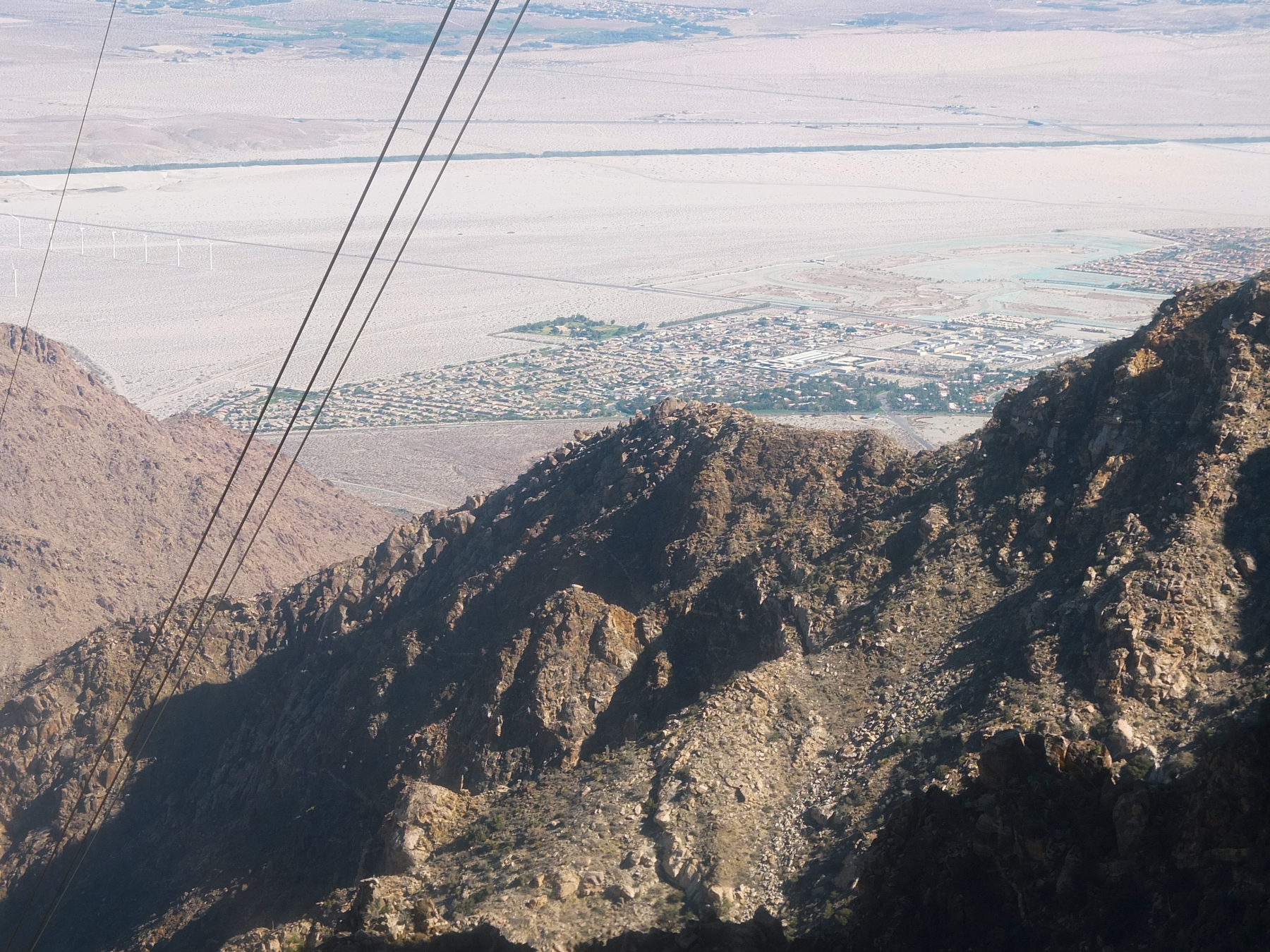
One of the great surprises of the area is how dramatically the landscape changes with elevation. The tram passes through different ecological communities, revealing how temperature, precipitation, and altitude influence plant life. The San Jacinto Mountains can even receive significant snowfall in winter, creating the extraordinary spectacle of snow-covered peaks rising above the desert. That contrast is what makes the tramway so memorable: few places allow you to experience such radically different environments during a single outing.


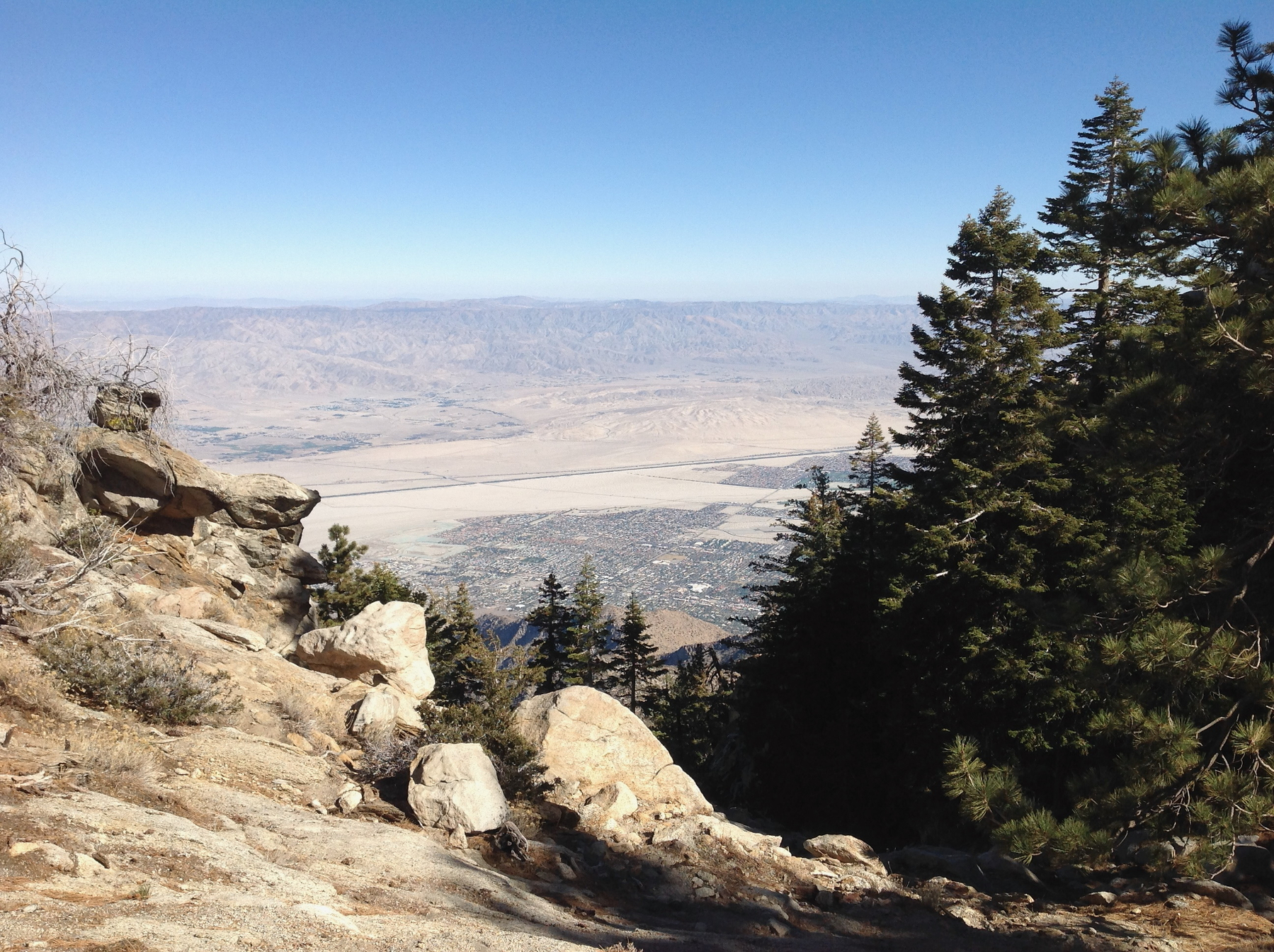
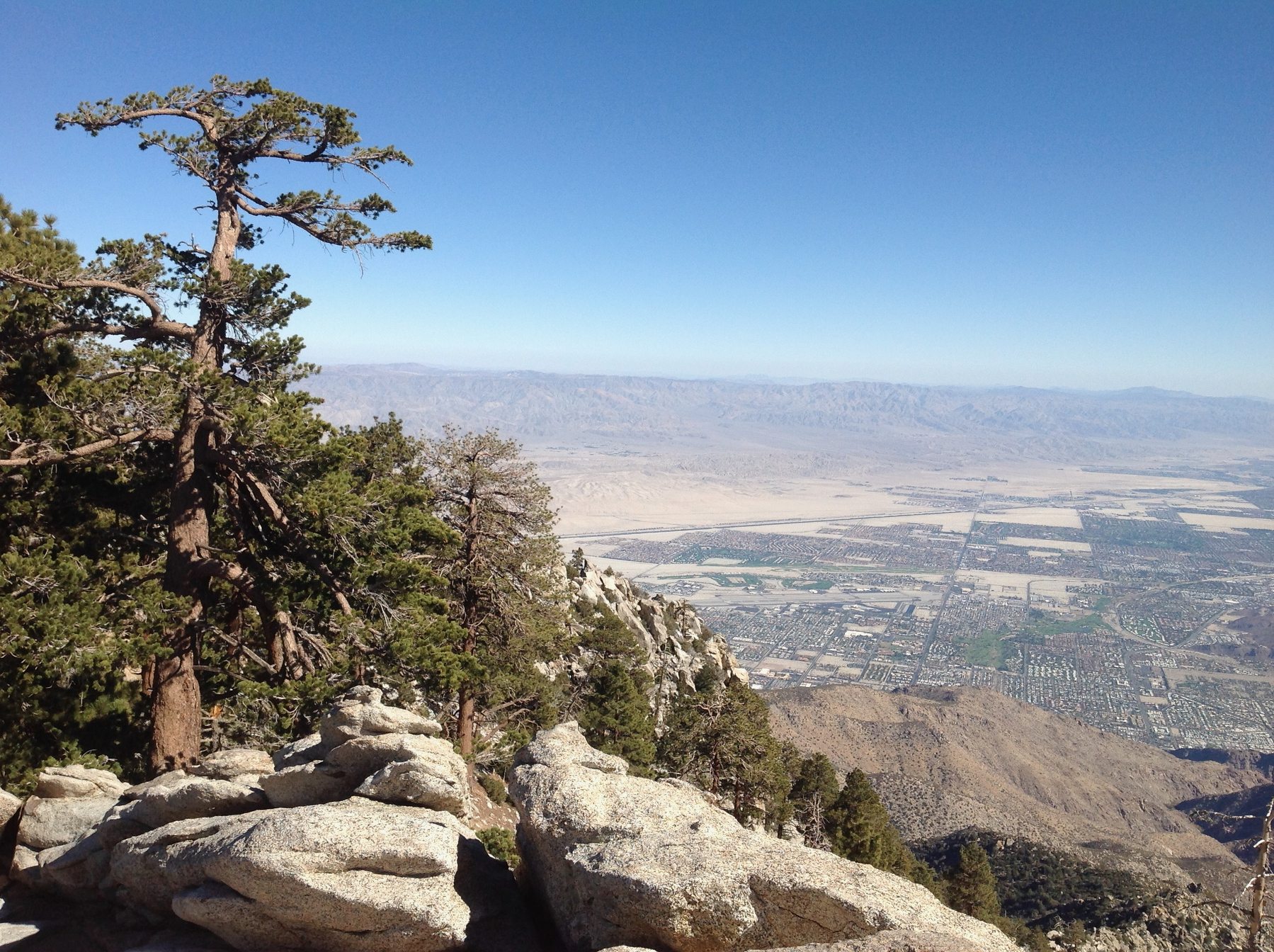
Standing above the valley, I found myself looking down toward Palm Springs and the enormous Coachella Valley beyond it. From this height, the geometric patterns of roads and development seemed almost delicate against the vast desert landscape. The mountains reminded me how quickly human environments can become small when viewed from a greater perspective. I stayed there longer than I intended, simply taking in the silence and watching the changing light across the valley.

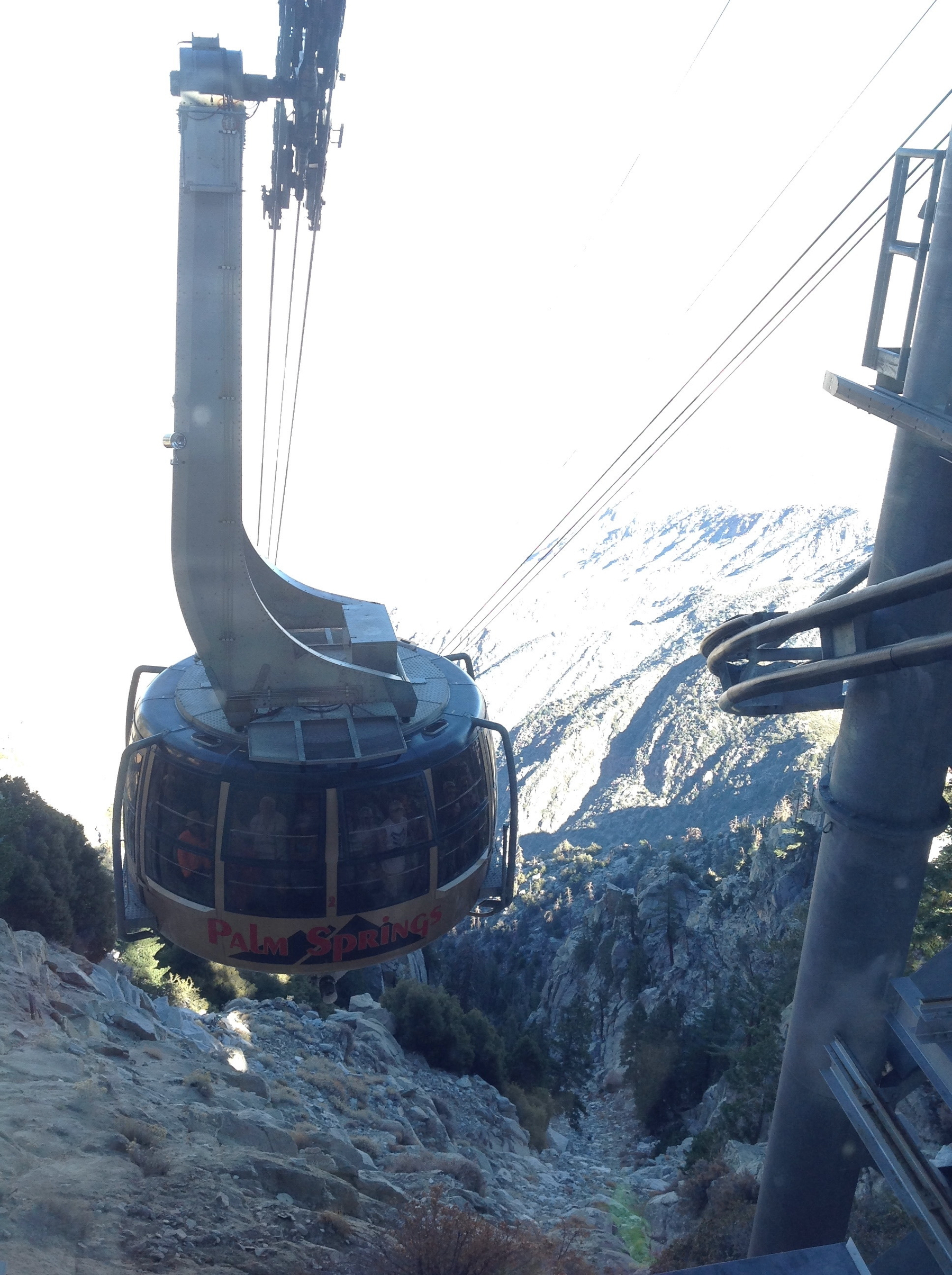


Eventually, it was time to descend. As the tram began its journey back toward the desert, I watched the forests slowly give way to exposed rock, then dry slopes, then the familiar landscape of Palm Springs. The temperature rose with every minute, and the city gradually expanded beneath me again. The Palm Springs Aerial Tramway had taken me from desert heat to alpine forest and back in a single day, but what stayed with me was more than the spectacular view. It was the reminder that nature doesn’t always require a long journey to reveal its extremes. Sometimes, all you need to do is go straight up.


#Photography #Photos #Photoblog #Blog #PalmSpringsAerialTramway #PalmSprings #CaliforniaTravel #PalmSpringsTravel #SanJacintoMountains #MountSanJacinto #CoachellaValley #CaliforniaDesert #CaliforniaMountains #AerialTramway #PalmSpringsAdventure #CaliforniaHiking #DesertToAlpine #MountainTravel #CaliforniaNature #TravelCalifornia #PalmSpringsPhotography #VisitPalmSprings #SanJacintoStatePark #USATravel