
Casa Azul, Walking Through Frida Kahlo’s Blue World

If art is a language, then Frida Kahlo’s Casa Azul is an epic poem. Tucked away in the historic Coyoacán neighbourhood of Mexico City, the Frida Kahlo Museum is much more than a collection of paintings and personal belongings. It is the house where Frida was born, where she spent much of her life, and where she died in 1954. Walking through it, I felt less like I was visiting a conventional museum and more like I had been invited into the private world of one of the twentieth century’s most recognisable artists.


Even before entering, Casa Azul makes an impression. Its intense cobalt-blue walls stand out against the streets of Coyoacán, immediately explaining the name by which the house has become known. The museum is enormously popular, and when I visited, the queue was part of the experience. It can be tempting to see the waiting as an inconvenience, but knowing what lies behind those blue walls makes the anticipation feel worthwhile. You aren’t simply waiting to see an exhibition; you’re waiting to enter Frida’s world.


Inside, the house unfolds almost like a three-dimensional diary. Rooms filled with photographs, personal objects, paintings and artifacts reveal different chapters of Frida’s extraordinary life. There is an intimacy here that is difficult to recreate in a conventional gallery. Her work is inseparable from her experiences — her physical suffering, relationships, Mexican identity, politics, family and relentless determination to express herself through art.


Perhaps the most moving space for me was Frida’s studio. Her easel and wheelchair remain part of the room, creating the extraordinary impression that she might return at any moment. It is easy to imagine her sitting there, transforming pain and experience into colour and imagery. Knowing that she painted extensively despite the physical challenges that shaped much of her life makes the studio feel less like a historical reconstruction and more like a window into her creative process.


Frida’s clothing is another essential part of the Casa Azul experience. Her brightly coloured huipils, long skirts and distinctive traditional Mexican clothing were not simply practical choices or costumes; they became an important part of the identity she presented to the world. Her clothing connected her with Mexican culture and heritage while also becoming an extension of her artistic personality. Standing among these garments, I began to see fashion, identity and painting as parts of the same creative language.


What I found particularly fascinating was how completely Frida turned her own life into artistic material. Her paintings frequently confronted subjects that are deeply personal — pain, love, loss, the body and identity. Rather than separating the artist from the person, Casa Azul constantly brings the two together. You don’t simply see Frida’s paintings here; you encounter the circumstances and objects that surrounded the woman who created them.


The museum’s audiovisual presentation also adds another dimension to the visit. Seeing and hearing more about Frida’s life gives context to the objects surrounding you and helps transform what could otherwise be a collection of fascinating artifacts into a much more personal story. Her life was complicated, sometimes painful and often turbulent, but what remains particularly striking is the determination with which she turned those experiences into something unmistakably her own.


For me, one of the greatest strengths of Casa Azul is that it doesn’t require you to be an art expert. You can arrive knowing almost nothing about Frida Kahlo and still find yourself absorbed by the environment. The house speaks through colour, objects, photographs, clothing and architecture. It makes her story accessible not by simplifying it, but by allowing you to encounter the physical world in which she lived and worked.


When I finally stepped back through the blue doorway and into Coyoacán, I felt that I had seen something different from the Frida Kahlo reproduced endlessly on posters and souvenirs. The real fascination is not simply the famous face, the flowers in her hair or the instantly recognizable paintings. It is the woman behind the image — an artist who transformed her own experiences into a visual language that continues to resonate around the world.


Casa Azul stayed with me long after I left. The colour of its walls suddenly seemed to represent more than a building; it felt like a symbol of Frida herself — vivid, unconventional, deeply personal and impossible to ignore. Whether you come to Mexico City specifically for art or simply want to understand one of Mexico’s most celebrated cultural figures, walking through Frida Kahlo’s Blue House feels less like ticking an attraction off a list and more like stepping briefly into the life of an artist who refused to make herself invisible.


#Photography #Photos #Blog #Photoblog #FridaKahlo #CasaAzul #FridaKahloMuseum #MuseoFridaKahlo #MexicoCity #CDMX #Coyoacan #MexicoTravel #ArtTravel #ArtHistory #MexicanArt #FridaKahloArt #CasaAzulMexico #TravelPhotography #Travel #Essay #TravelBlog #MexicoCityTravel #CulturalTravel #WomenInArt #ArtMuseums
Sitges in Silence. Experiencing the Good Friday Procession
There is a particular kind of silence that has weight. It isn’t simply the absence of noise; it feels almost like a presence, carrying centuries of tradition, devotion and memory. I found that silence last Friday beneath a faint quarter moon, walking through the medieval streets of Sitges as the town prepared for one of its most solemn nights of the year: the Good Friday Processó del Silenci.
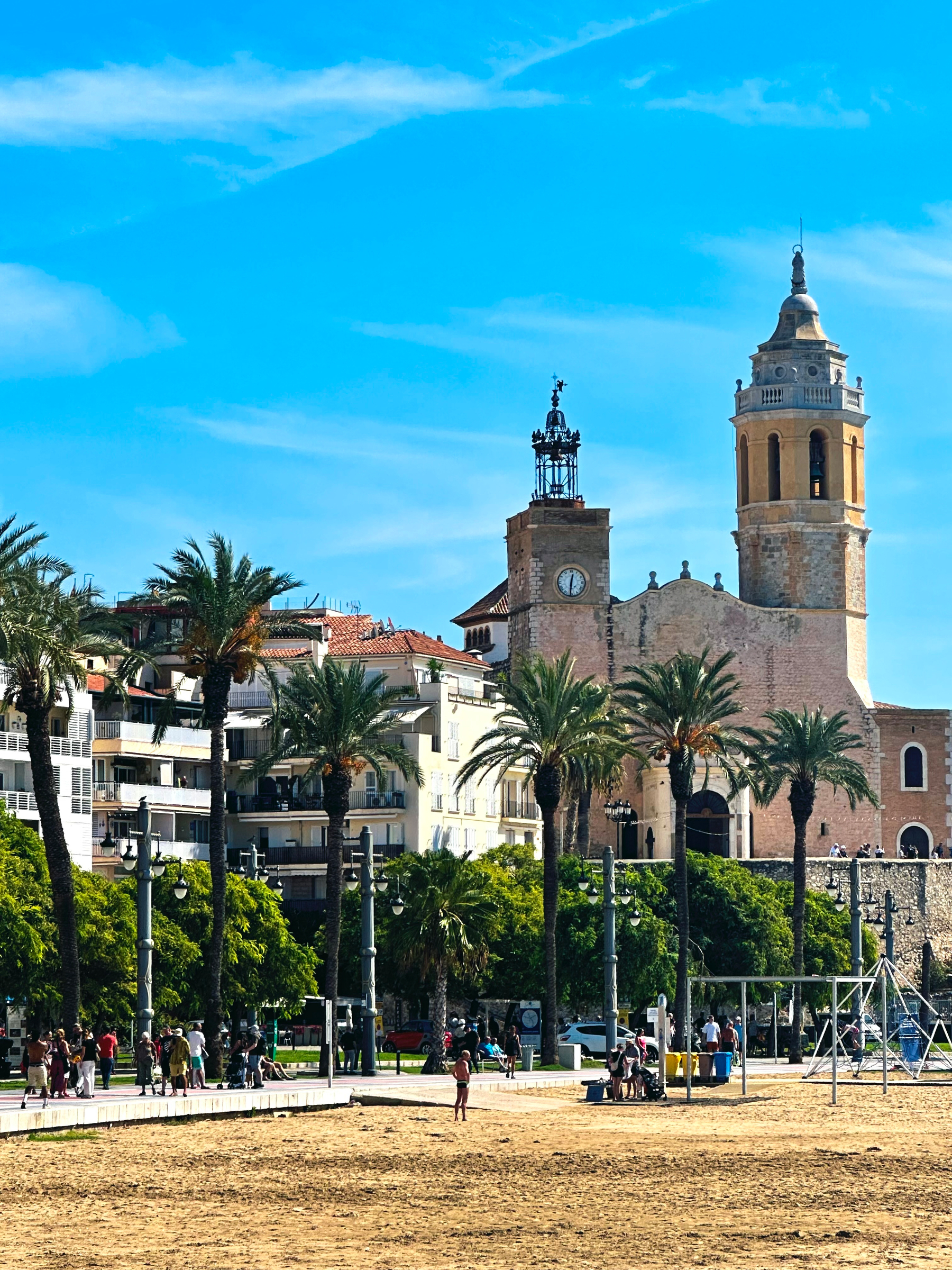
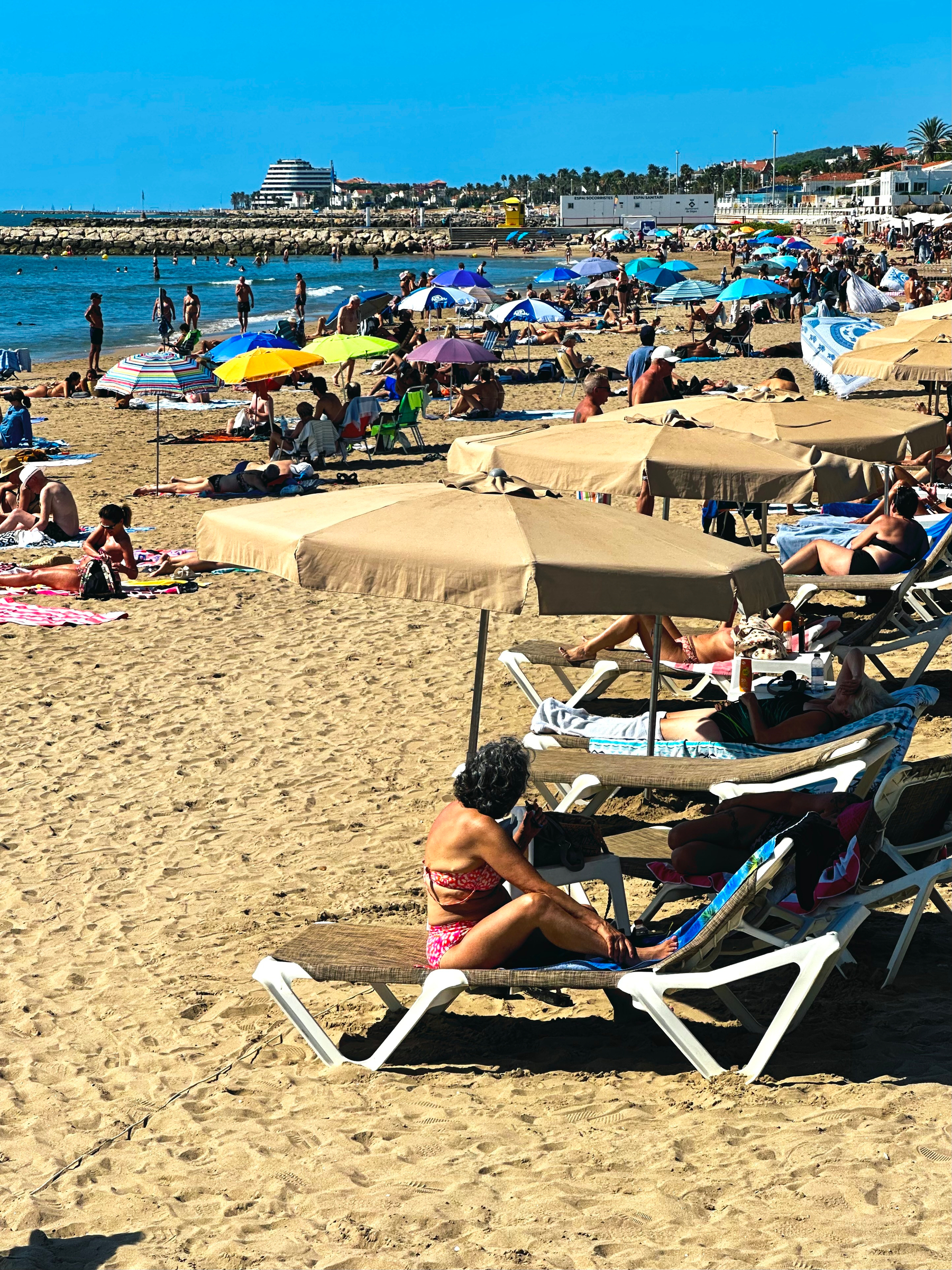
Sitges is usually a town of colour, sunlight, beaches and nightlife, but for a few hours that familiar personality seemed to disappear. By around 9:30 PM, near El Baluard and the historic Church of Sant Bartomeu i Santa Tecla, the atmosphere had completely changed. The cheerful sounds of the evening were replaced by hushed conversations, the shuffle of hundreds of feet and the unmistakable scent of melting beeswax. The Mediterranean resort town I knew so well had suddenly become something much older.
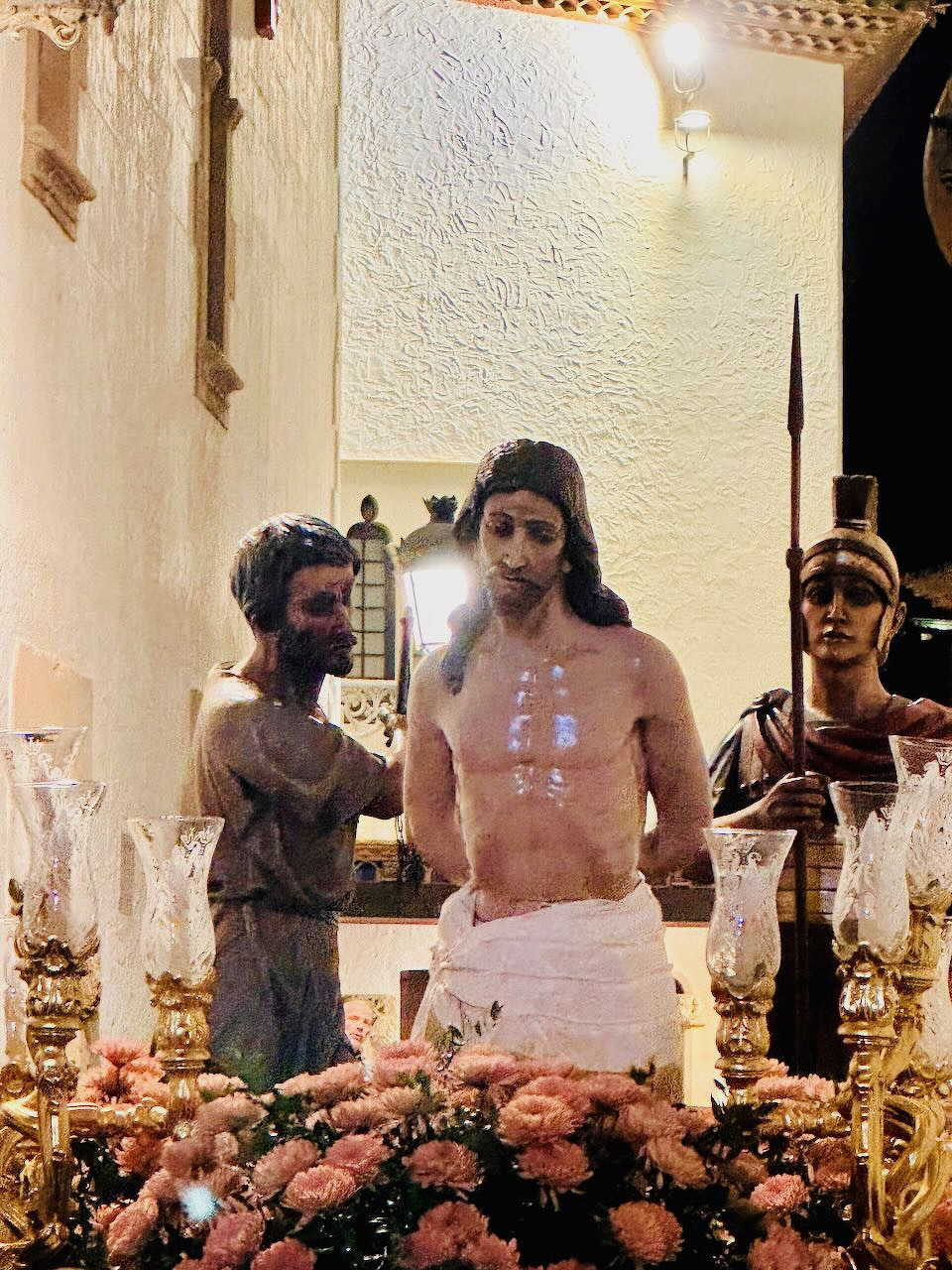
Then came the drum. Deep, slow and perfectly measured, its muffled boom seemed to rise from the ancient stones themselves. There was no elaborate musical accompaniment, just that solitary rhythm marking the procession’s deliberate progress. With every beat, the anticipation grew, until the first figures emerged from the shadows of the church.
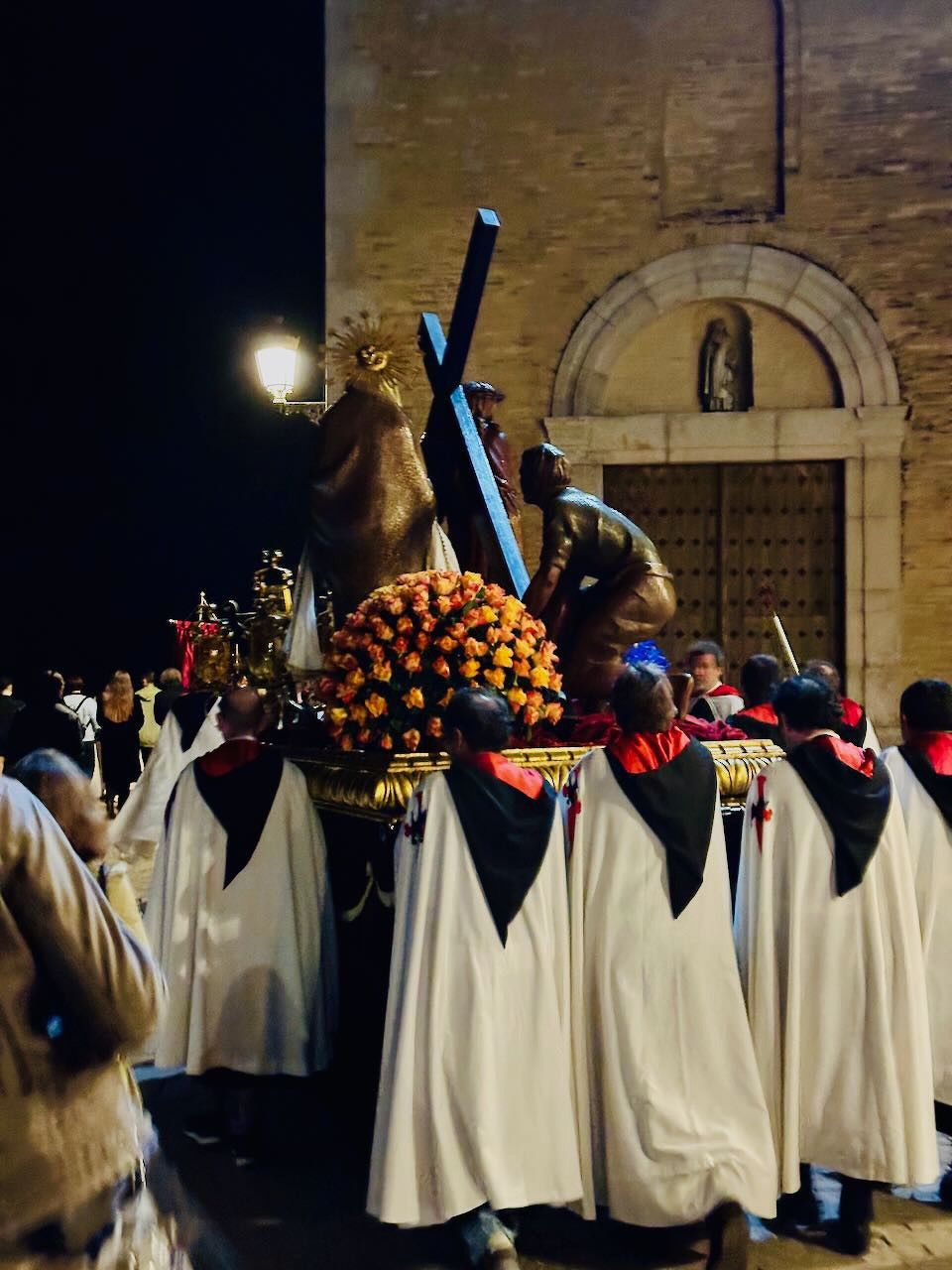
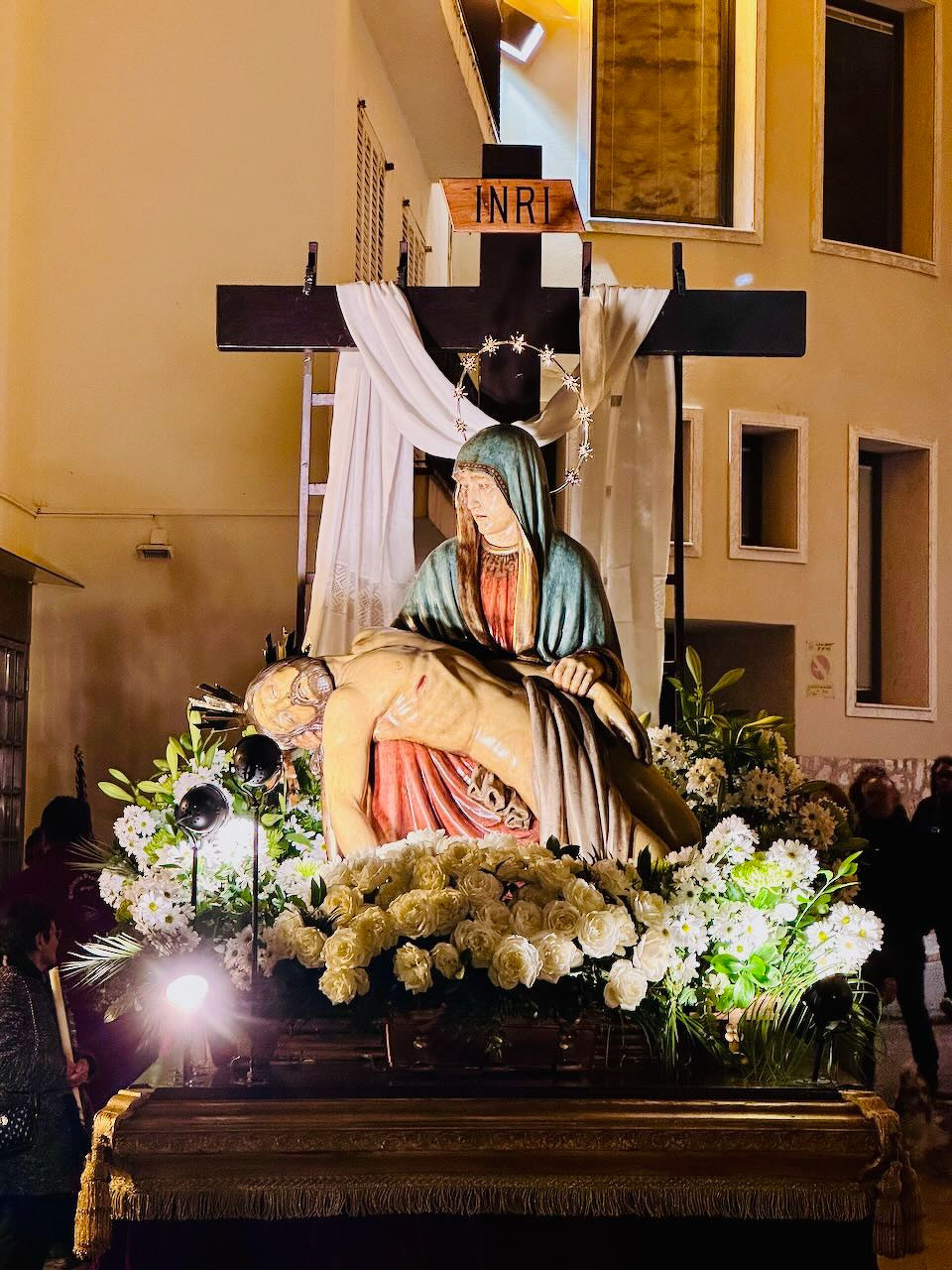
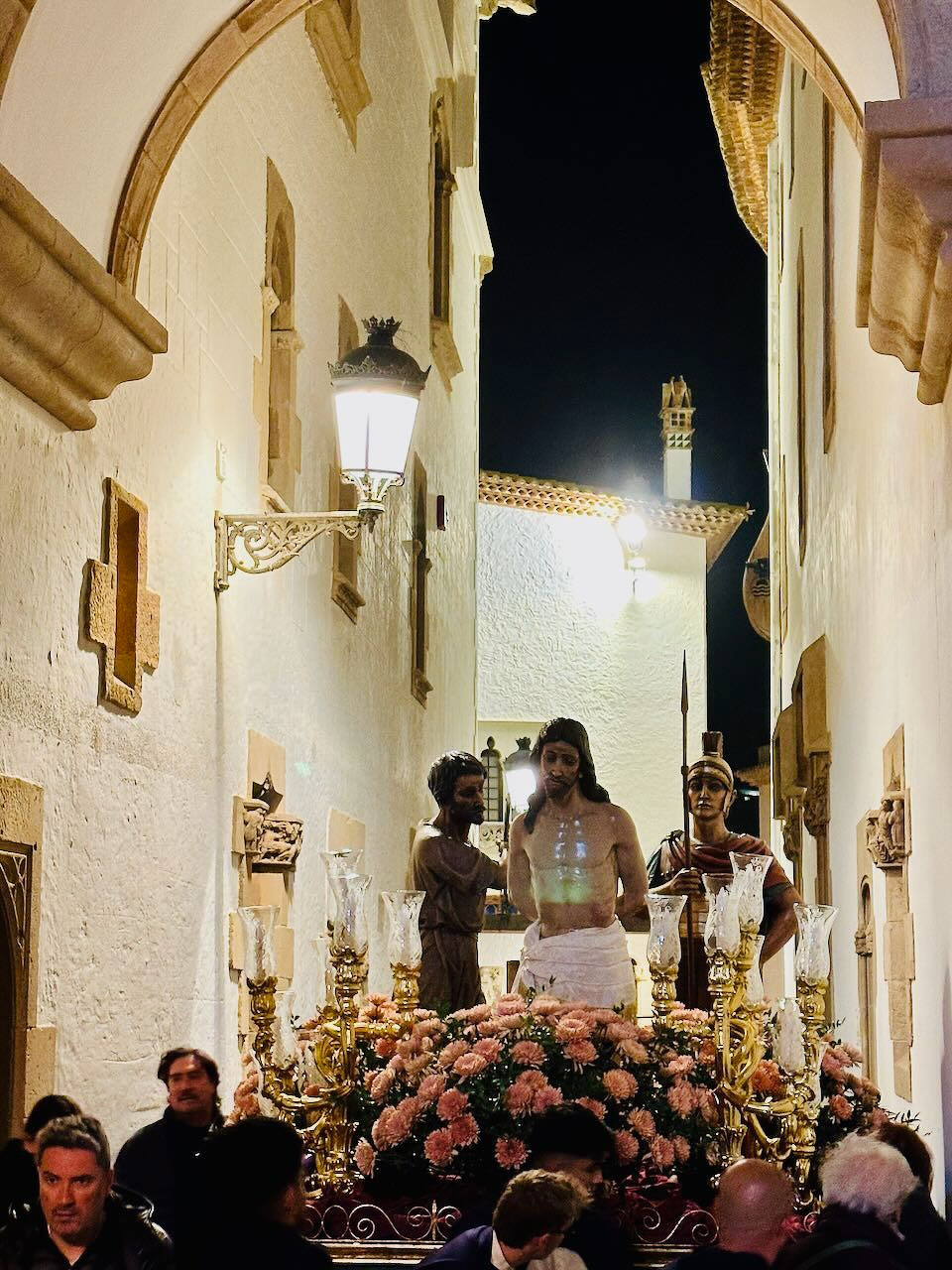
The Confraries, or religious brotherhoods, appeared in long, sombre robes, carrying tall candles that provided much of the procession’s illumination. Most striking were the nazarenos, their faces hidden beneath tall, conical hoods. In the flickering candlelight, they seemed almost timeless, connecting the modern town around us with traditions that have endured across generations. Behind them came the Pasos — elaborate religious floats carrying dramatic sculptures representing scenes from the Passion of Christ.
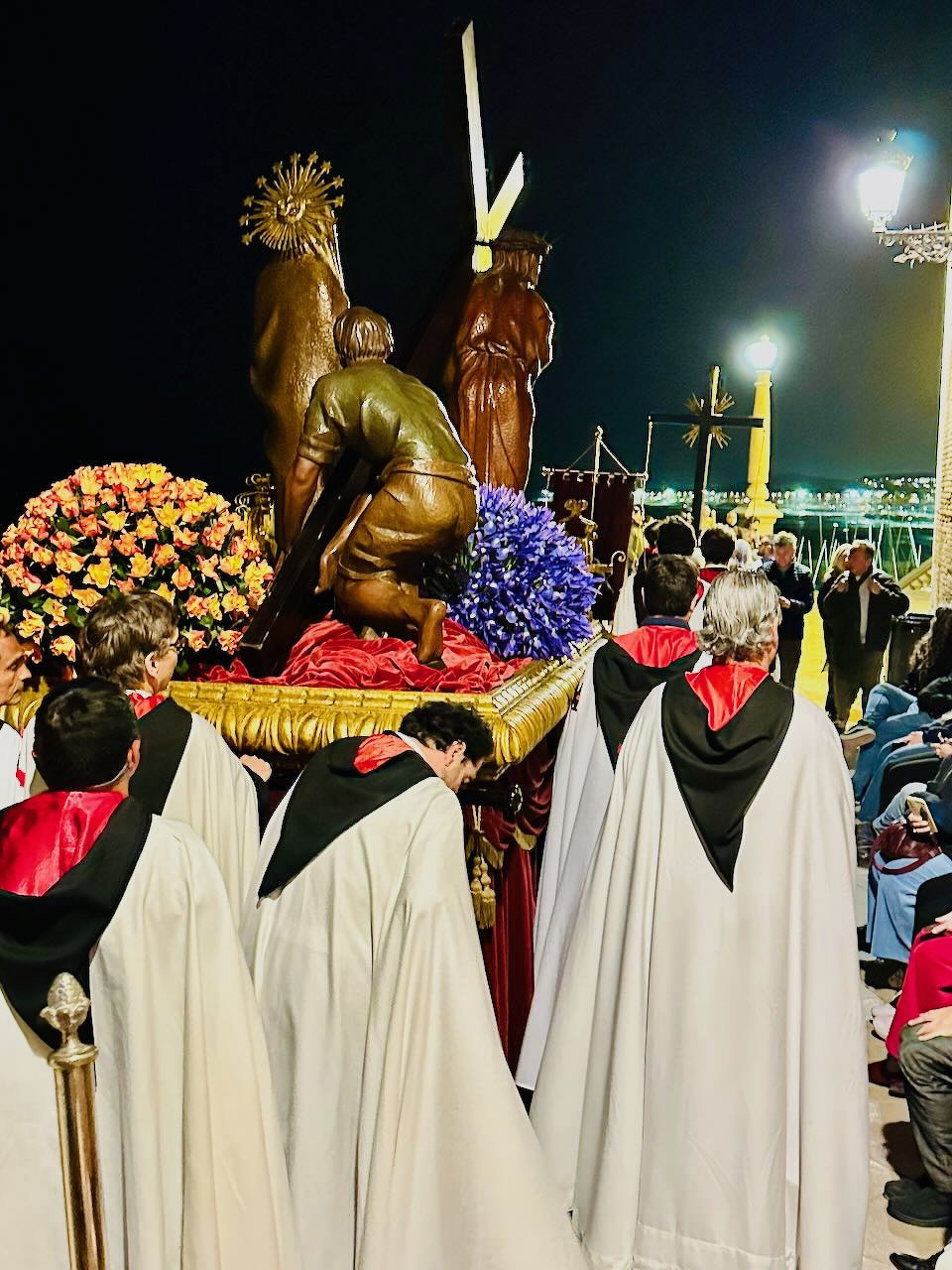
Watching the Pasos being carried through Sitges was an experience in itself. These enormous works of religious art require teams of costaleros to carry them through streets that can become remarkably narrow and difficult to navigate. Their movements were slow, controlled and perfectly coordinated. As they passed beneath balconies and around tight corners, the statues seemed to sway gently above the crowd, creating an almost surreal impression that they were floating through the darkness.
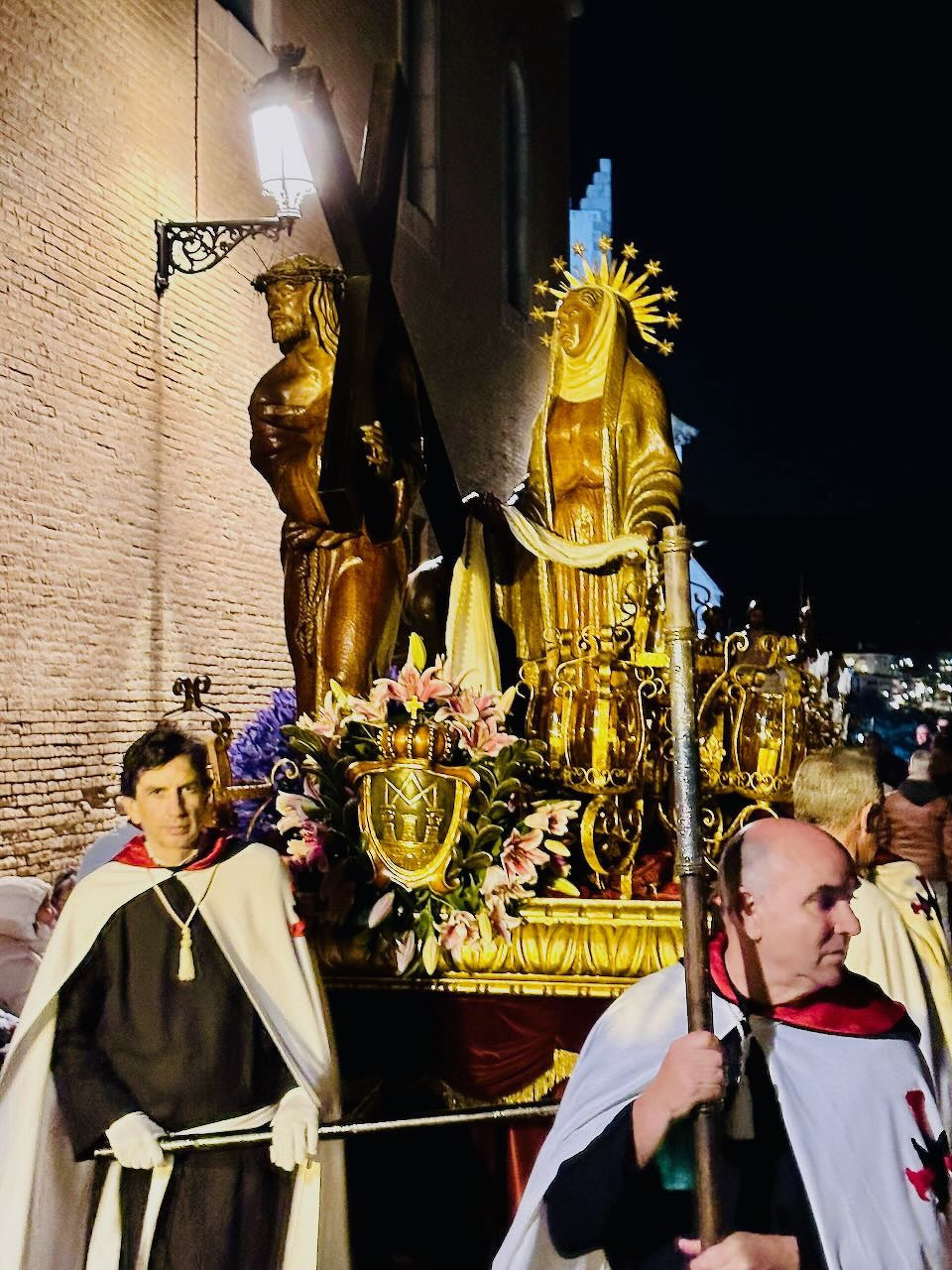
The most powerful moment for me came in the Plaça del Cap de la Vila, the historic heart of Sitges. The streets funnel into this busy square, creating a natural stage for the procession. As the first float entered, something remarkable happened: thousands of people became almost completely silent. I could hear the rhythmic movement of feet, the occasional scrape of a staff against the pavement and the soft crackle of candle wax. For a moment, the entire square seemed suspended in time.
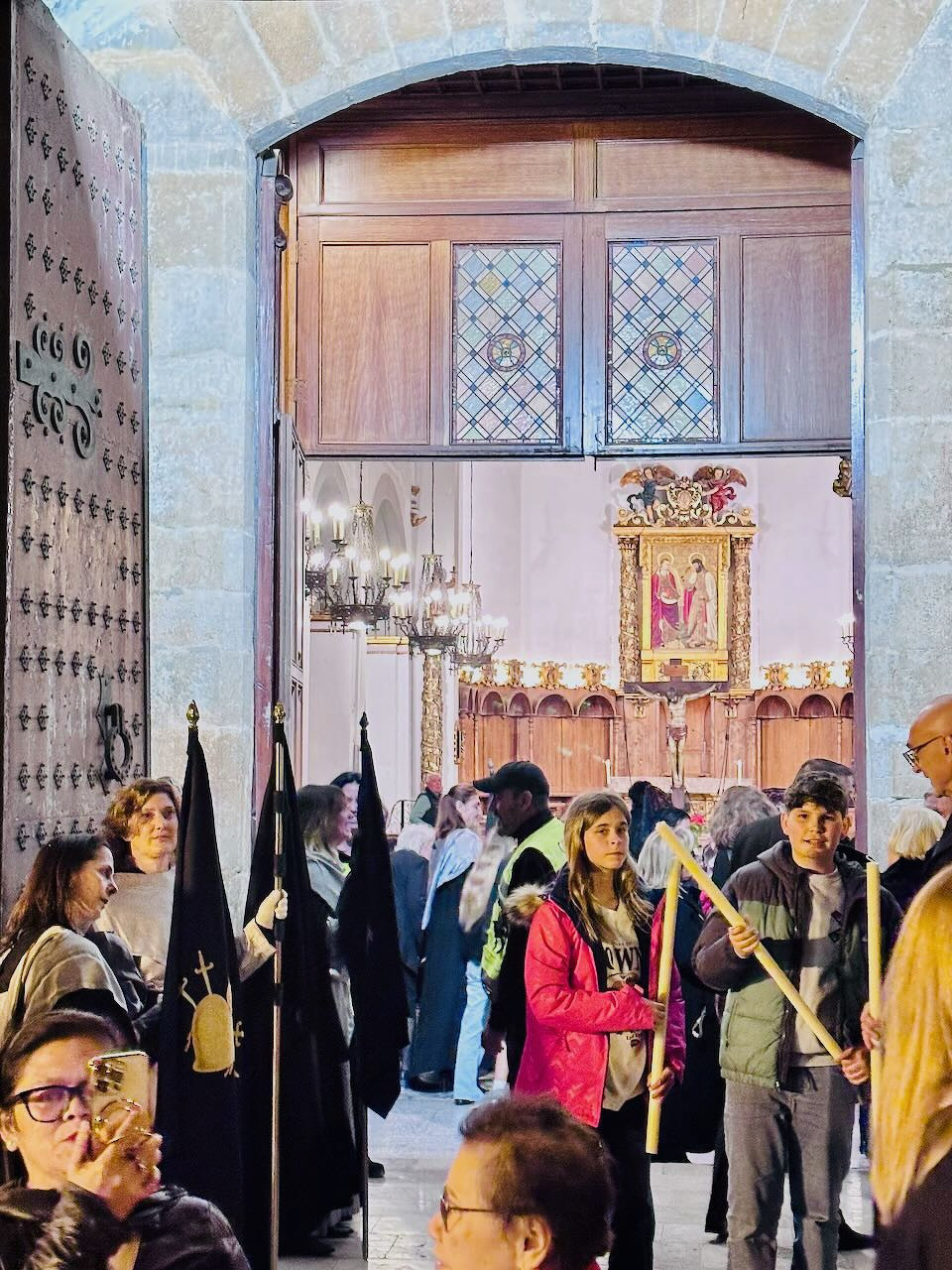
Coming from my experience of Spain’s more exuberant Holy Week traditions, particularly the famous processions of Andalucía, I found the Catalan approach especially striking. Here, the silence wasn’t simply what happened when the music stopped. The silence was the message. It created an atmosphere of mourning, reflection and collective remembrance, drawing everyone together — the participants, local residents and visitors like myself — without needing words.
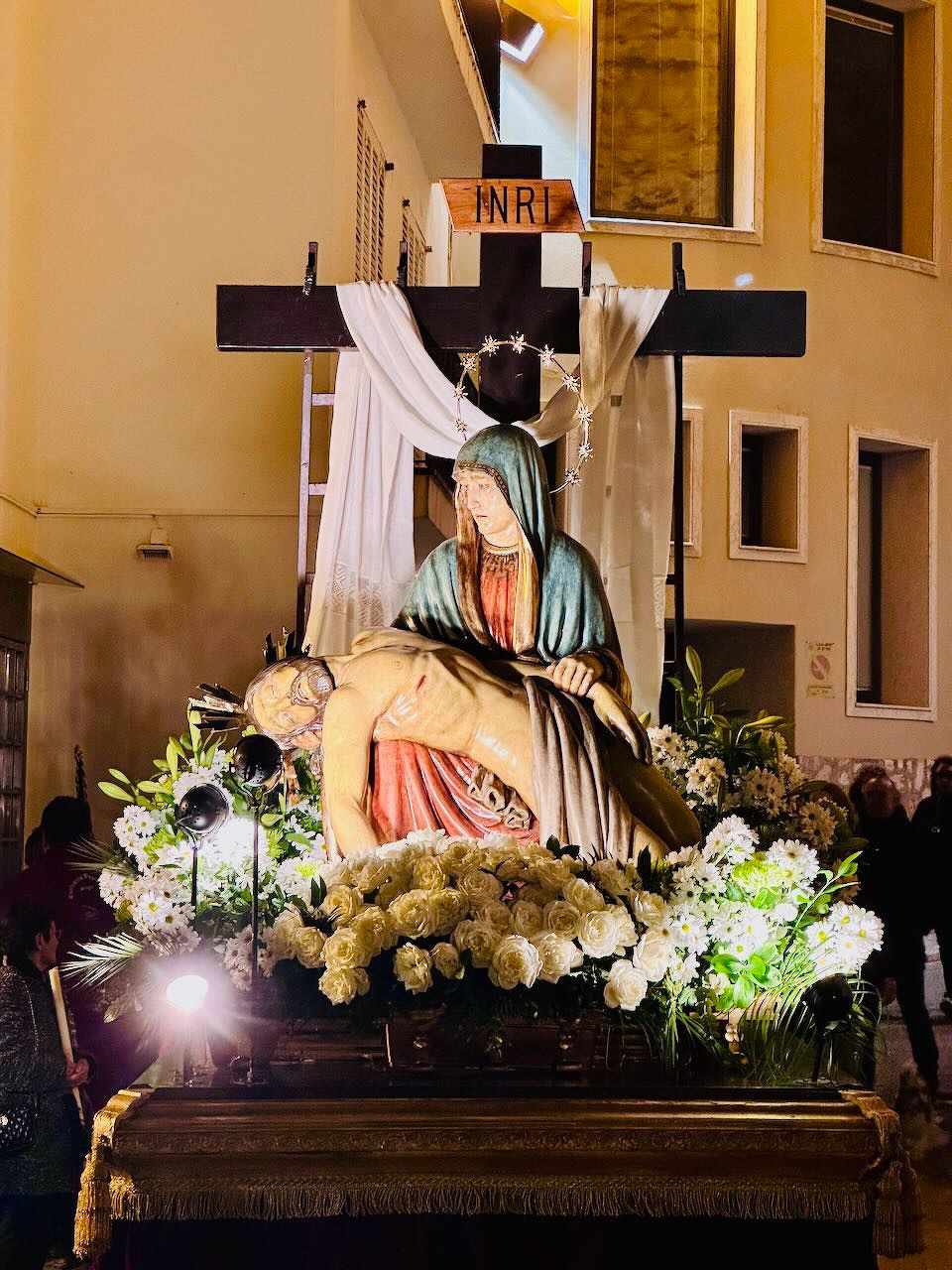
As a photographer, I found myself almost instinctively slowing down. The darkness demanded restraint. There was no bright spectacle to capture, only fragments of light: a hooded figure emerging from shadow, candle flames reflected against ancient stone, the intricate details of a Paso passing just feet away. I managed to capture a few images, but photography felt secondary to simply standing there and experiencing the procession. Some moments are better remembered through atmosphere than through a camera.
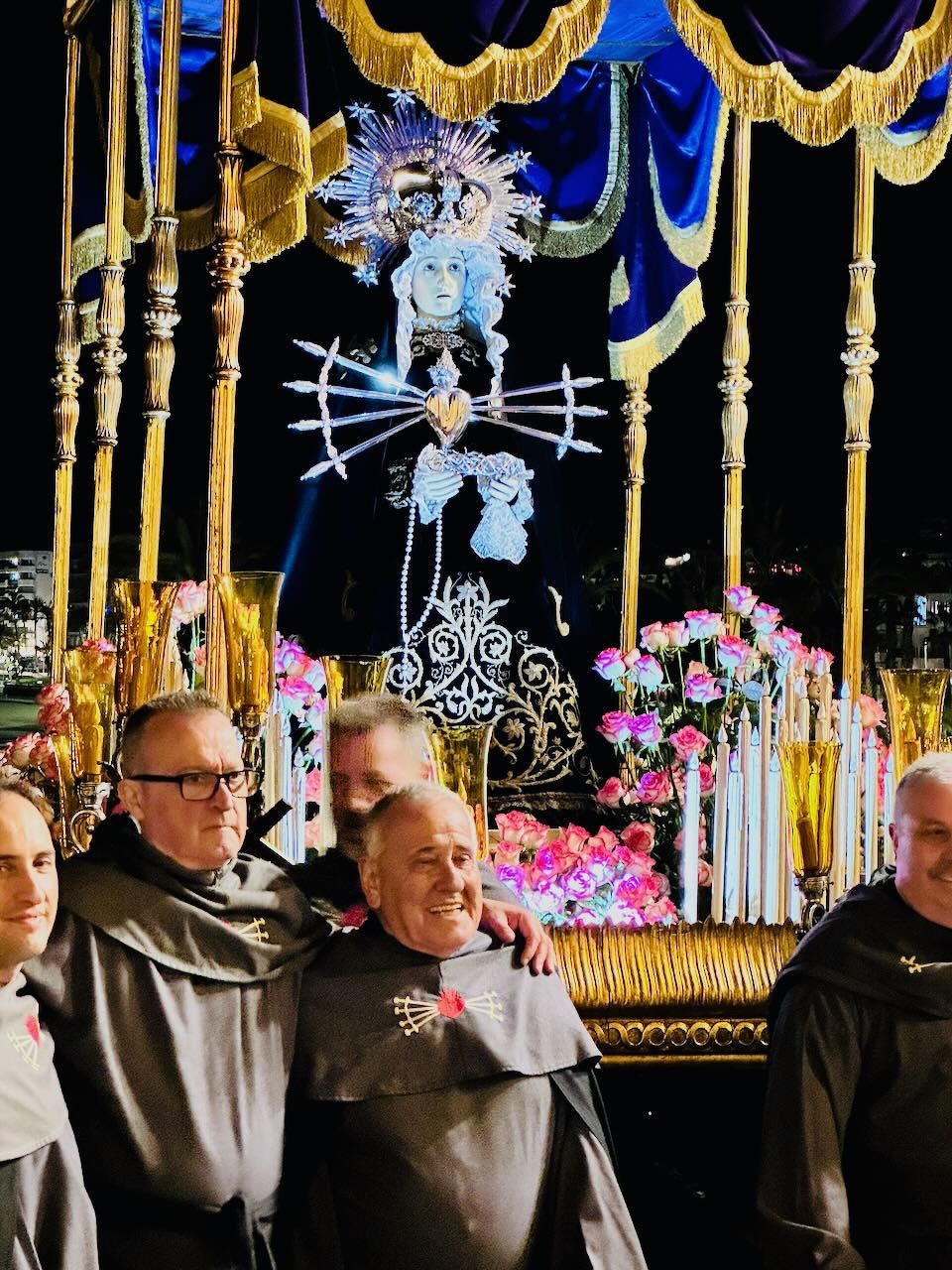
Eventually, the procession made its way back toward the Plaça de l’Ajuntament, beside the elegant town hall and only steps from the parish church. The floats gathered in the square, the drum fell silent, and the hundreds of participants stood together beneath the candlelight. A final prayer was offered, and gradually the extraordinary stillness began to dissolve. After hours of solemn silence, the town seemed to take one enormous collective breath.
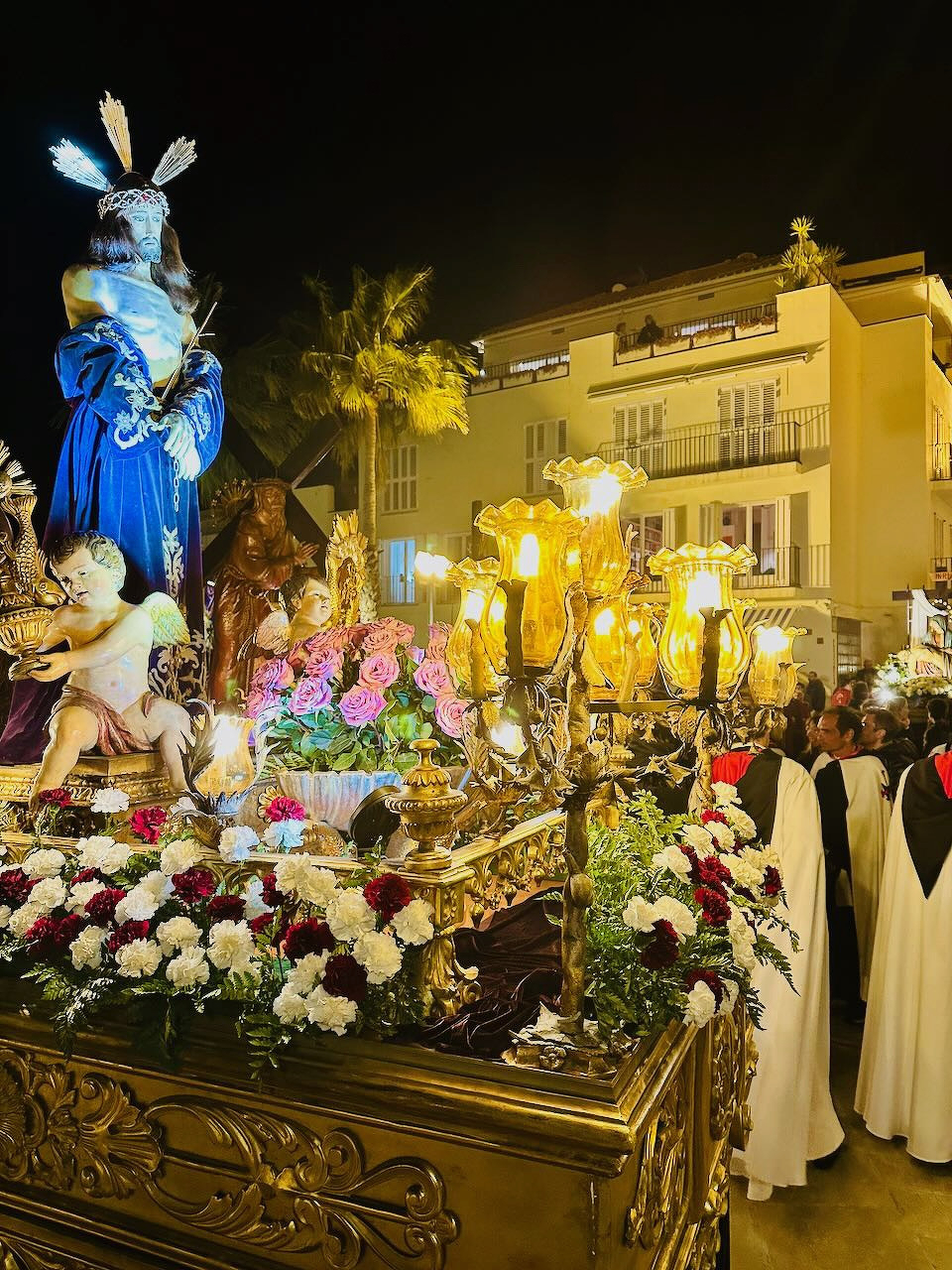
Walking away through the old streets of Sitges that night, I kept thinking about how different the town had felt just a few hours earlier. The beaches, bars and colourful streets were still there, but I had seen another side of Sitges — one shaped by faith, history, community and tradition. The Processó del Silenci reminded me that sometimes the most powerful experiences don’t need spectacle or noise. Sometimes the loudest message is the one delivered in complete silence.
#Photograpghy #Photos #Blog #Sitges #SitgesCatalunya #ProcessoDelSilenci #GoodFriday #HolyWeek #SemanaSanta #Catalonia #Catalunya #SitgesOldTown #SantBartomeuISantaTecla #EasterInSpain #CatalanTraditions #SpanishTraditions #ReligiousProcession #TravelPhotography #TravelEssay #TravelBlog #VisitSitges #BarcelonaDayTrips