
Osaka's Electric Heart: A Visual Travel Essay on Dotonbori, Neon Streets, and Kuidaore
From Neon Glare to Sizzling Takoyaki: Explore the sensory overload of Osaka's vibrant street scenes and the dazzling, reflection-filled Dotonbori Canal at night.

There are cities you visit, and then there are cities you feel. Osaka, the undisputed culinary capital of Japan, falls squarely into the latter category. It is a city that does not wait for you to approach; it rushes forward, embraces you in a whirlwind of savoury steam and neon light, and demands that you wander. To simply observe Osaka is impossible; the city insists on total immersion, pulling the traveller through its dense, dynamic street scenes that pulse with an unmistakable, brazen energy.


My initial steps into the Minami district were immediately swallowed by the tide of movement. Beneath the immense, covered arcades and along the bustling surface streets, the visual spectacle is overwhelming. Walls are plastered in vibrant, blocky kanji signage, competing loudly for attention, while the air is thick with the scent of sizzling sauces and burning oil. This is where the city’s famous culinary soul, kuidaore—to eat oneself to ruin—becomes a tangible force. The visuals supporting this segment are the bustling, shoulder-to-shoulder crowds, the careful art of the takoyaki vendor turning balls of batter on a hot plate, and the sheer density of human activity—a true portrait of modern urban chaos harnessed into dazzling efficiency.


Yet, true wandering involves discovering the pauses between the roars. A few steps off the main drag, the volume drops, and the visual mood shifts dramatically. Here, in the narrow, stone-paved alleyways—the atmospheric yokocho—the lighting softens to the warm glow of paper lanterns, reflecting off the damp cobblestones. Even near the cacophony of Namba, these quiet pockets offer a temporary sanctuary. It is in these spaces that the lens captures not the speed of the city, but its texture: the moss-covered lanterns of a tiny, ancient temple or the steam curling from the sliding door of a hidden izakaya. This dual nature—the frantic rush alongside the serene retreat—is essential to understanding the rhythm of Osaka.


But the city reserves its grandest visual performance for the Dotonbori Canal at night. As dusk falls, the scene transforms into a chrome-and-electric stage. The focal point of the visuals here is undeniably the canal’s edge, a vertical explosion of light that plunges into the dark water. The legendary Glico Running Man, arms raised in triumph, dominates one bank, while on the other, colossal, animated fixtures—the massive, scuttling crab, the glowering pufferfish, the dragon’s head—jut out over the crowds. The reflection of these brilliant, eccentric signs on the black surface of the Dotonbori Canal provides the crucial visual depth, doubling the spectacle and creating an electric mirror of Osaka’s irrepressible spirit. This is the moment where the city truly shines, a glittering testament to its love of performance, food, and life lived in high definition.


To wander Osaka is to follow the promise of light and flavour, tracing a path from the overwhelming neon spectacle to the quiet dignity of a lantern-lit alley. The visual memories are not static; they are the vibrant blur of a thousand faces, the glossy sheen on the canal water, and the audacious glow of a mechanical crab presiding over the ultimate street party. This city is a moving picture, and I was thrilled to be swept along in its current.

Thanks for reading… until next time! Happy travels.
Share
Thanks for reading TravelEssayist.com! This post is public, so feel free to share it.
#Osaka #Japan #Dotonbori #Minami #StreetPhotography #TravelJapan #TravelEssay #TravelPhotography #Kuidaore
Tovallons d'Art: Sitges Exhibition Fuses Catalan Food & Art
A review of the ‘Art Napkins’ exhibition at Mercat Vell, Sitges. Explore how artists transform humble napkins into powerful visual metaphors for gastronomy, memory, and regional identity.

The “Tovallons d’Art” (Art Napkins) exhibition, recently encountered at the atmospheric Mercat Vell in Sitges, offers more than just a collection of art; it presents a profound meditation on the connection between gastronomy, creativity, and regional identity. The experience of seeing the work firsthand proved to be an illuminating journey into the project’s core philosophy: that the simple act of eating is a fundamental cultural expression, rich with history and emotion.


The exhibition begins with a compelling premise, framing cuisine not merely as sustenance but as a vibrant language capable of expressing identity, transmitting knowledge, and weaving essential social ties. This idea echoes the popular wisdom cited by the project: that “cuisine is a country and its landscape placed in a casserole.” This concept provides the intellectual groundwork for the show, positioning the food we consume as a direct narrative of the land from which it originates. By paying tribute to the act of cooking and creation, the exhibition elevates the humble dish to the level of poetry—a composition of colours, flavours, and diversity that demands listening and respect.


Central to this artistic endeavour is the transformation of the restaurant napkin, an object typically fleeting and disposable, into a symbol of lasting dialogue. As the documentation describes, the napkin begins as a “humble element” but, in the hands of a contemporary artist, becomes a canvas. These pieces, originating from participating restaurants across the Catalan regions, carry the essence of their locale. Each artwork is a synthesis, capturing the specific culinary gestures, local raw materials (the materia), and the spirit of the territory, transforming them into a visual metaphor. The result is a vibrant “constellation of works” where the landscape connects directly with the table.


Stepping through the Mercat Vell and examining the individual pieces provided a powerful confirmation of the exhibition’s philosophical depth. The artistic interventions—ranging from abstract compositions to figurative depictions—demonstrate how the fleeting nature of cuisine can be captured and contemplated. The works bring to life the idea that cuisine is a form of “fleeting art,” like a painting on a “cloth of vapour and flavour.” This artistic capture aligns perfectly with the wisdom of the philosopher of taste, Brillat-Savarin: “Tell me what you eat and I will tell you who you are.” The napkins, therefore, become portraits, revealing the identity of both the region and the artist who interpreted it.


Ultimately, the visit to “Tovallons d’Art” was a deeply resonant experience, showcasing the power of art to elevate the everyday. It successfully bridges the gap between the senses—taste, sight, and touch—in a way that honours both innovation and tradition. The exhibition’s final sentiment, that “cooking, creating, is an act of love,” serves as a fitting conclusion, positioning the entire endeavour as a warm, creative celebration of memory and taste. It stands as a powerful reminder that our cultural landscape is reflected not just in grand monuments, but in the most unassuming objects that sit right beside our plate.
#TovallonsDArt #Sitges #MercatVell #Gastronomia #ArteContemporaneo #Catalunya #CulturaCatalana #FoodAndArt #SpainTravel #TravelPhotography
The Immovable Center: A Visit to the Barcelona Conciliary Seminary
Seminari Conciliar de Barcelona: Elies Rogent’s Neo-Romanesque Masterpiece in the Eixample
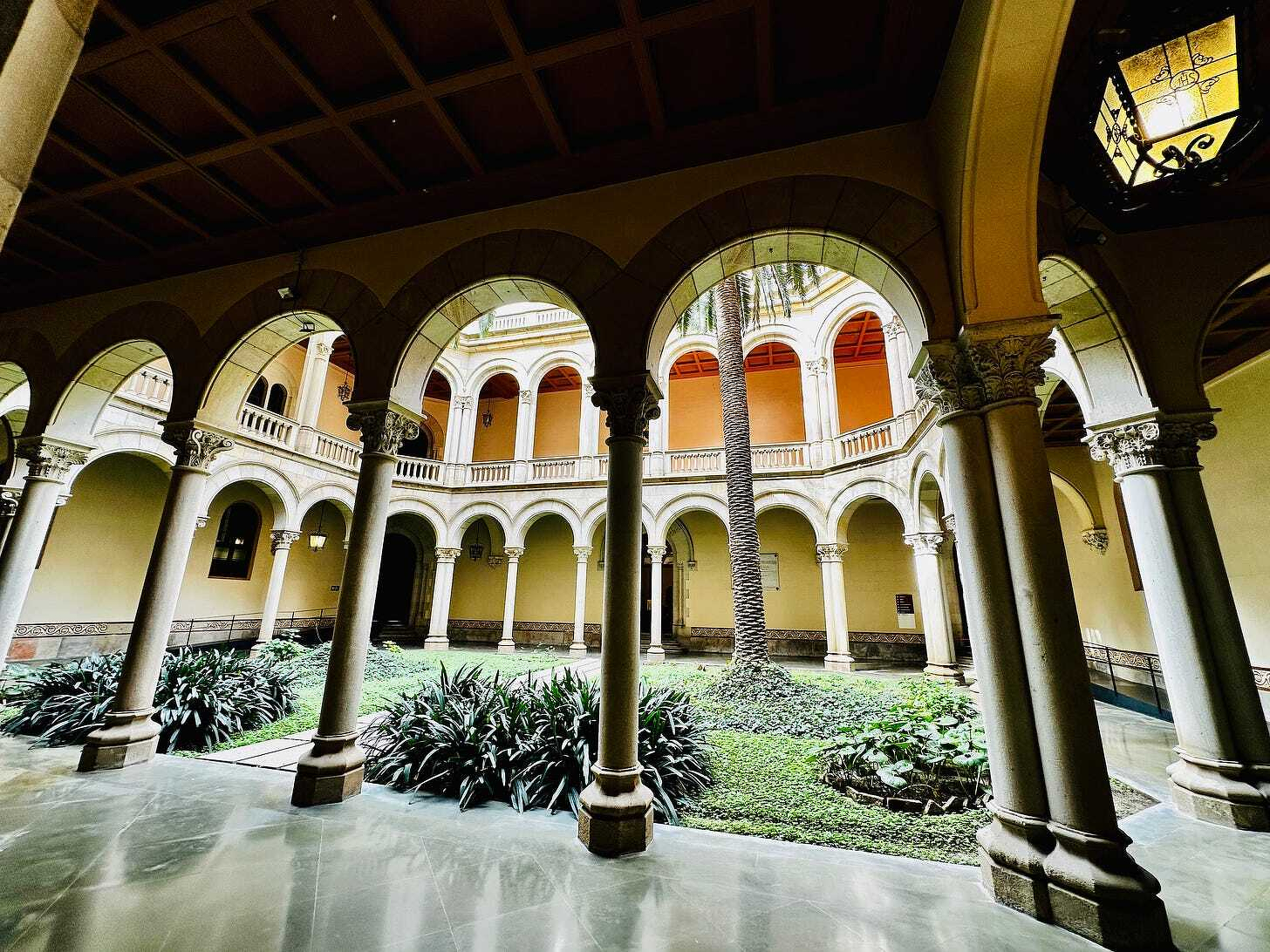
Stepping onto Carrer de la Diputació, one is immediately confronted by the solemn mass of the Barcelona Conciliary Seminary. Located centrally in the bustling Eixample, this building offers a stark contrast to the district’s usual perimeter-block housing. It is a work of scale, historical gravity, and intentional austerity—a physical manifestation of authority designed by the renowned architect Elies Rogent i Torra.
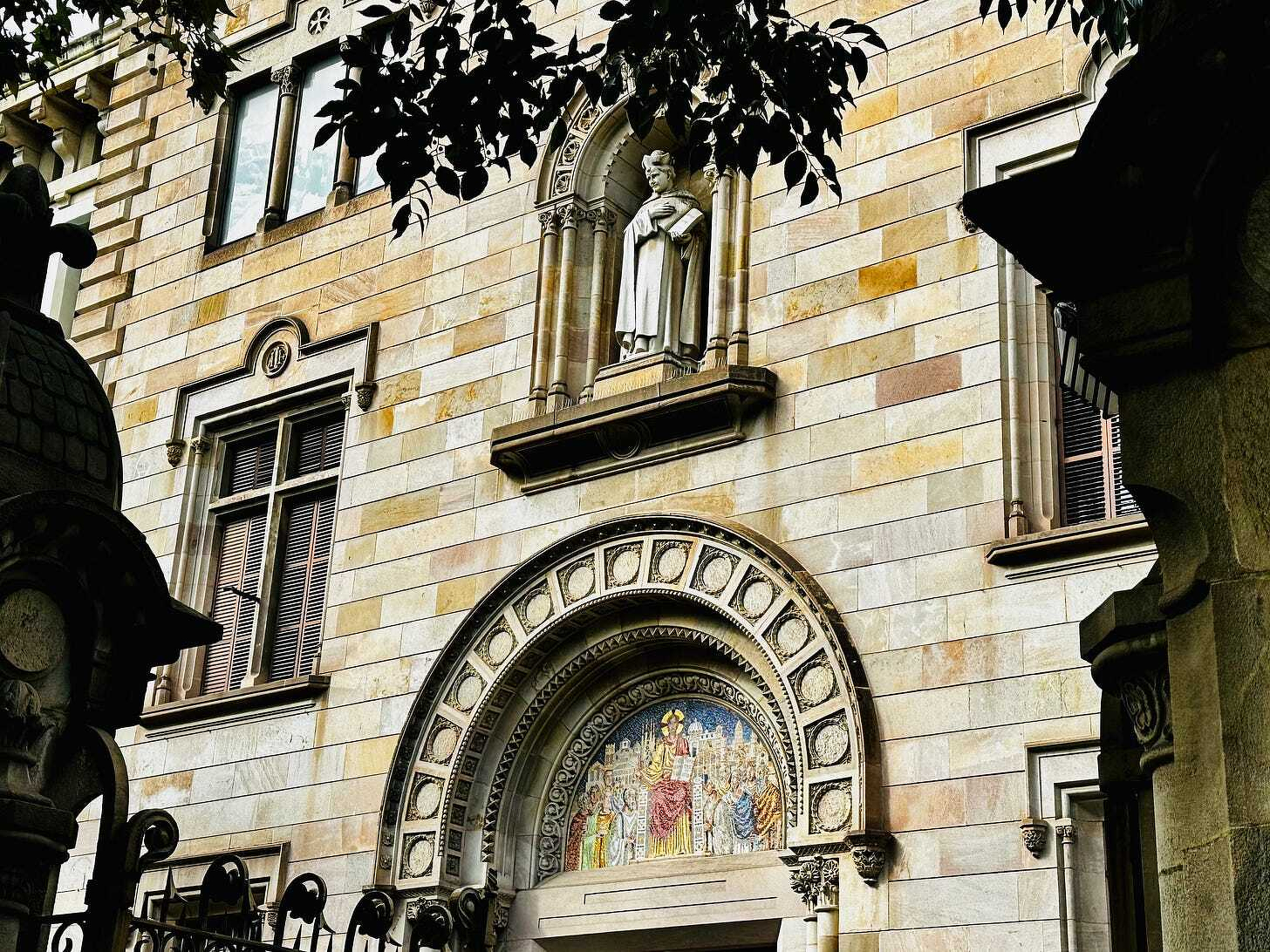
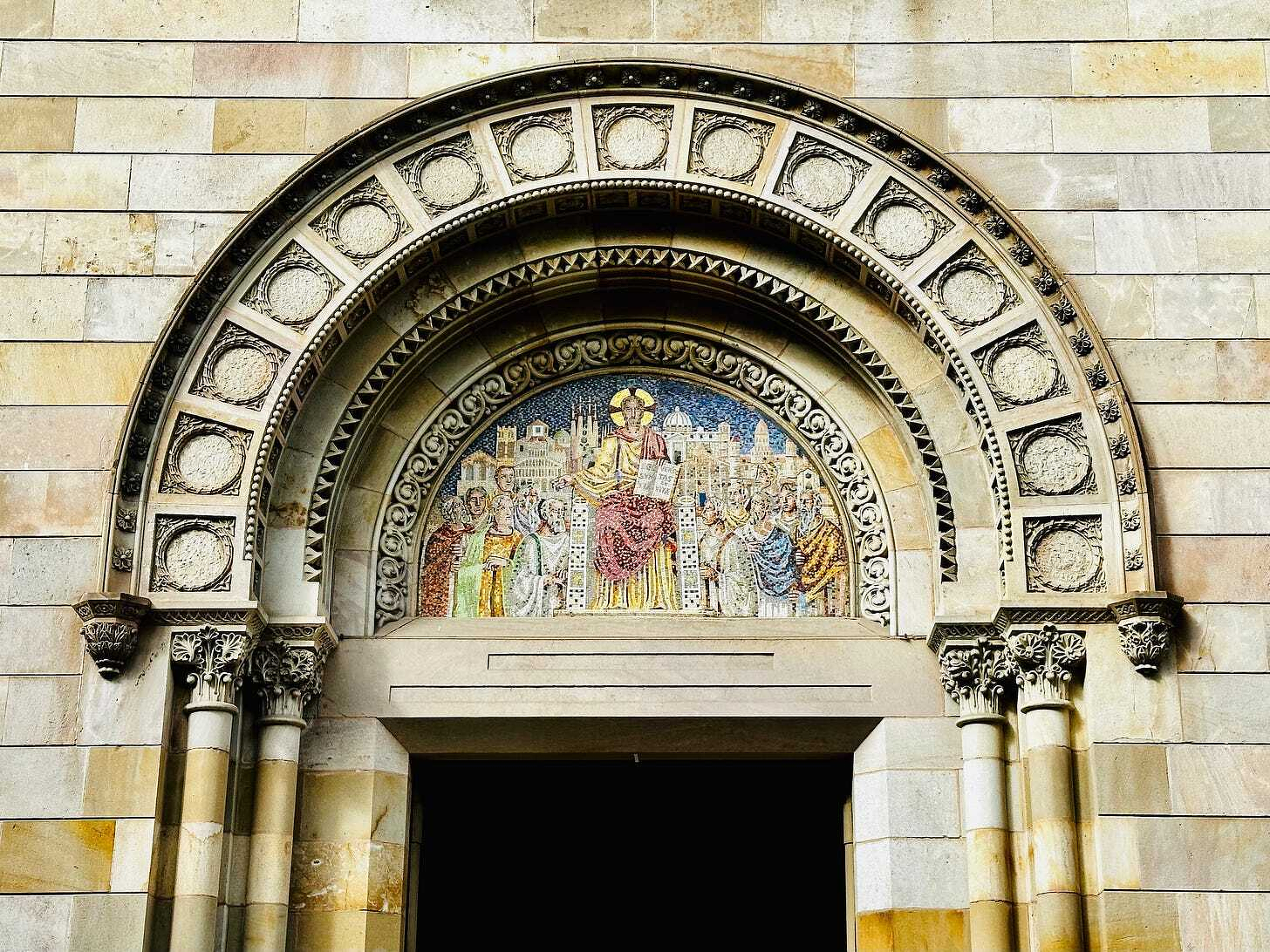
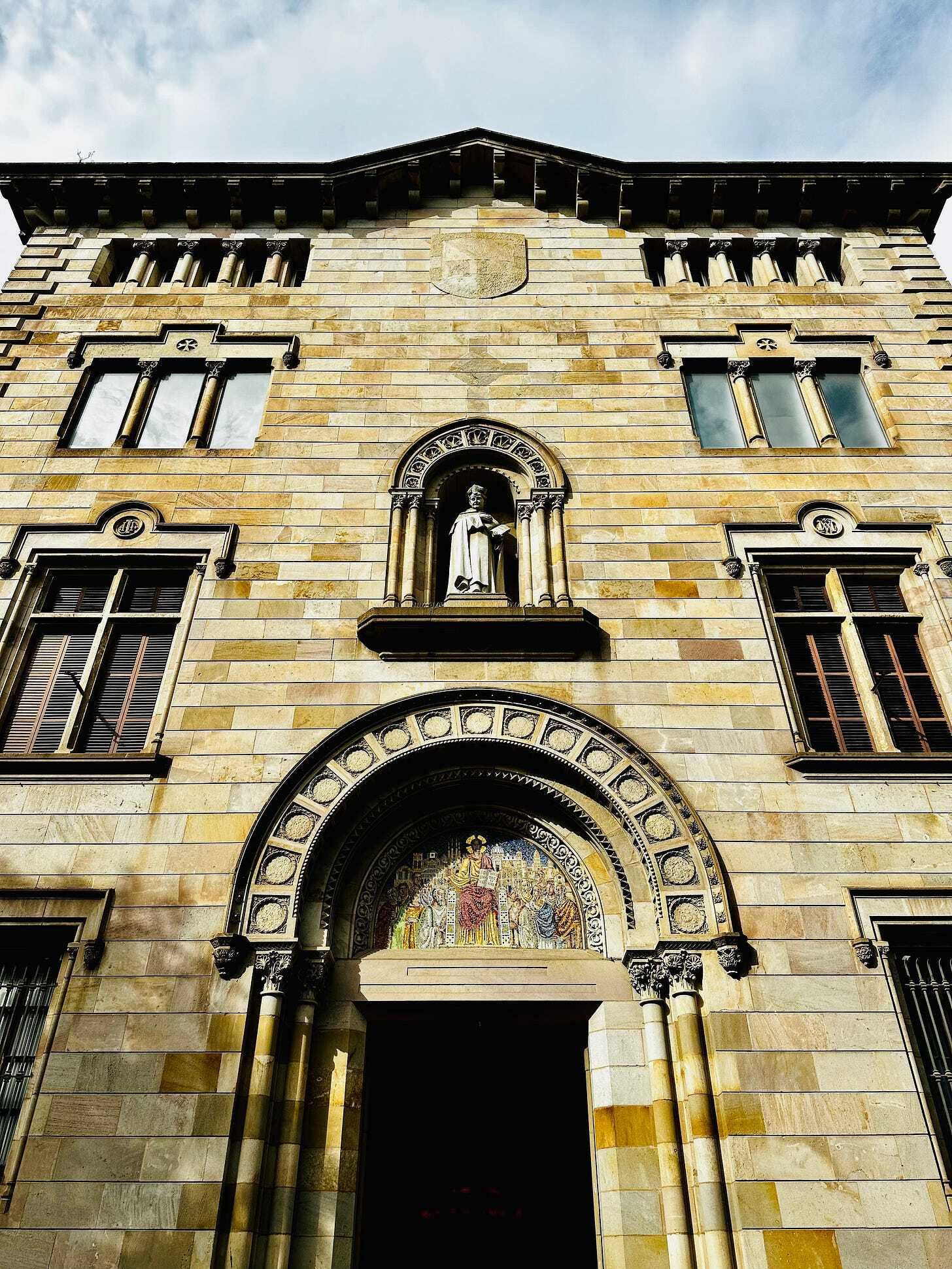
Elies Rogent (1821–1897) was a towering figure in Catalan architecture, bridging the classical tradition and the emerging Modernist sensibility. The design of the Seminary, executed around the same time as his other colossal project, the main building of the University of Barcelona, showcases his mastery of historical revivalism. The entire complex proudly follows the lines of medieval architecture, embracing the Neo-Romanesque style that was so fashionable at the time. This was a deliberate choice to evoke the solid, sacred sincerity of Catalonia’s early religious heritage, contrasting with the often perceived frivolity of contemporary urban trends.
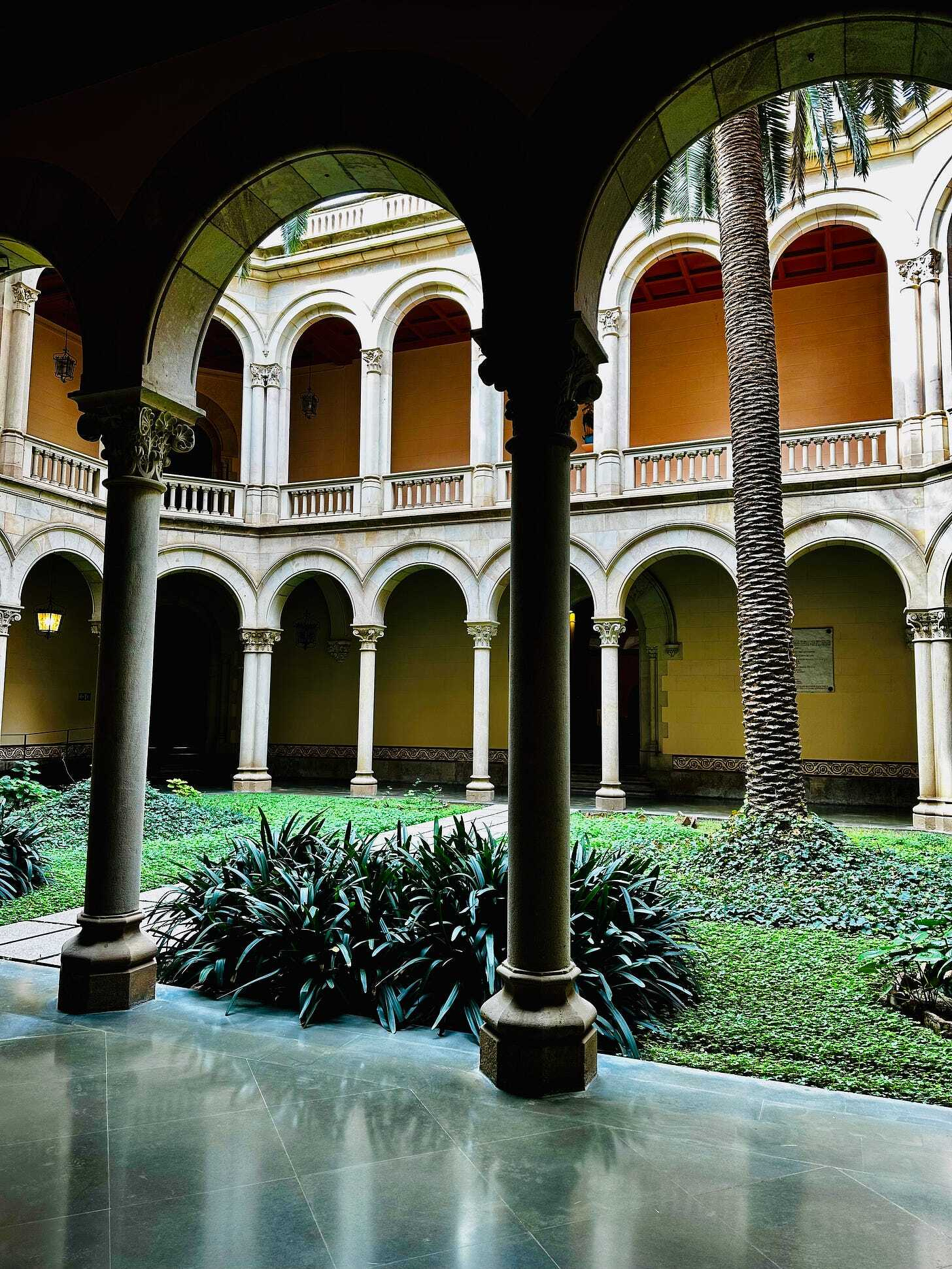
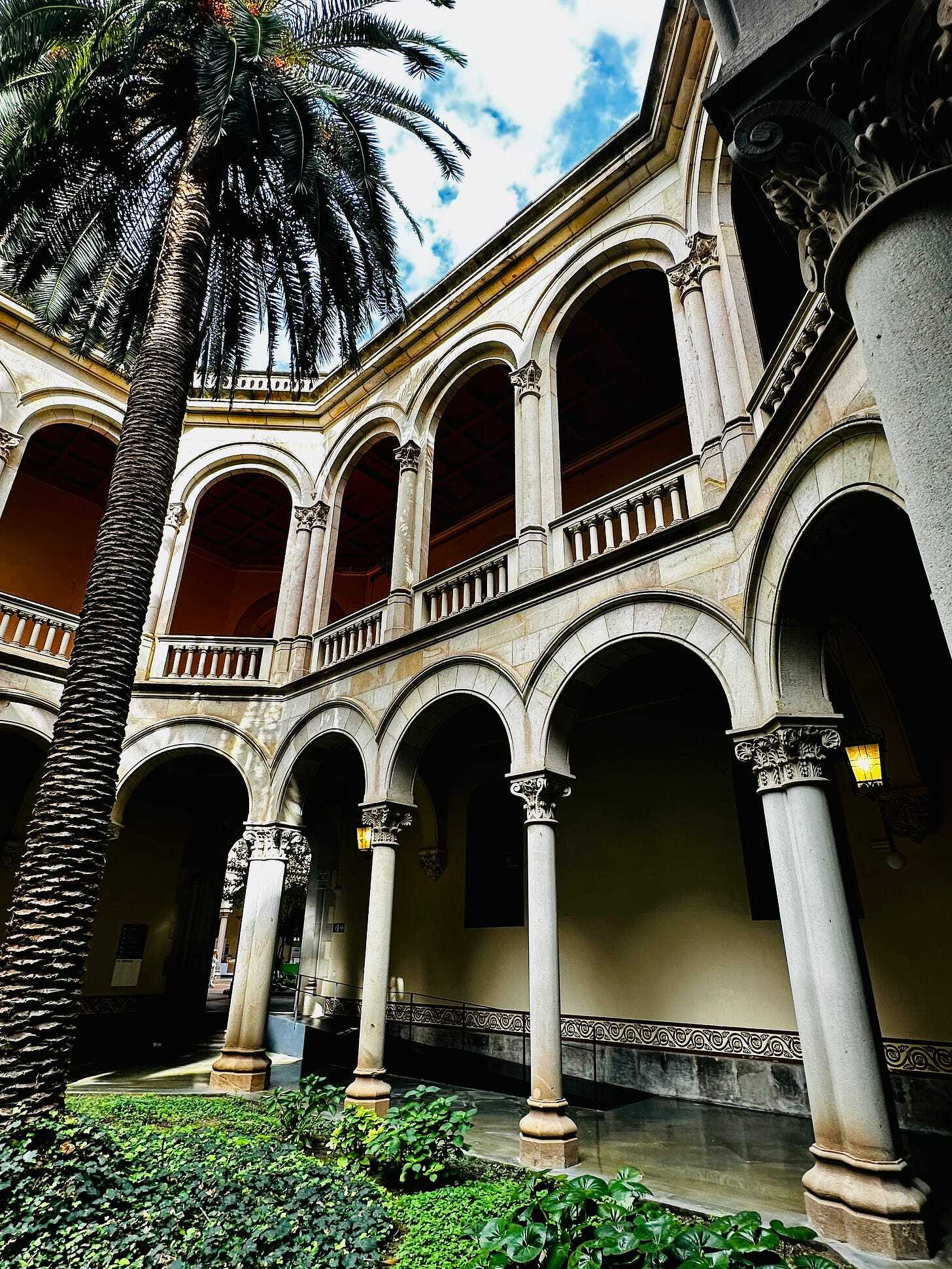
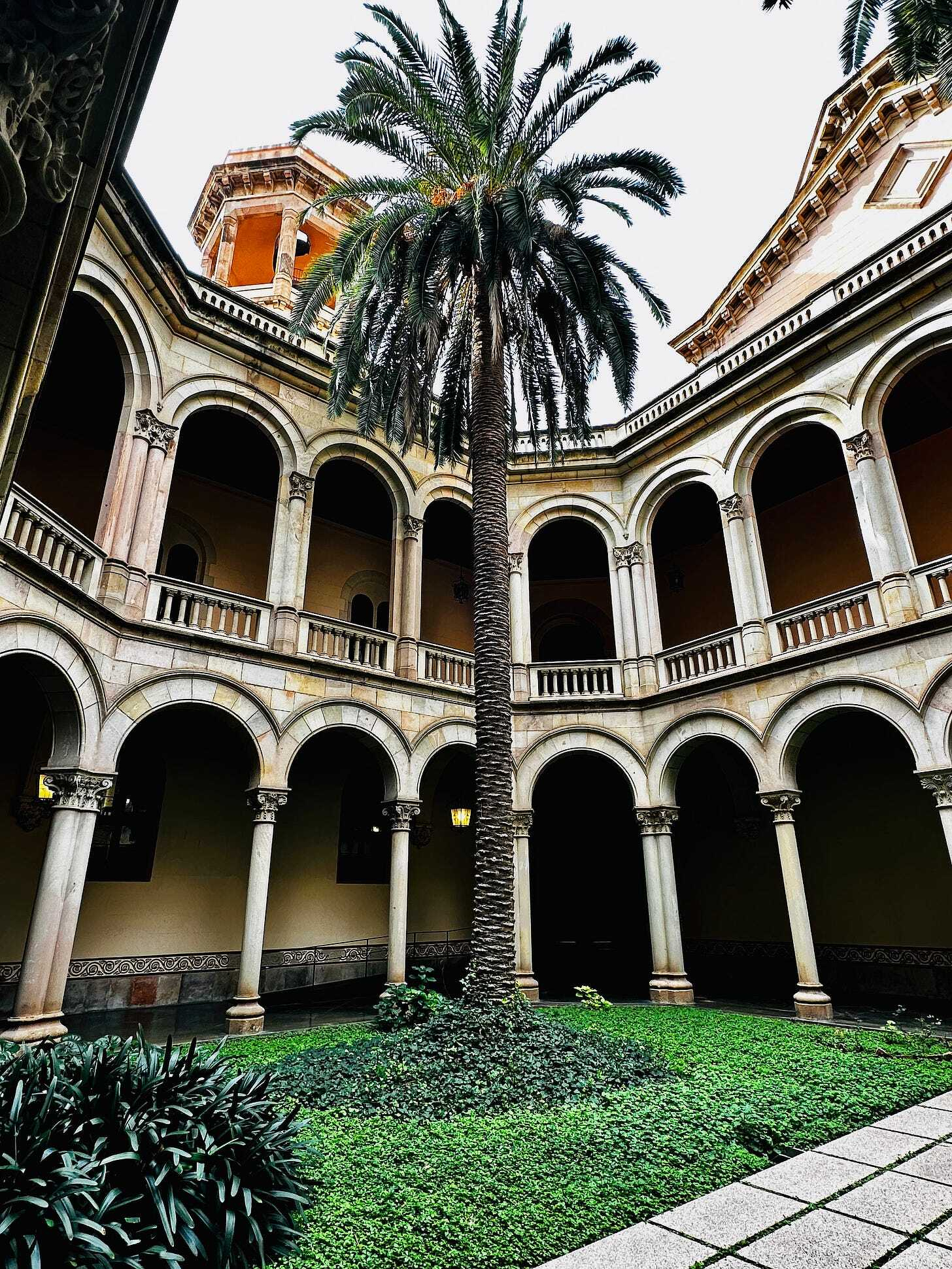
The Seminary’s urban placement is perhaps its most compelling and unique feature within the Eixample. Instead of adhering to Ildefons Cerdà’s standard model of filling the block’s perimeter, Rogent placed the massive complex squarely in the centre of the block. The entire composition is laid out in a distinct Greek cross plan (four equal arms), with the Cimborrio marking the composition's absolute centre.
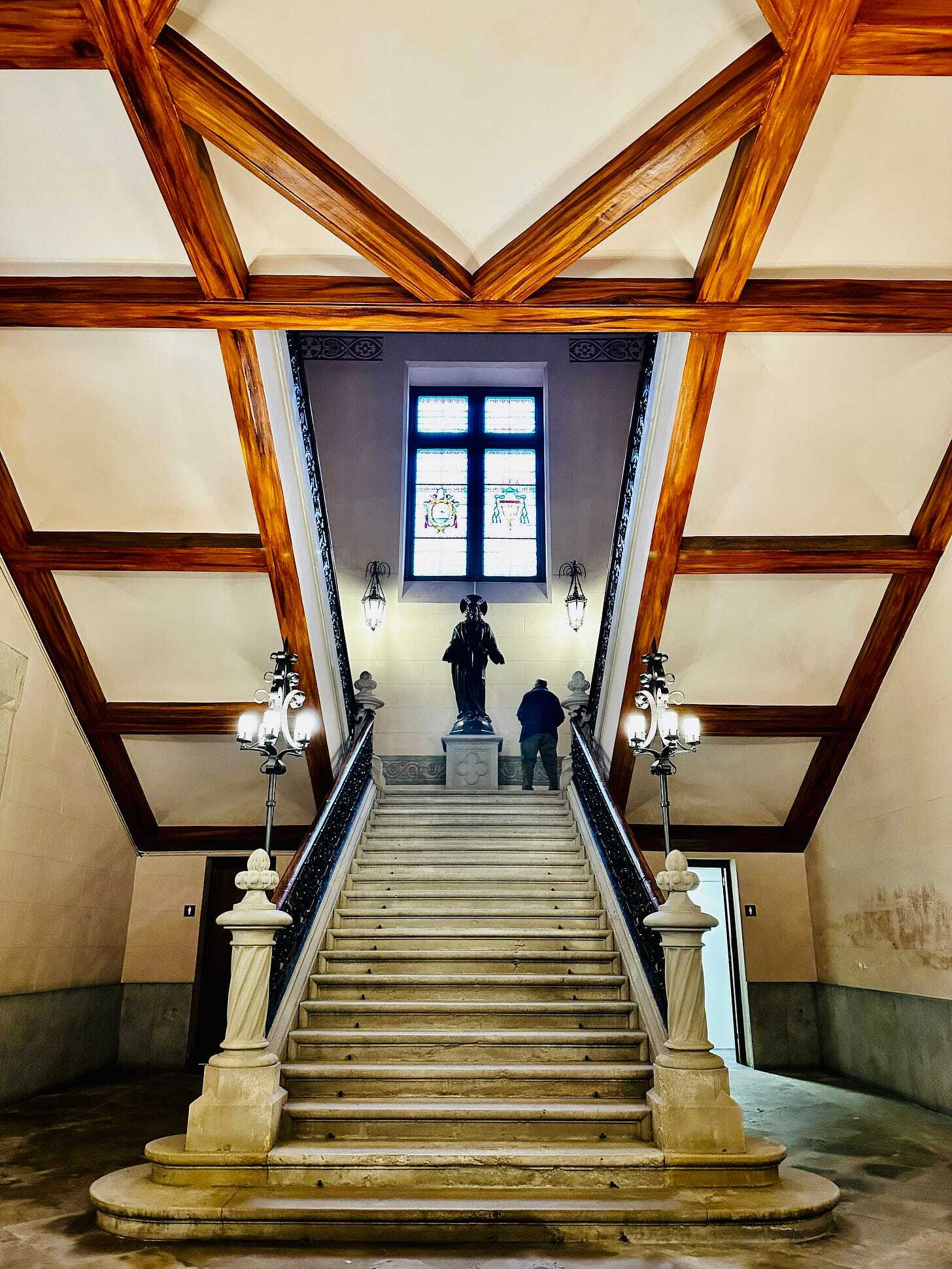
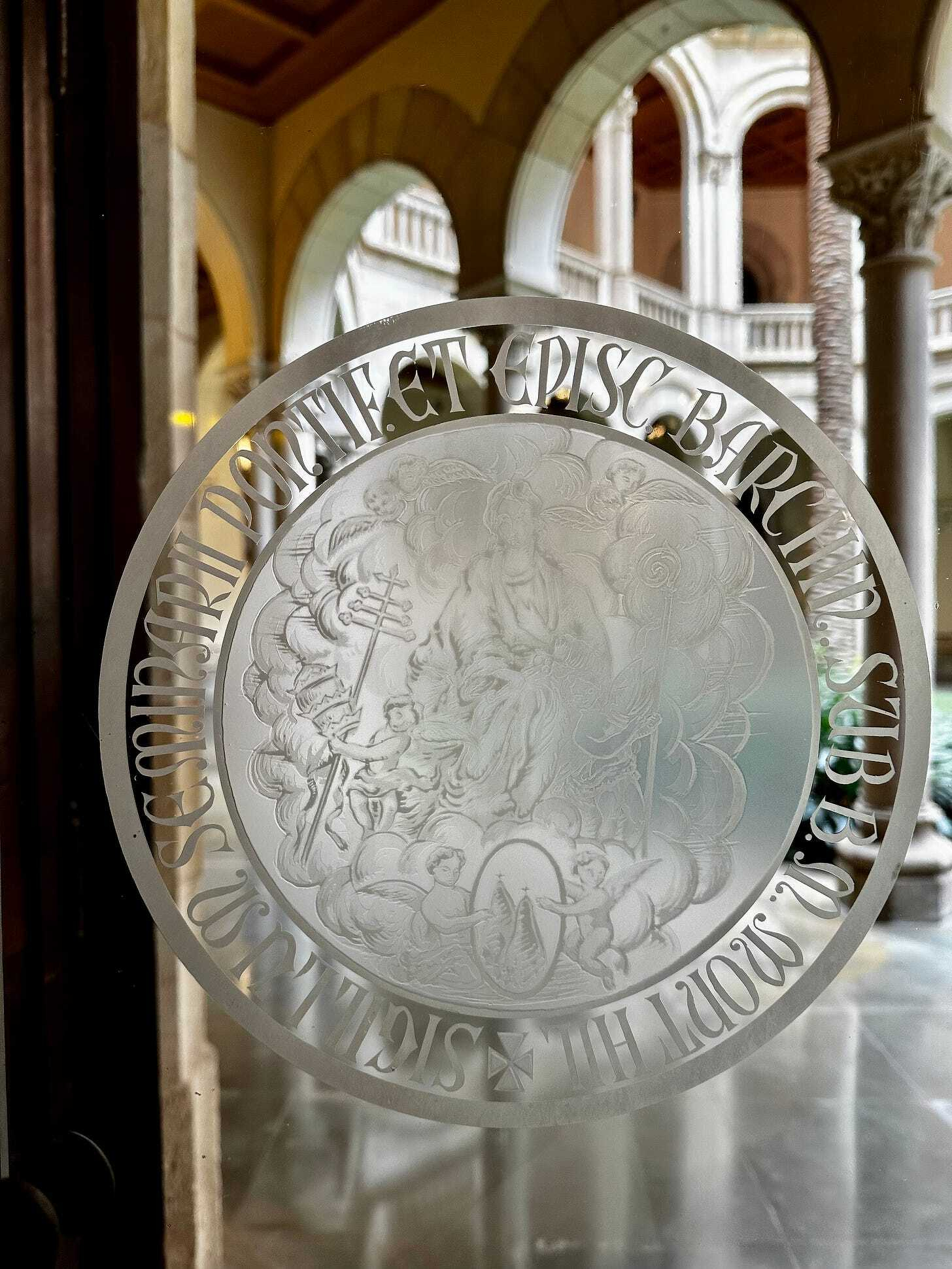
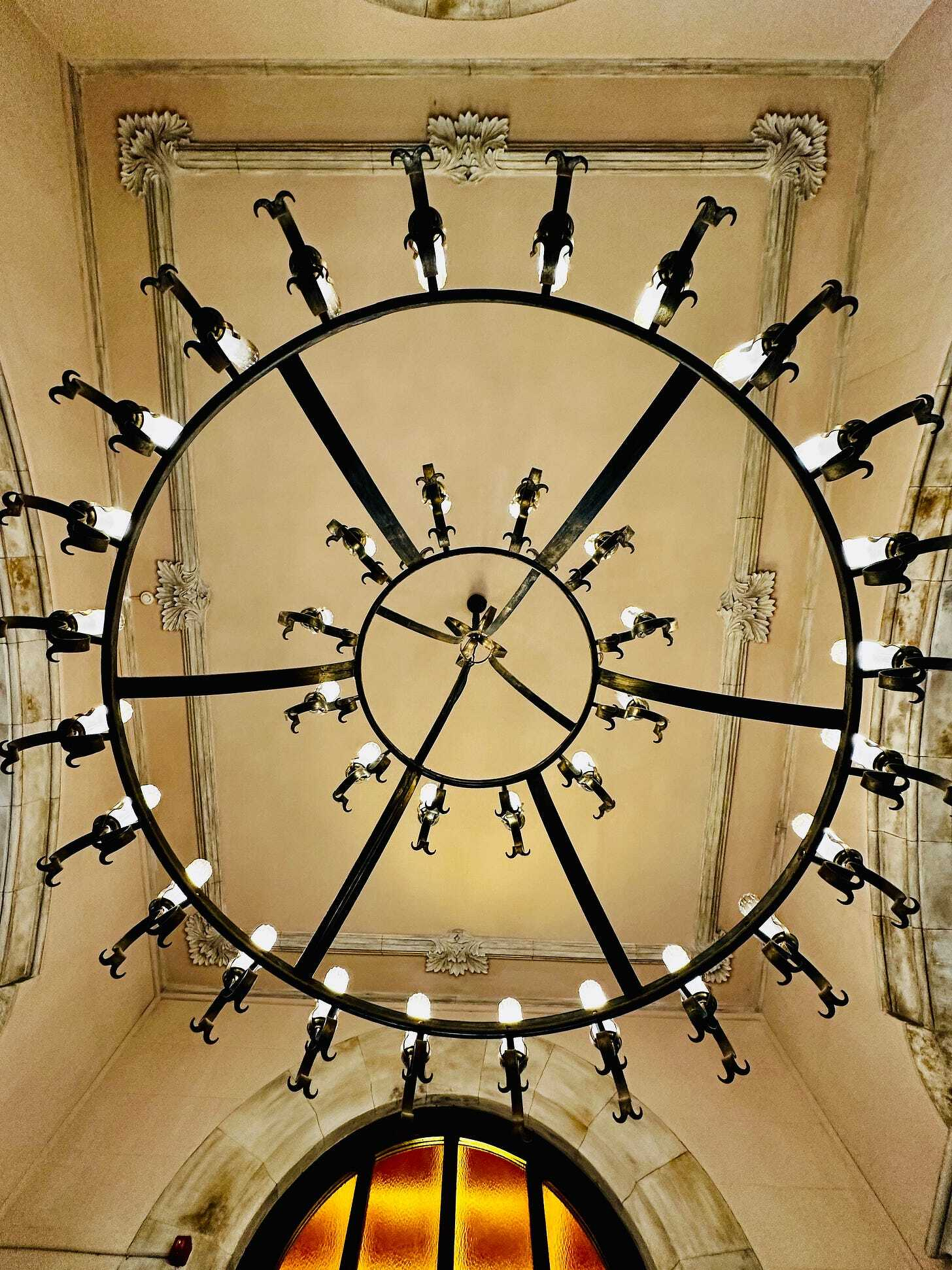
This strategic placement created four resultant empty building spaces in the block’s corners—spaces that were initially designated as gardens. This layout creates a semi-monastic internal environment, organised around courtyards, deliberately separating the spiritual world of the Seminary from the secular clamour of the city, much like a medieval cloister.
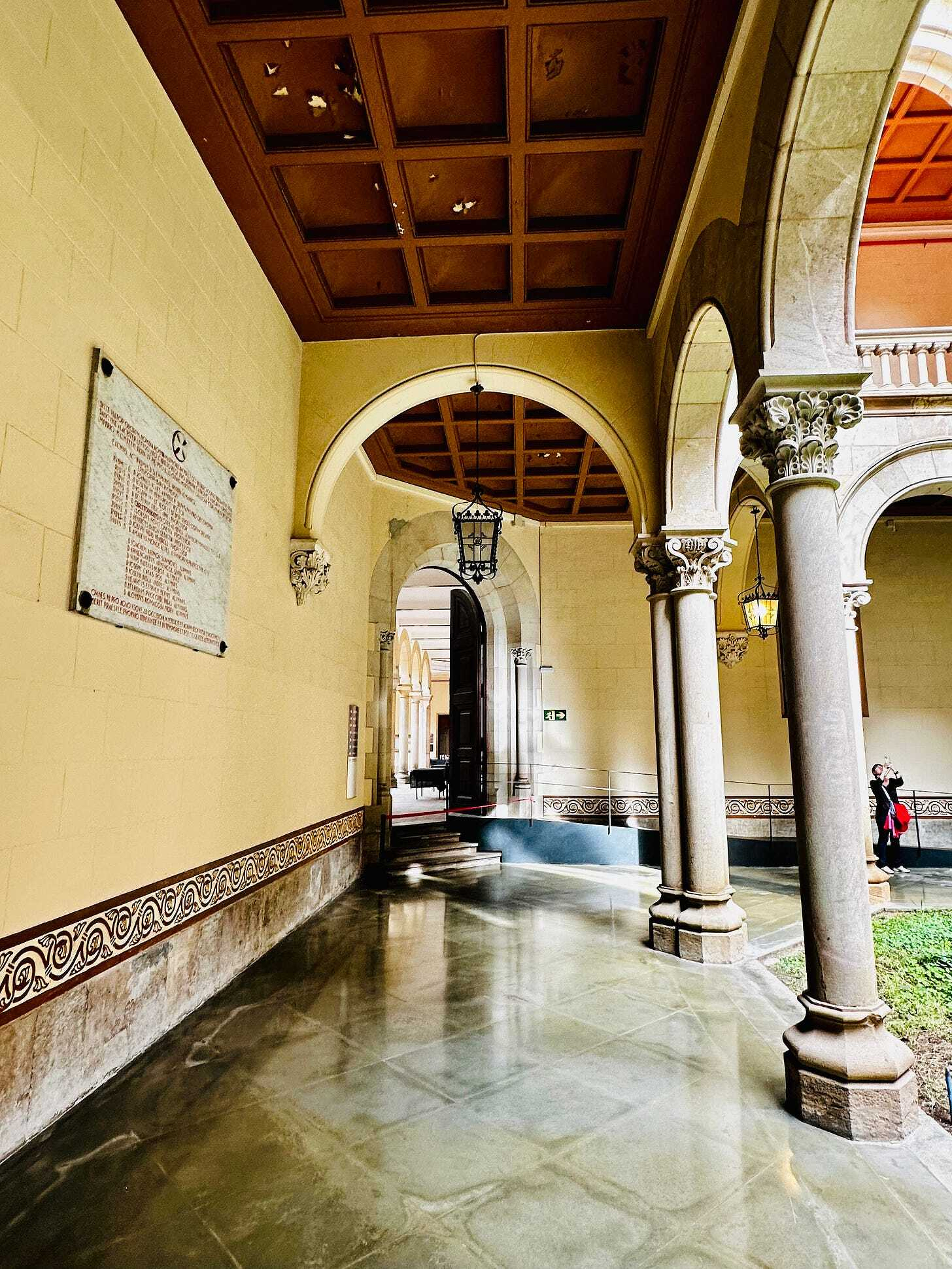
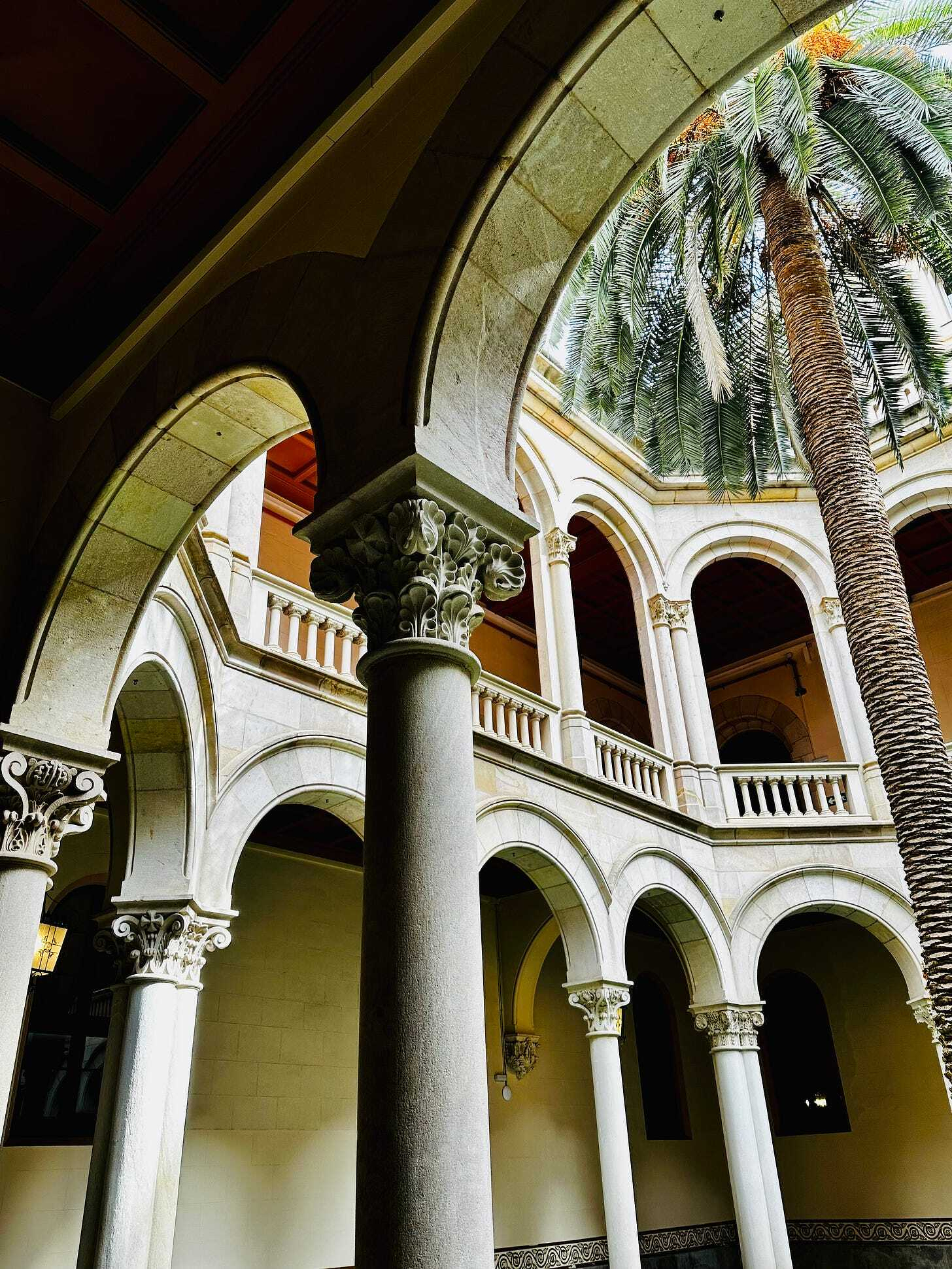
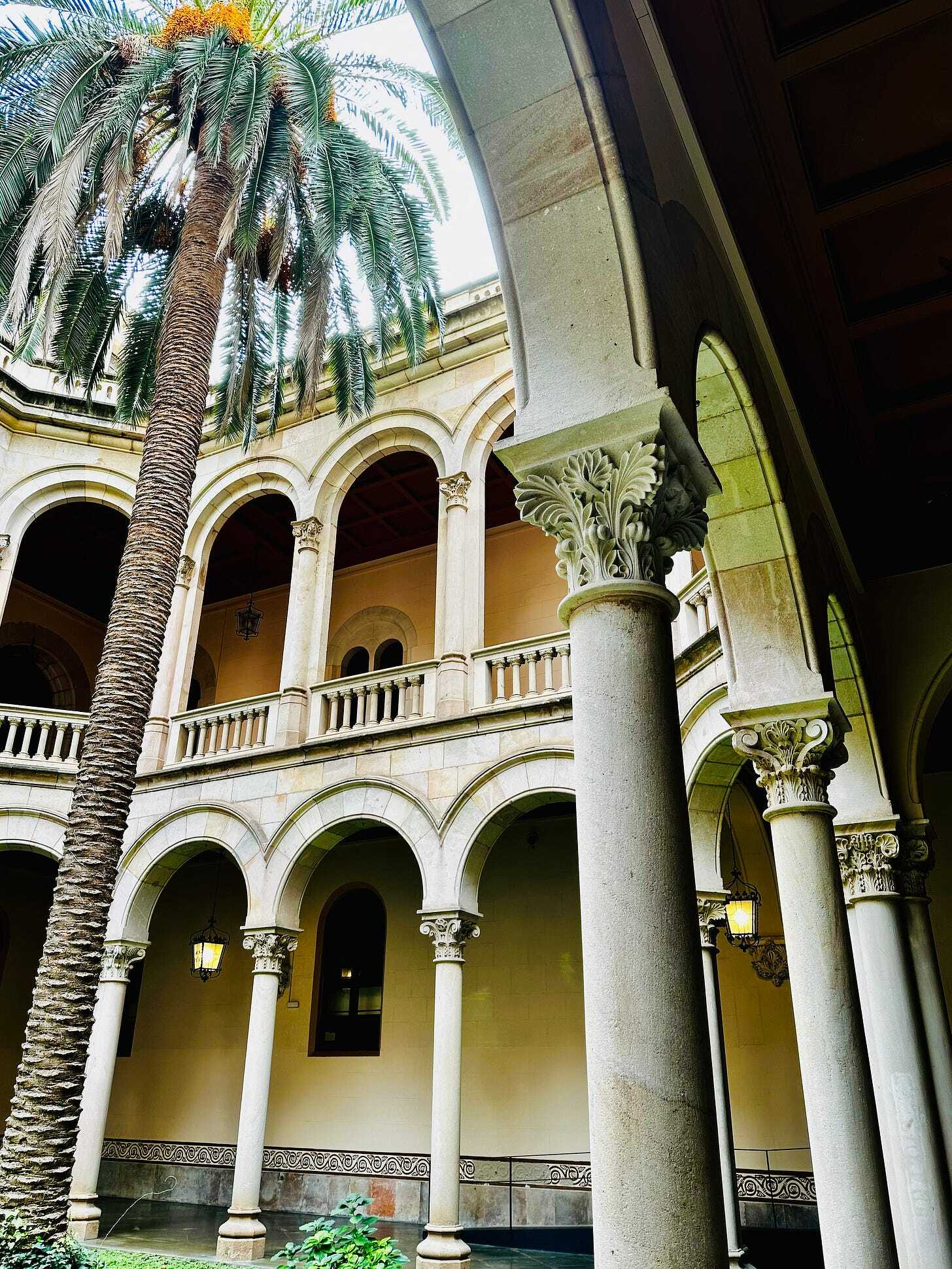
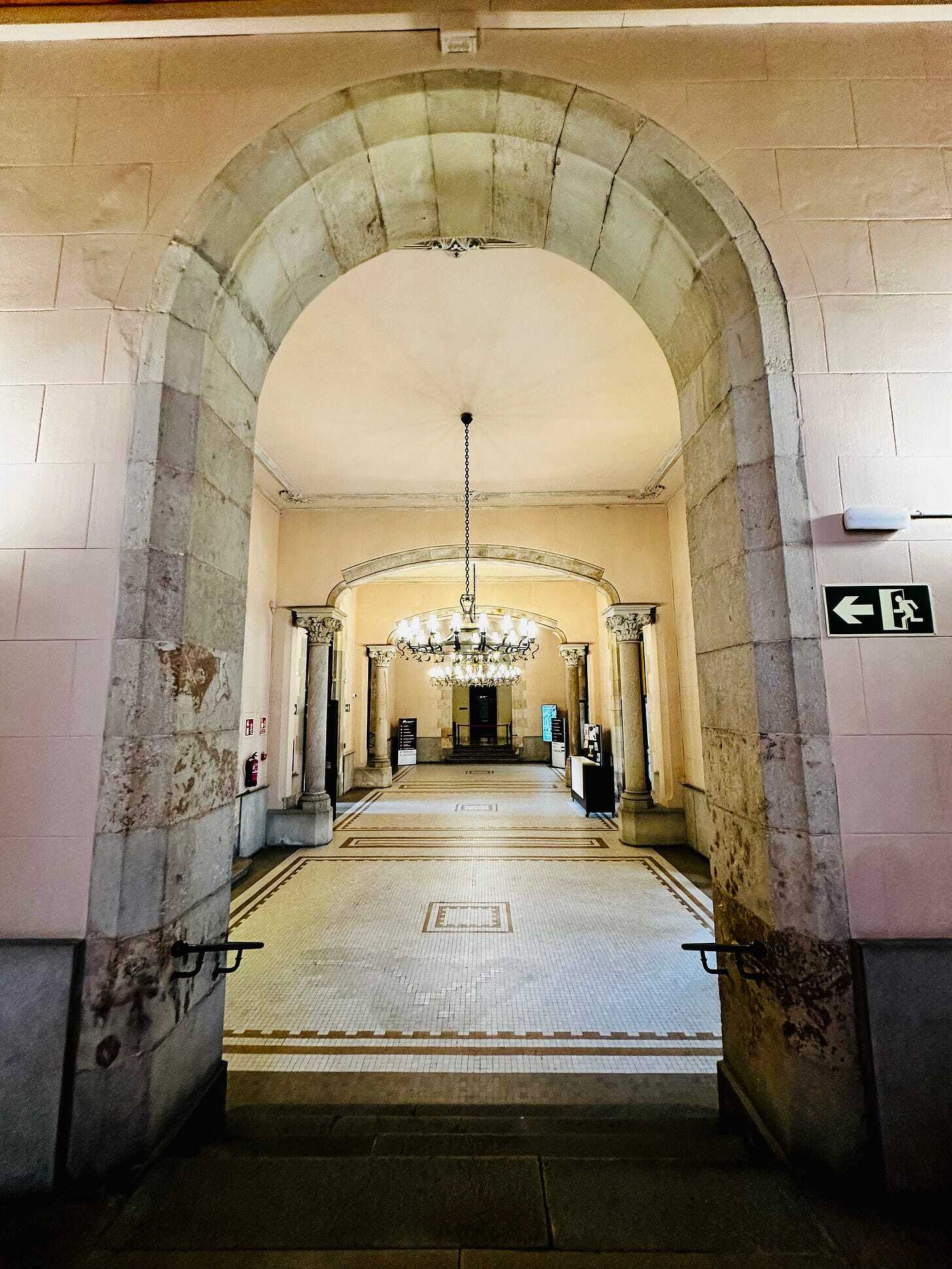
Despite the size of the complex, the construction is compositionally centred on the church building. This church deviates slightly in plan, adopting the traditional Latin cross layout (a longer nave). Its grand façade confronts Diputació Street, positioned perpendicular to the road—an orientation that ensures its prominence and accessibility, making it the most visible element of the whole to the passing public.
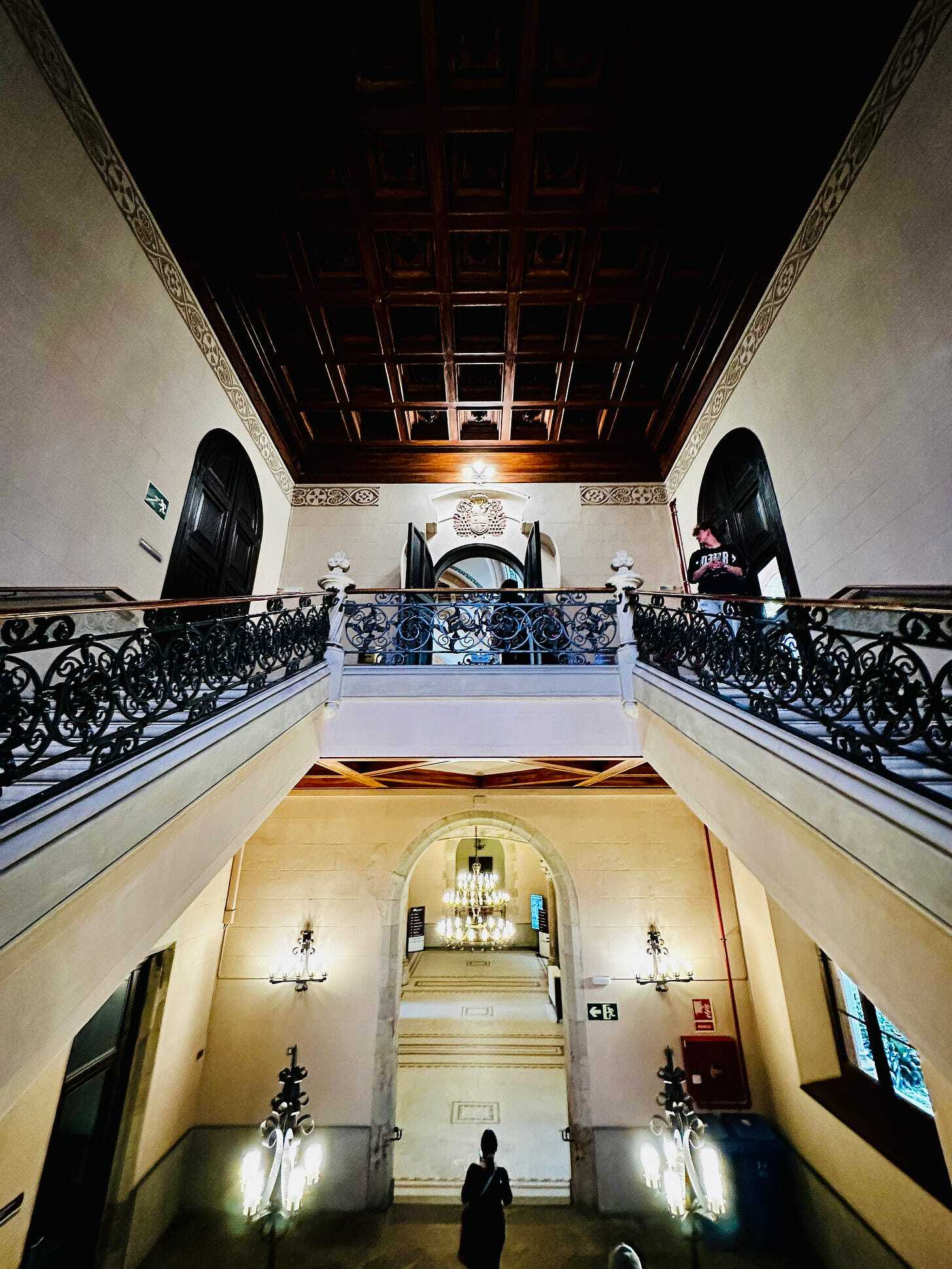
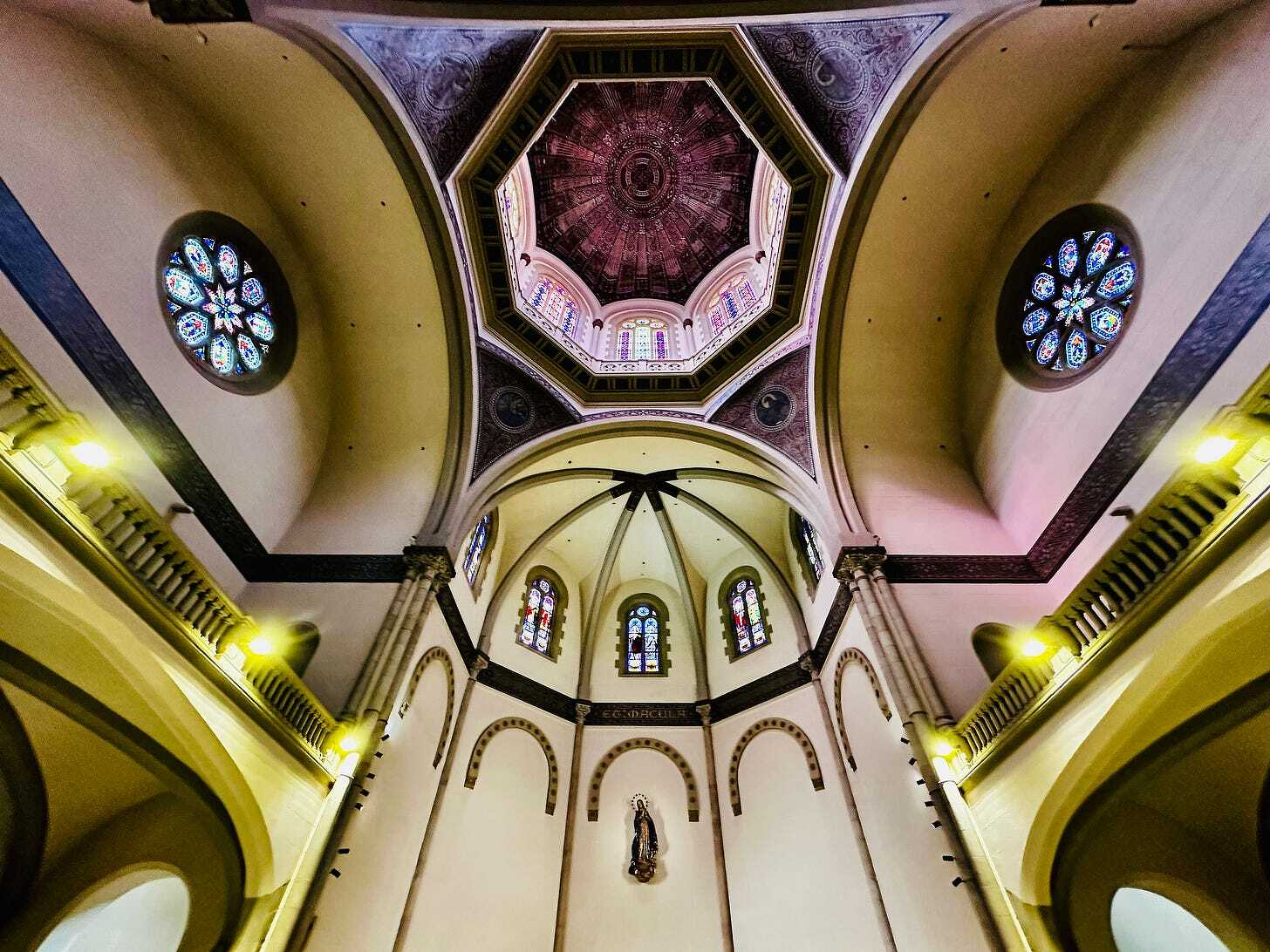
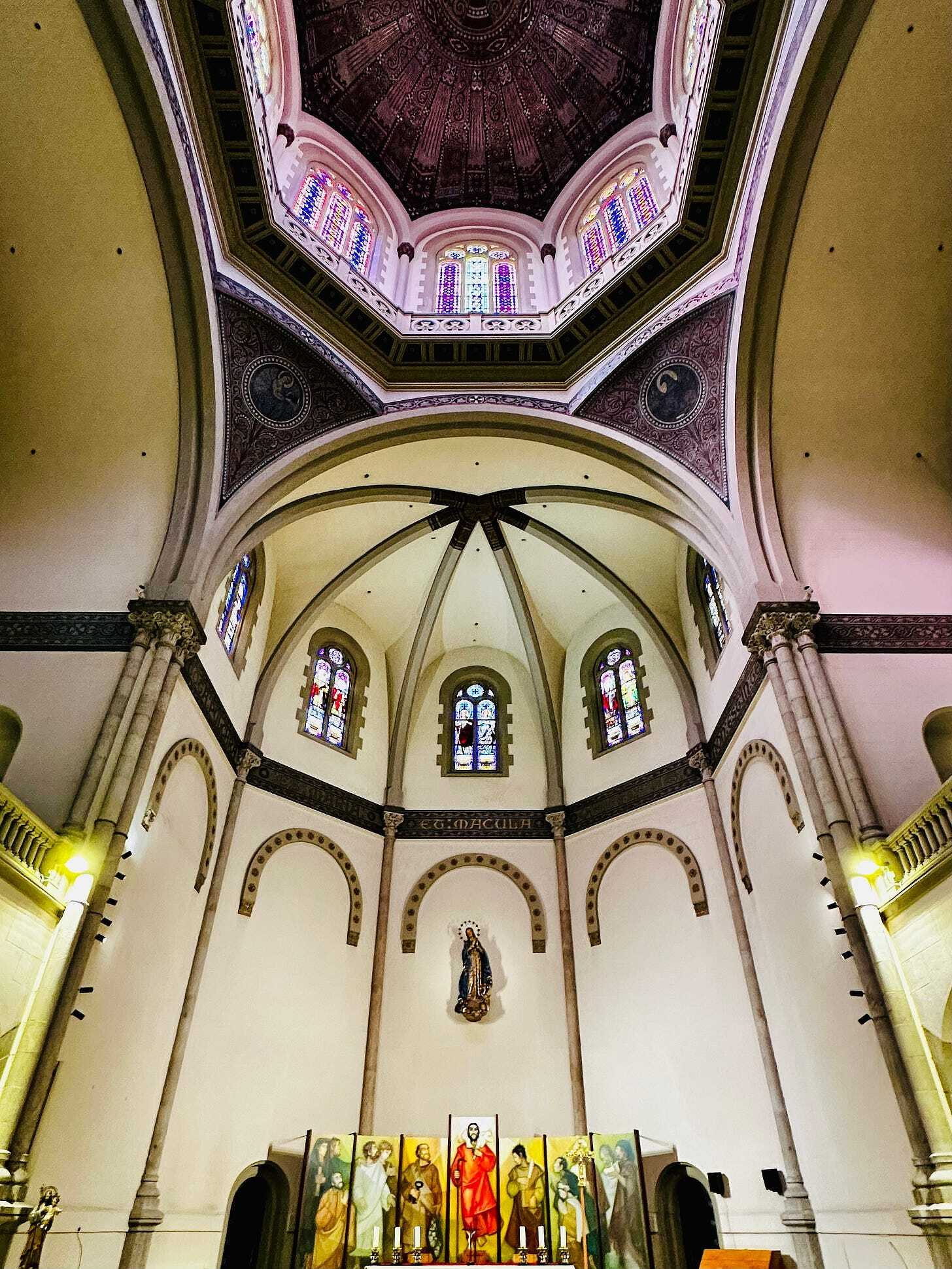
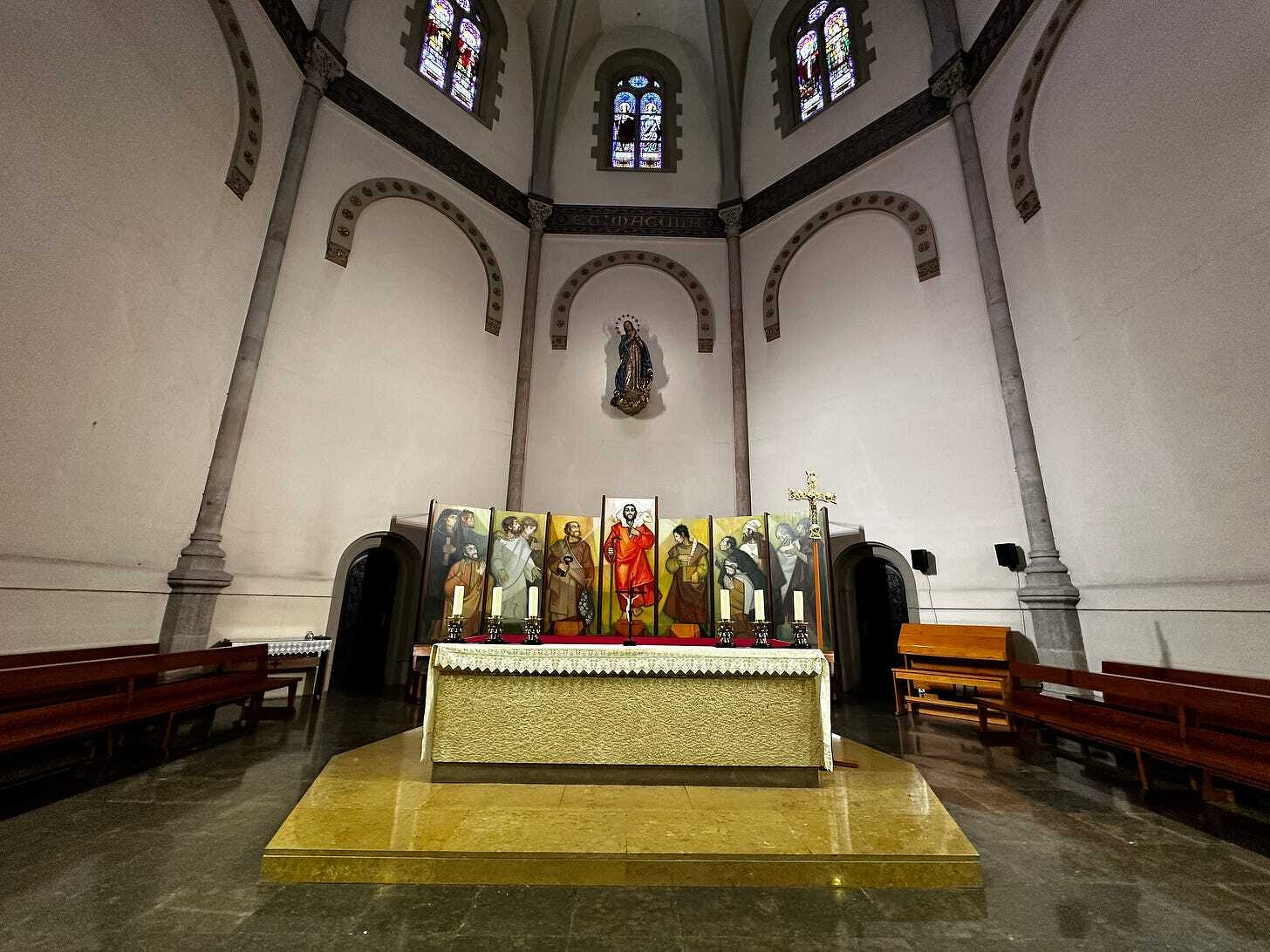
However, the undisputed crown of the entire composition is the magnificent Cimborrio (or lantern tower) rising above the crossing of the church. This structure is the literal and spiritual centre of the whole design, providing light and focus. Rogent’s inspiration is explicitly referenced in its design, which is similar to that of the revered Cistercian monastery of Poblet. This allusion firmly roots the Seminary not just in general medieval style, but in the specific, powerful religious history of Catalonia.
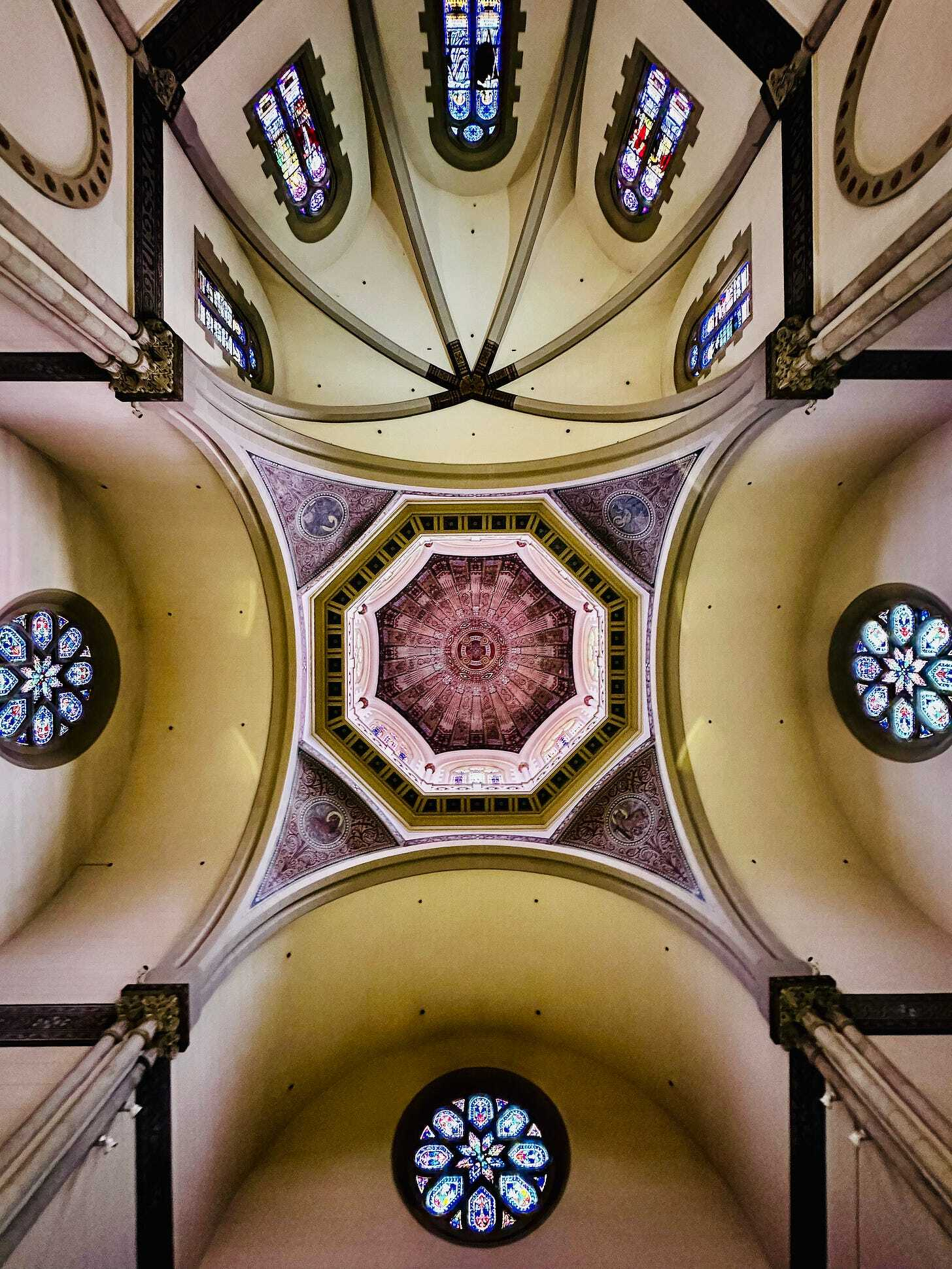
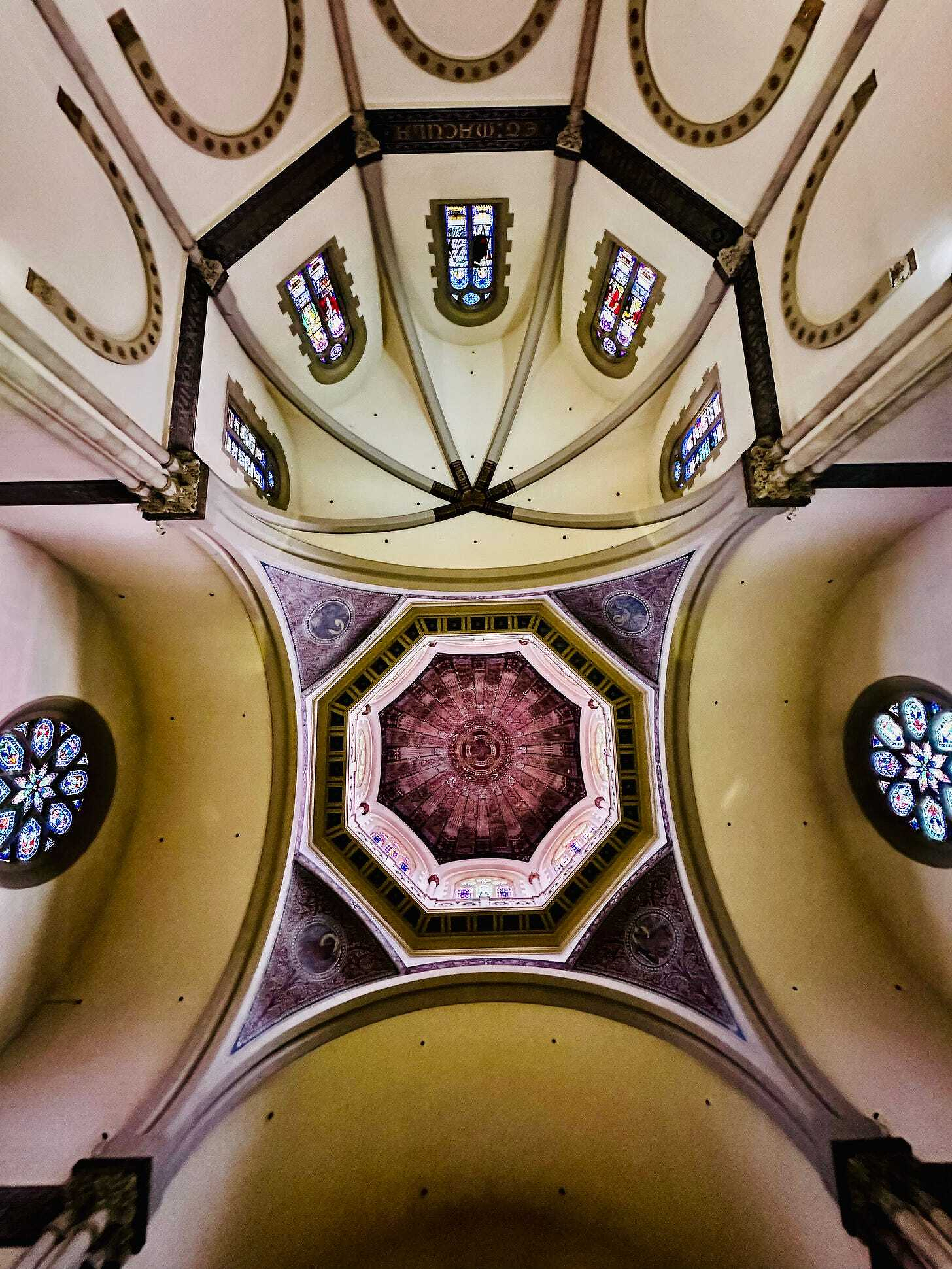
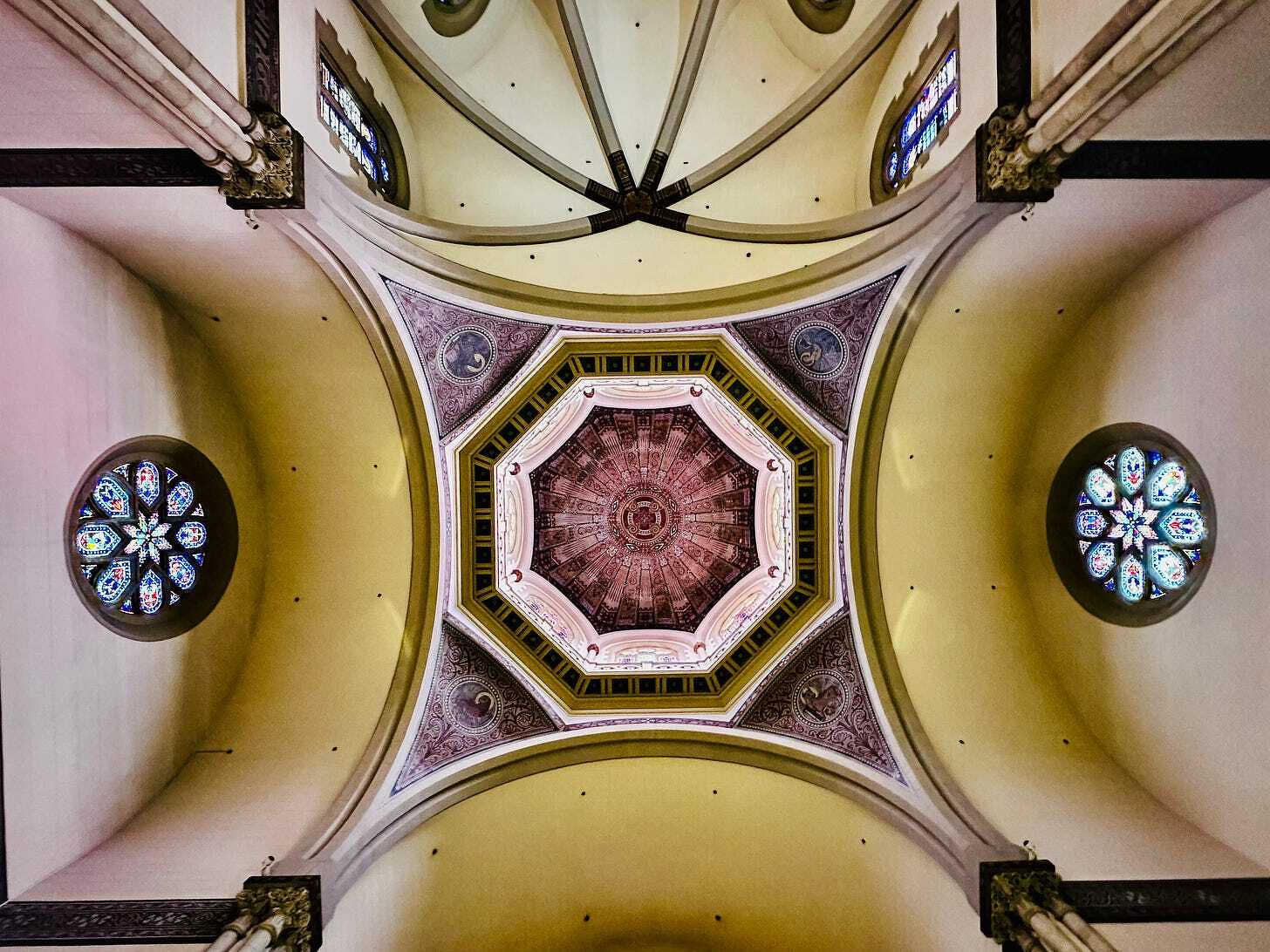
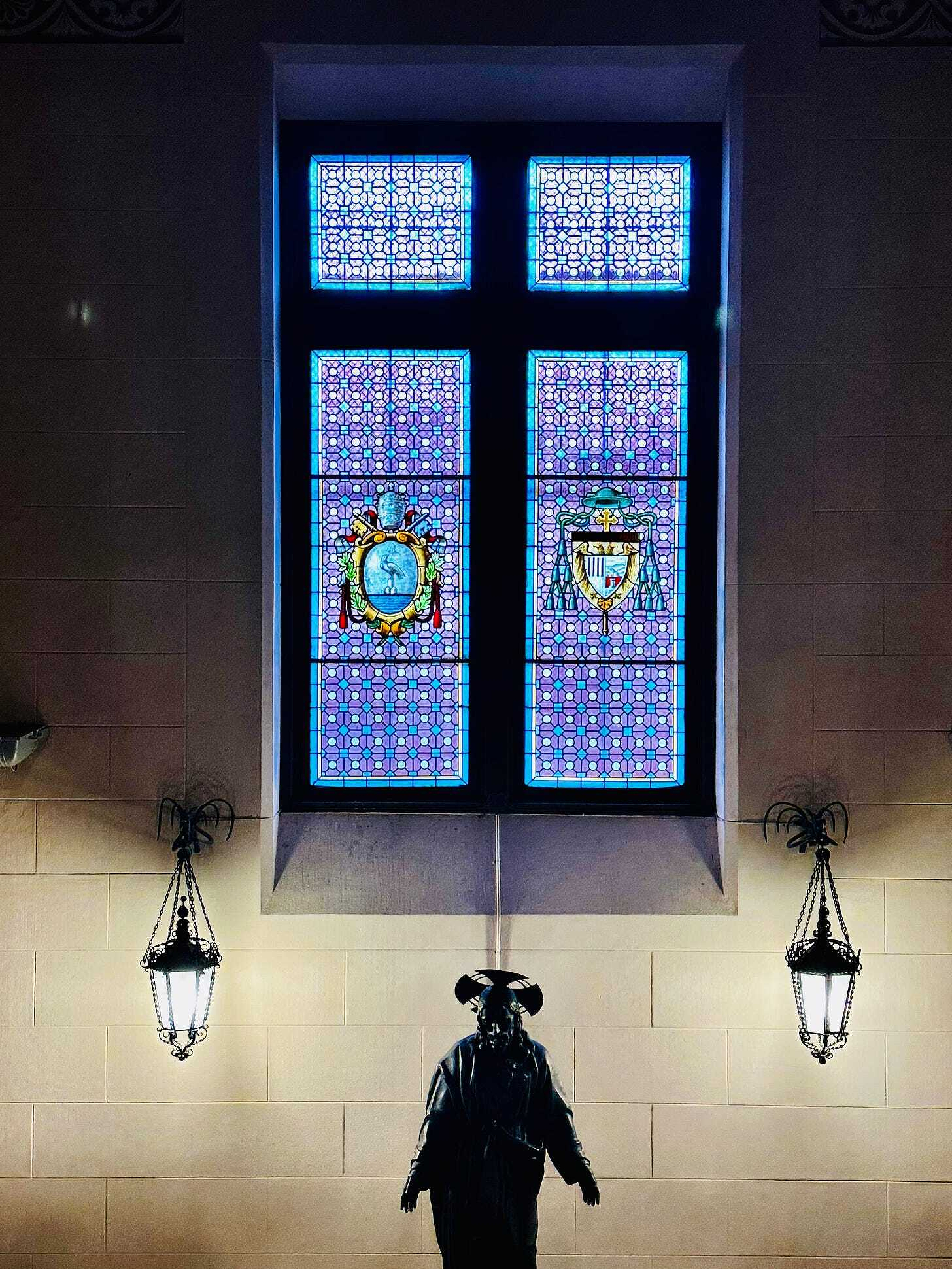
A profound aspect of Rogent’s design is the stark difference in material quality used between the church and the surrounding educational and residential wings. To reinforce an image of austerity, the extensive complex wings employ low-quality materials. The external shell is constructed with battered work (rough, simple masonry), and the roofs are covered in humble Arabic tile.
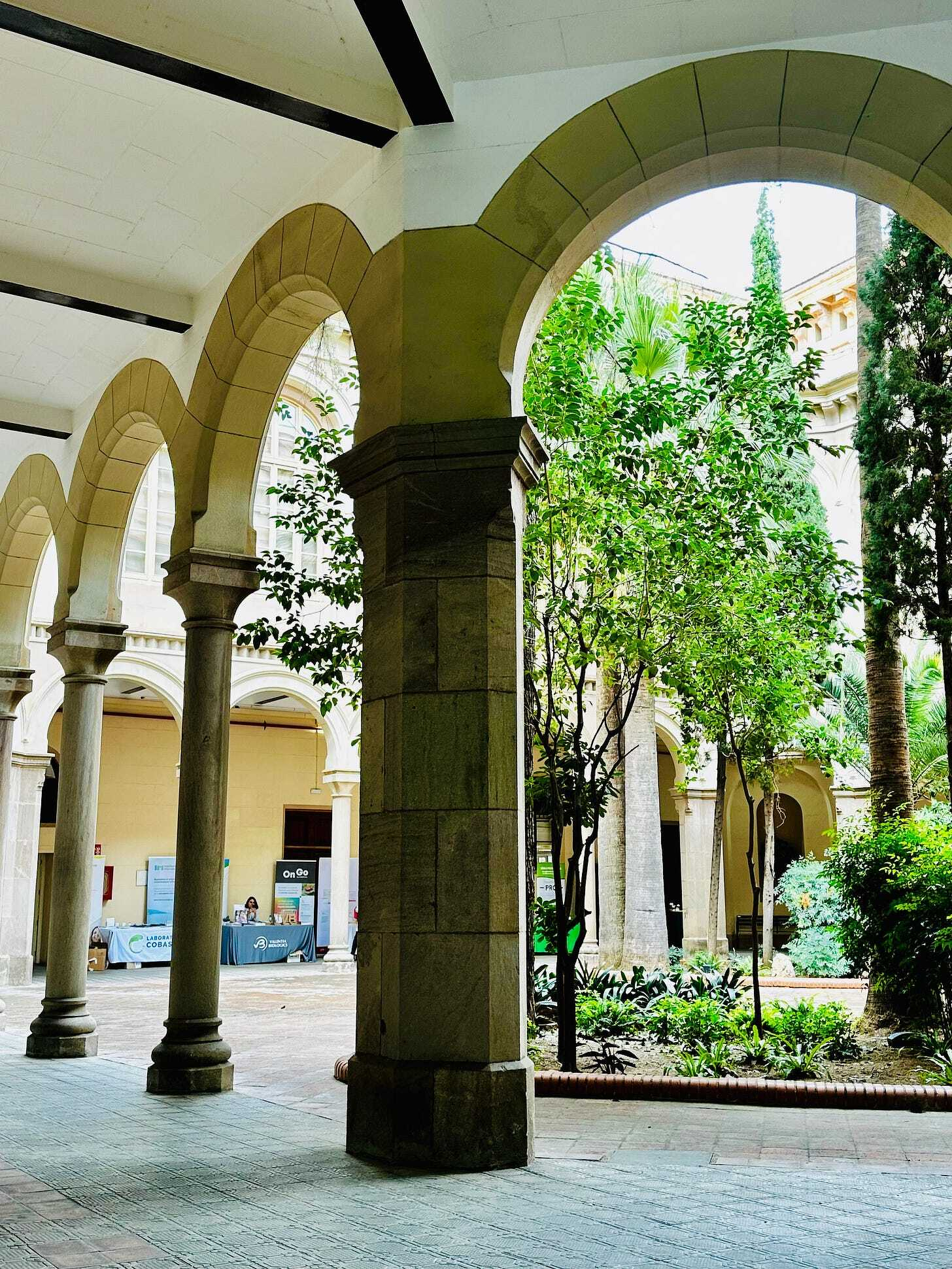
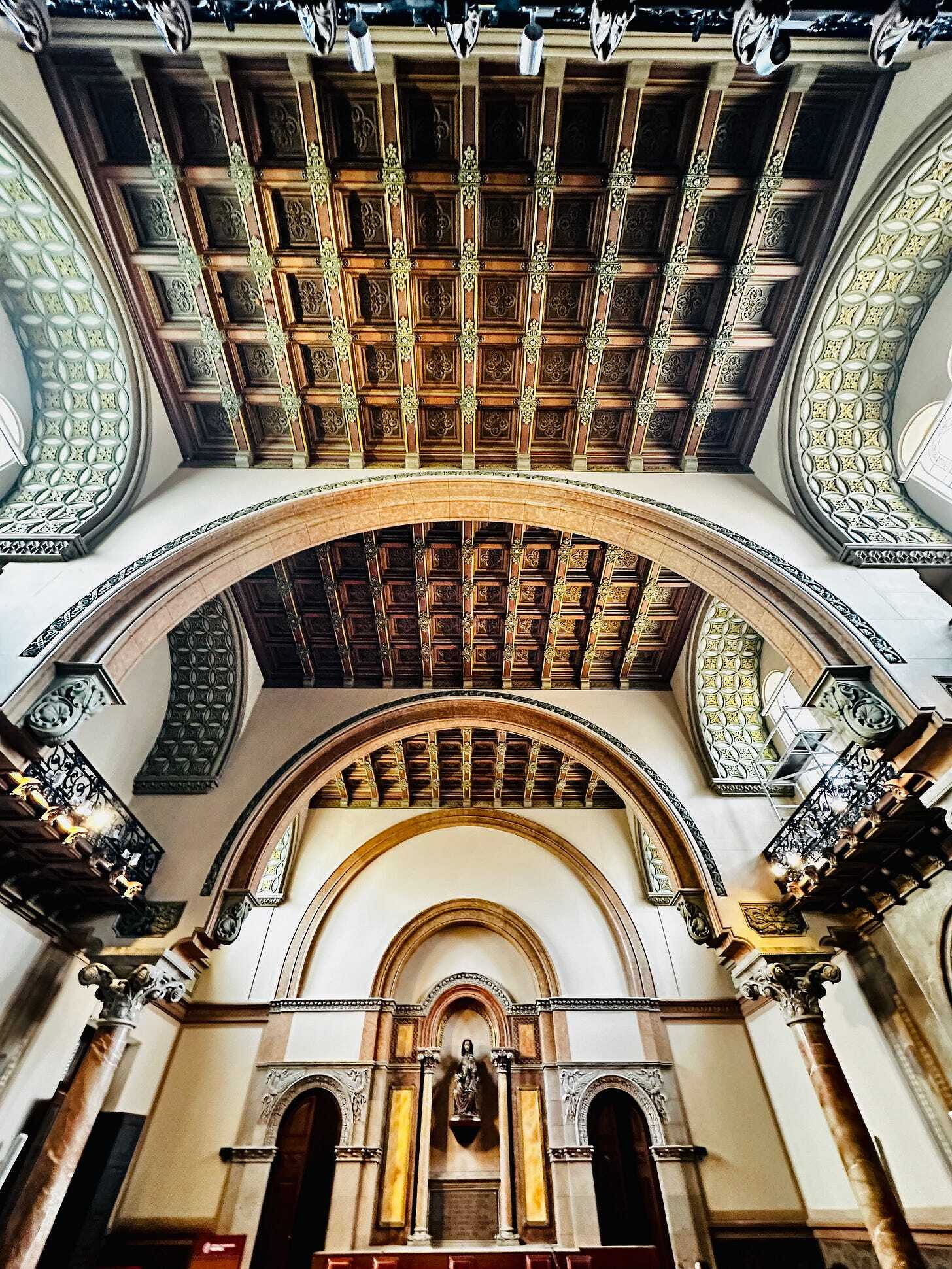
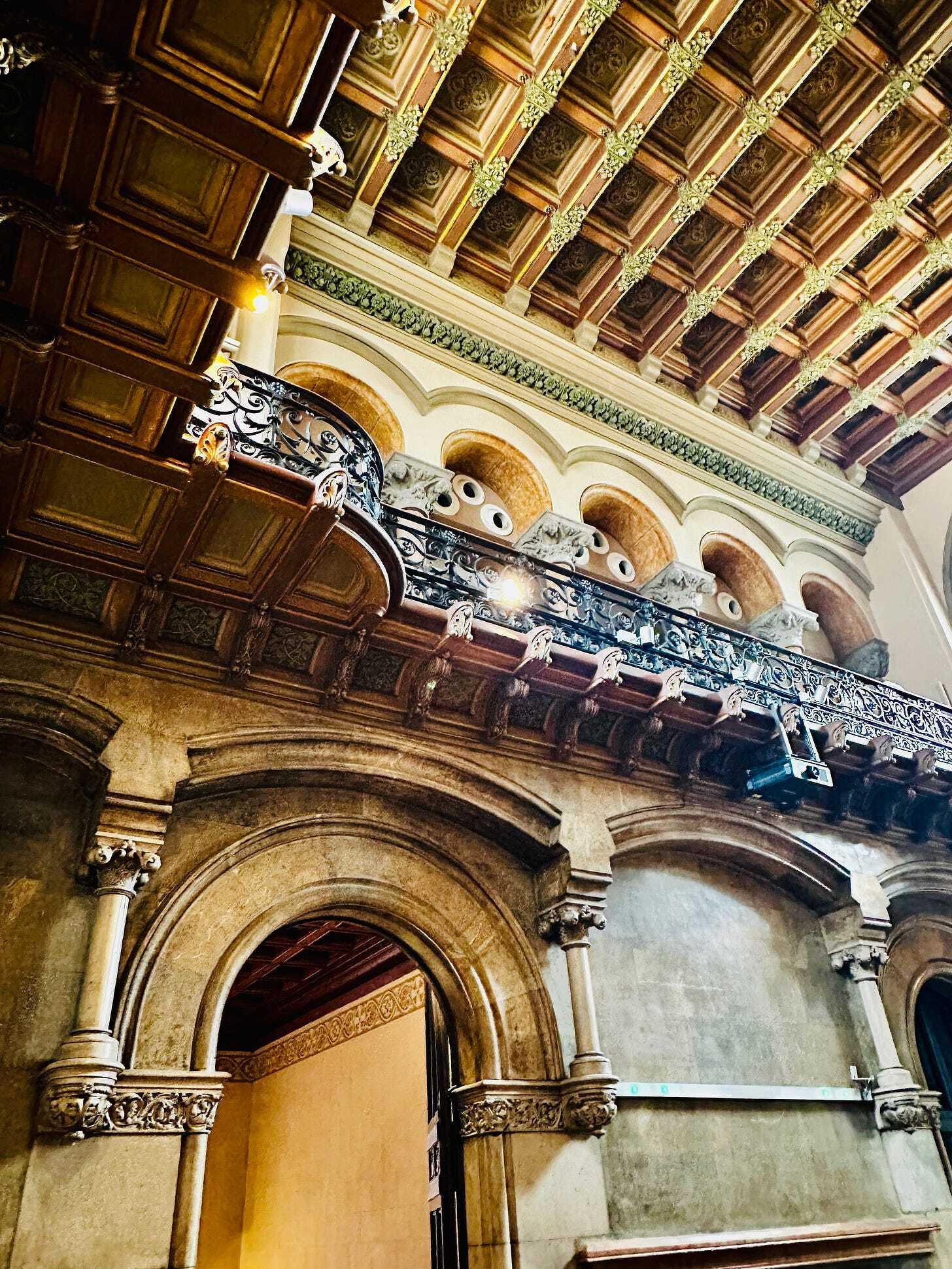
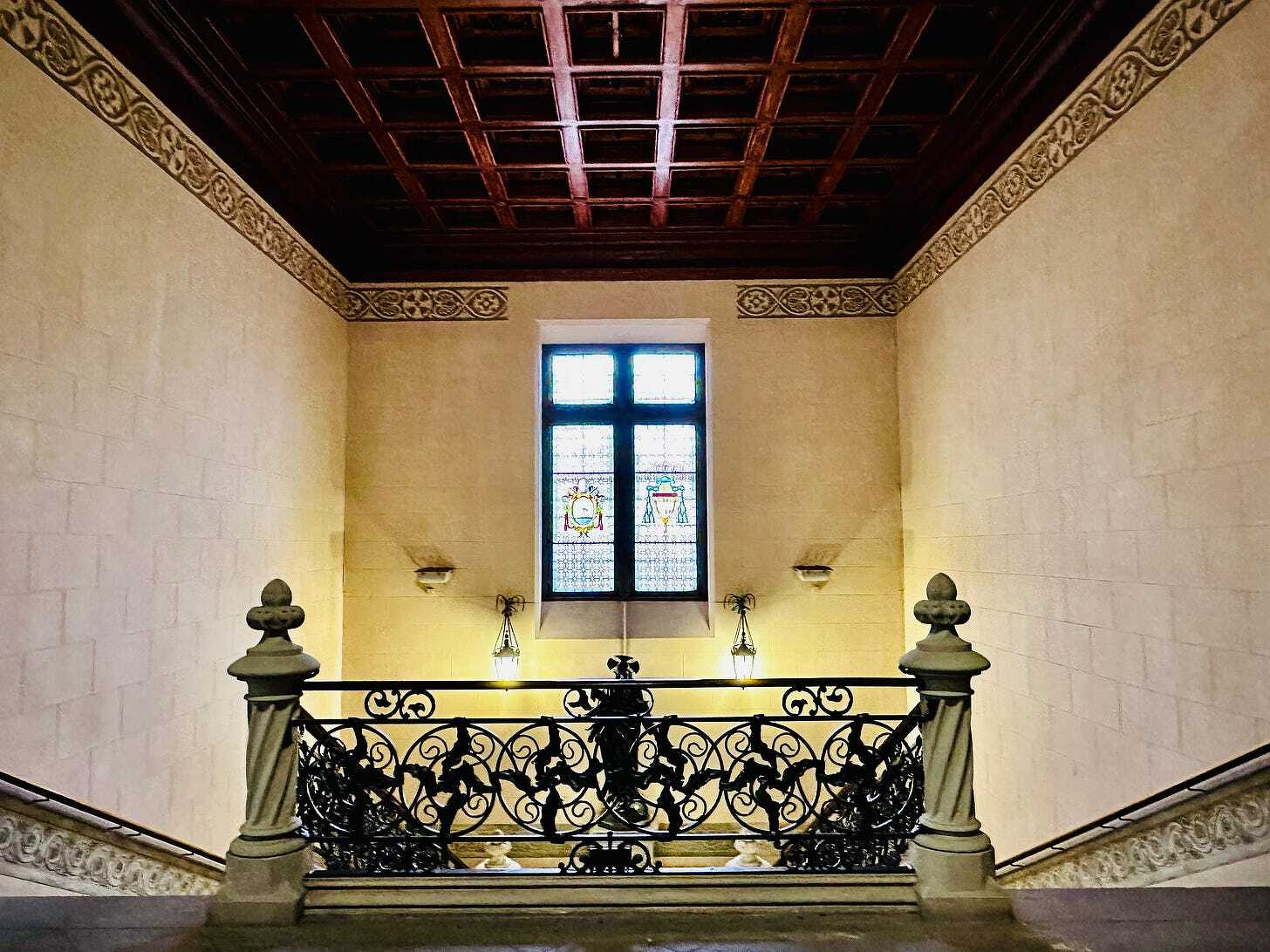
This choice perfectly embodies the ideals of Neo-Romanesque, which championed simplicity, solidity, and a sense of enduring strength over ornate decoration. The contrast implies a clear hierarchy: the sanctity of the church is reserved for the finest materials (presumably polished stone, in contrast to the rough work), while the living quarters and classrooms are defined by their utilitarian simplicity, befitting a place dedicated to rigorous discipline and spiritual training.
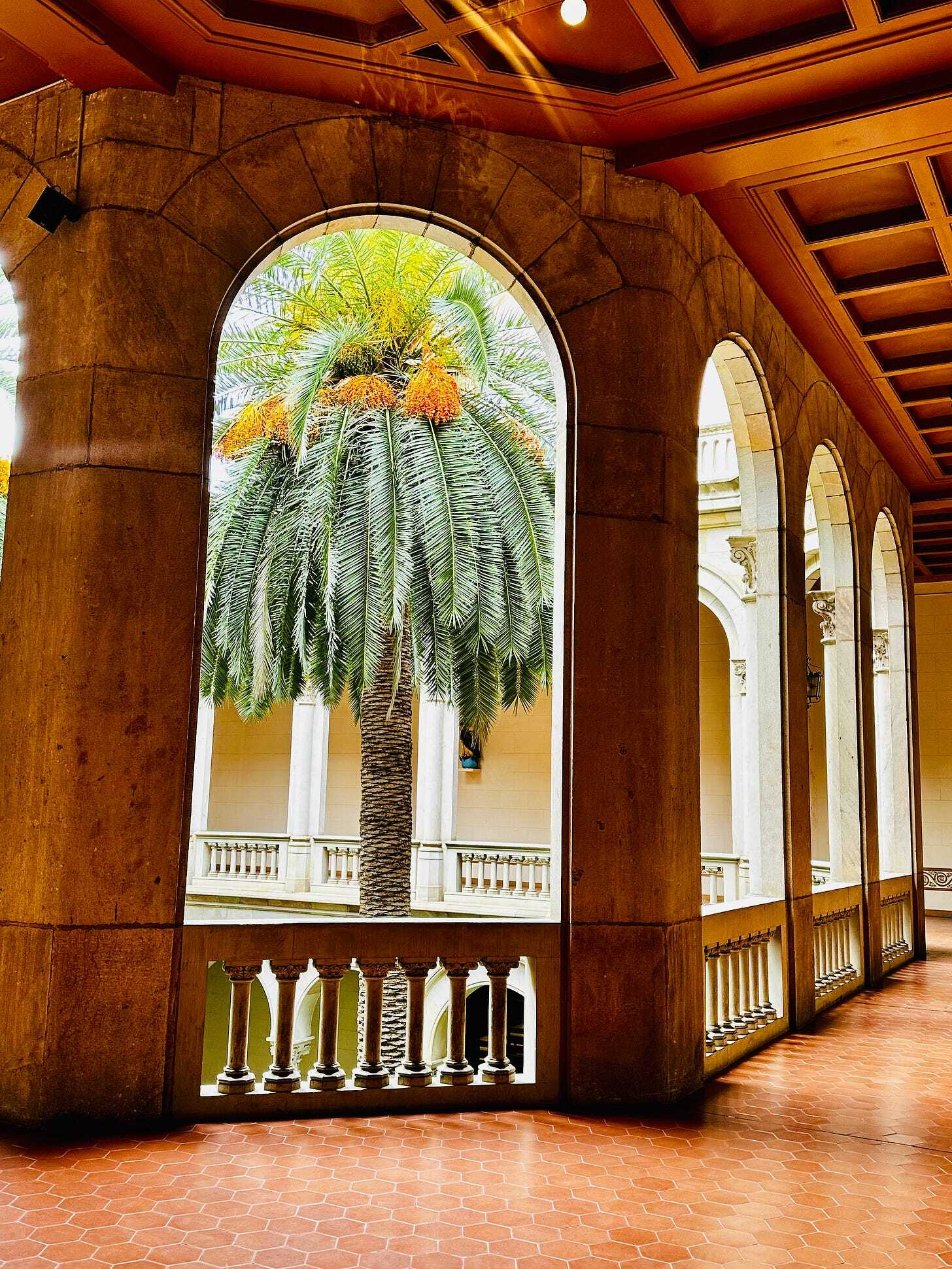
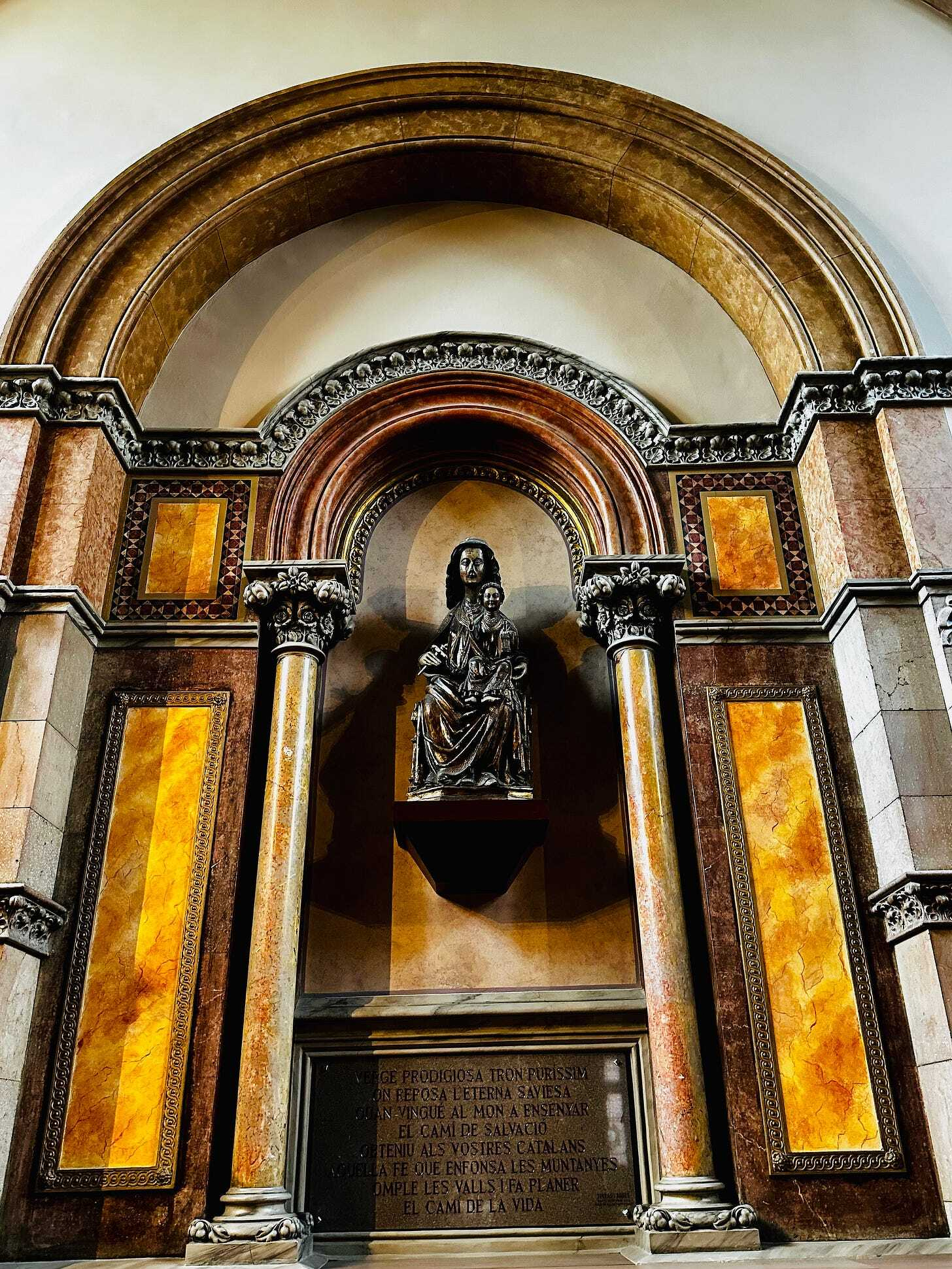
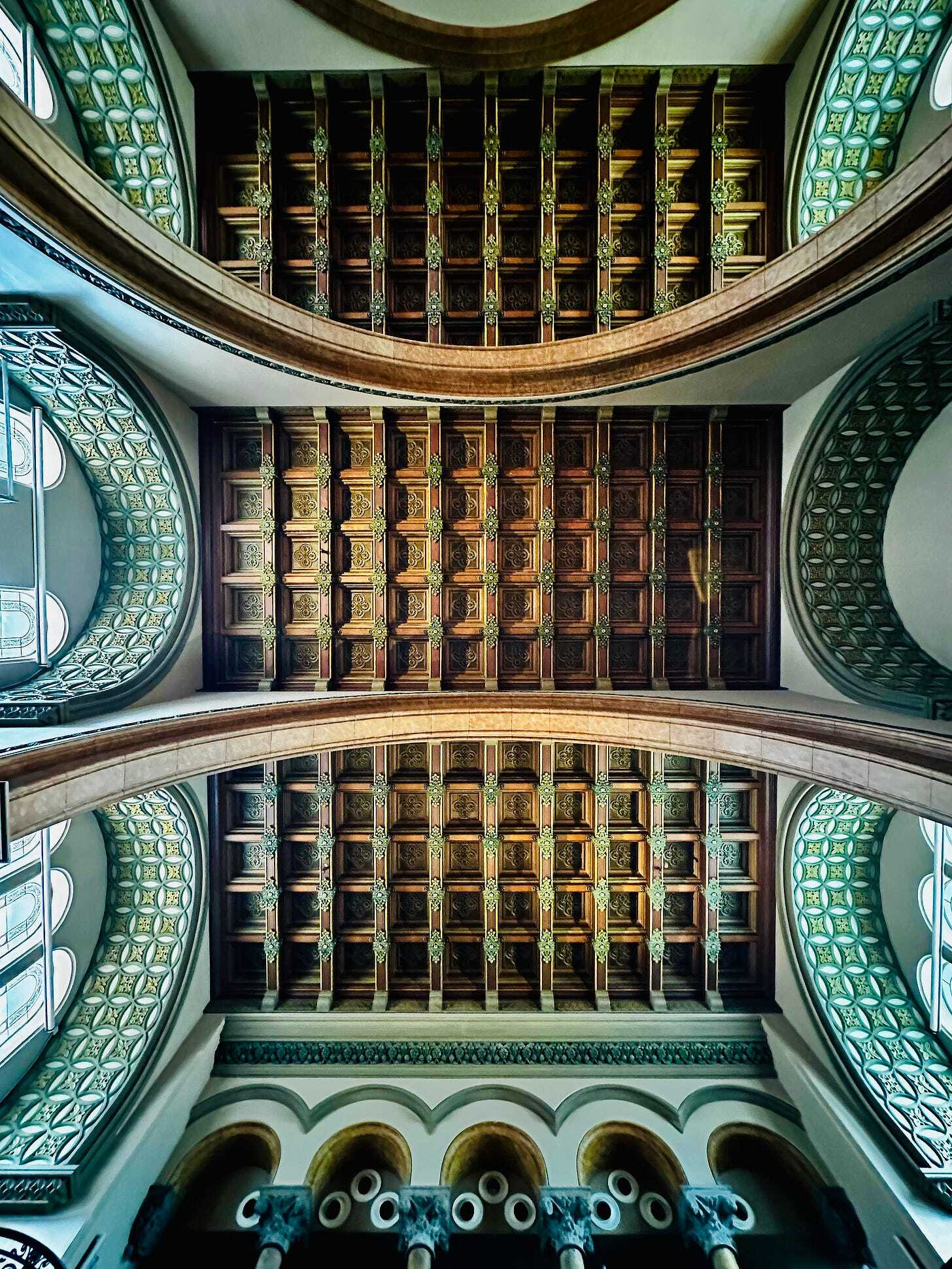
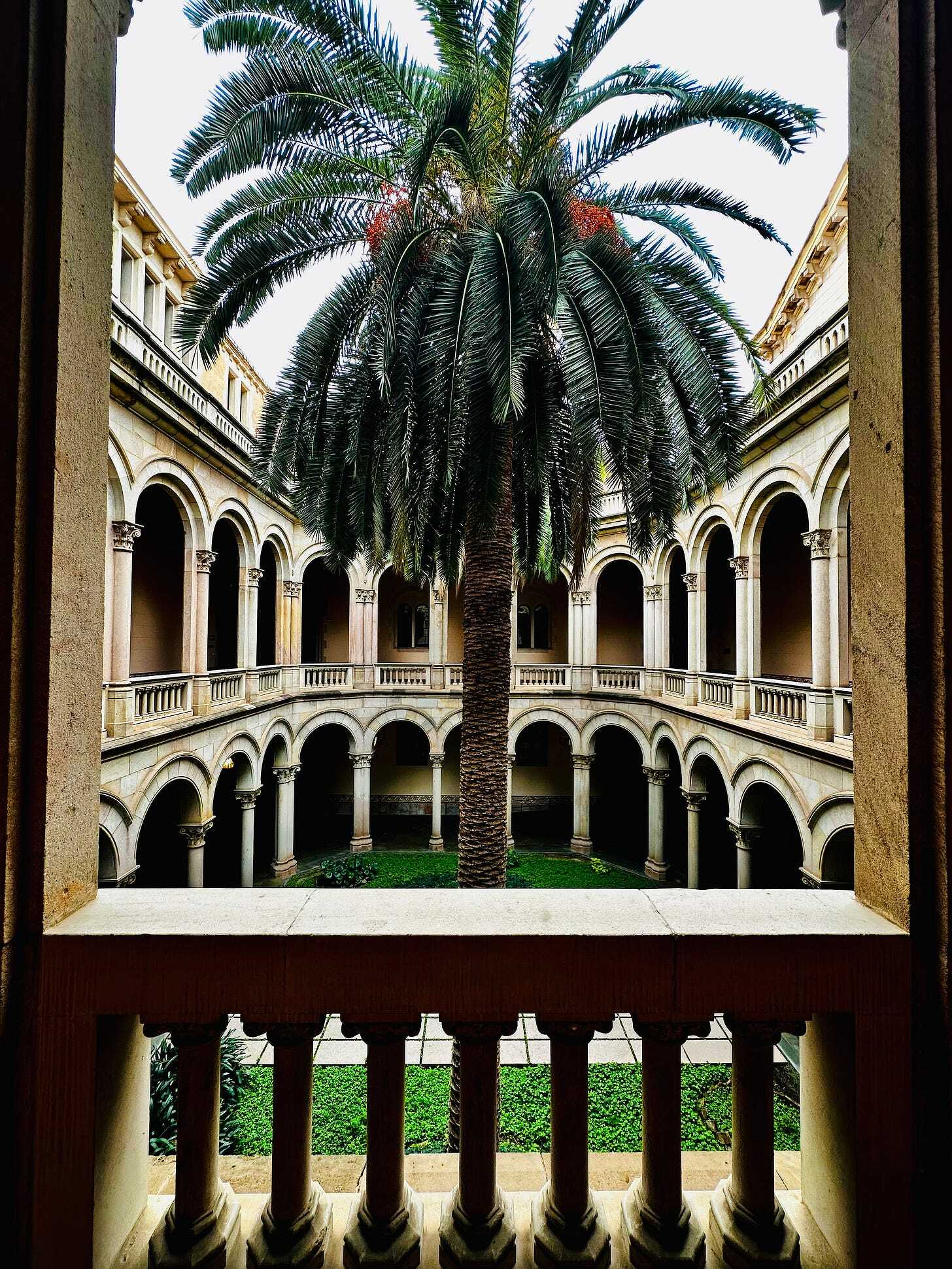
The Barcelona Conciliary Seminary, therefore, is far more than a simple set of buildings. It is a masterclass in urban planning, a powerful statement of architectural revivalism by Elies Rogent, and a monumental structure whose unique placement and material contrasts tell a profound story of faith, education, and deliberate isolation within the booming heart of Barcelona.
#SeminariConciliar #Barcelona #Eixample #EliesRogent #NeoRomanesque #Architecture #CatalanModernism #HistoricArchitecture #TravelBarcelona #SpainTravel