
Sóller: Mallorca’s Hidden Gem for the Perfect Island Escape
Now It’s Time to Book Your 2026 Summer Trip!
Mallorca has its fair share of postcards: turquoise coves, bustling beaches, and resorts crammed with sunbathers. But if you want the island without the crowds, where history, nature, and the sea collide with effortless charm, there’s really only one answer: Sóller. Nestled in a lush valley in the Serra de Tramuntana, a UNESCO World Heritage site, this little town manages to feel timeless, authentic, and impossibly picturesque all at once.
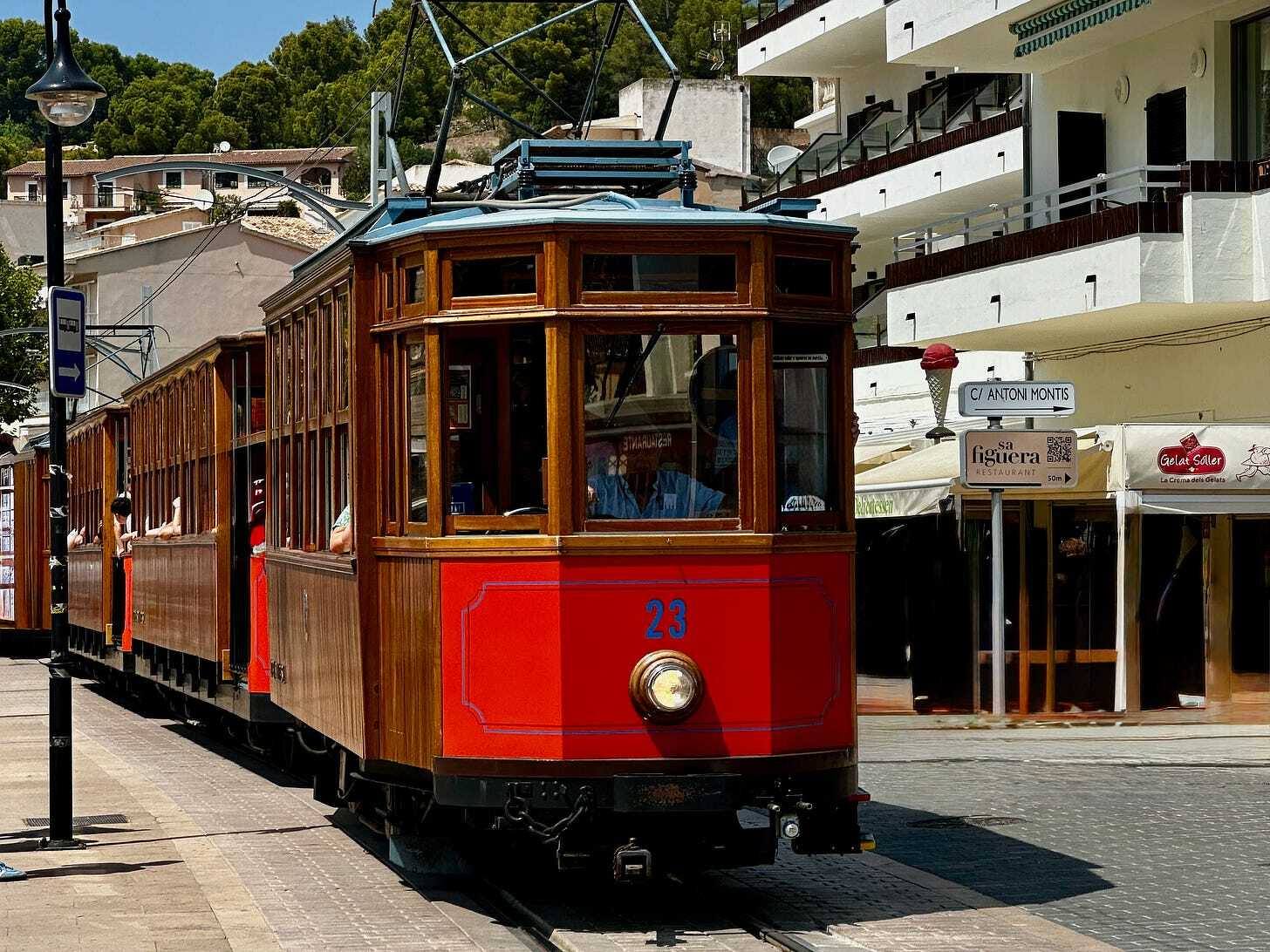
And the journey there? Equally magical. The Tren de Sóller, a century-old wooden railway, winds its way from Palma through endless citrus orchards, olive groves, and rugged mountains, passing through 13 tunnels and over stone bridges that have been standing longer than most modern vacations. The ride takes about an hour, but who’s counting? With vintage carriages, polished wood, and an air of nostalgia, it’s more than a train ride—it’s a slow-motion introduction to the island’s beauty. By the time you arrive, you already feel a little bit in love.
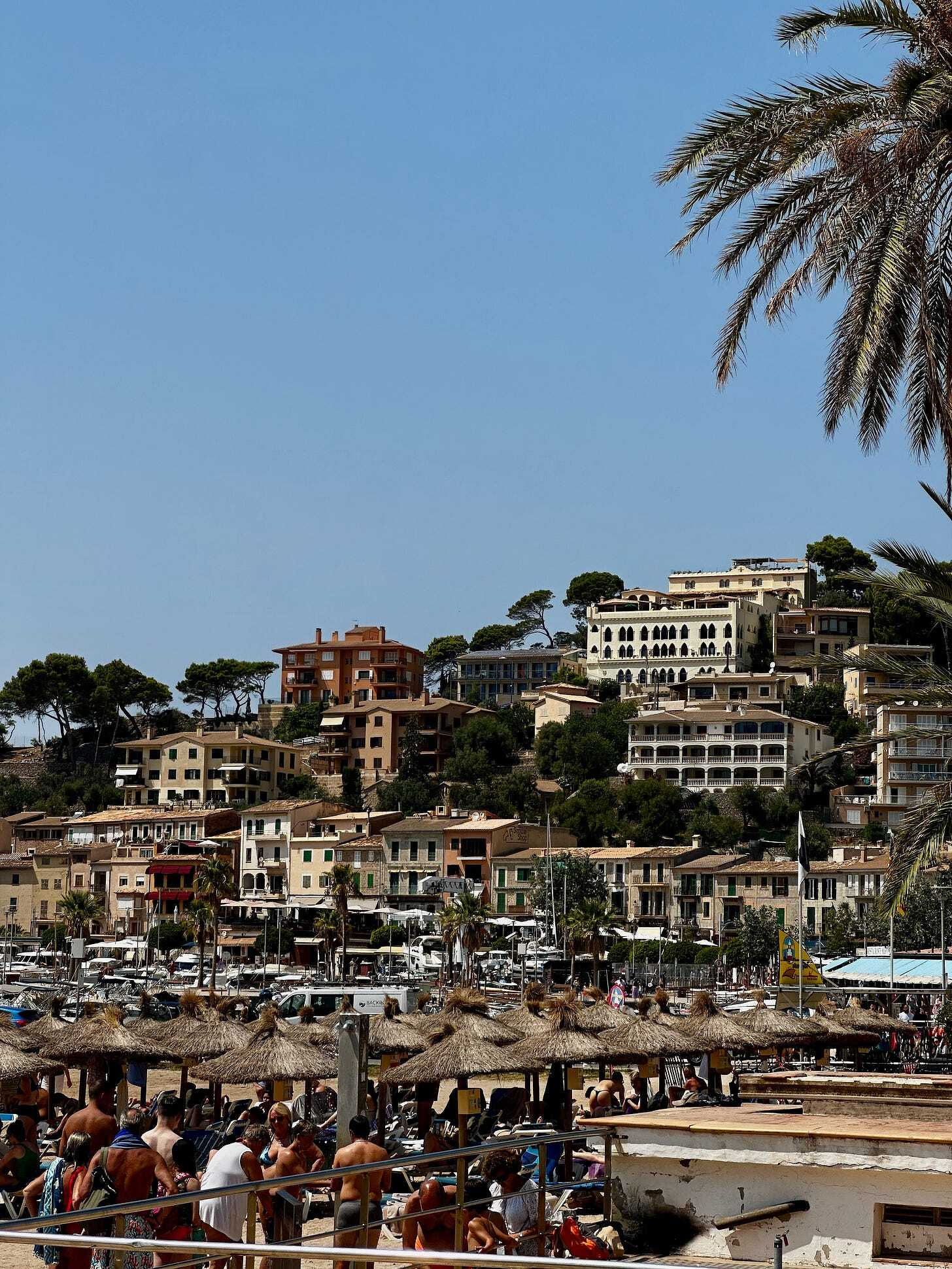
The town itself feels like stepping into a postcard. The Plaça Constitució, the beating heart of Sóller, is lined with cafés, restaurants, and terraces, all under the watchful eye of the neo-Baroque Església de Sant Bartomeu. It’s the kind of square that invites you to linger with a coffee, a pastry, or simply a good people-watching session. Wander a few streets, and you’ll discover modernist mansions like Can Prunera, narrow cobbled lanes, and boutiques selling citrus products, olive oil, and handmade crafts. There’s no rush here—Sóller insists you slow down and actually notice the details.
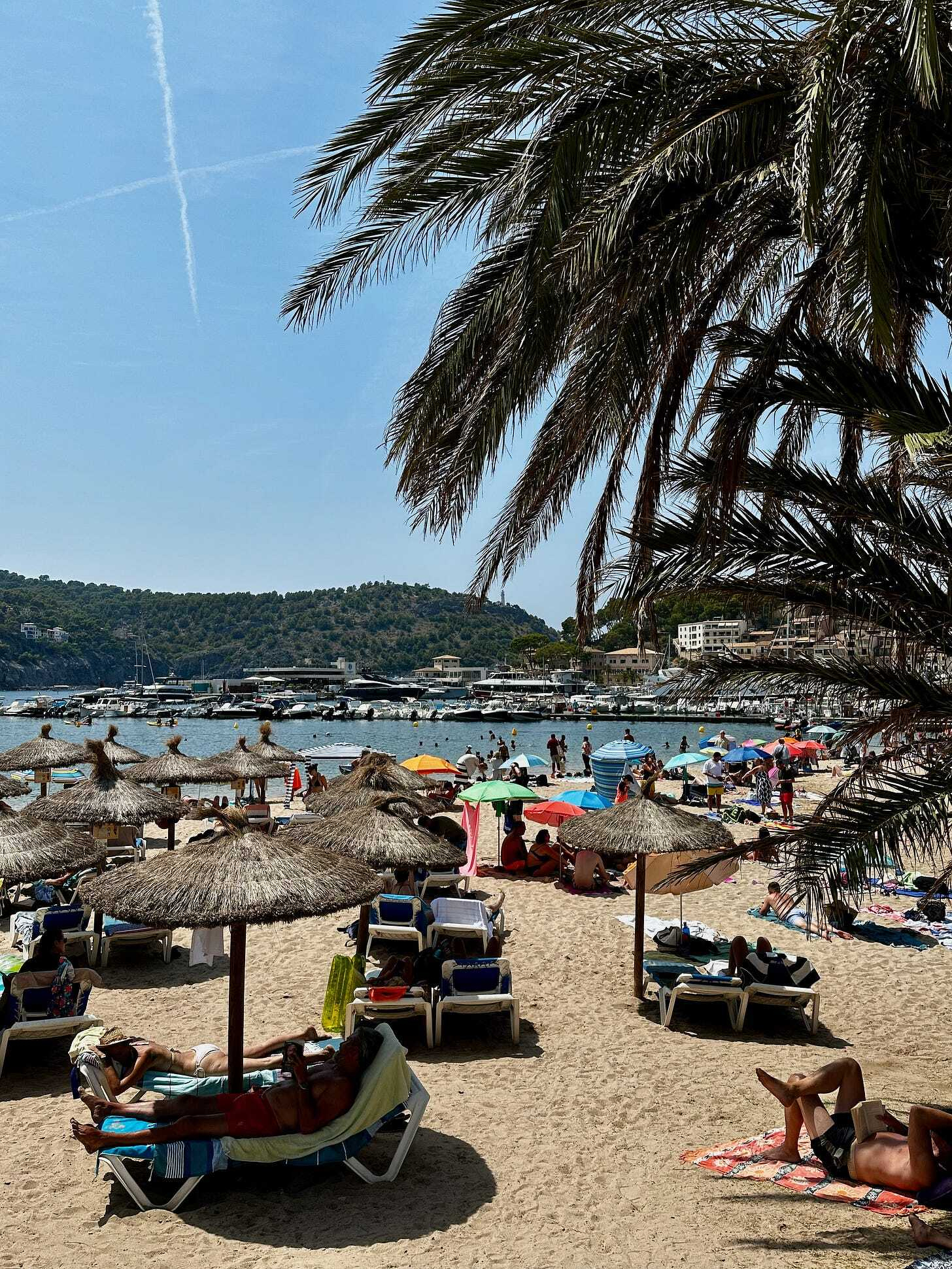
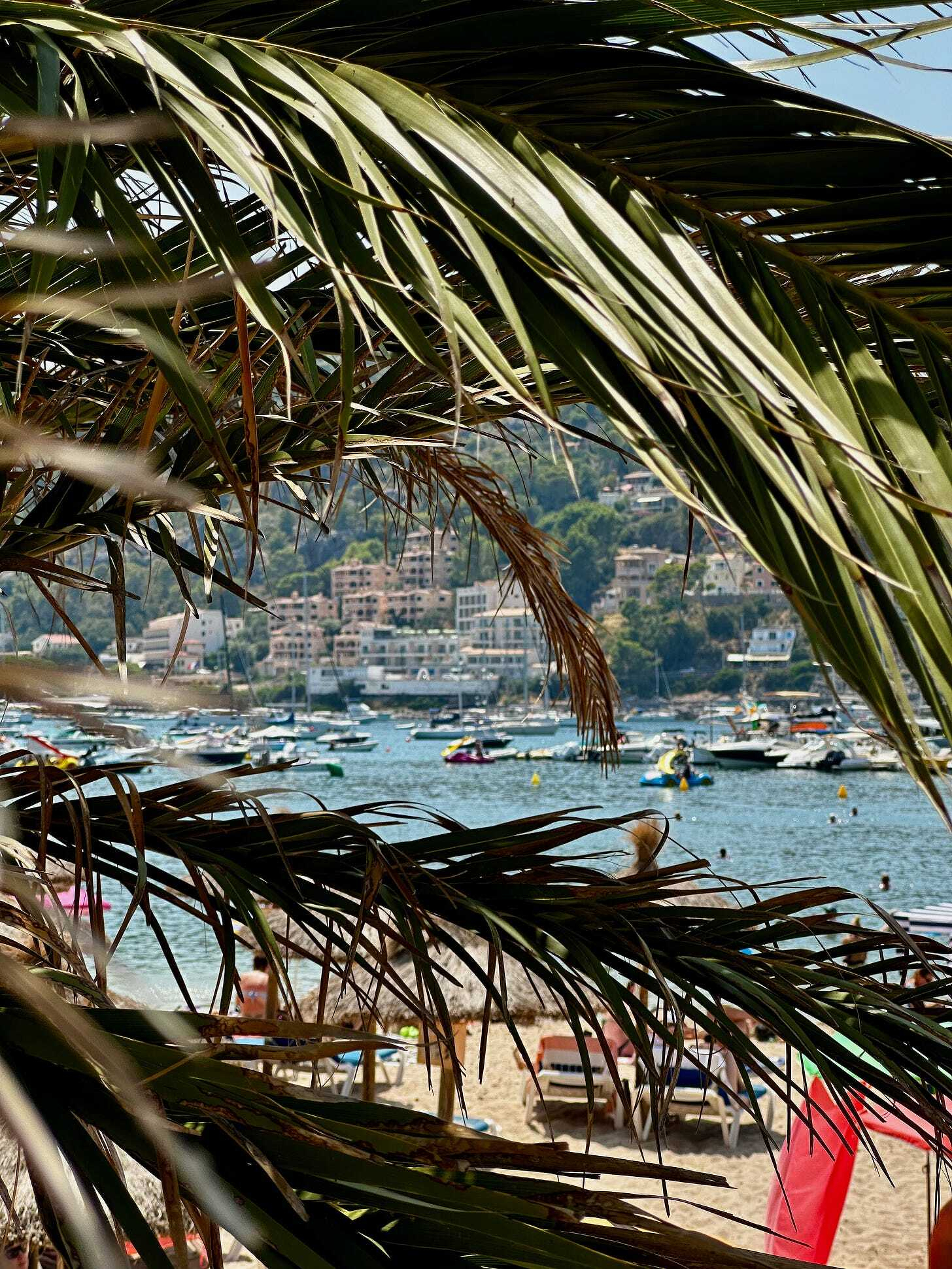
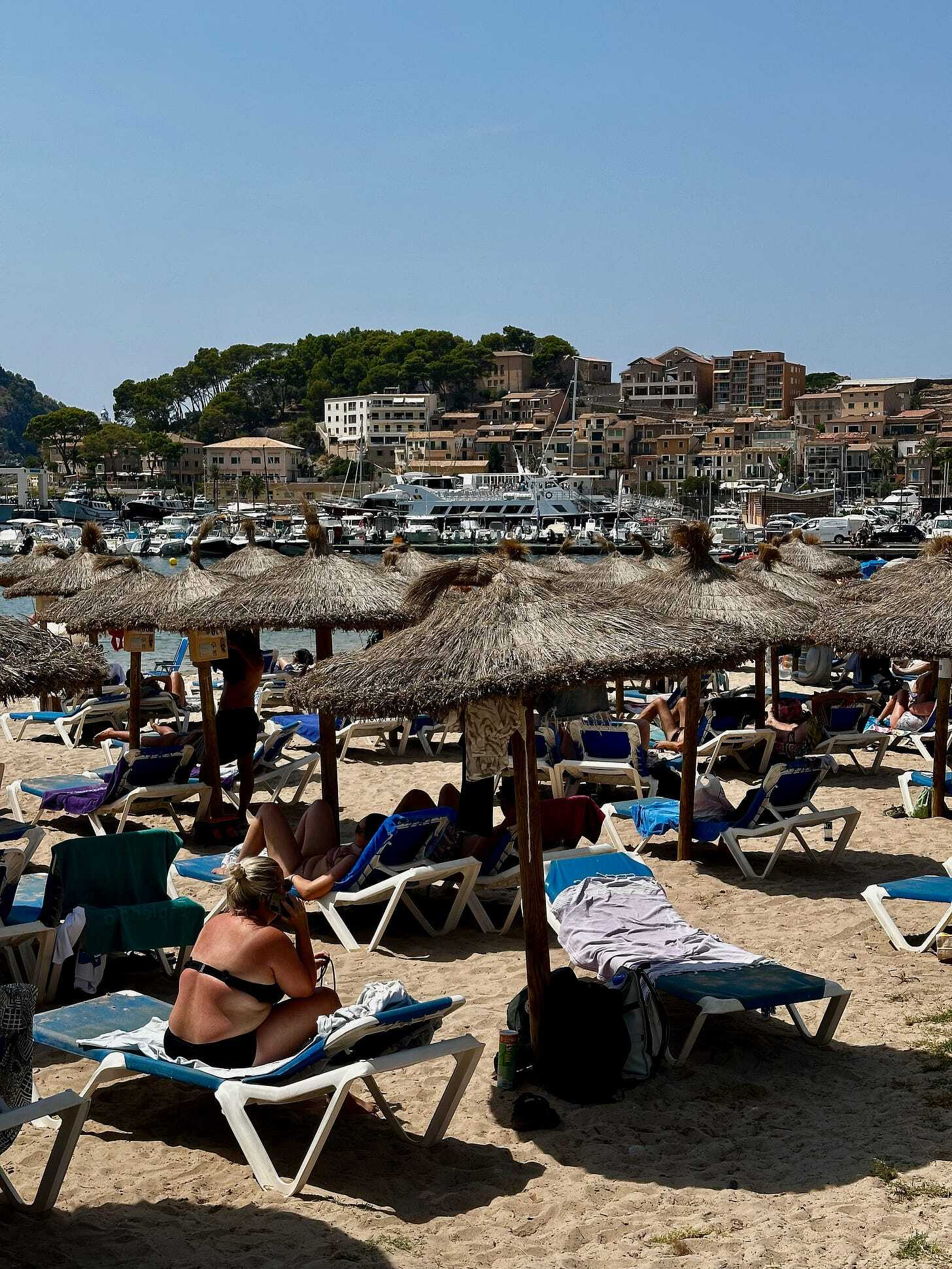
Then there’s the seaside magic. Just 4 kilometres away lies Port de Sóller, a crescent-shaped bay embraced by cliffs, with golden sands and calm turquoise waters. The historic tranvía ferries visitors from town to port in about 15–20 minutes, gliding through orange groves and scenic hillsides. It’s a ride that feels like a miniature adventure, with enough charm to make you forget Instagram exists.
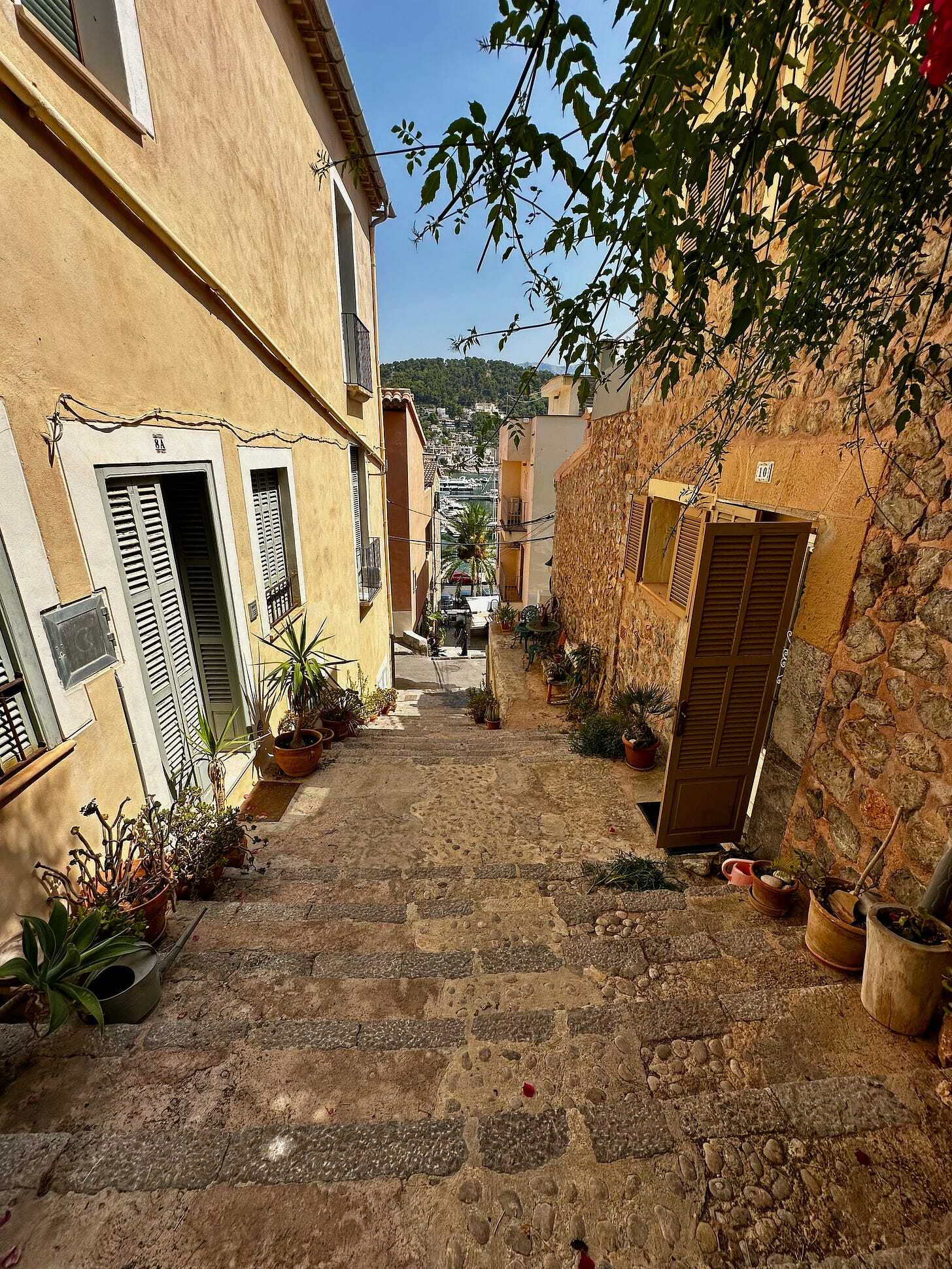
At the port, the beach is small but blissful. The marina is dotted with fishing boats and yachts, offering a glimpse into local life, while the promenade invites strolls, ice cream stops, and sunset dinners. Seafood dominates the menu here, fresh enough that it practically arrives at your table before you order. Lounge on the sand, swim in the calm waters, or just watch the world go by—it’s a rare spot where even the busiest traveller slows down.
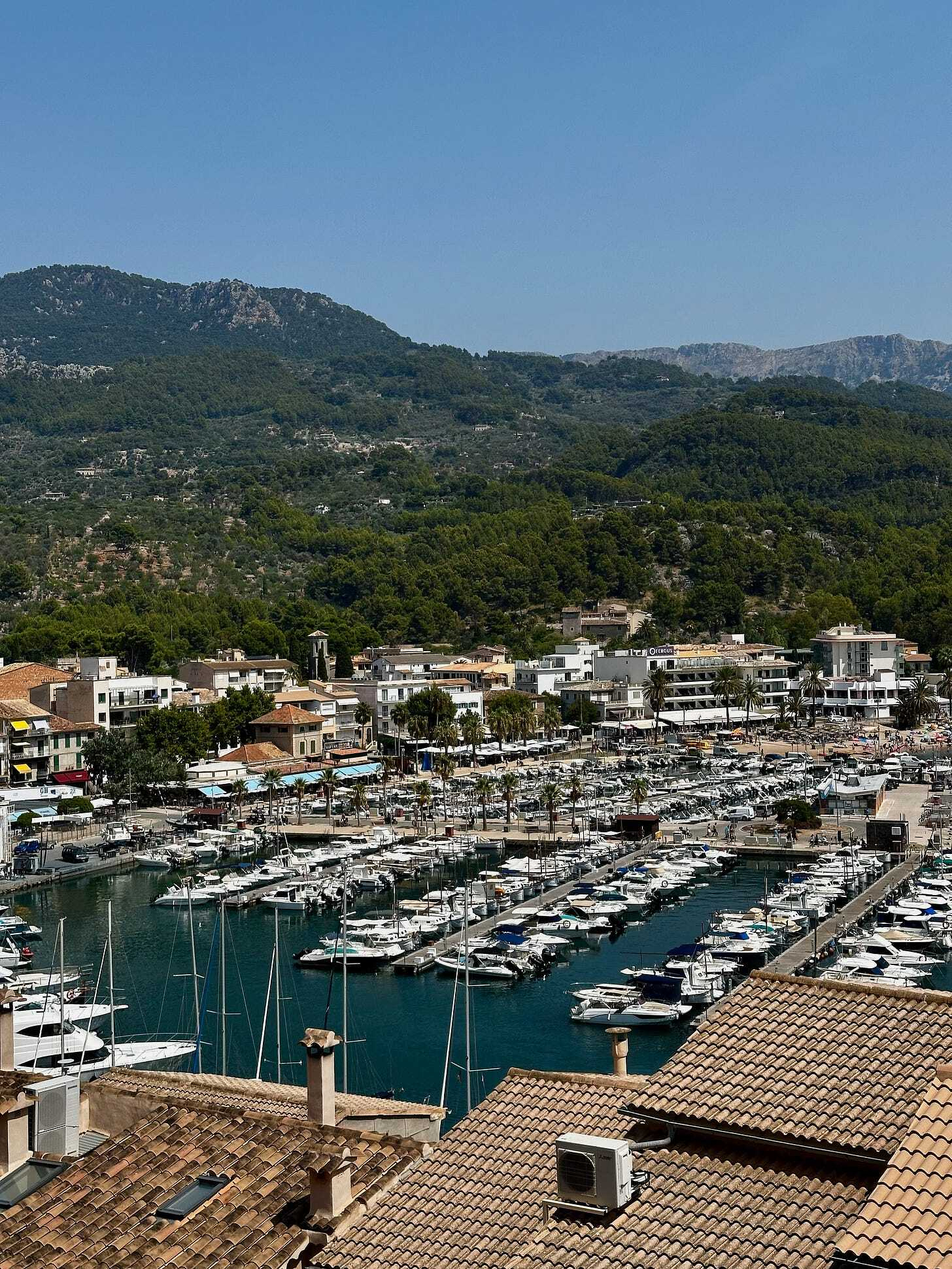
A perfect day in Sóller combines all these elements seamlessly. Take the train from Palma in the morning, explore the town’s squares, shops, and cafés, then hop on the tranvía to the port. Spend the afternoon on the beach, have lunch at a seaside restaurant, and soak up the harbour’s calm charm. Return to town for a coffee or pastry, and finish your day by catching the train back to Palma, feeling like you’ve somehow lived a week’s worth of travel in just one day.
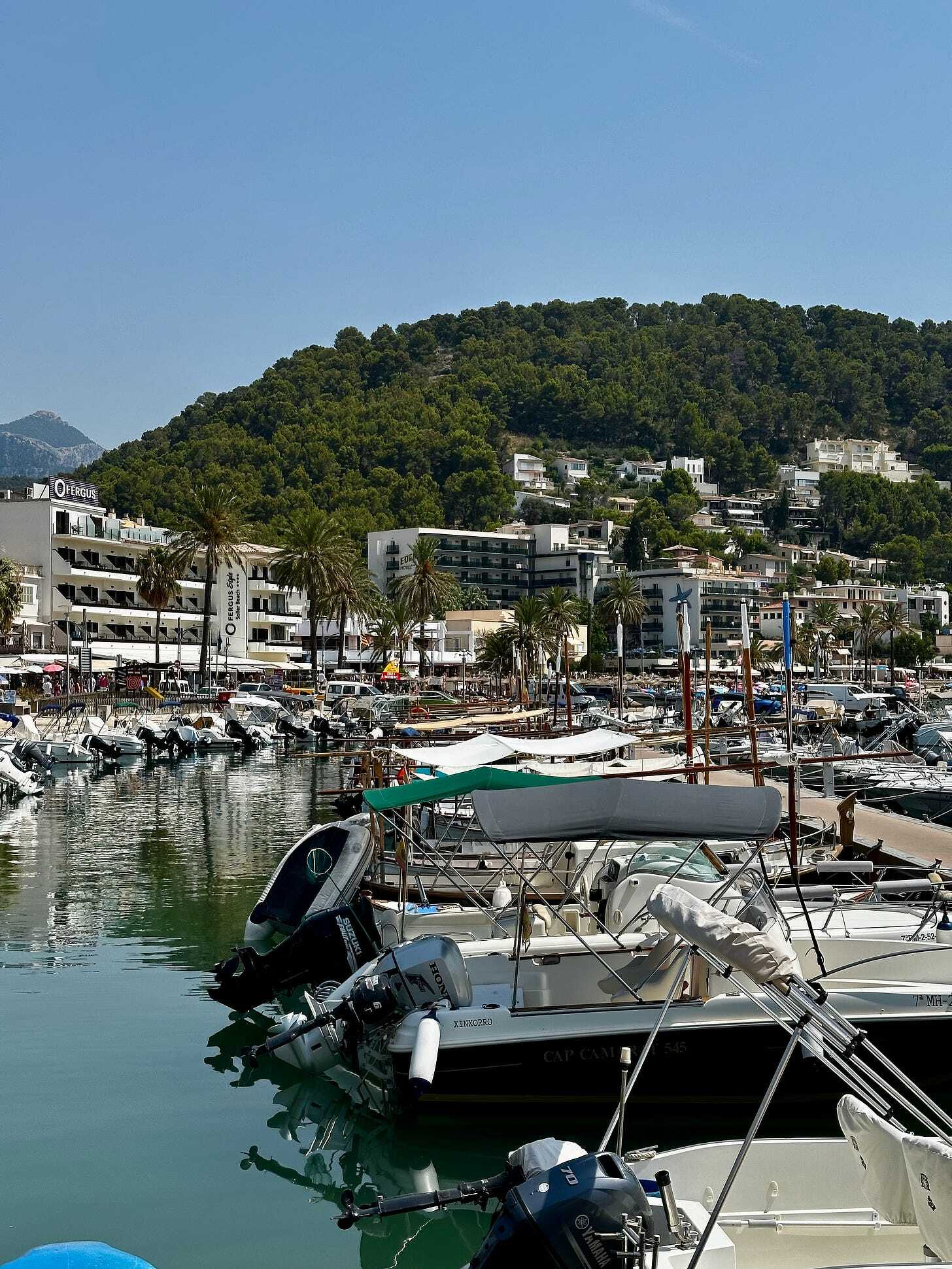
What makes Sóller truly special is this balance of experiences. It’s a town where you can admire historic architecture, wander cobbled streets, taste aromatic citrus and local delicacies, and still end your day with sand between your toes and waves lapping at your feet. The combination of the vintage train, charming town, scenic tram, and peaceful port feels curated, effortless, and somehow completely real.
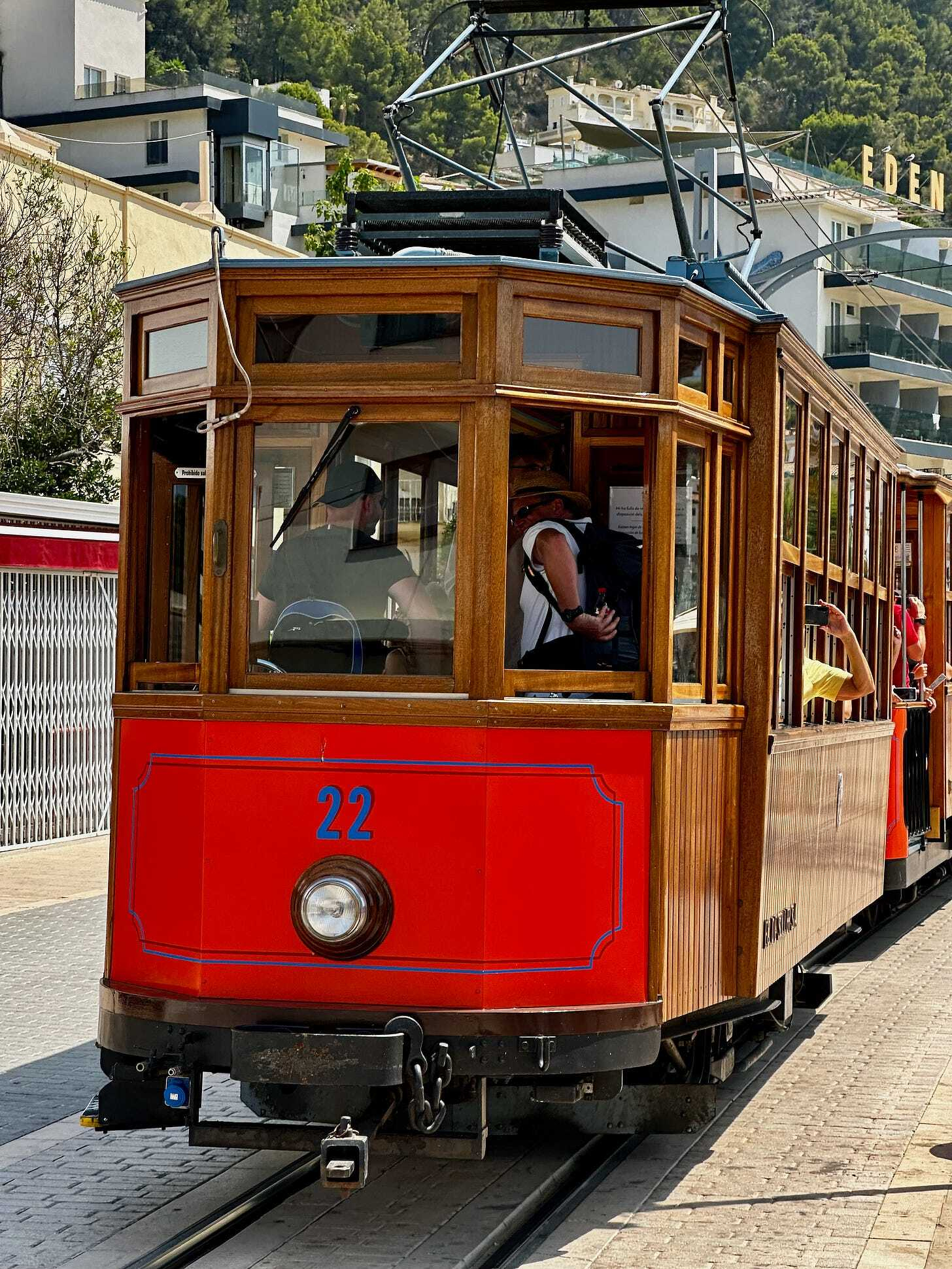
So, if you’re visiting Mallorca and want to skip the clichés, make Sóller a non-negotiable stop. It’s not just a town; it’s a destination that lingers in memory, a place where the slow rhythm of the train, the scent of oranges, and the calm of the sea remind you exactly why you came to the island in the first place.
In short: if Mallorca is an island of wonders, Sóller is the gem that ties them all together—and one that’s perfect for a day, a weekend, or a longer stay, if you’re smart enough not to rush. But book it well in advance! Thanks for reading! Until next time…
#Soller #Mallorca #SerraDeTramuntana #TrenDeSoller #IslasBaleares #MallorcaHiddenGem #MediterraneanTravel #SpainTravel #TravelPhotography
Christmas in New York City: Ice Skating at Rockefeller and a Night with the Rockettes
Winter magic, festive excess, and believing the New York Christmas myth in 2018
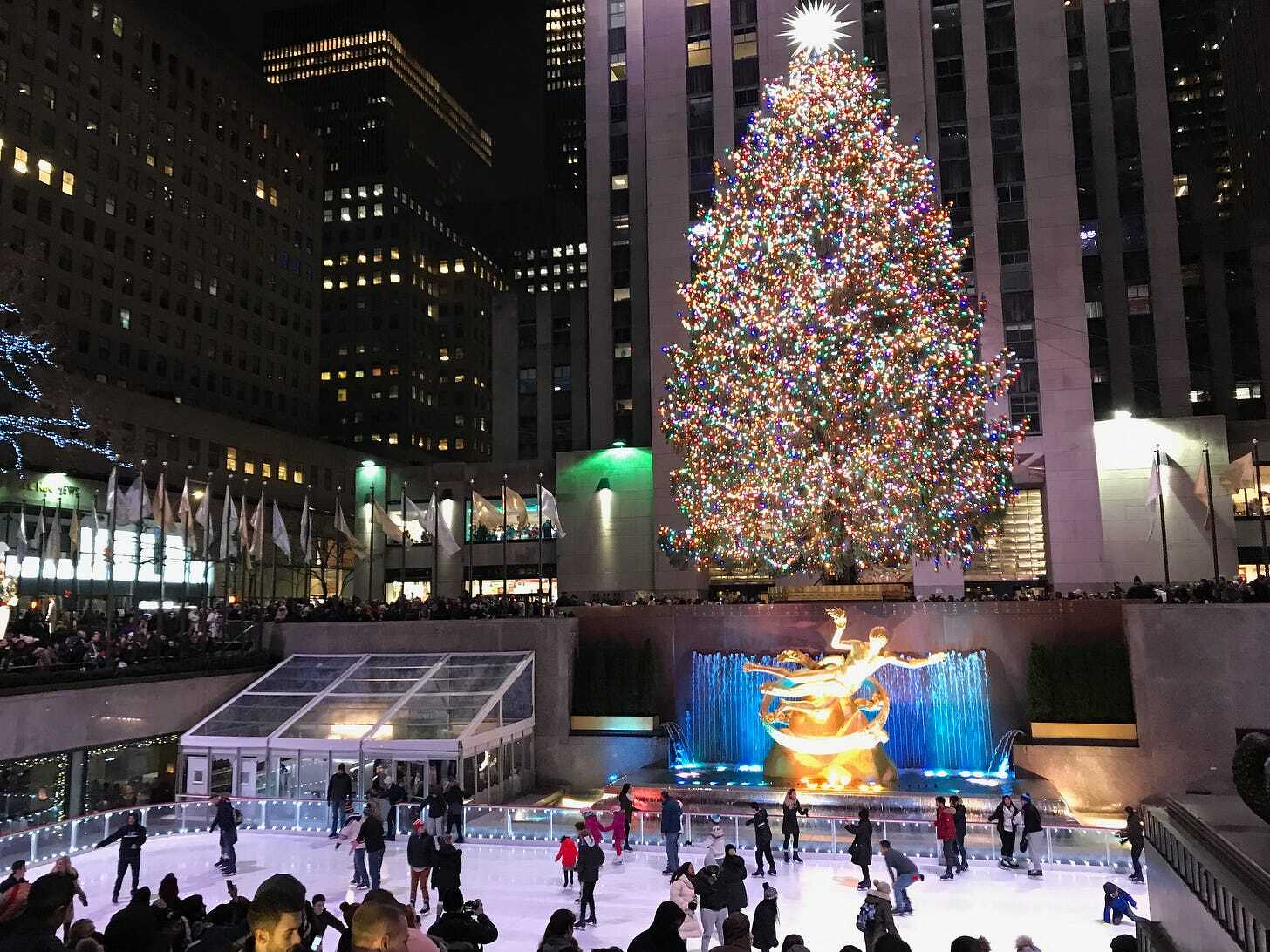
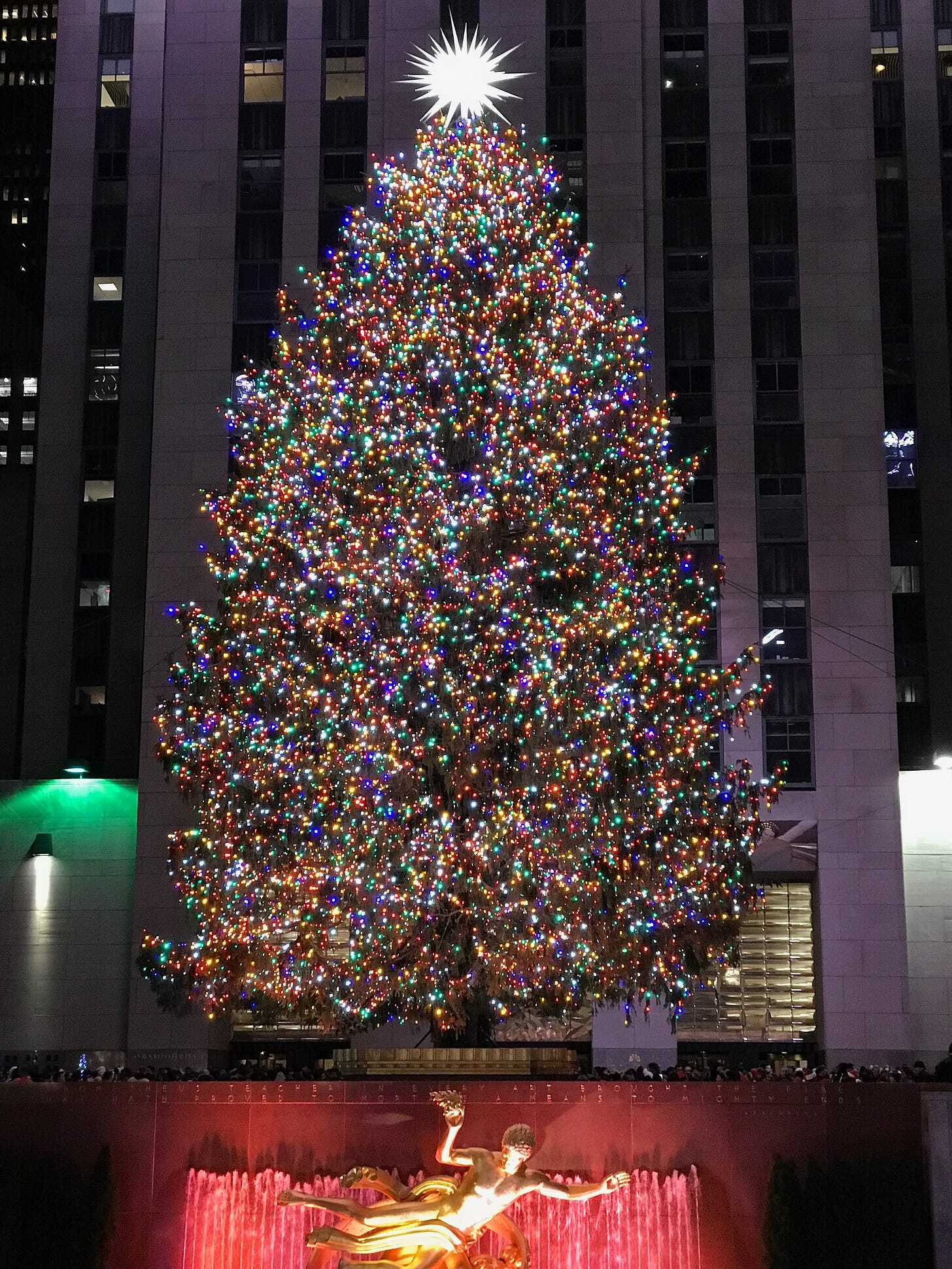
Christmas in New York is not a season; it’s a performance. In December 2018, I walked straight into it, jet-lagged, wide-eyed, and entirely unprepared for how convincingly the city sells its own myth.
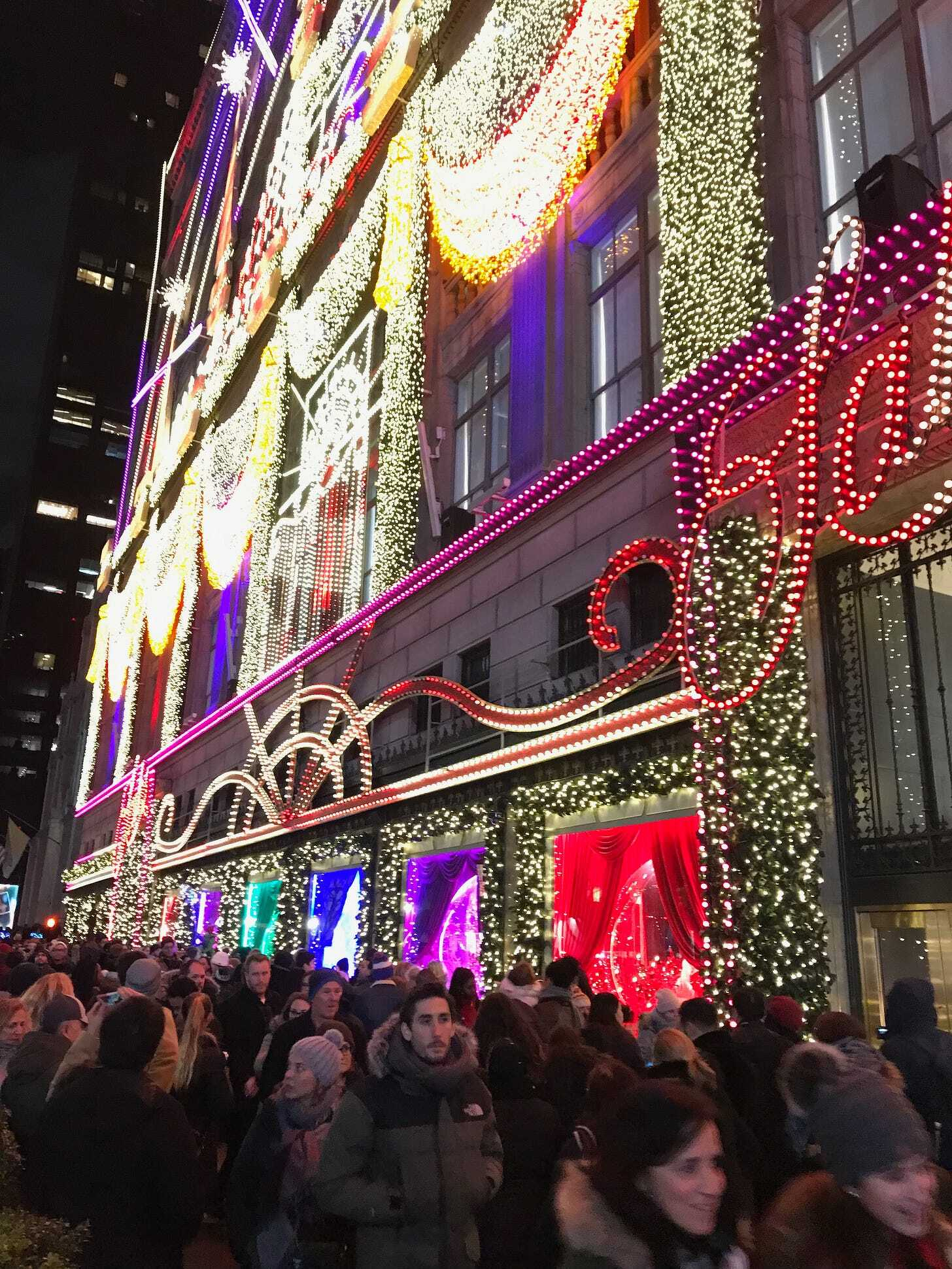
New York in winter has a particular confidence. It doesn’t politely decorate for Christmas—it commits. Lights spill out of shop windows like Broadway understudies desperate for their own spotlight. Every street feels staged, every corner framed as if someone somewhere is about to shout, “Action.” Even the cold seems intentional, sharpened just enough to justify scarves, gloved hands wrapped around paper coffee cups, and that cinematic cloud of breath that makes everyone look thoughtful.
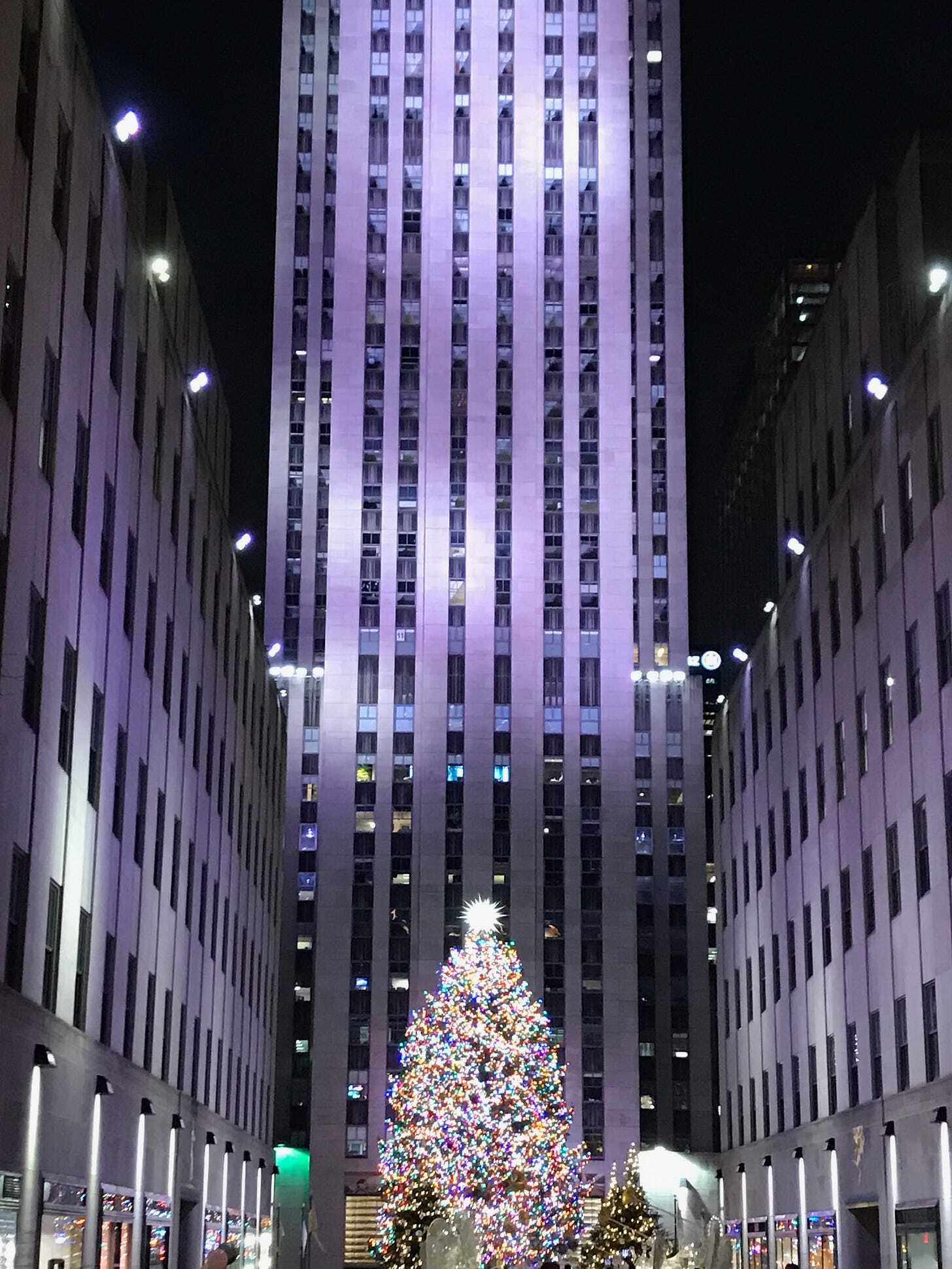
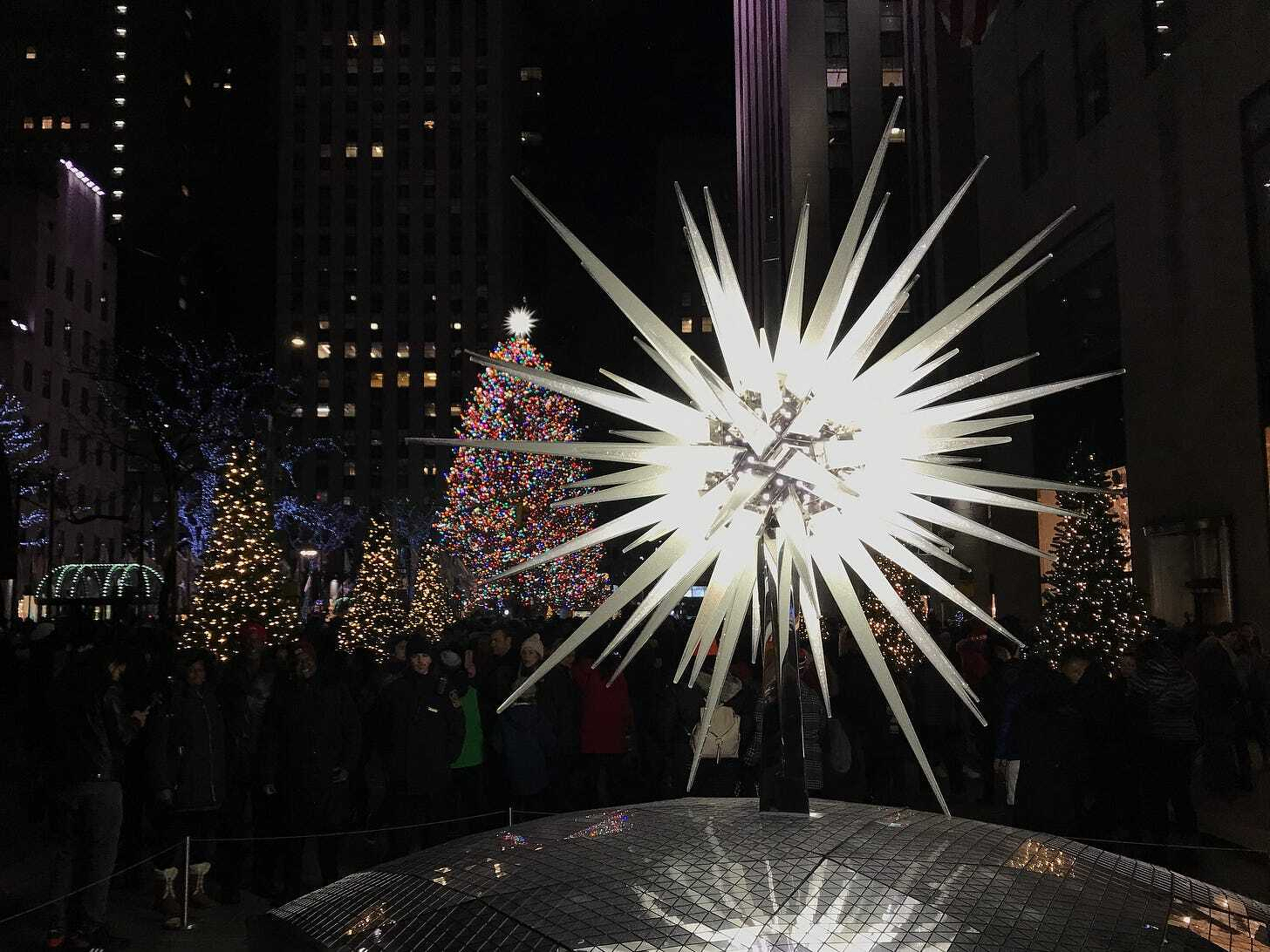
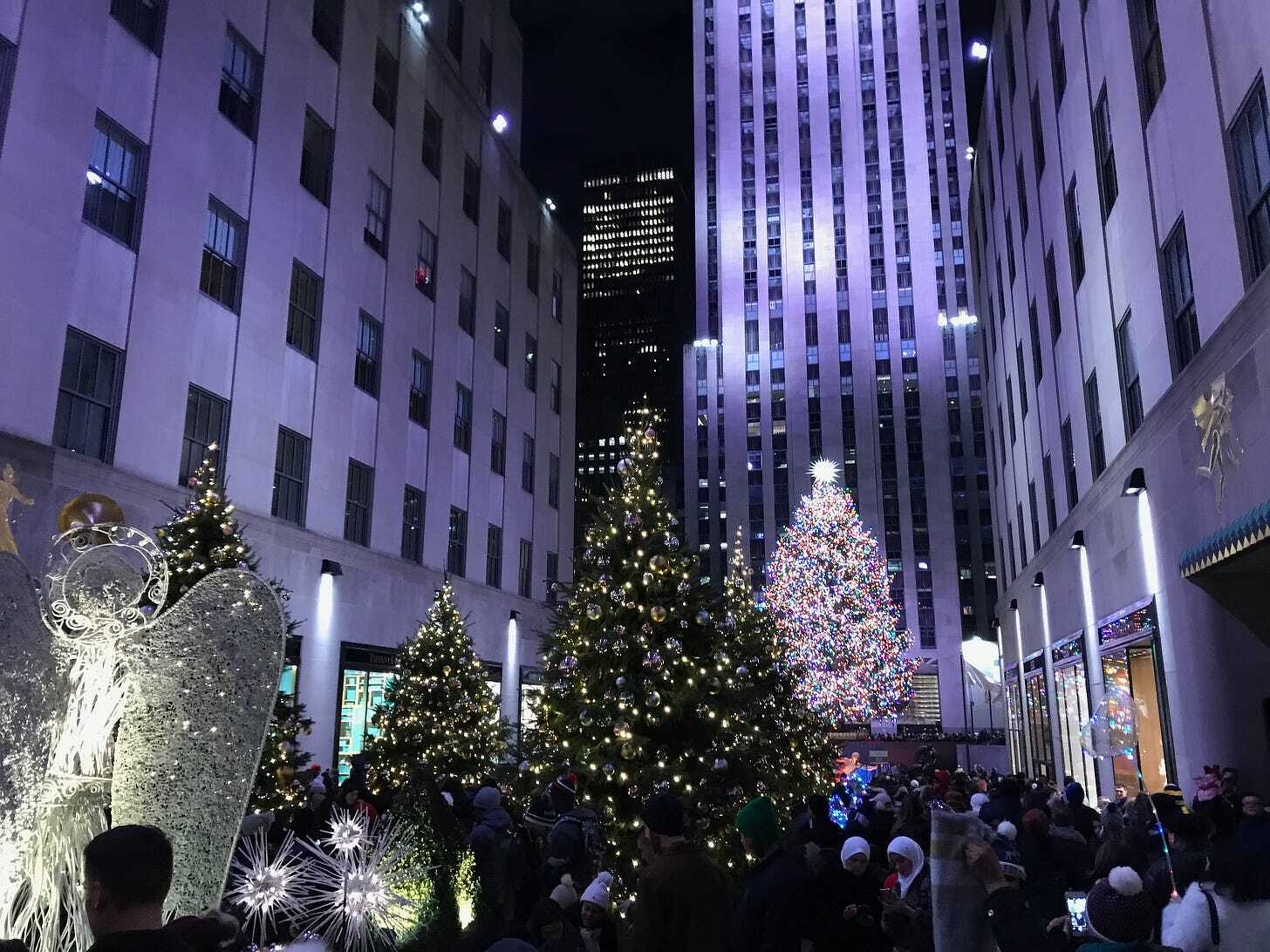
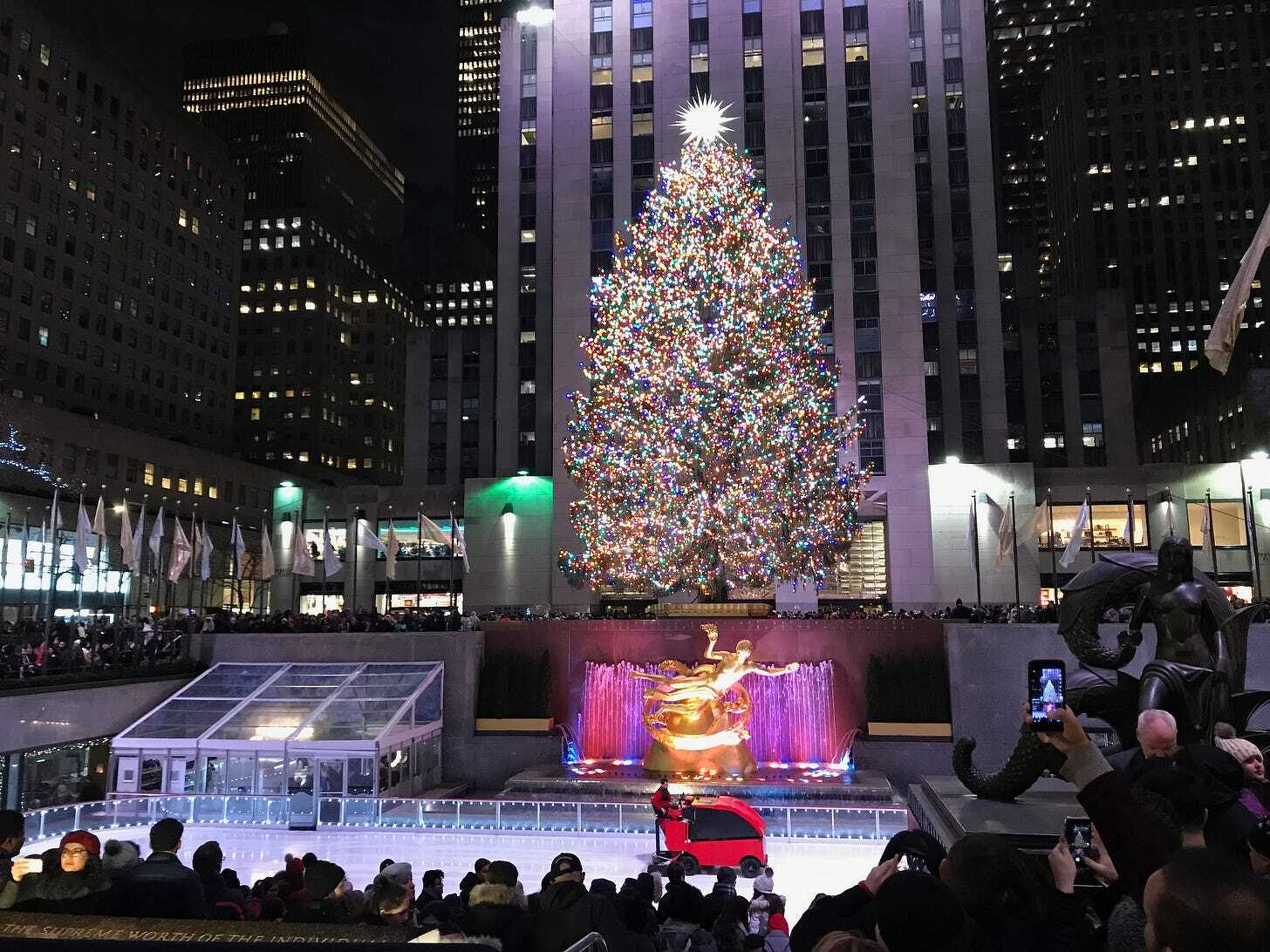
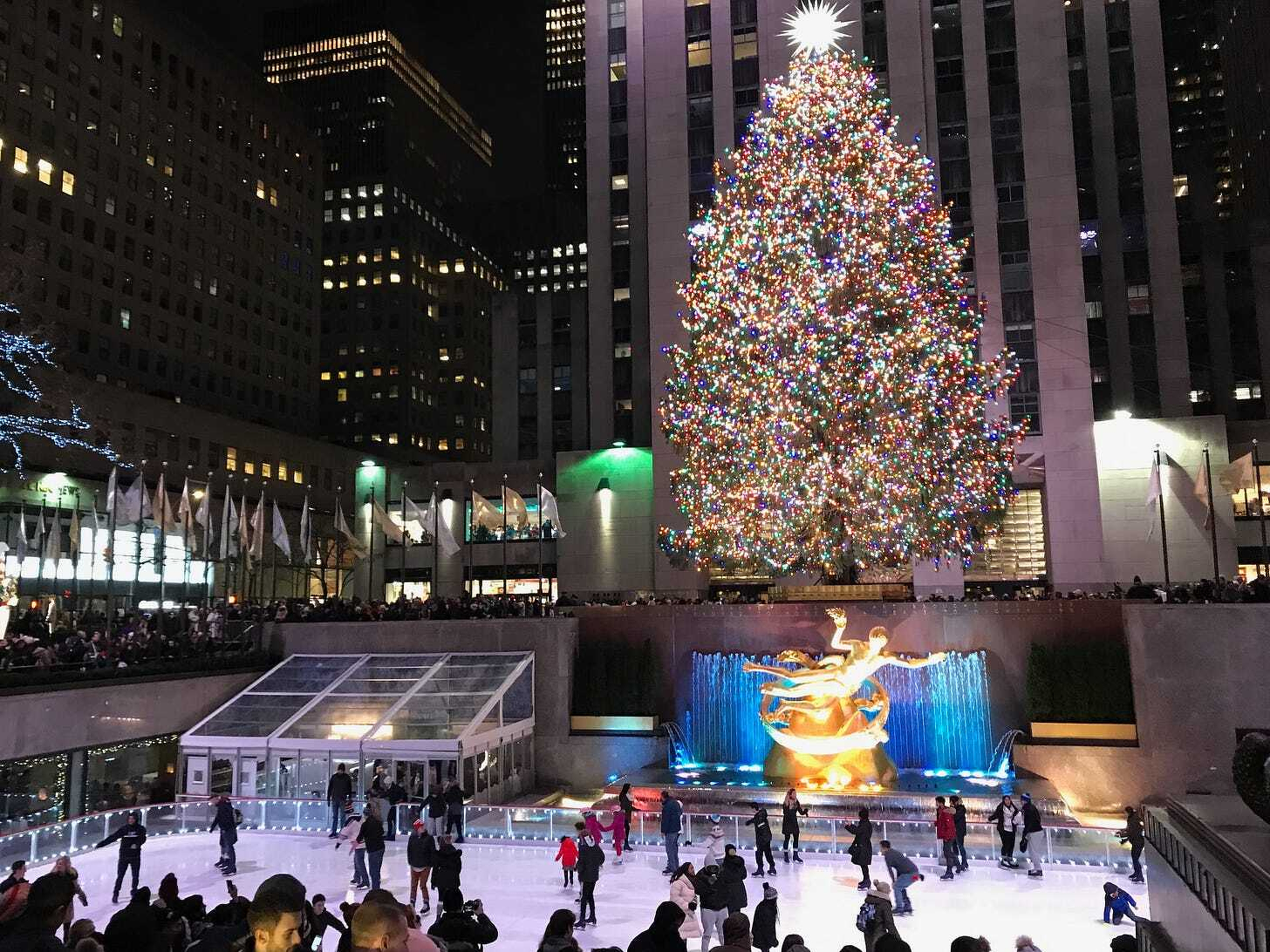
Rockefeller Centre was, unsurprisingly, the epicentre of it all. The tree dominated the plaza like a celebrity who doesn’t need to acknowledge the crowd to be adored. Beneath it, the ice skating rink pulsed with movement—people gliding, wobbling, clinging to the edge with quiet dignity. Skating there felt less like a sport and more like stepping into a collective memory you didn’t know you had borrowed. The ice reflected the lights above, and for a moment, the city seemed to exist upside down as well as right-side up.
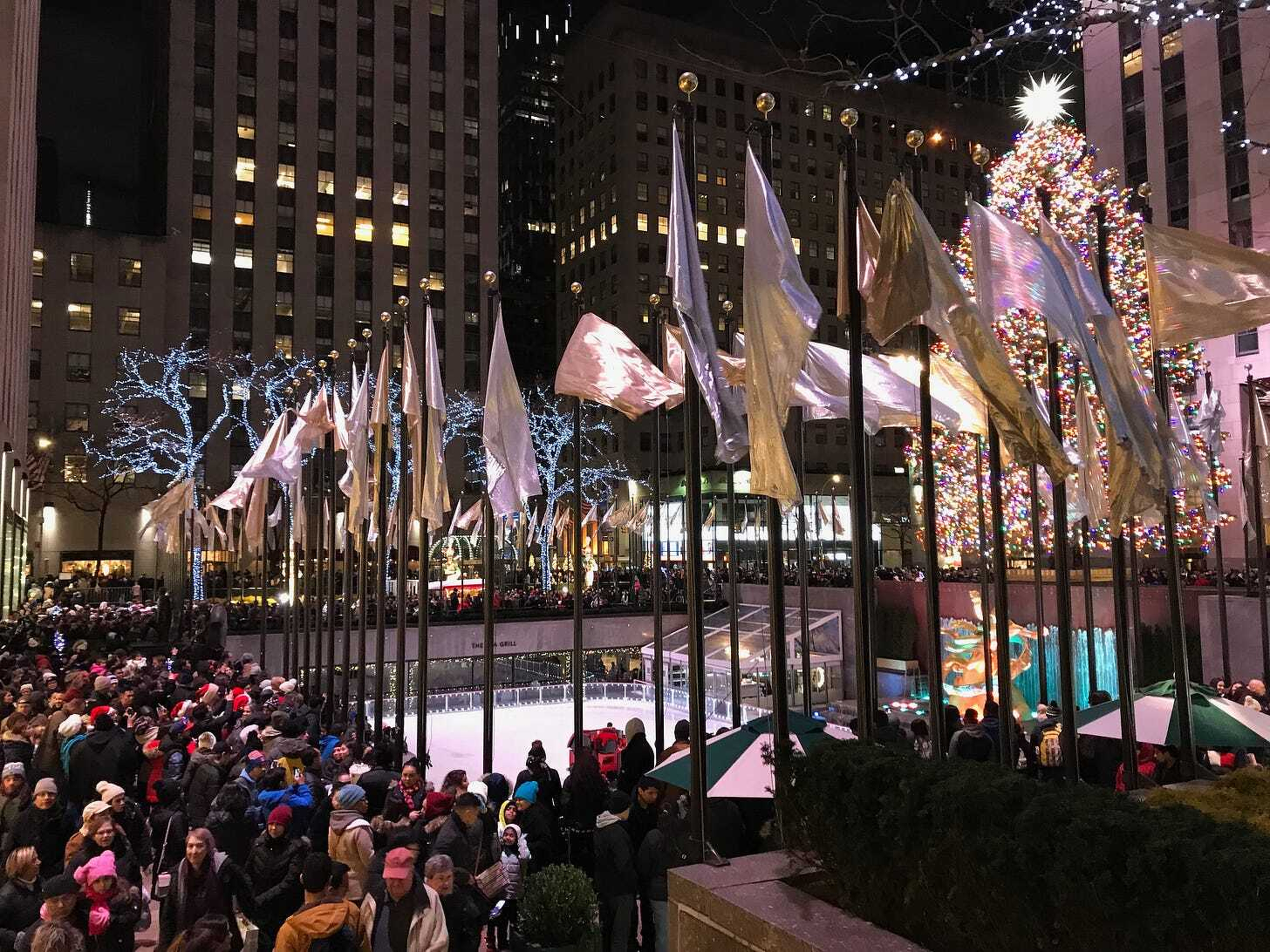
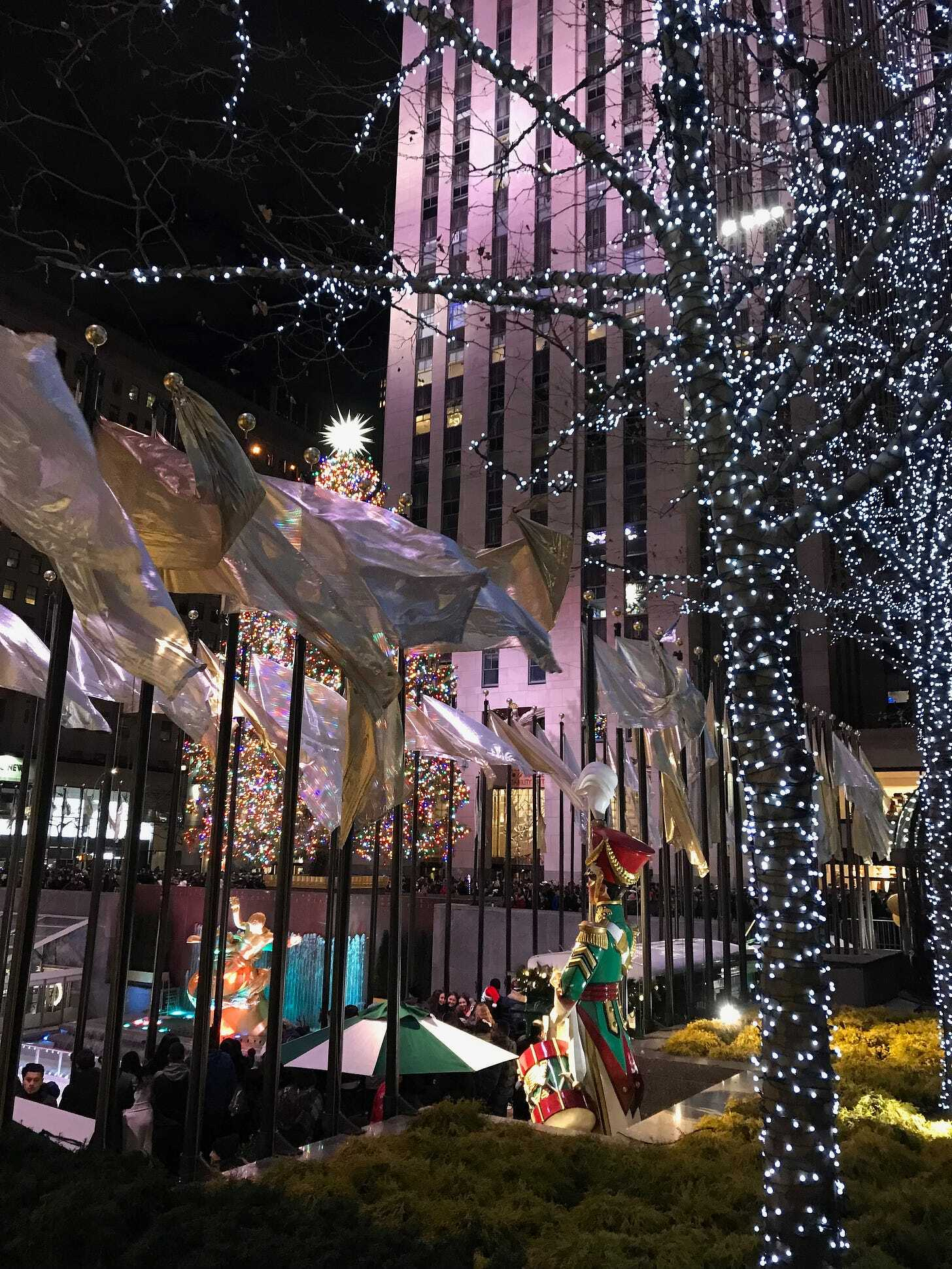
I was not a graceful skater. But that hardly mattered. Falling would have felt appropriate—New York has never required elegance, only participation. Around me, tourists filmed each other with the seriousness of documentary filmmakers. At the same time, locals passed through with practised indifference, as if skating under a Christmas tree between skyscrapers were merely another Tuesday inconvenience.
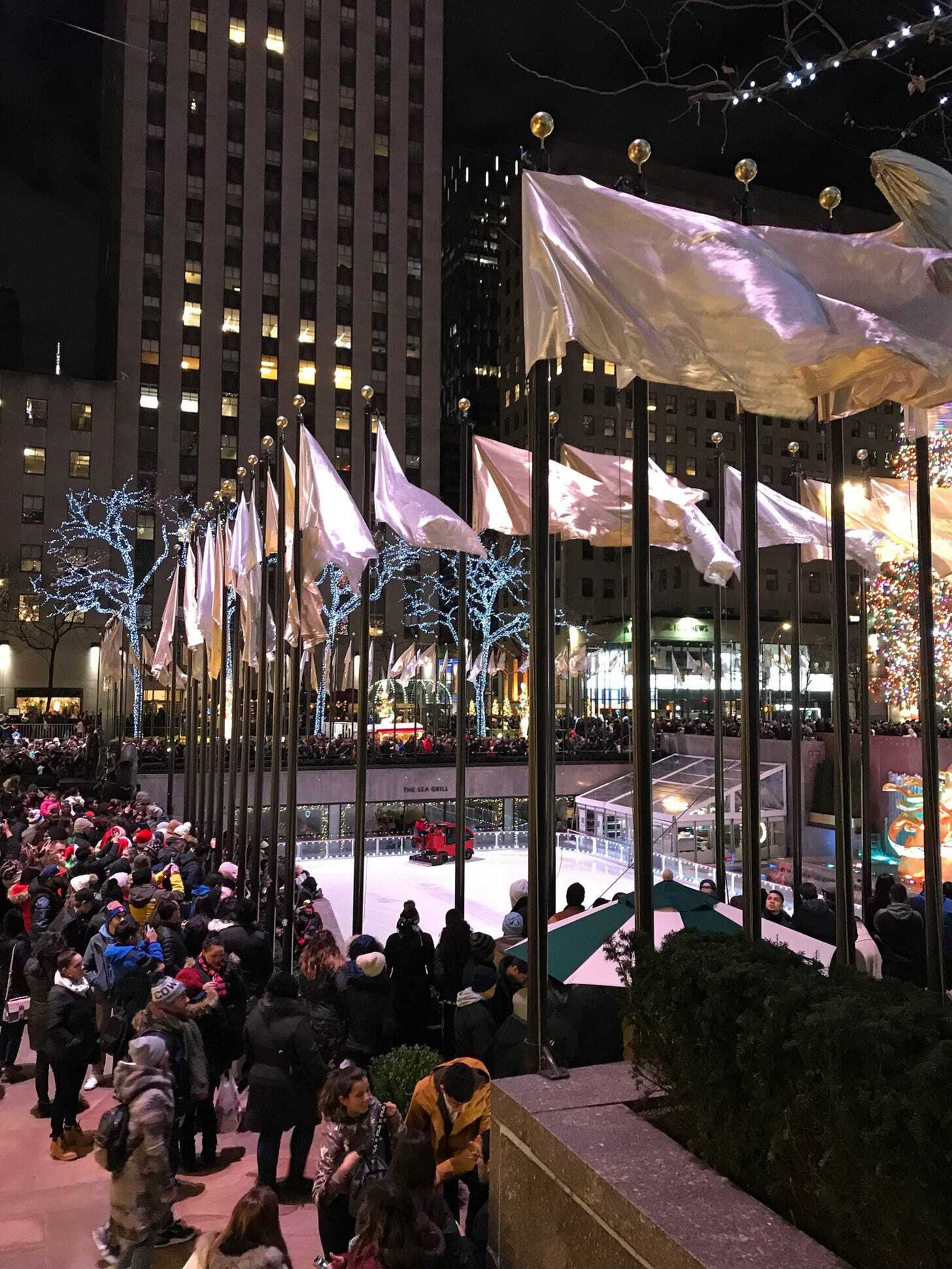
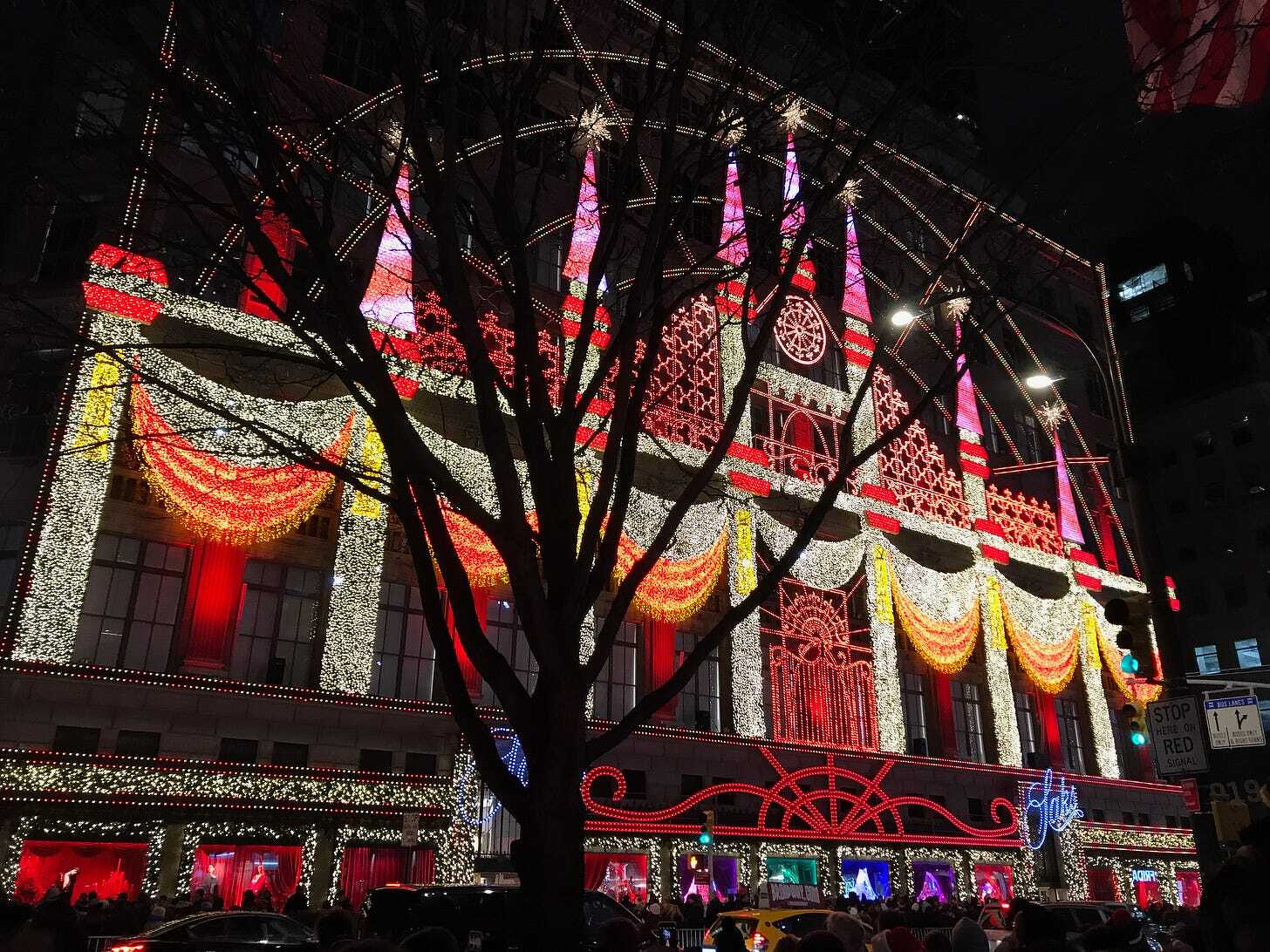
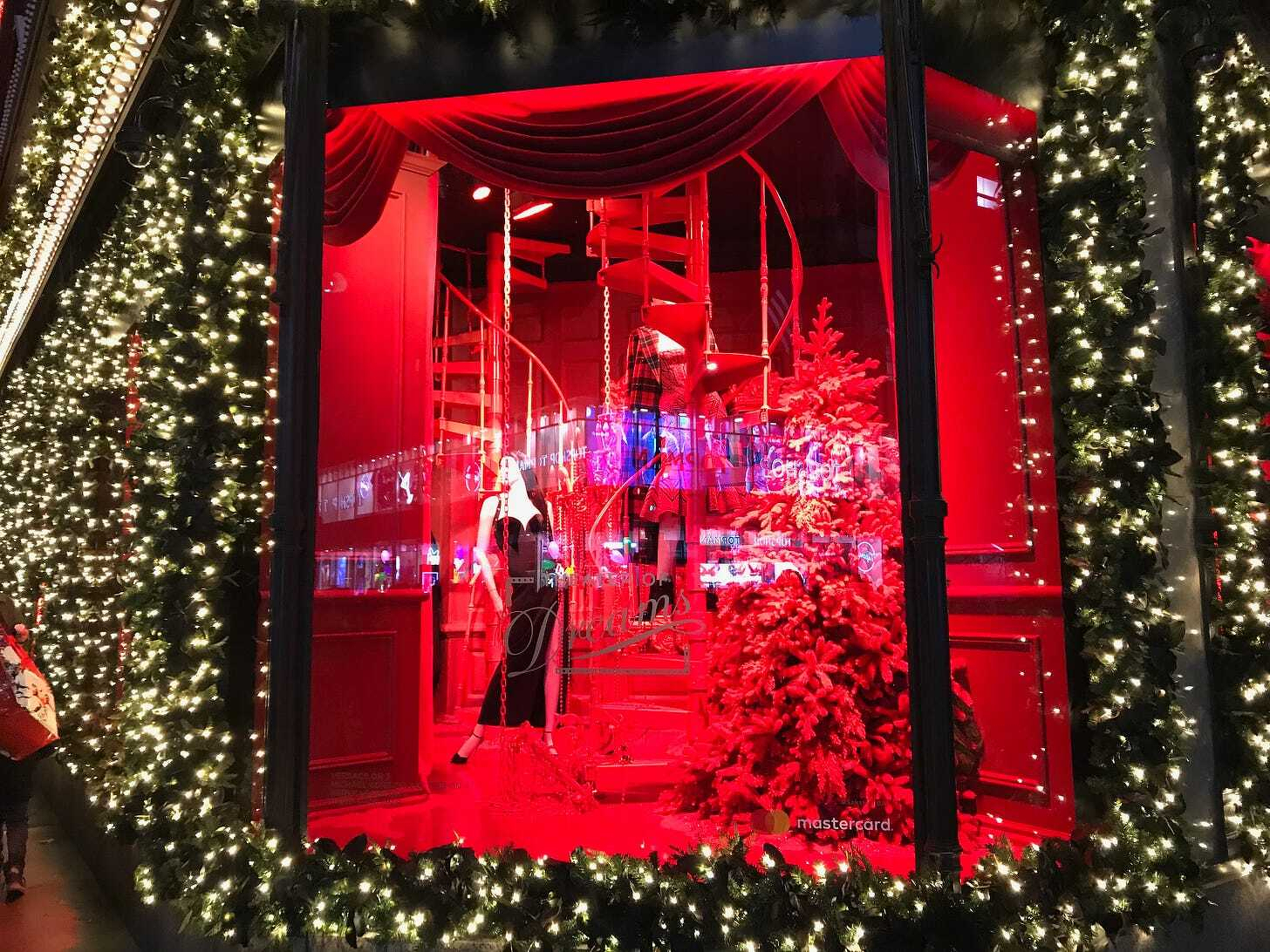
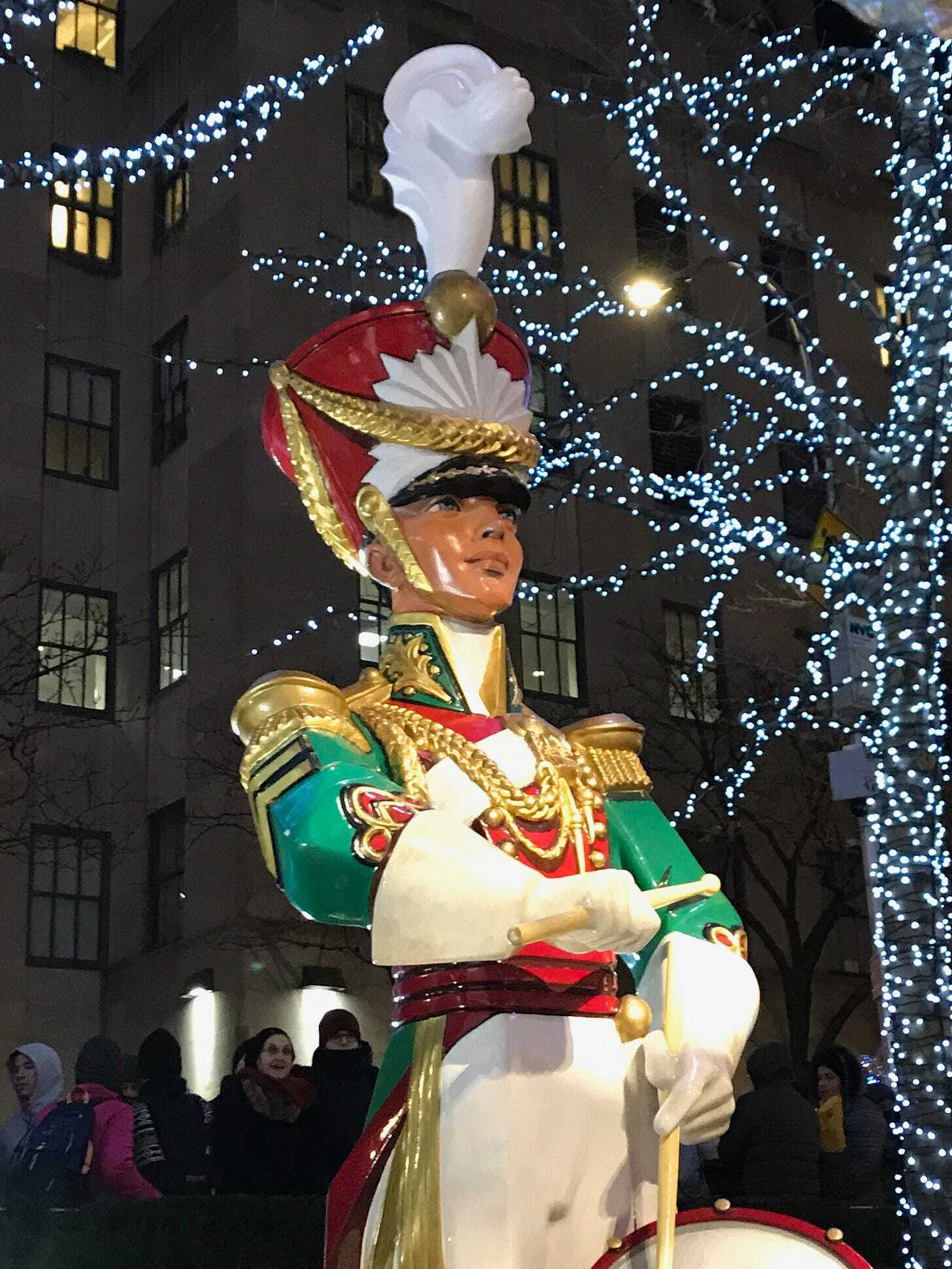
The decorations were relentless in the best possible way. Fifth Avenue shop windows were miniature theatres: mechanical elves working overtime, snowy villages looping the same eternal story, luxury brands transforming nostalgia into something improbably expensive. I lingered longer than necessary, watching reflections of passing taxis merge with fake snow and blinking lights. It felt like the city was daring you to be cynical—and winning.
One evening led me to Radio City Music Hall, where the Rockettes performed with military precision disguised as joy. The show was unapologetically festive: high kicks slicing the air, perfect smiles that somehow didn’t feel forced, and choreography so exact it bordered on surreal. Watching them was like watching time itself behave—everything landing exactly where it should. It was excessive, polished, and utterly sincere. In other words, completely New York.
Outside, the city resumed its usual level of activity. Sirens threaded through Christmas music. Street vendors sold roasted nuts under glowing carts. Somewhere, someone was late for something important. Yet even in the rush, December softened the edges. Strangers held doors a second longer. The city, famously indifferent, allowed itself brief moments of warmth.


Looking back now, Christmas 2018 in New York feels less like a trip and more like a shared illusion I willingly stepped into. I didn’t just see the decorations or the shows—I participated in the agreement that, for a few weeks each year, New York becomes exactly what everyone hopes it will be. Loud, beautiful, exhausting, and somehow still magical.

And maybe that’s the real tradition: arriving knowing it’s all a bit ridiculous, and leaving grateful that you believed in it anyway.
#NewYorkCity #NYCChristmas #RockefellerCenter #RadioCityMusicHall #FifthAvenue #ManhattanWinter #HolidaySeason #TravelEssay #NewYorkTravel #TravelPhotography
A Glimpse of the Divine: Casablanca's Majestic Hassan II Mosque
A Traveller’s Guide to Morocco's Architectural Gem and the World’s Second Tallest Minaret
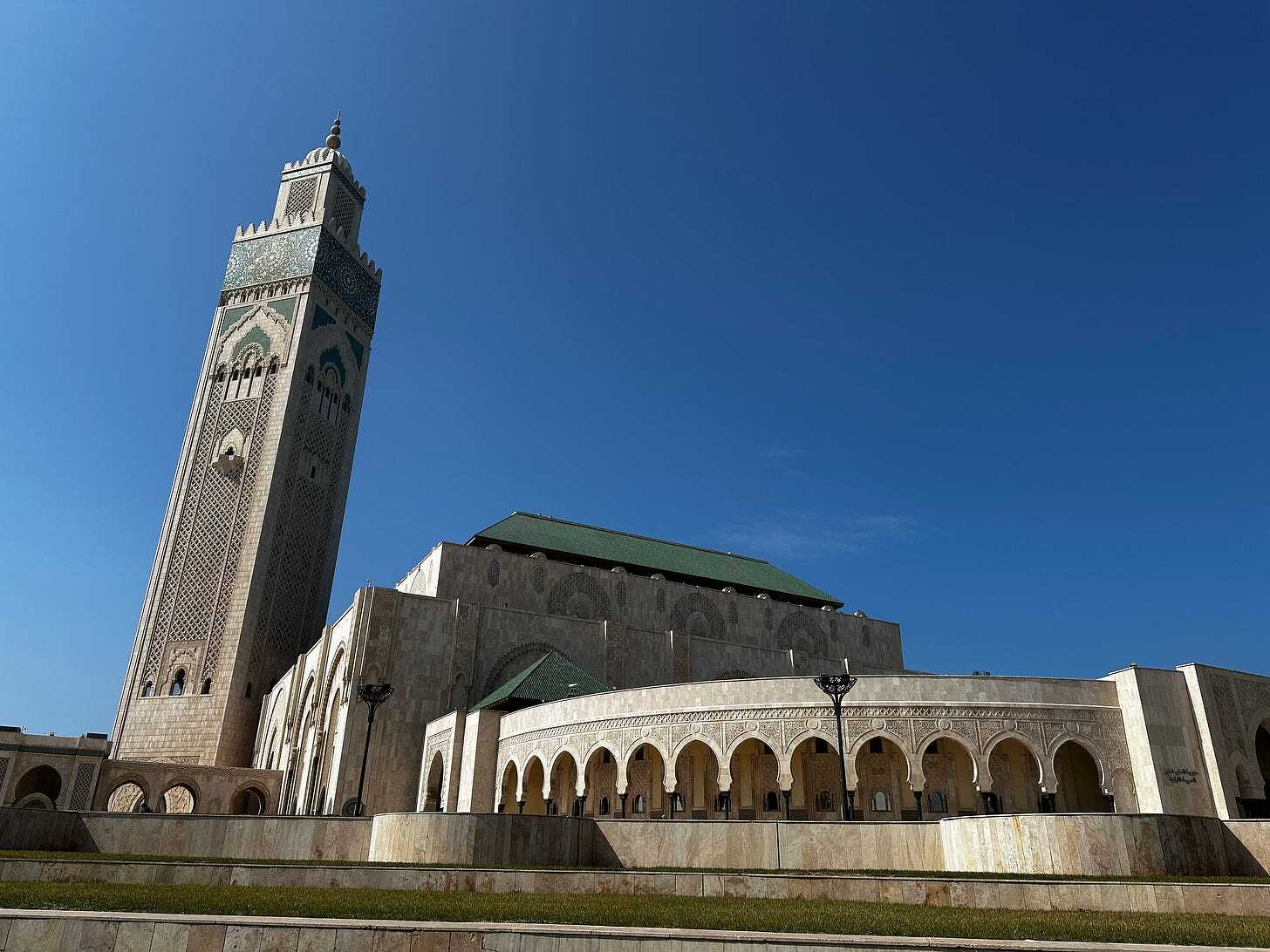
Casablanca. A city whose name evokes black-and-white romance and high drama, yet whose modern reality is a vibrant, bustling North African metropolis. My own encounter with Casa was a fleeting one—a precious few hours snatched from a long journey—but it was time enough to fall for its coastal energy and, most importantly, to stand in awe before the architectural masterpiece that defines its skyline: the Hassan II Mosque.
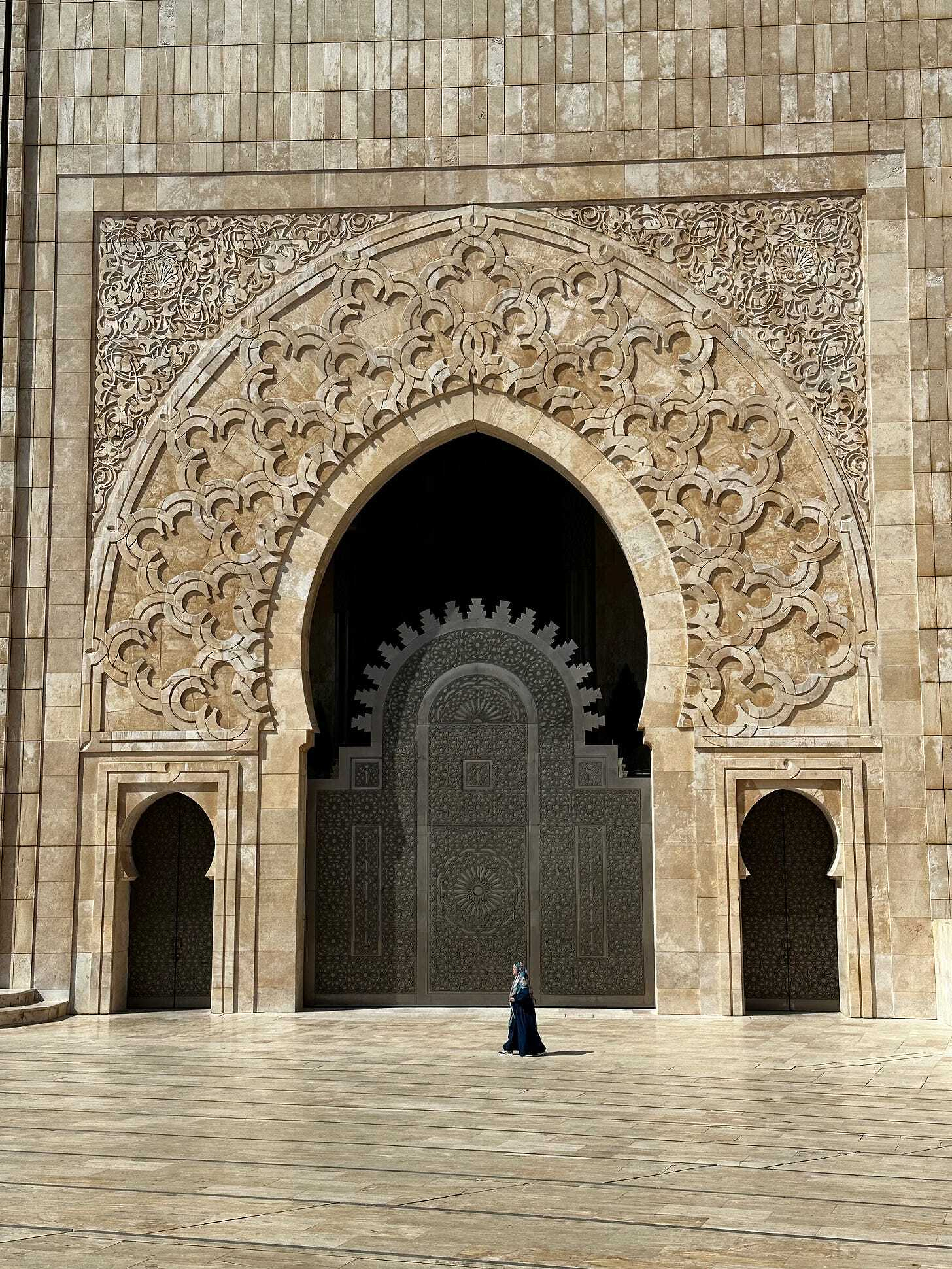
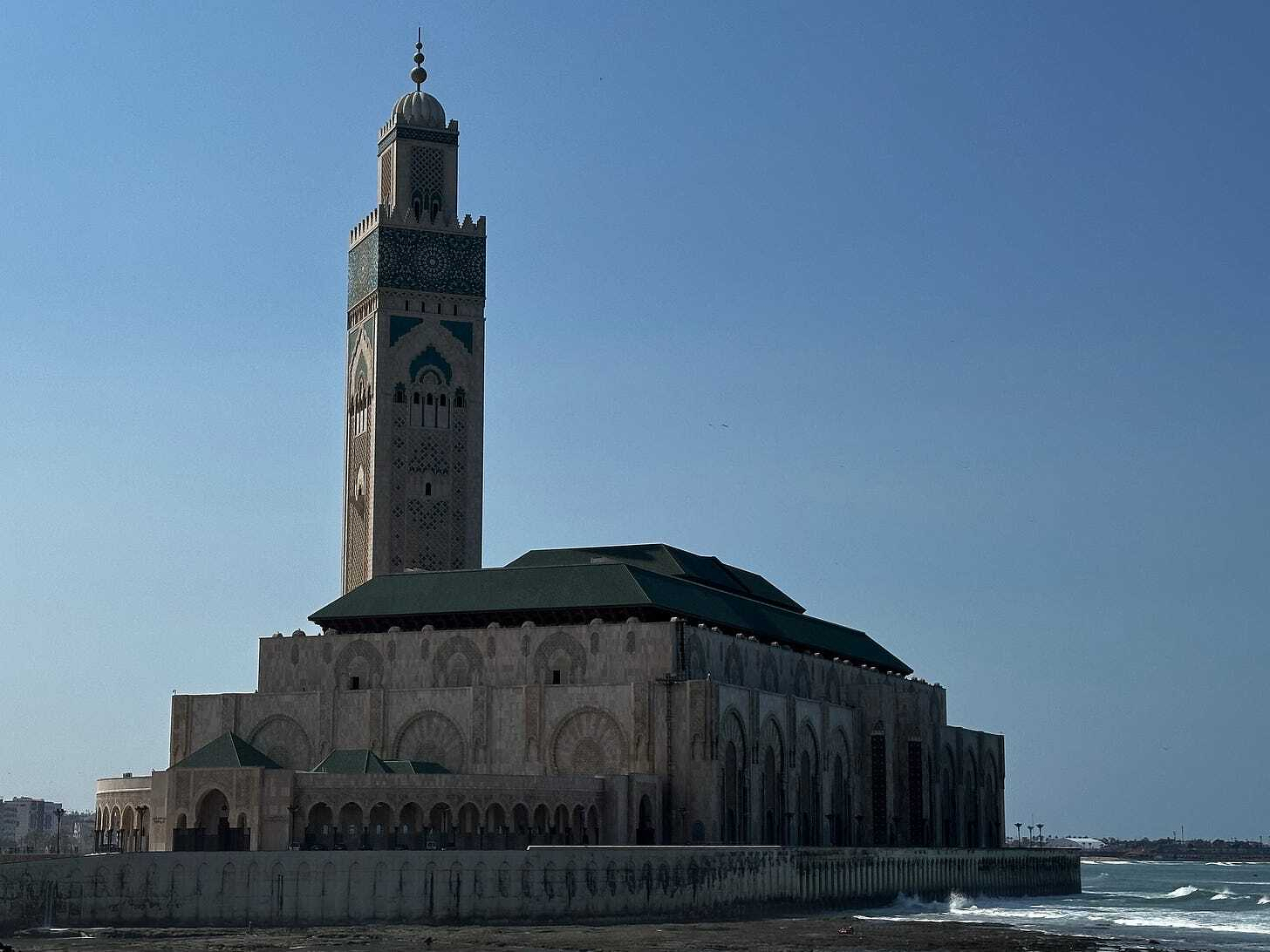
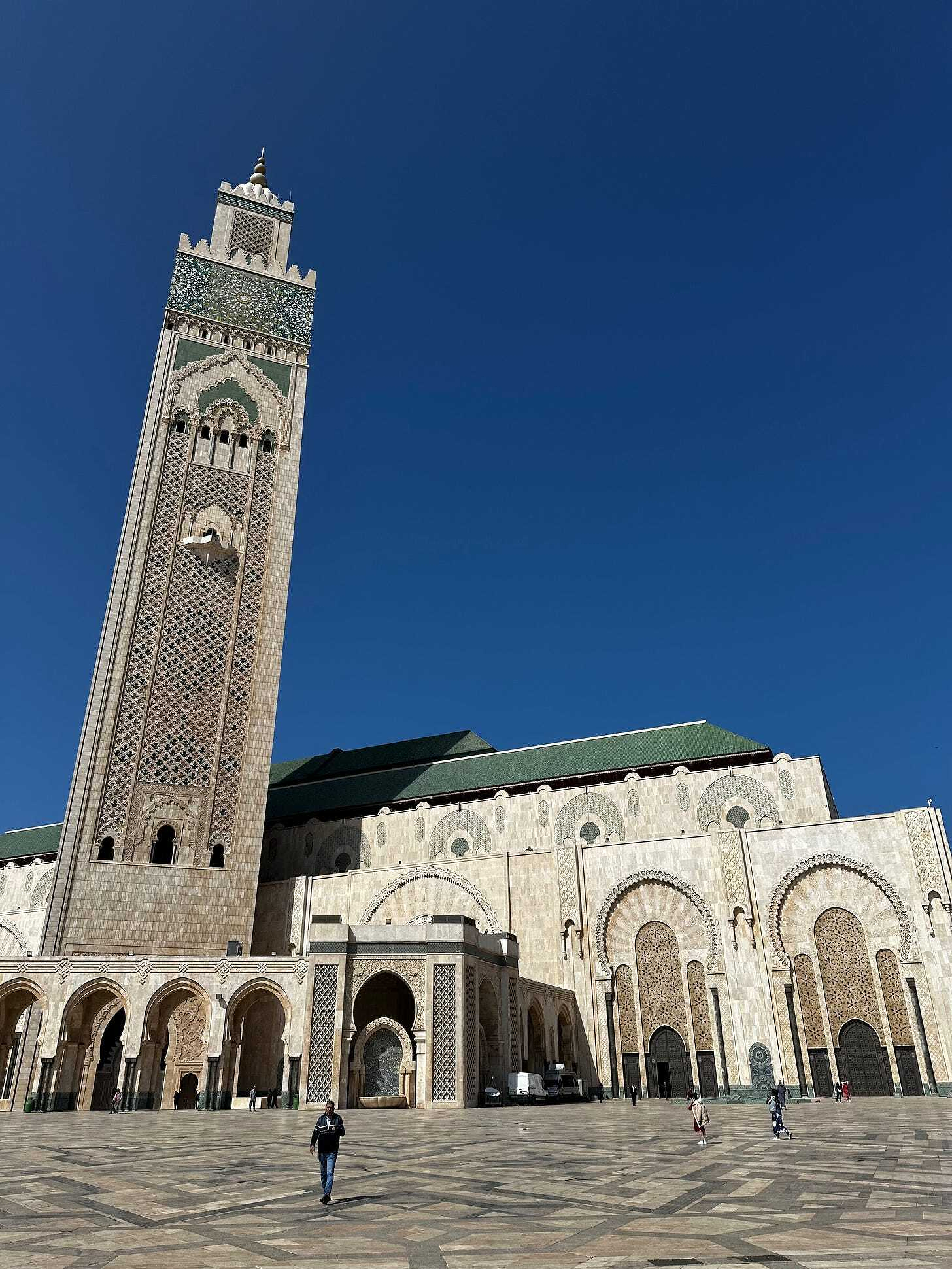
The city, though full of charming chaos, felt like a prelude to the main event. My path led me along the coast, and as I approached, the scale of the mosque was almost staggering. It doesn’t just dominate the landscape; it commands the entire Atlantic horizon. Built on a promontory, it appears to rise majestically from the sea itself, a monumental achievement that fulfils the vision of King Hassan II, who stated: “I want to build this mosque on the water, because God’s throne is on the water.”
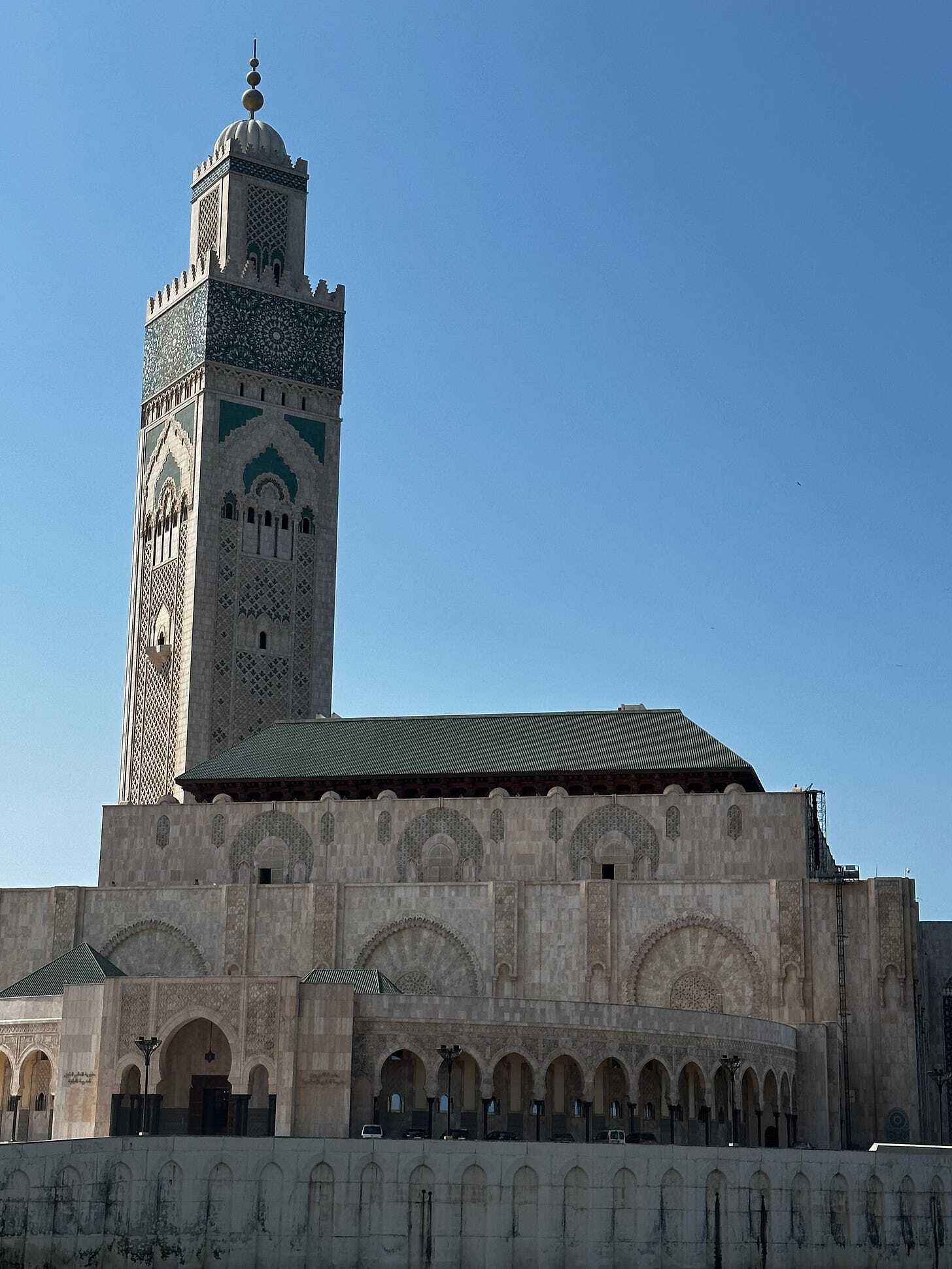
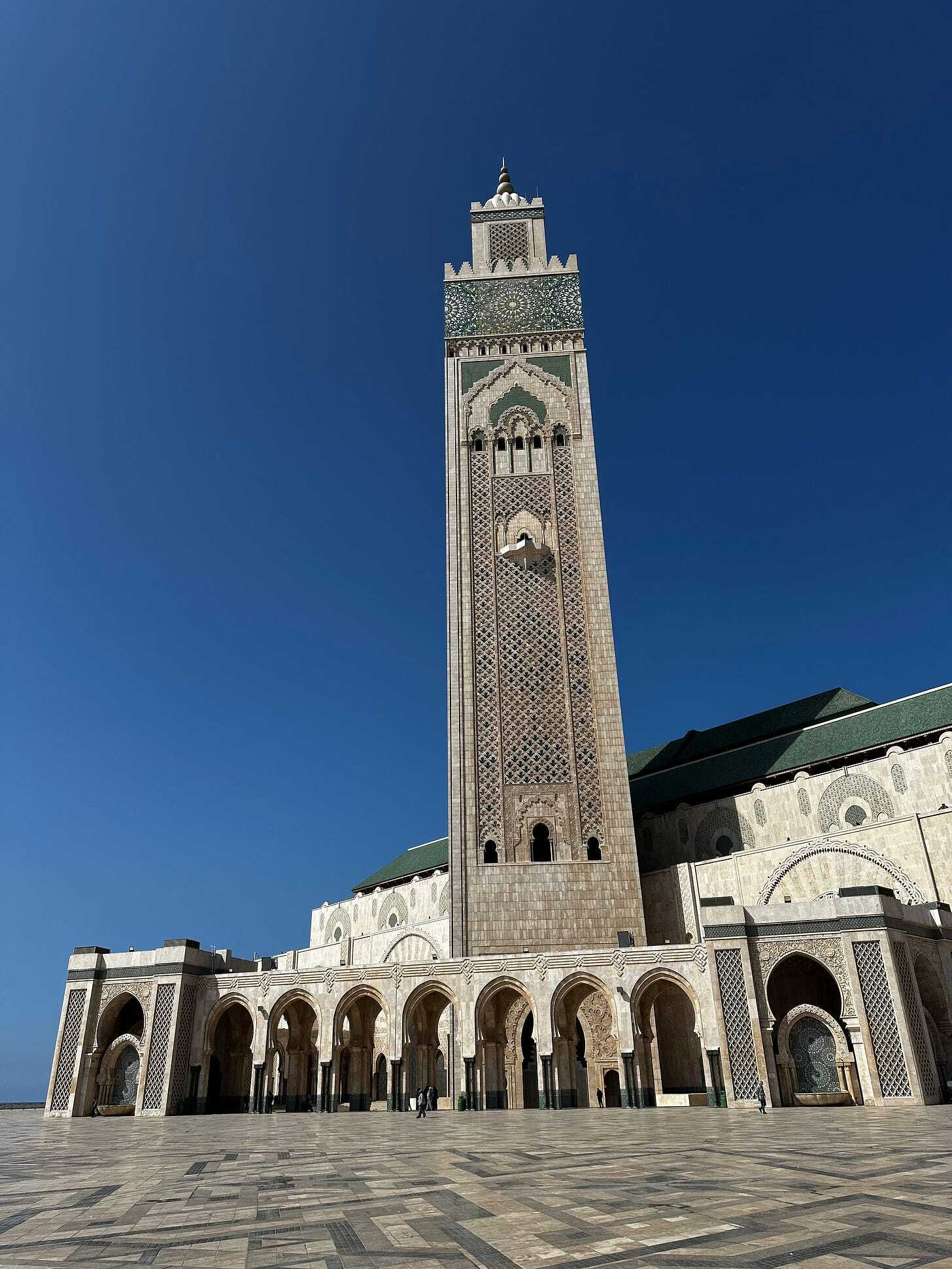
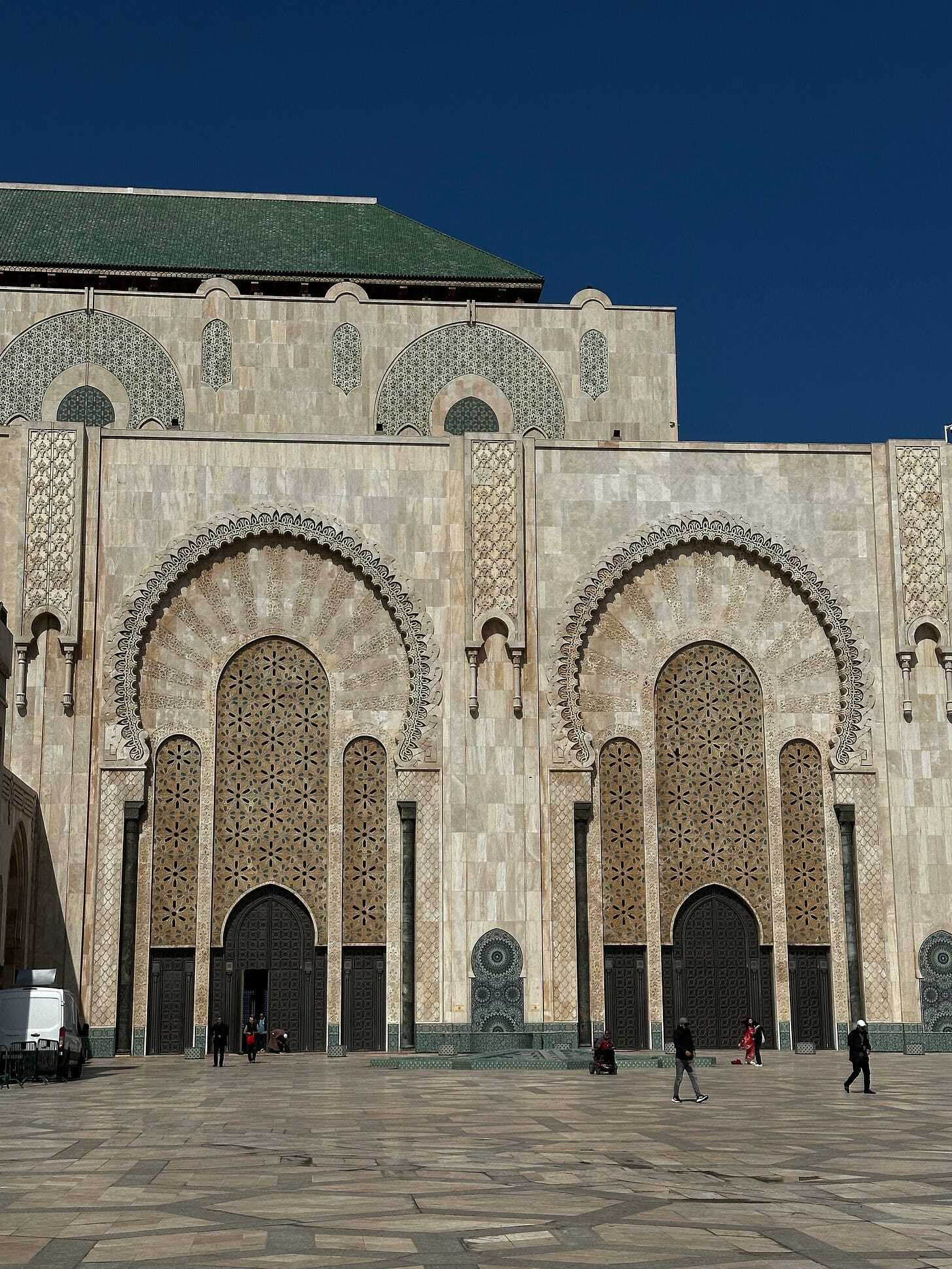
Even from the outside, the mosque is a sensory experience. The sound of the crushing Atlantic waves provides a natural, spiritual soundtrack to the immense plaza. I walked the perimeter of the vast courtyard, imagining the incredible sight of 80,000 worshippers gathering on these very grounds, in addition to the 25,000 capacity of the indoor prayer hall. The sheer magnitude makes it the second-largest functioning mosque in Africa.
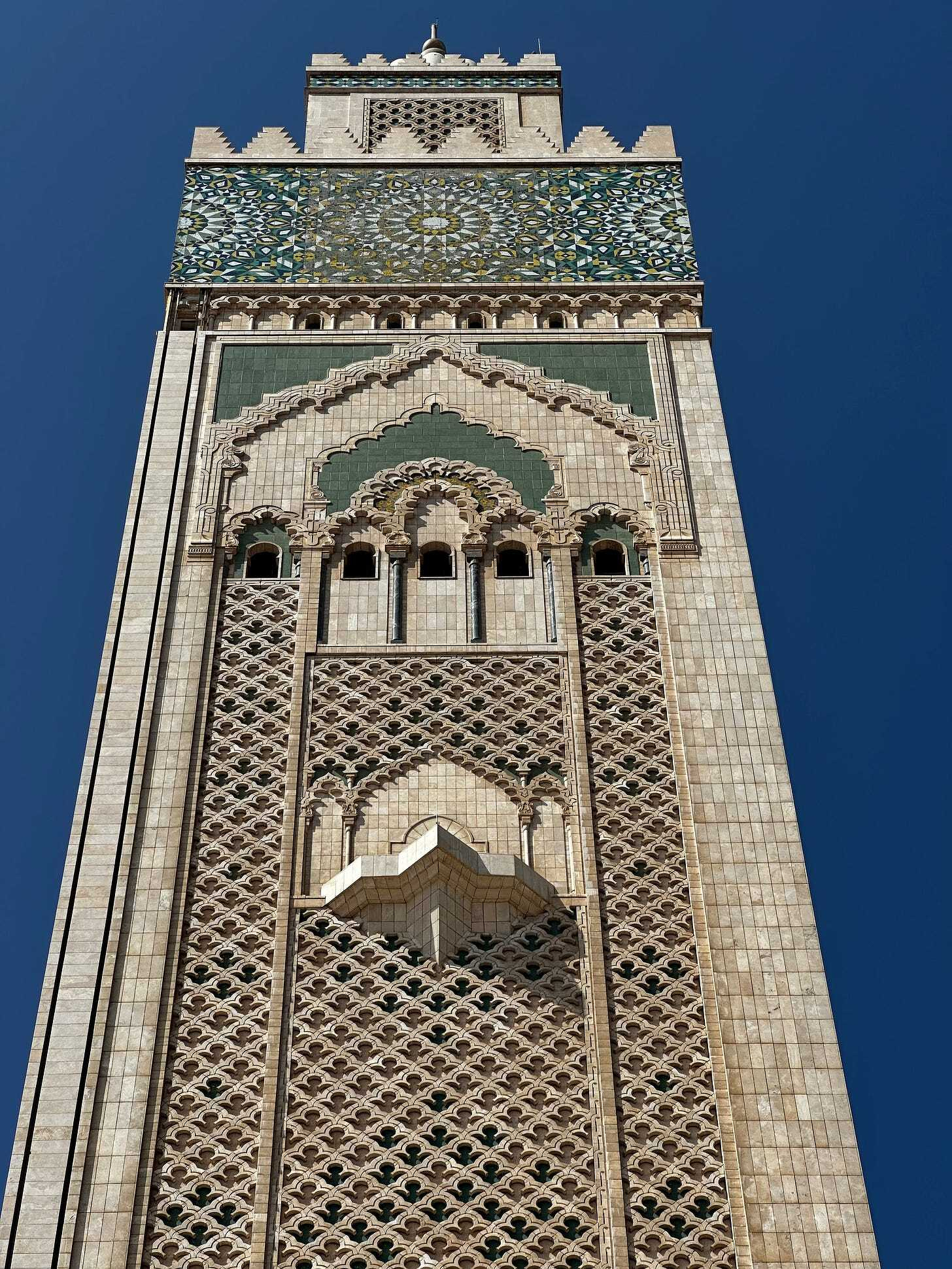
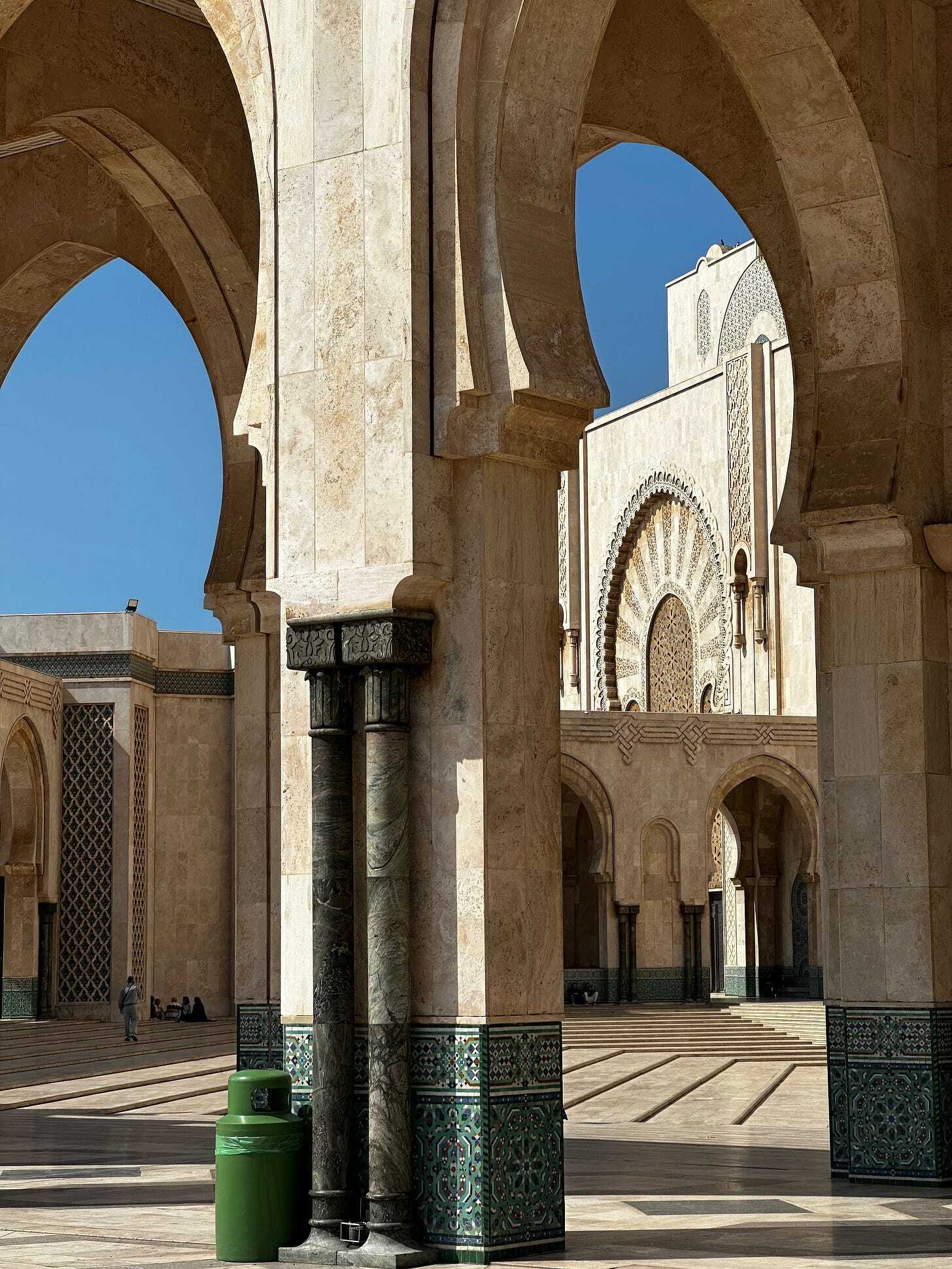
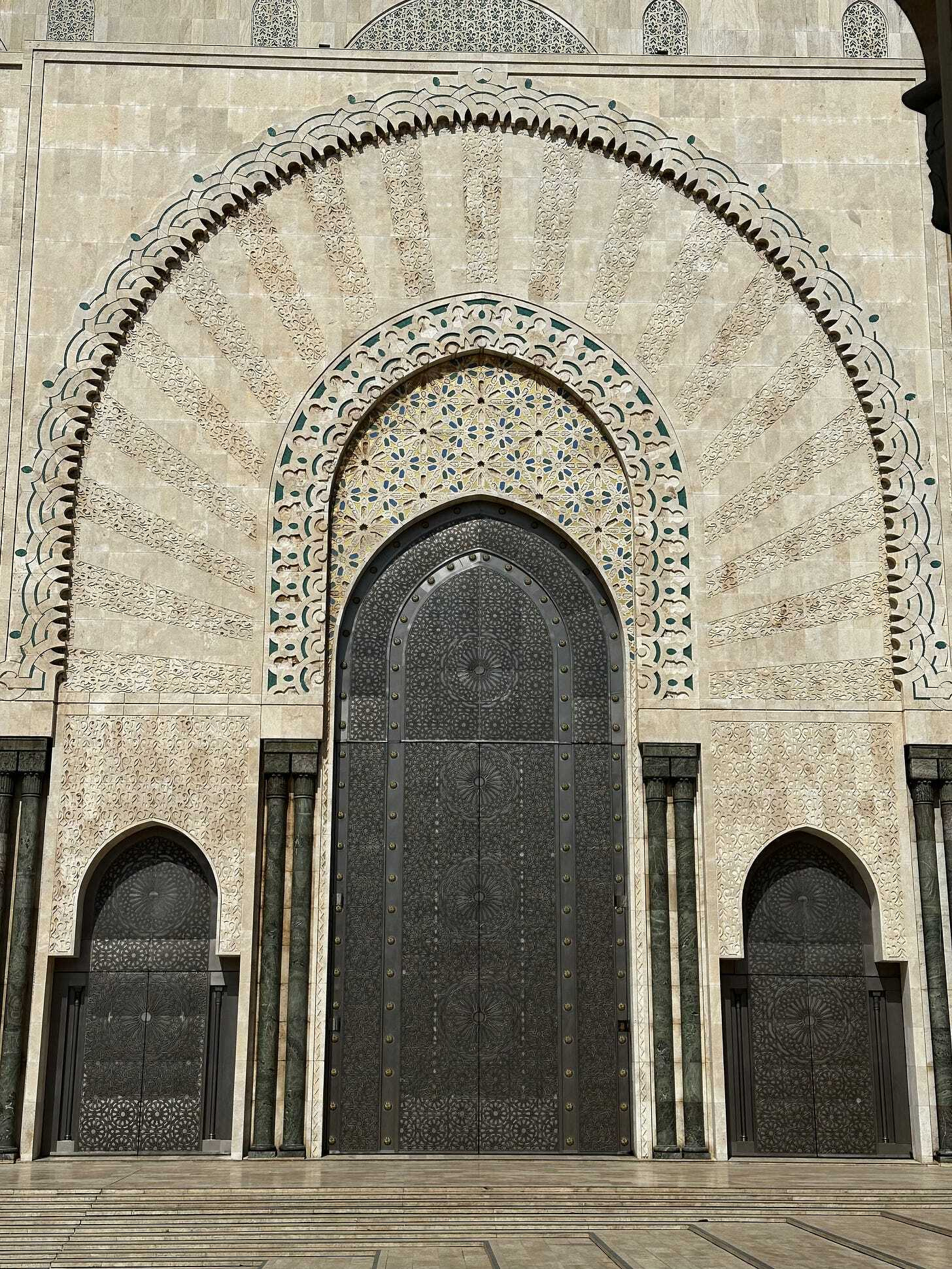
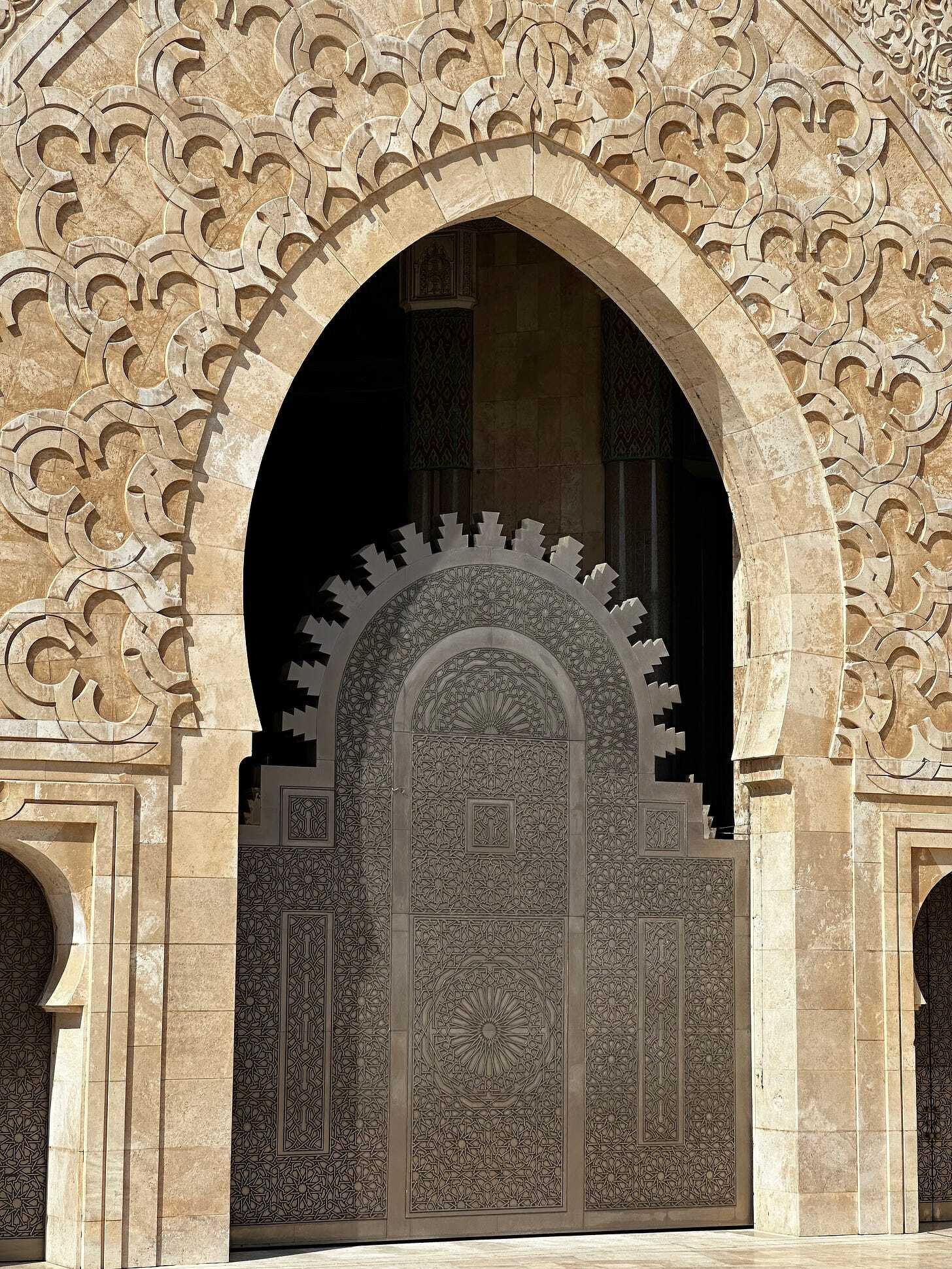
The architecture is a breathtaking symphony of Moroccan, Andalusian, and Moorish styles. You can spend hours simply tracing the intricate detail etched into every surface. The exterior is a rich tapestry of hand-crafted materials, nearly all sourced from Morocco: fragrant Cedarwood from the Middle Atlas, gleaming Marble from Agadir, and sturdy Granite from Tafraoute. It is said that 10,000 master craftsmen from across the kingdom contributed to its construction, a testament to the nation’s artistry. The walls are adorned with pale blue marble and exquisite Zellige tilework, forming complex, colourful geometric patterns that seem to shimmer under the Moroccan sun.
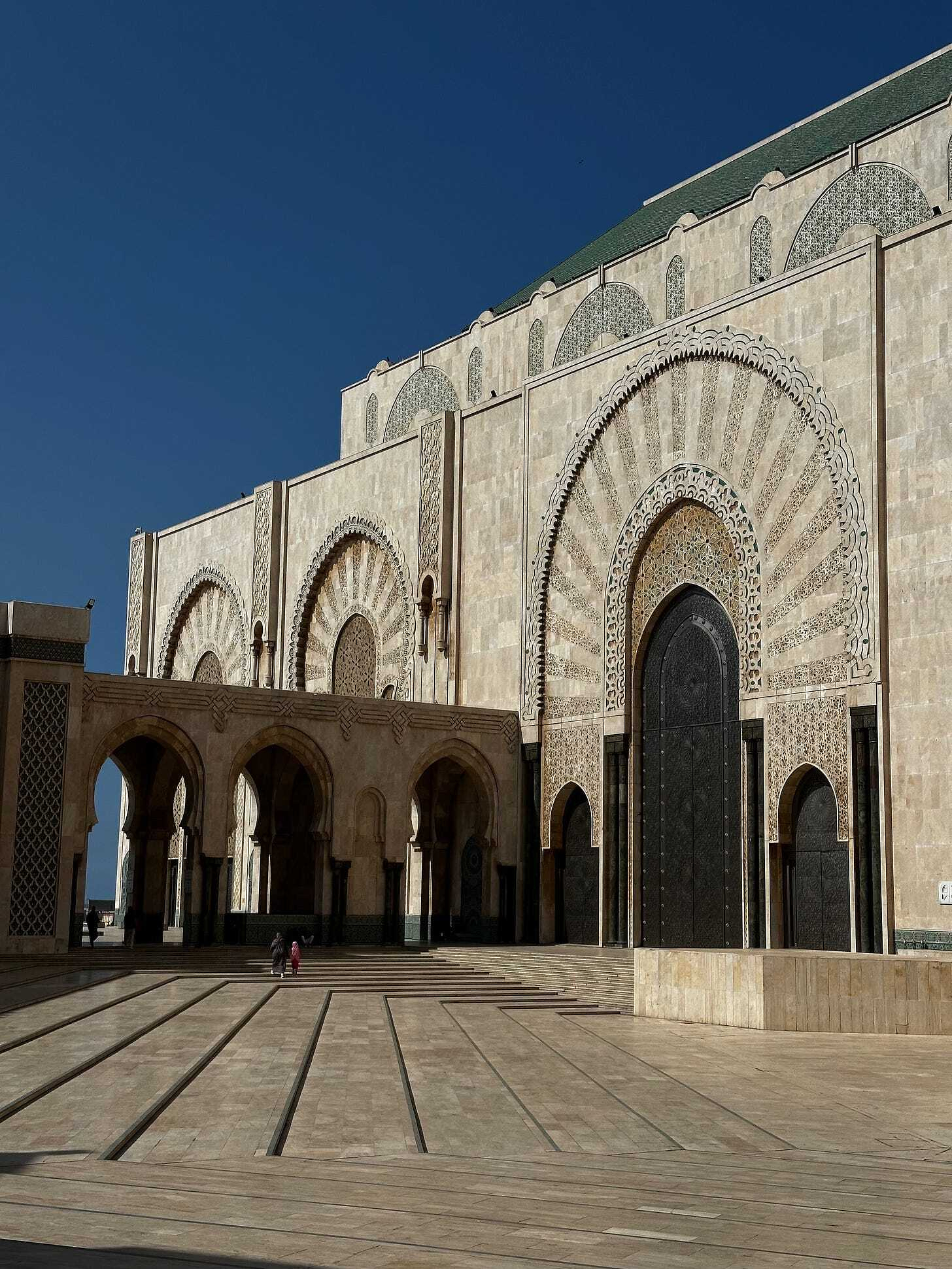
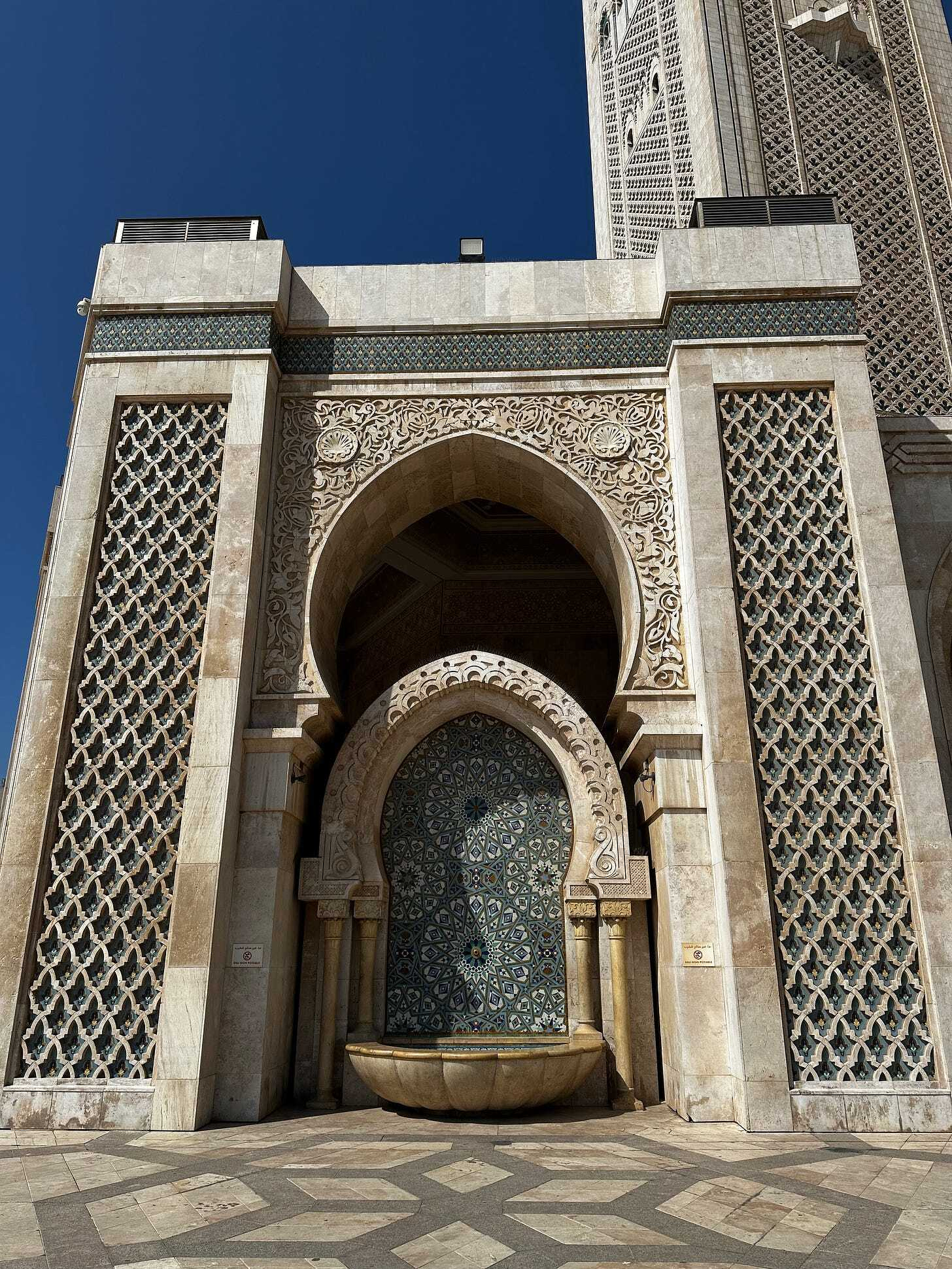
But it is the Minaret that truly steals the breath. Soaring 210 meters (689 feet) into the sky, it was, at the time of its completion in 1993, the tallest minaret in the world (it is now the second). The tower is a colossal work of art, covered in austere green tiling that reflects the light of the ocean. At night, it’s topped by an electronically operated laser beam—a spiritual beacon stretching 30 kilometres toward Mecca, an unmistakable directional light for the faithful.
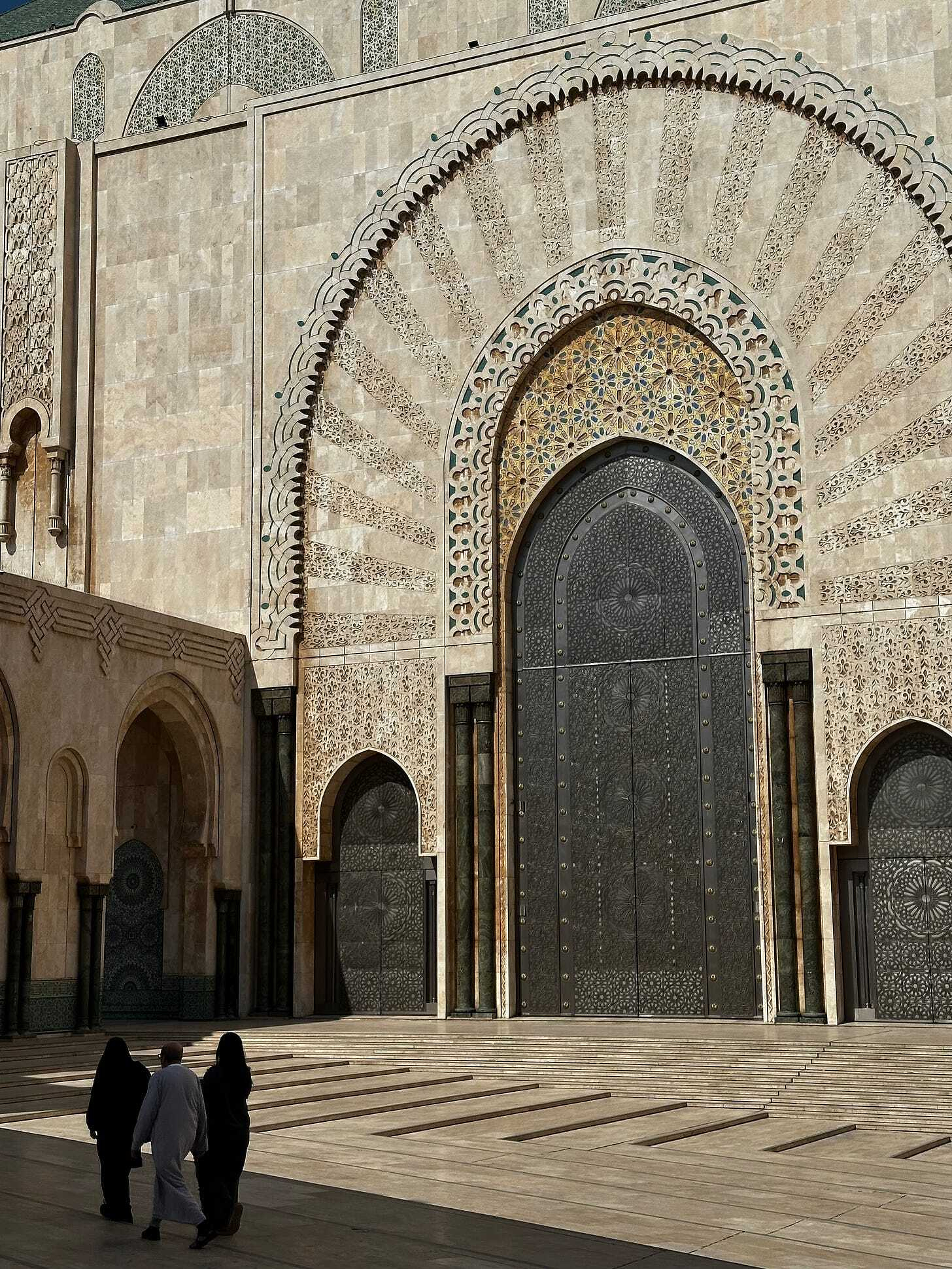
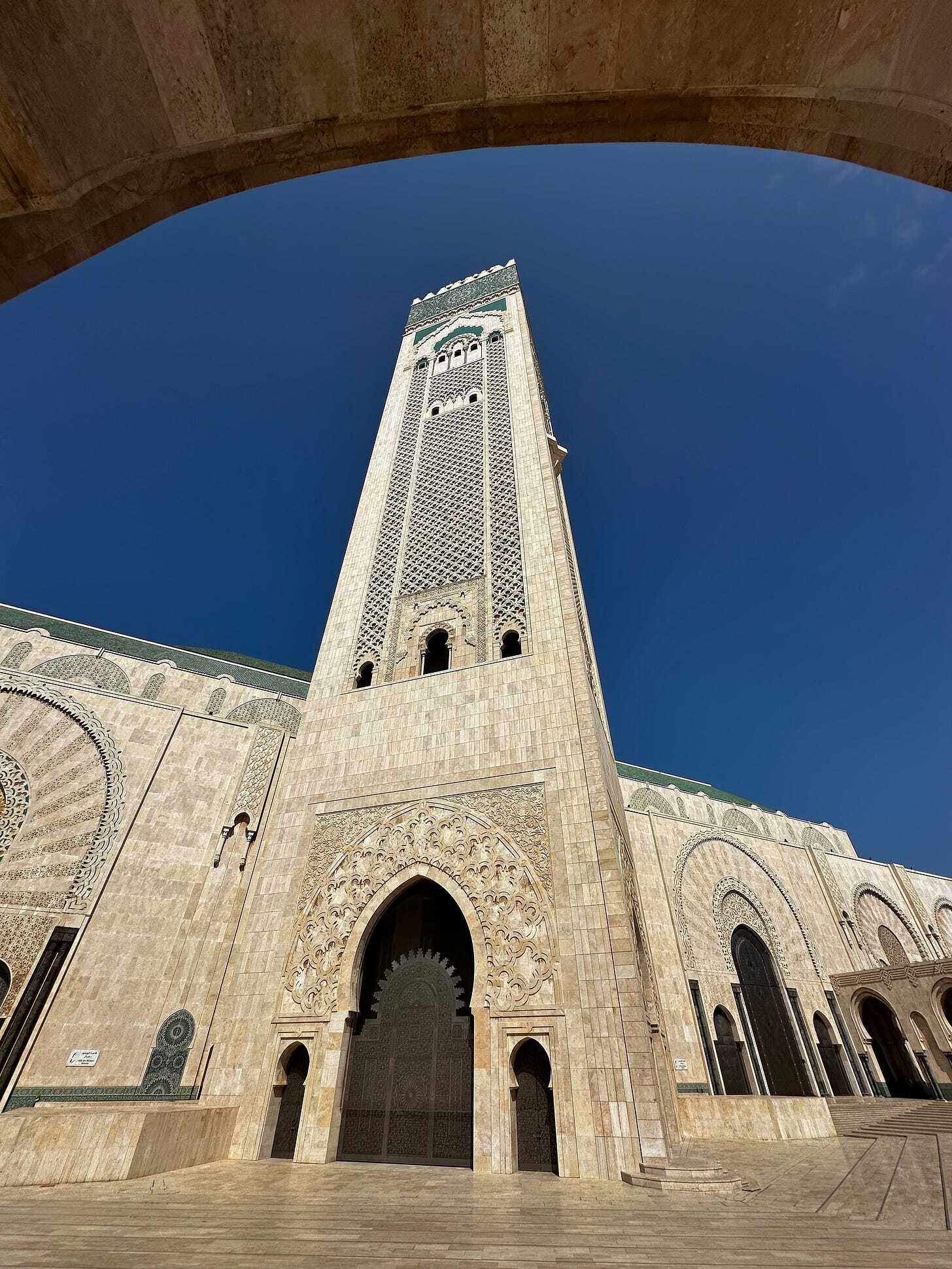
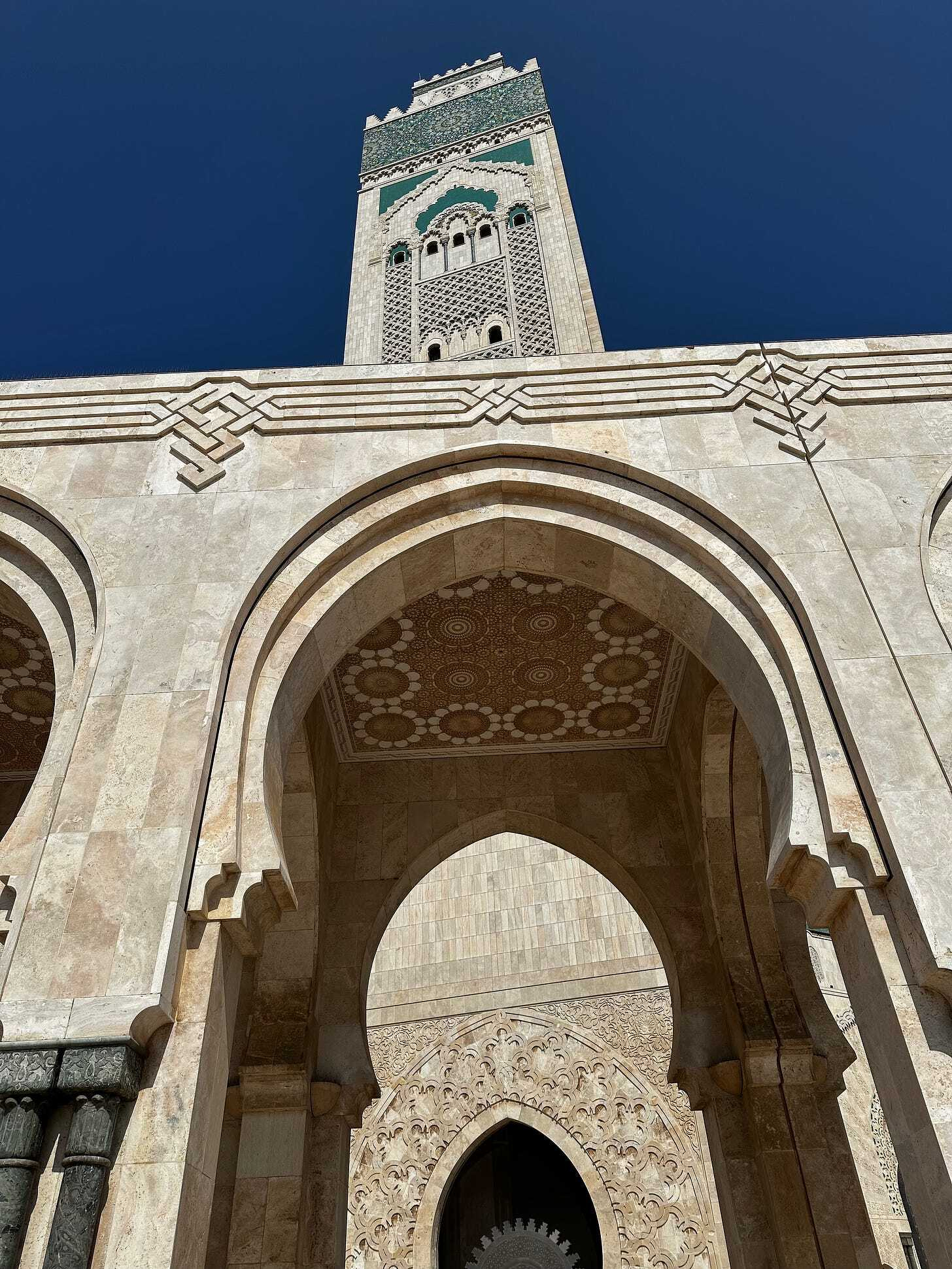
Though my brief time meant I couldn’t join an internal tour—a definite reason for a return trip!—I learned about the miraculous interior features from the outside. Knowing that the roof above the prayer hall is fully retractable is awe-inspiring. This architectural marvel, which weighs 1,100 tons, can open in just five minutes, allowing worshippers to pray under the daytime sun or the stars at night. The mosque’s placement, with parts of its foundation extending directly into the ocean, makes this connection to the elements profoundly meaningful.
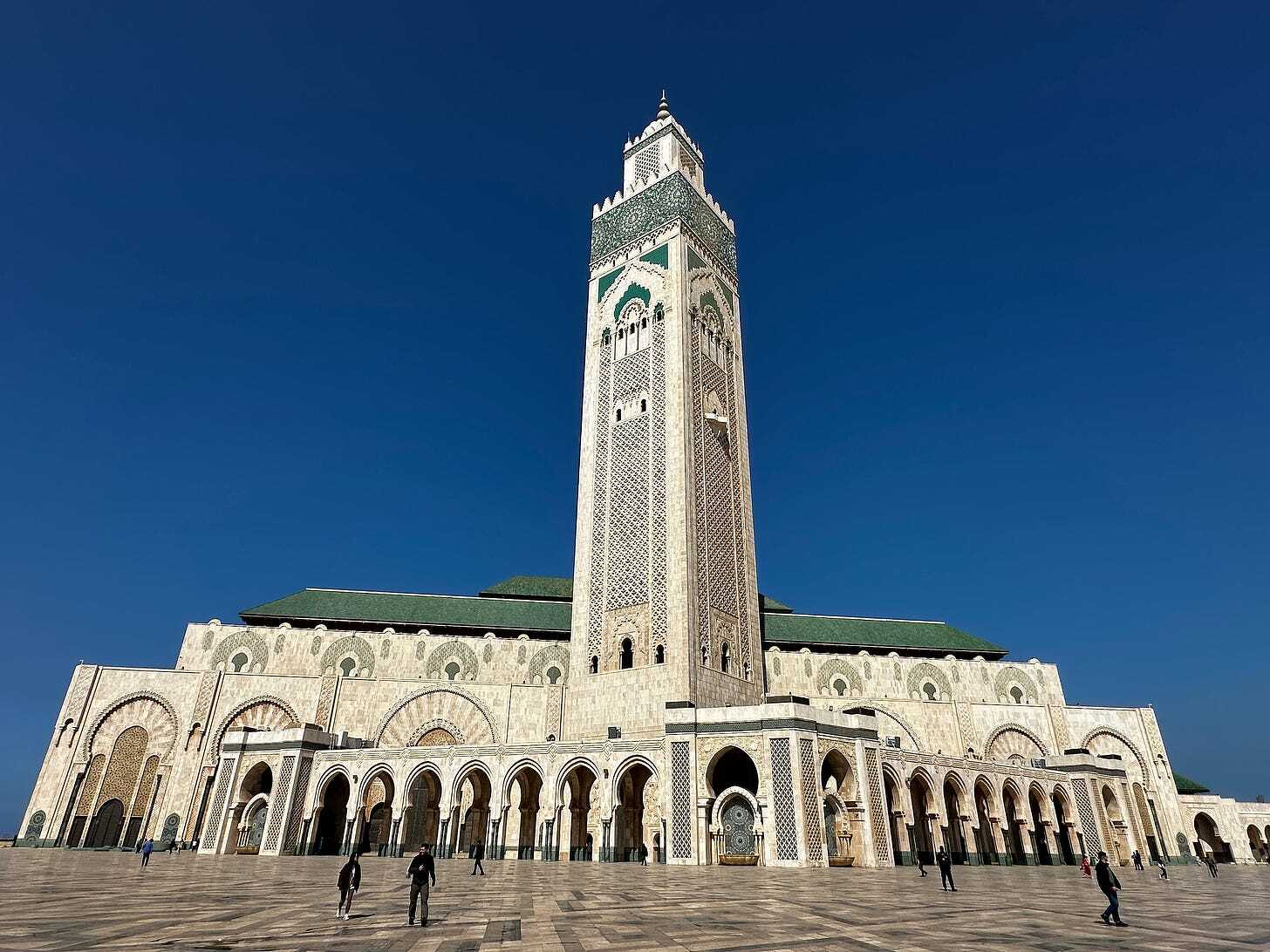
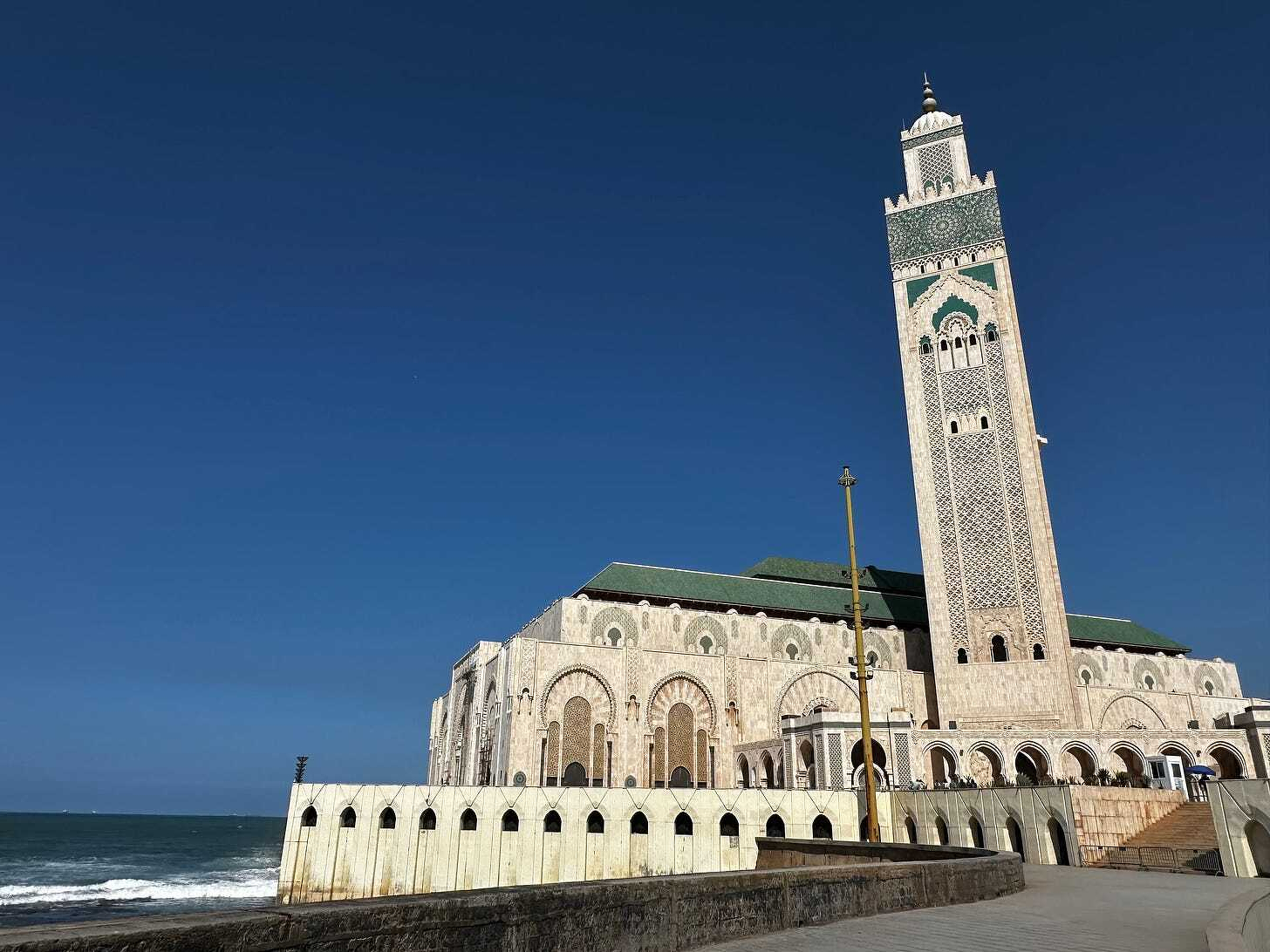
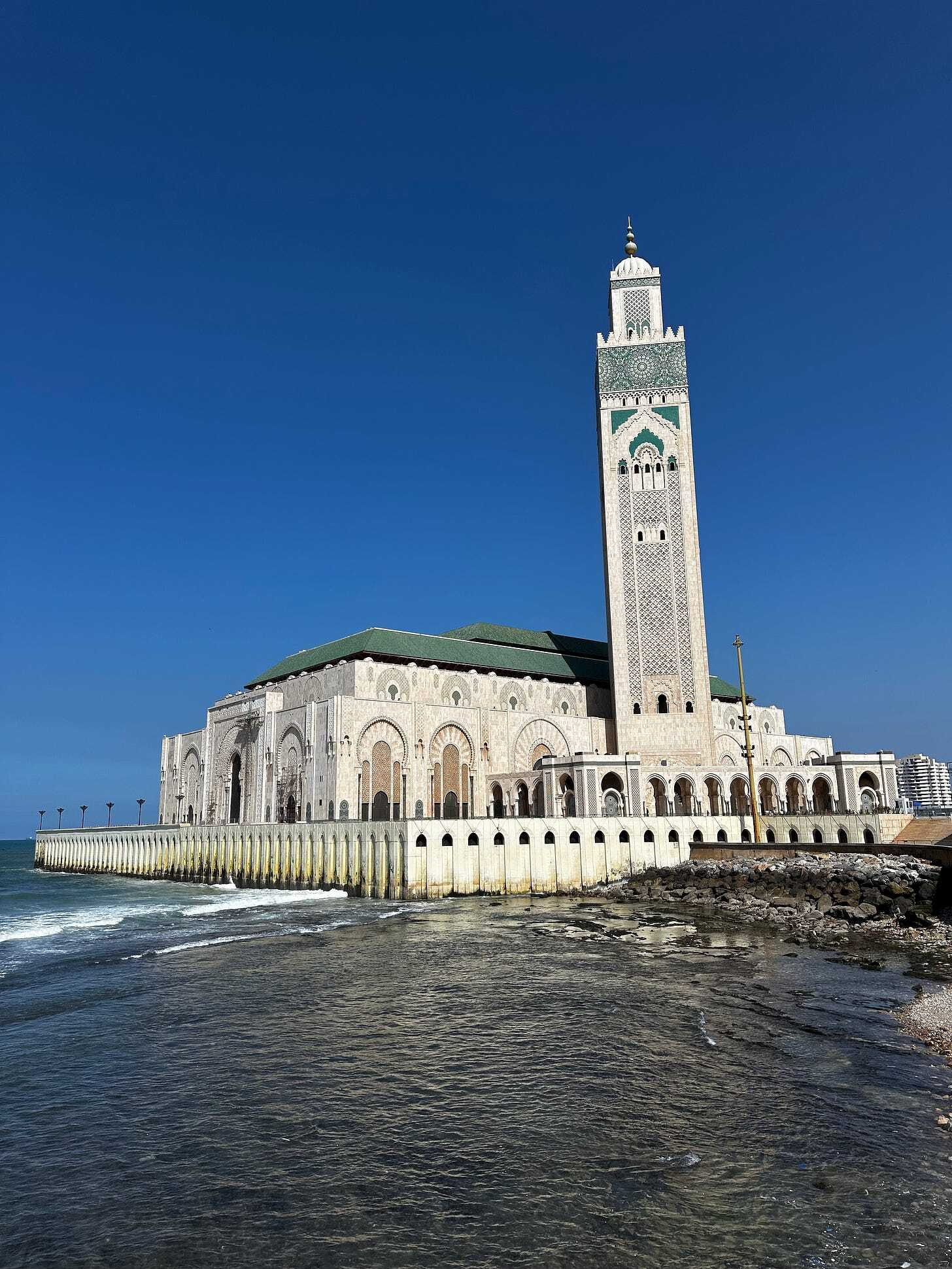
Standing on the edge of the continent, watching the powerful Atlantic meet this immense sacred structure, felt like witnessing a moment of perfect harmony between man and nature. My few hours in Casablanca passed far too quickly, but the sight of the Hassan II Mosque—a glorious, sea-lapped gem—was an unforgettable highlight, a towering testament to faith, craftsmanship, and the enduring grandeur of Morocco.
#Casablanca #Morocco #HassanIIMosque #Architecture #NorthAfrica #IslamicArt #TravelMorocco #TravelEssay #TravelPhotography