Exploring the Greco-Roman Theatre and Odeon of Catania
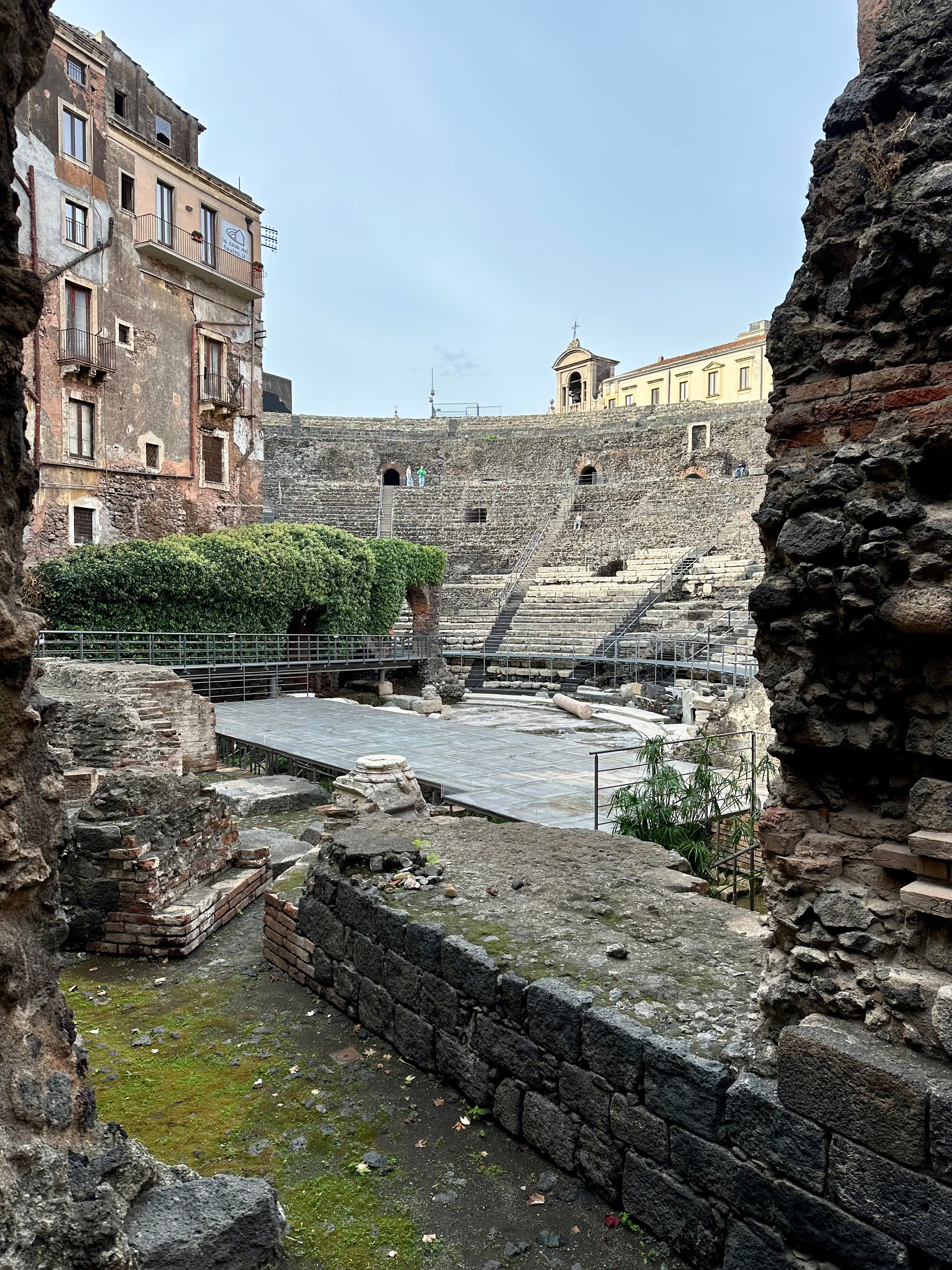
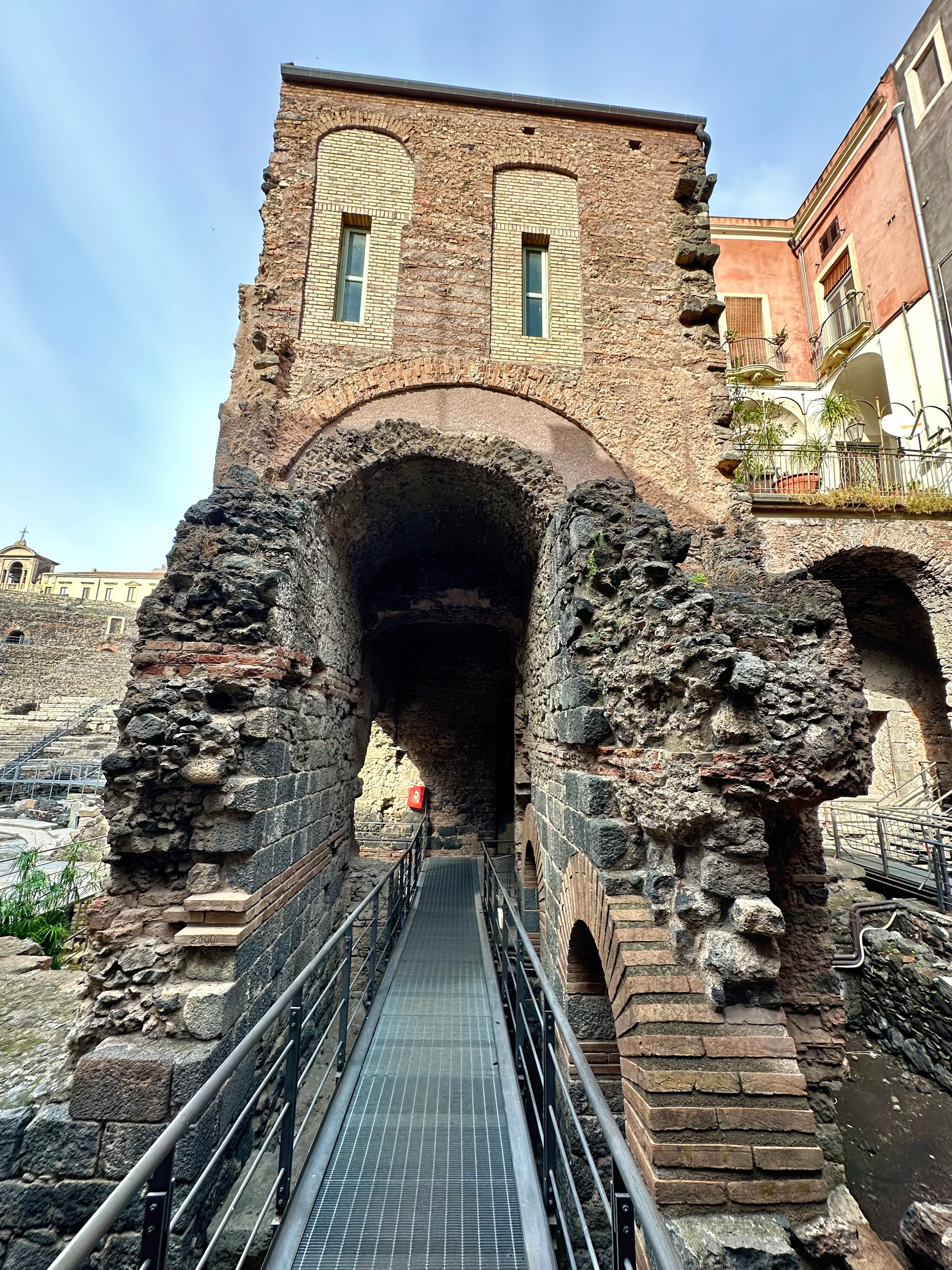
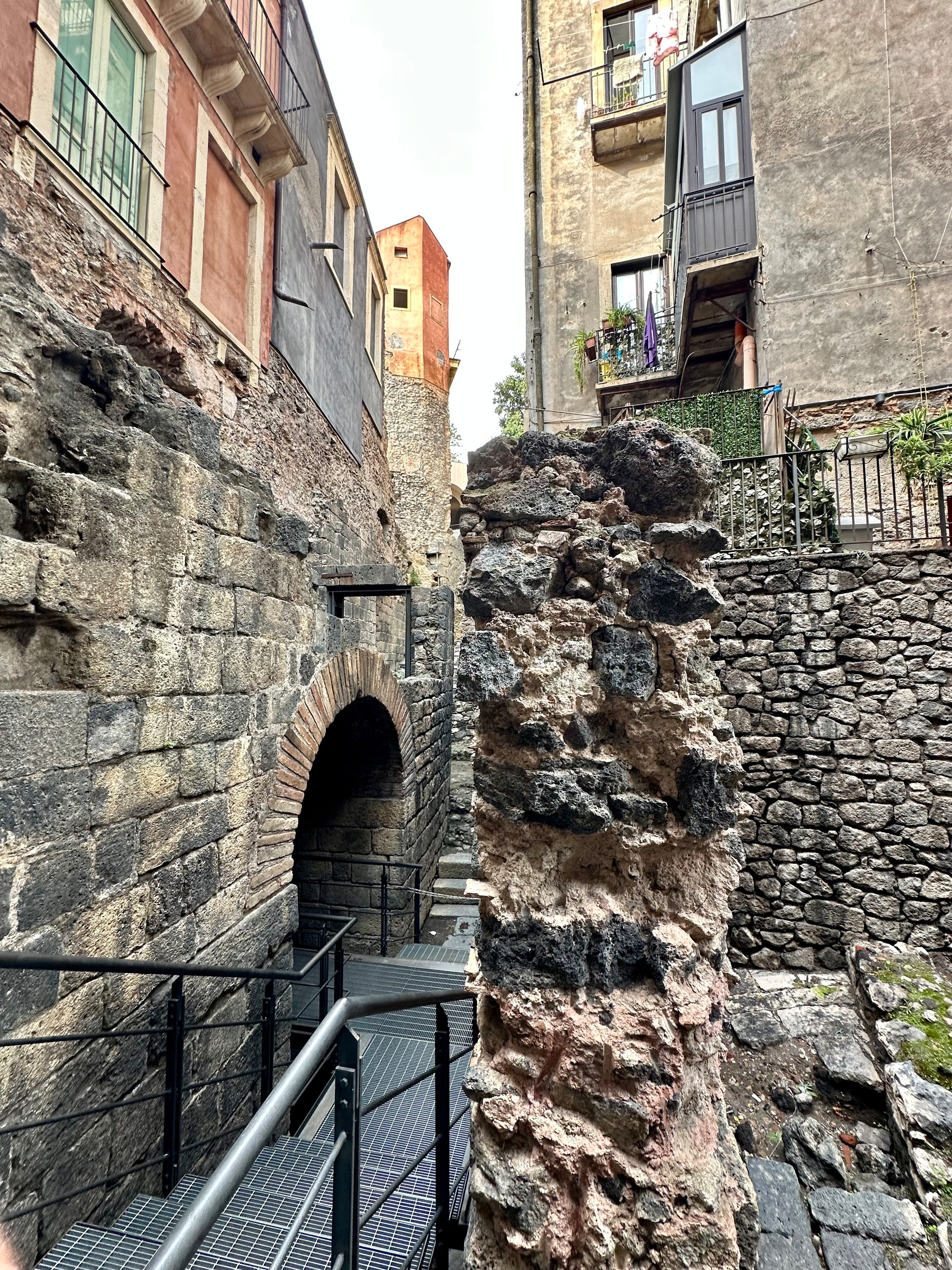
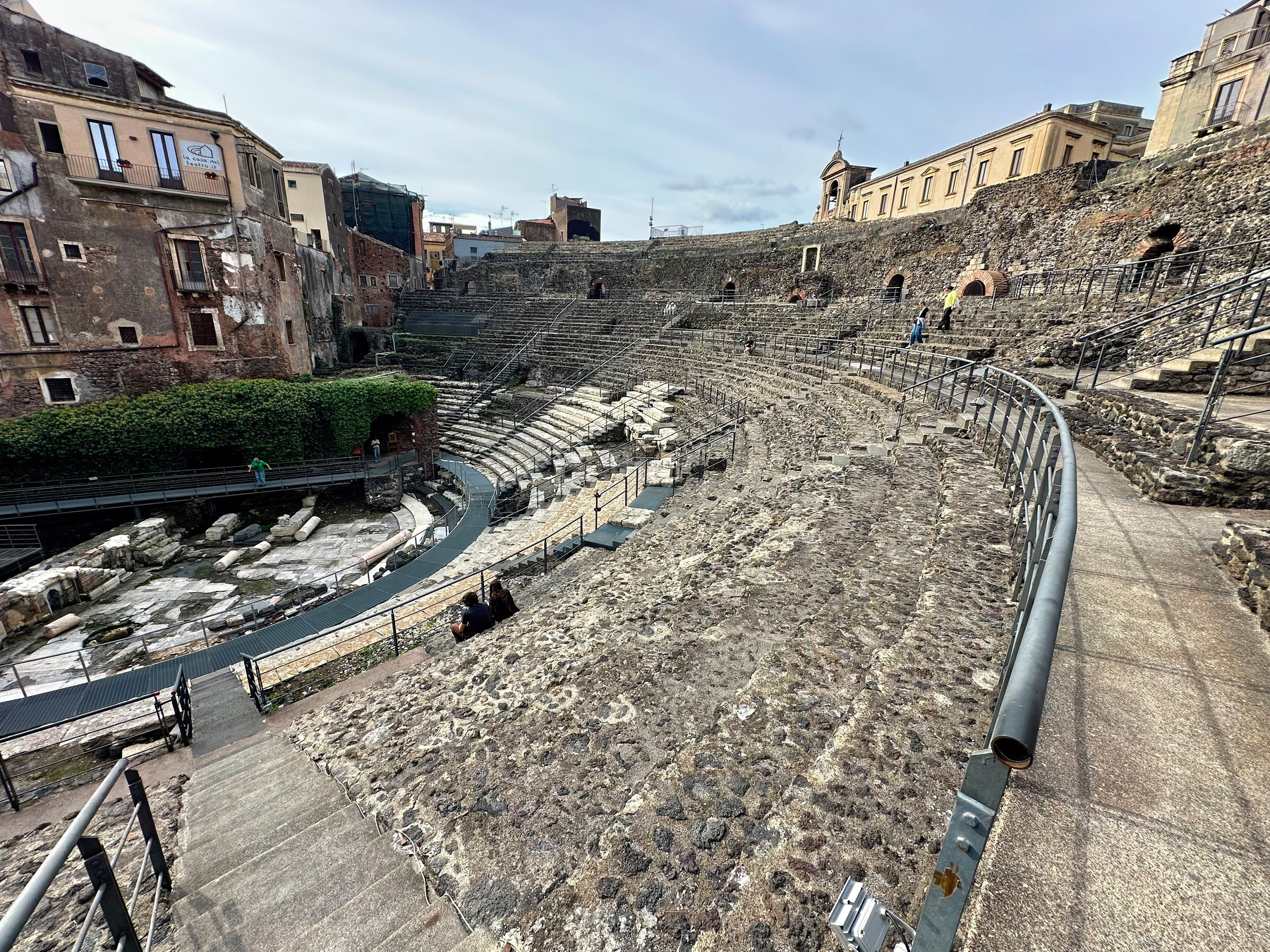
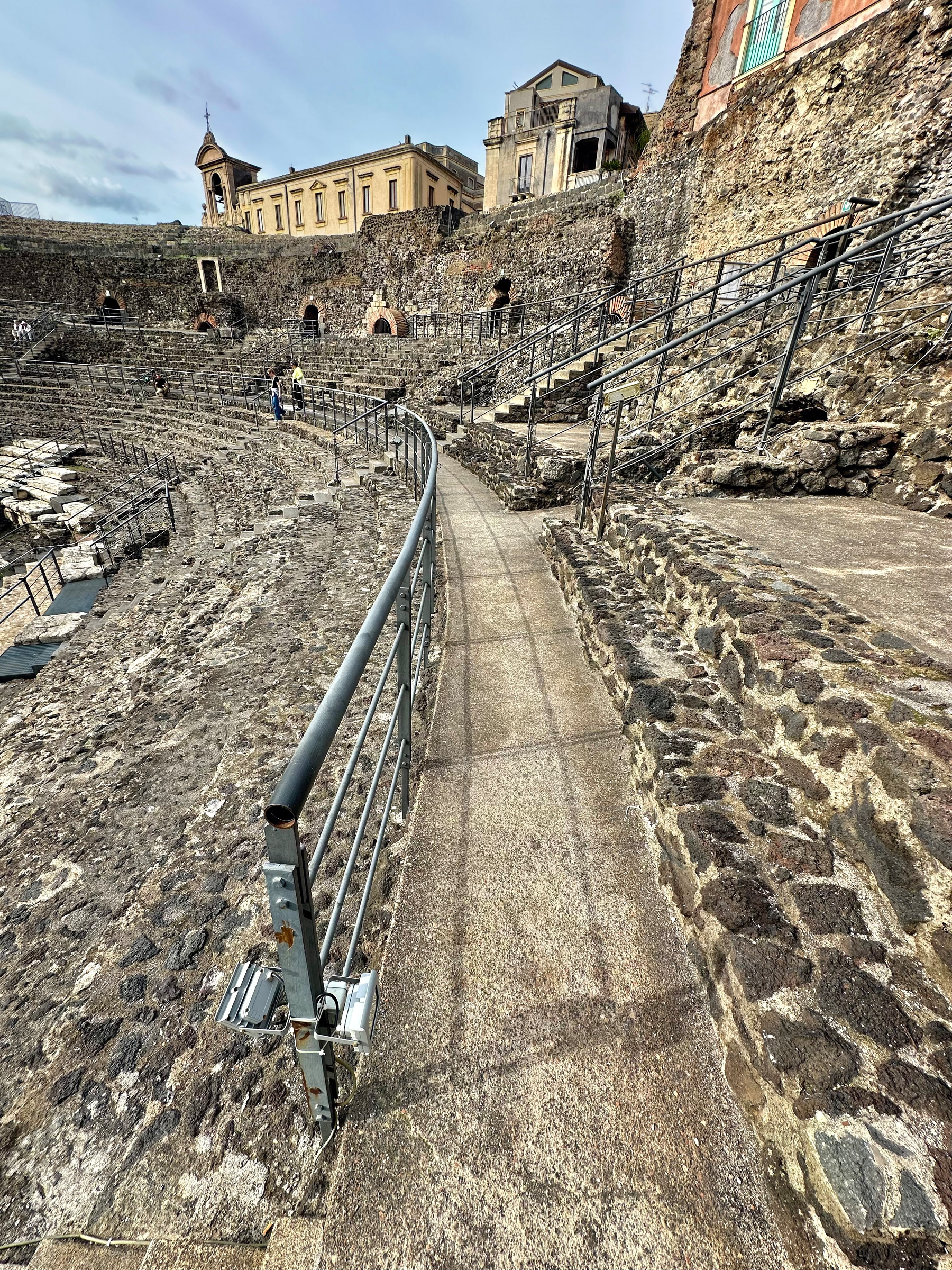
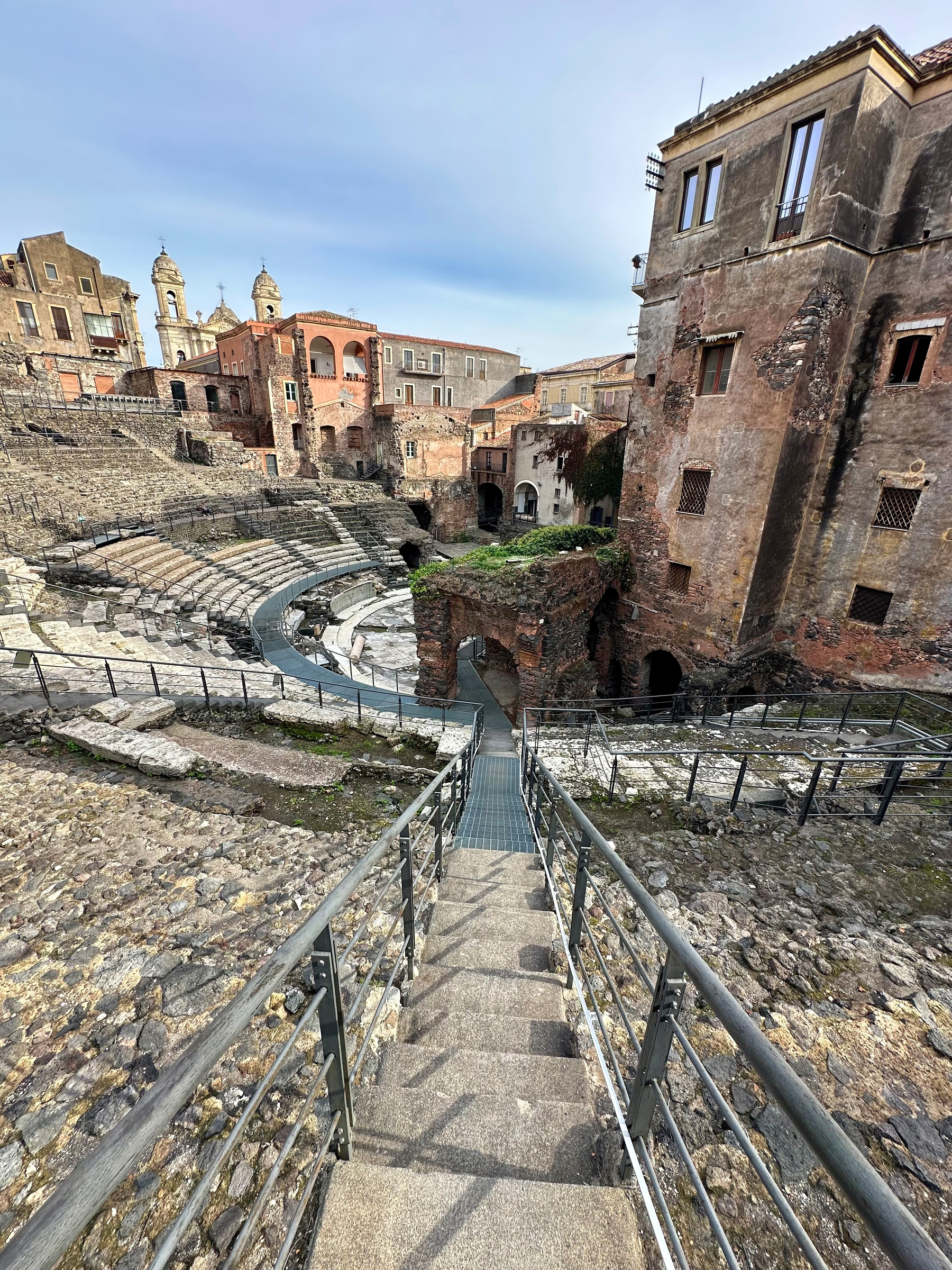
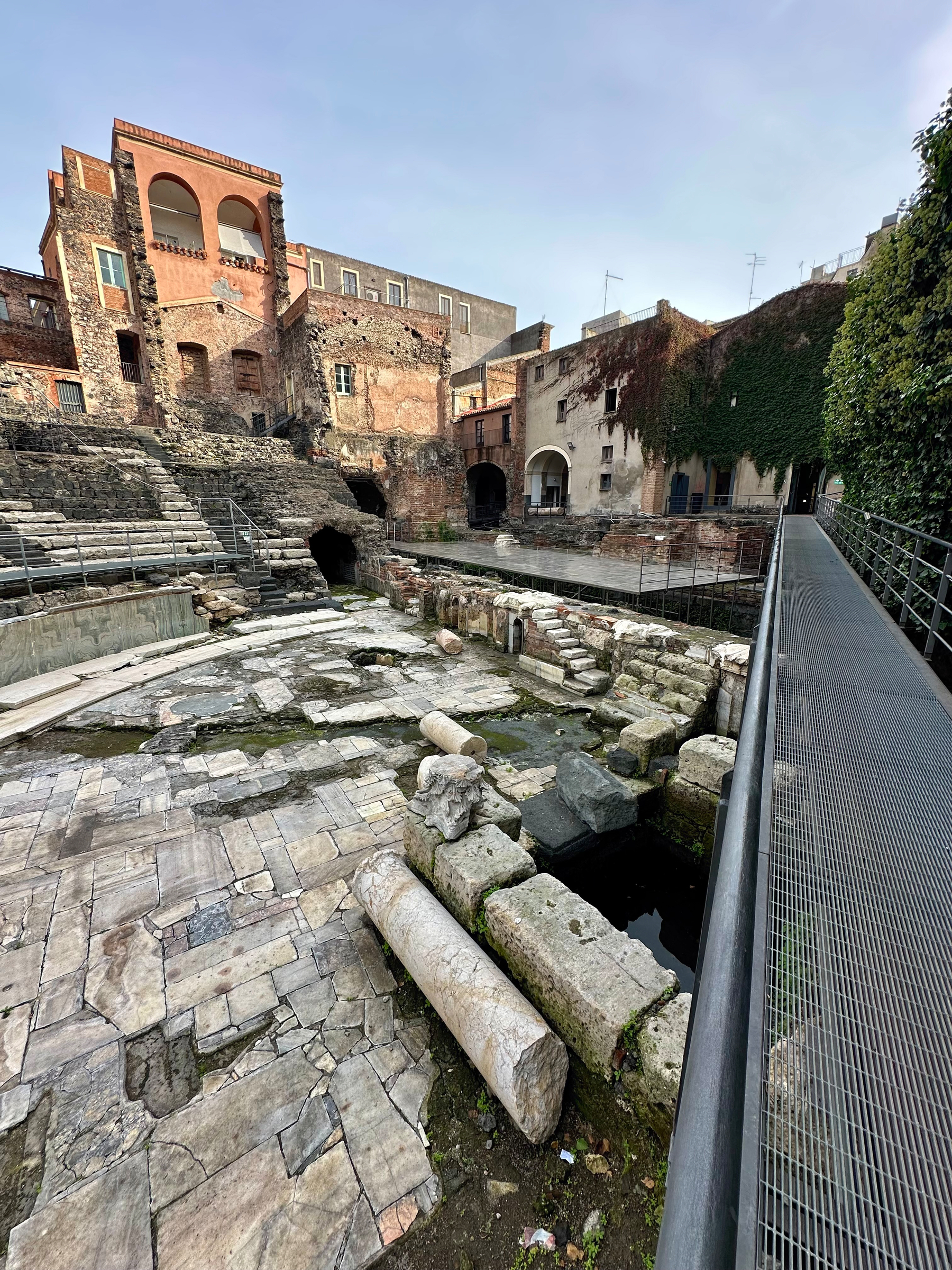
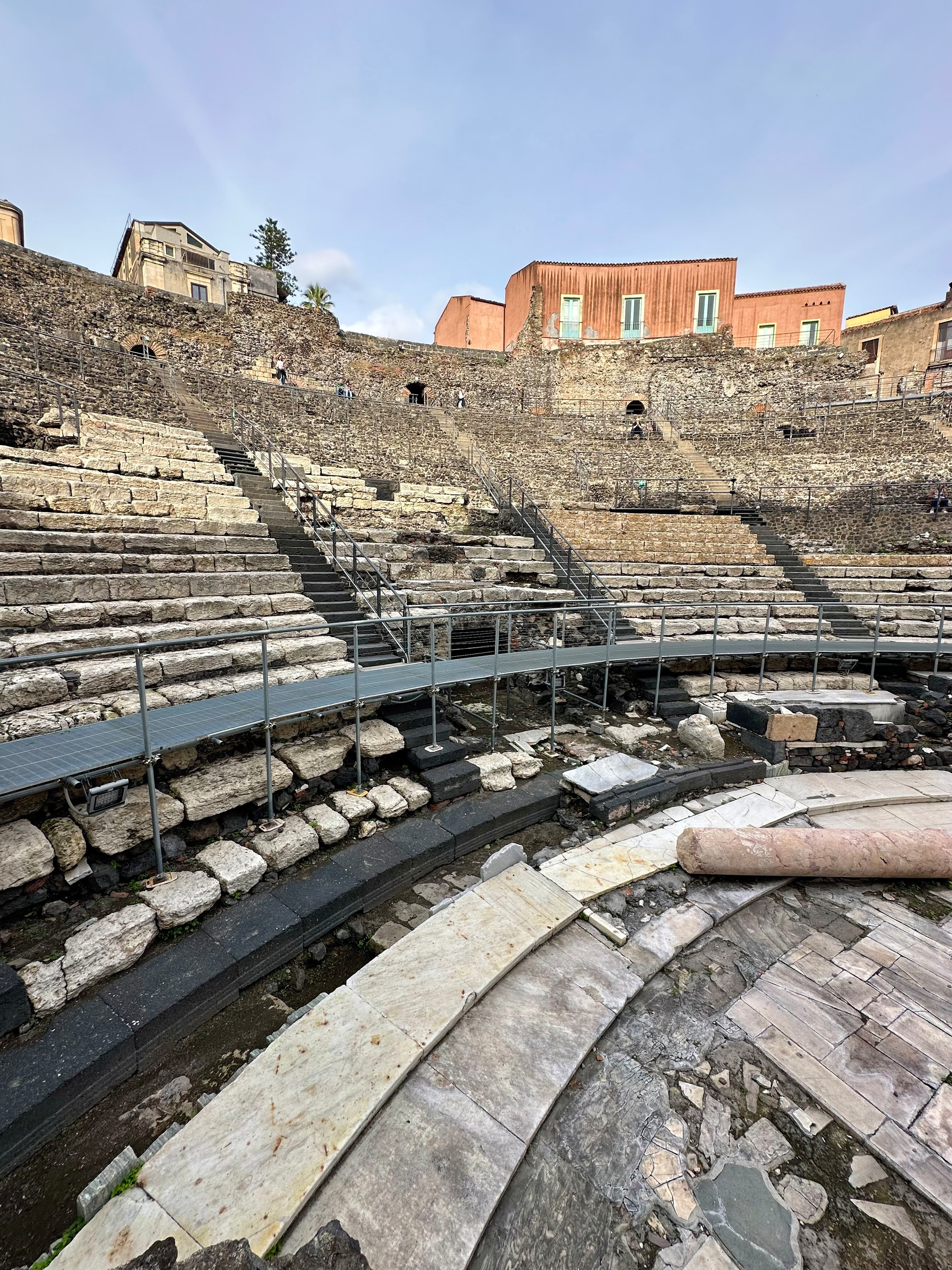
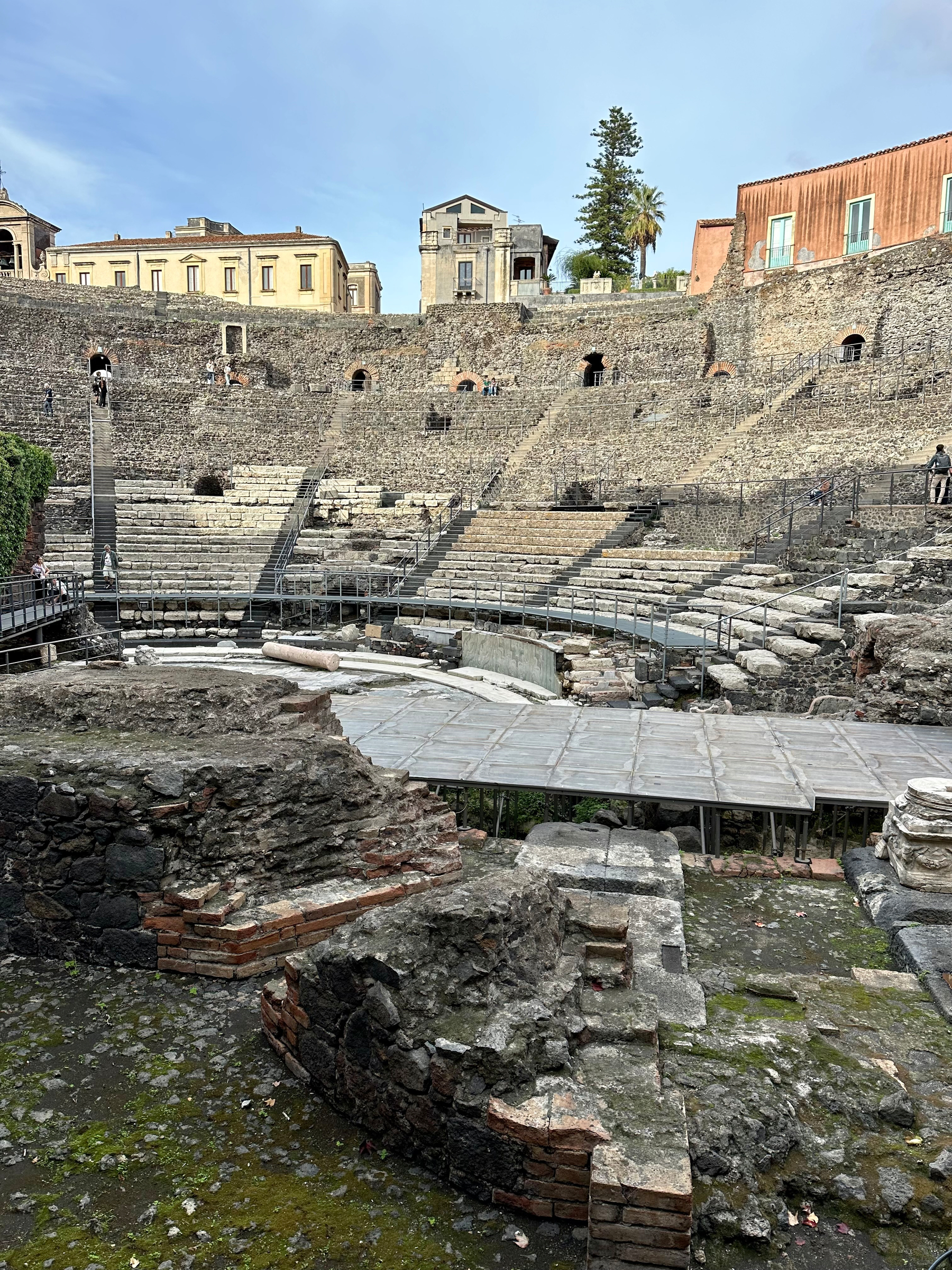
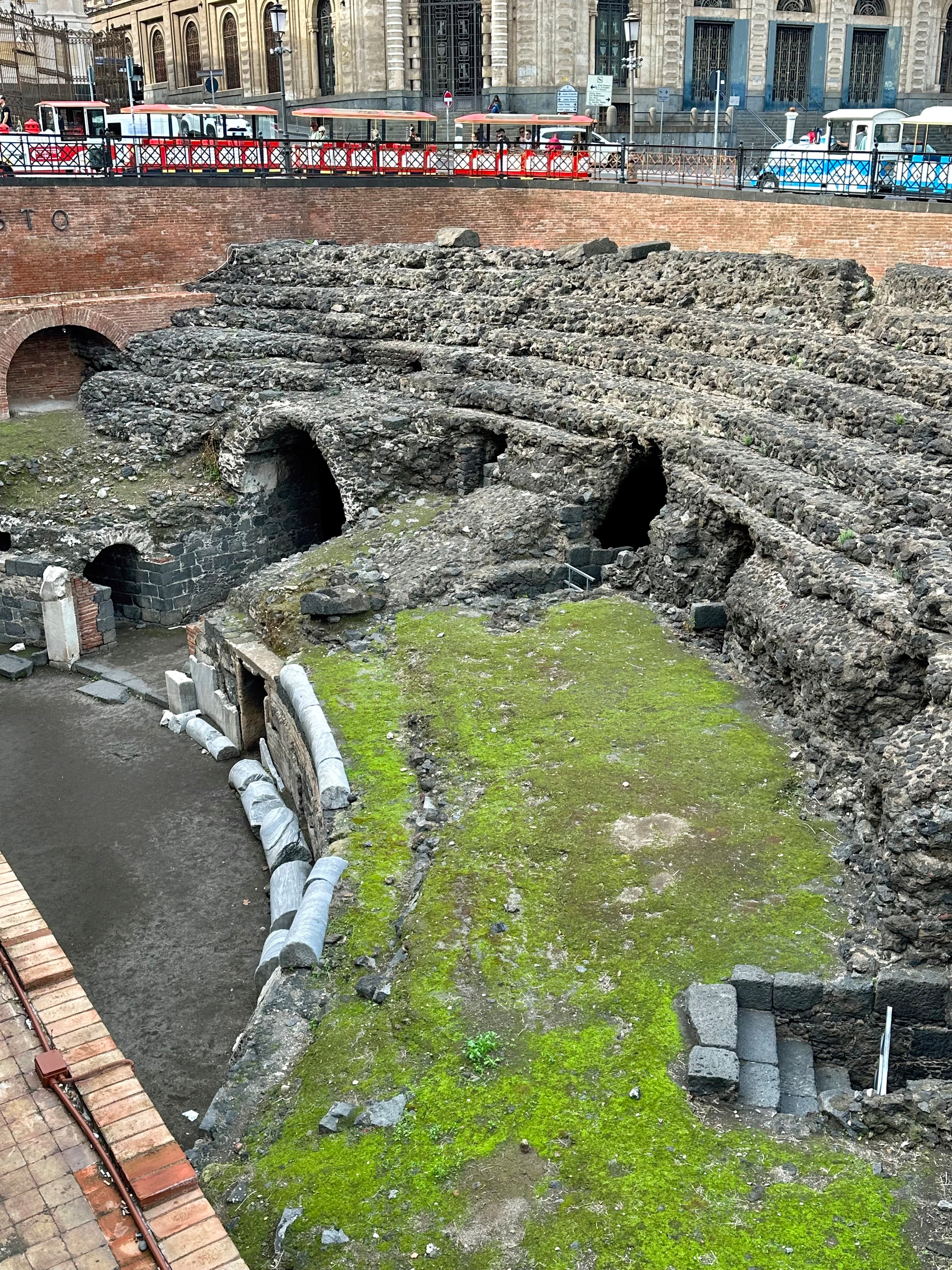
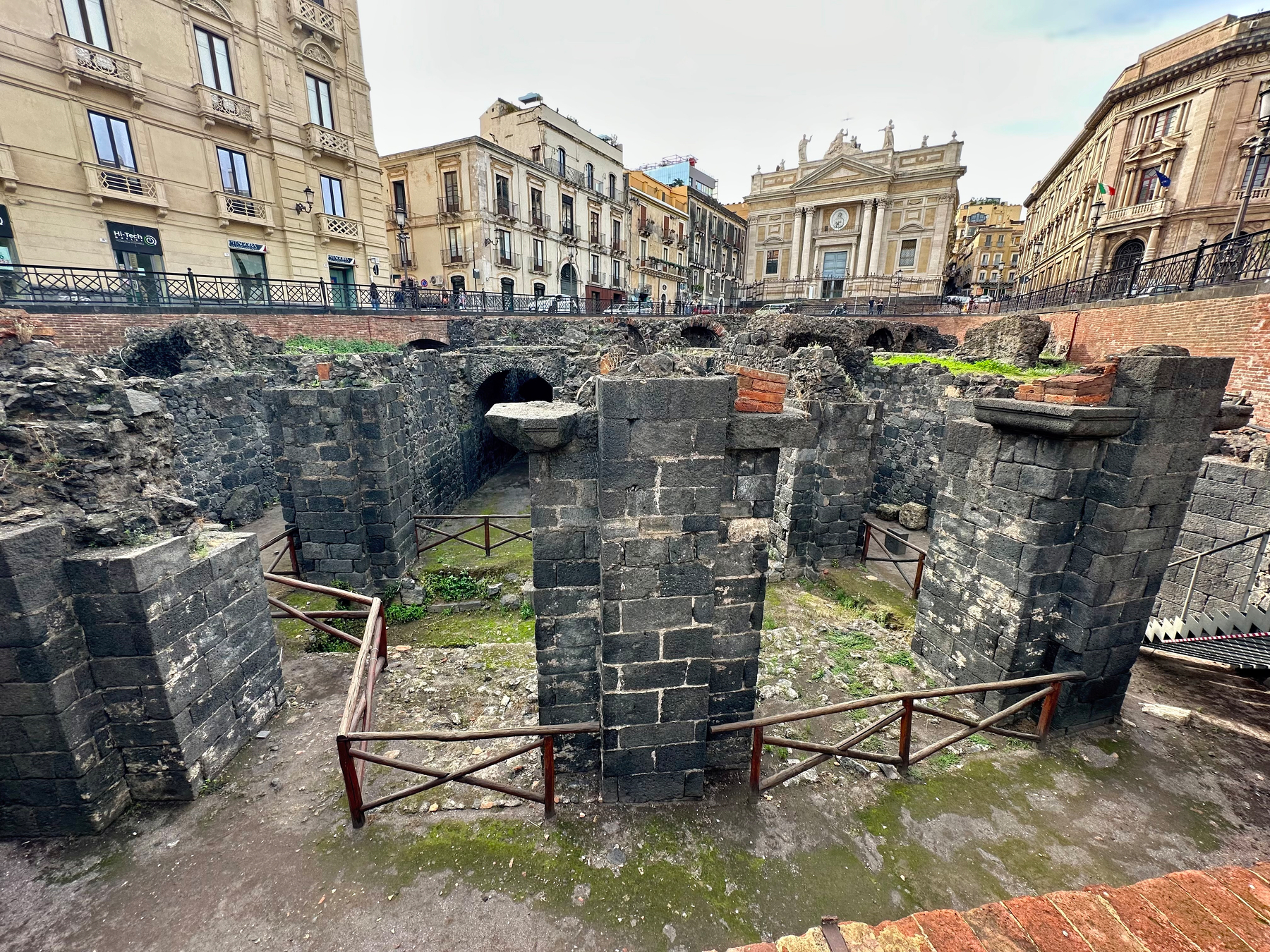
Walking through the bustling street of Via Vittorio Emanuele II in central Catania, you would never guess that just behind a modest row of buildings lies one of the most extraordinary ancient urban sites in the Mediterranean. Stepping through the entrance into the courtyard of the Teatro Romano e Odeon di Catania, the noise of modern traffic vanishes, replaced by an eerie stillness and the overwhelming sight of millennia of history carved straight out of dark volcanic basalt. Exploring this site in person today was an unforgettable journey through time. What makes Catania’s ancient theatre so mesmerizing is its deep structural connection to Mount Etna itself—the dark lava stone used to build its massive sweeping tiers creates a striking contrast against the surrounding Sicilian sky and nearby historic townhouses.
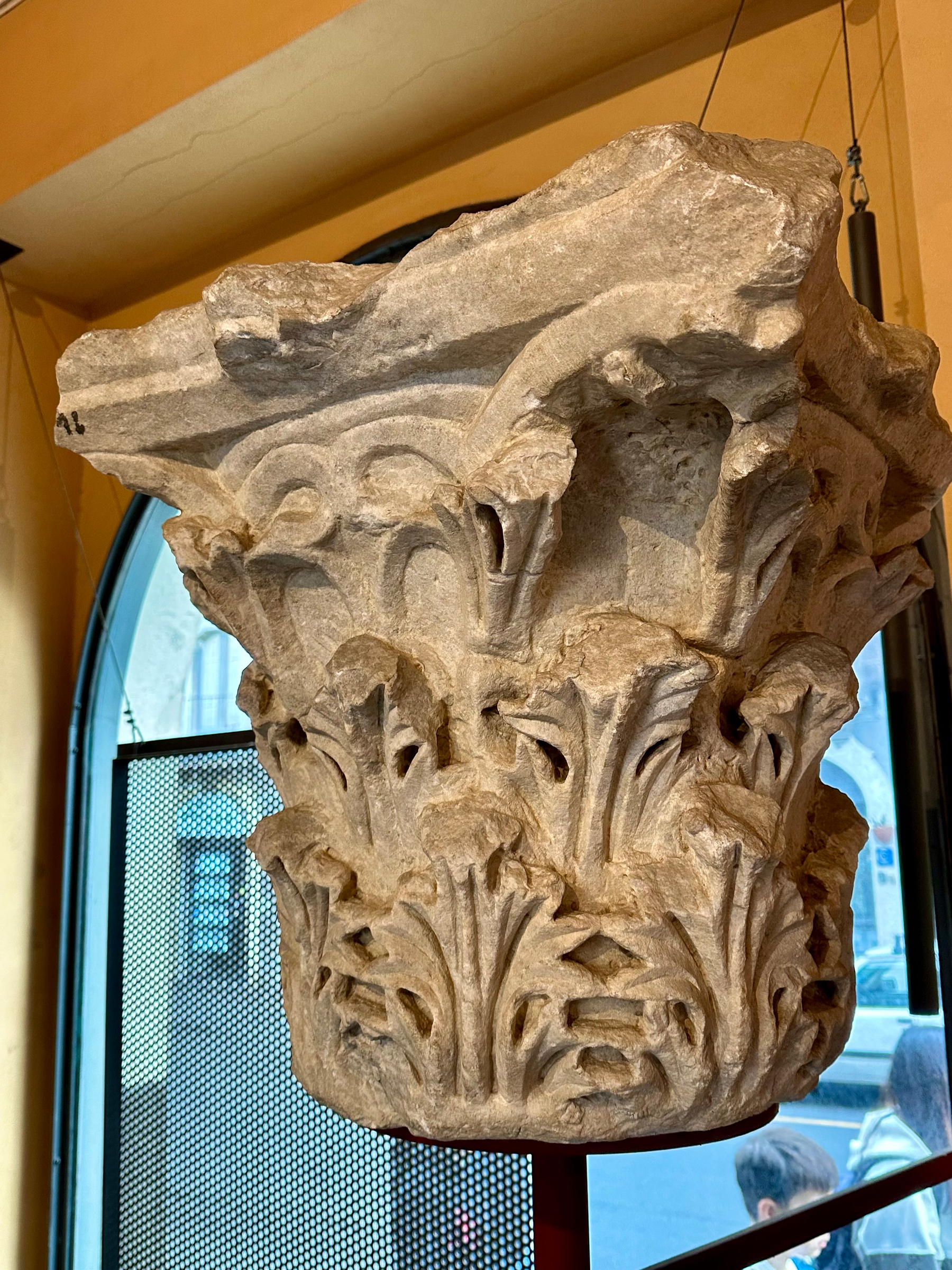
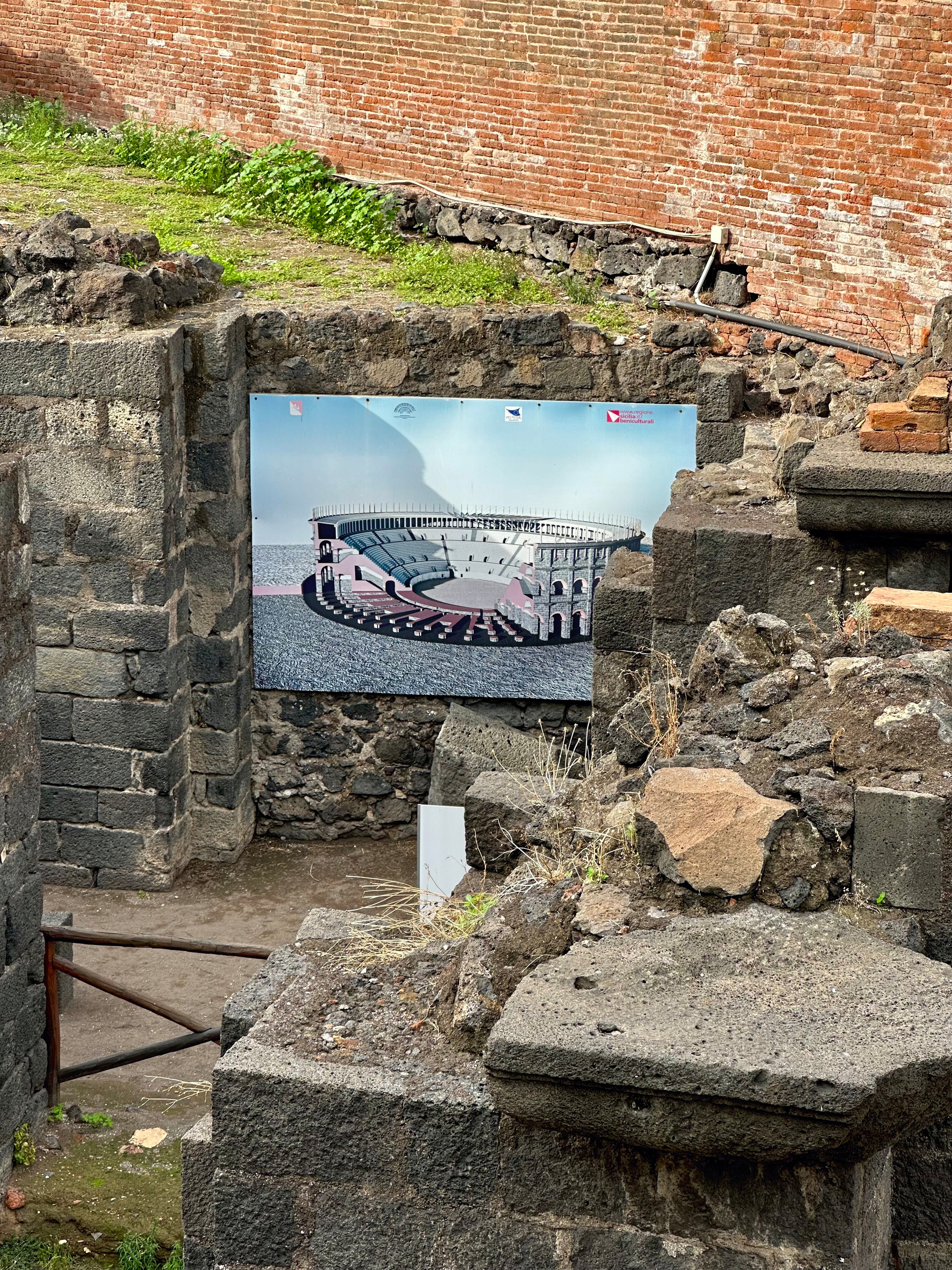
Standing atop the cavea, the main seating section, you quickly realize this isn’t merely a single Roman relic, but a multi-layered historic puzzle spanning over 17,000 years of continuous human habitation. Long before any dramatic performances took place here, the southern slope of Montevergine hill served as a home for early humans. Stratigraphic excavations reveal a continuous story beginning with Neolithic cattle herders taking shelter along the lava ridge between 5520 and 5000 BC. By the Early Eneolithic period, around 4330 to 3950 BC, an organized village of circular huts stood here, leaving behind polished tools, painted pottery, and evidence of hunting and animal husbandry before being buried by a massive prehistoric landslide. In the 4th century BC, the Greek colony of Katane recognized the natural amphitheater slope of Montevergine hill and built an open-air theatre facing south toward the sea. Under the Flavian and Antonine dynasties in the 1st and 2nd centuries AD, the Romans transformed the site into a grand theatrical venue. Extending the cavea to nearly 98 meters in diameter, they engineered a seating capacity for over 7,000 spectators. They built the sweeping structure out of heavy volcanic lava stone faced with bright white limestone and rich Anatolian marble.
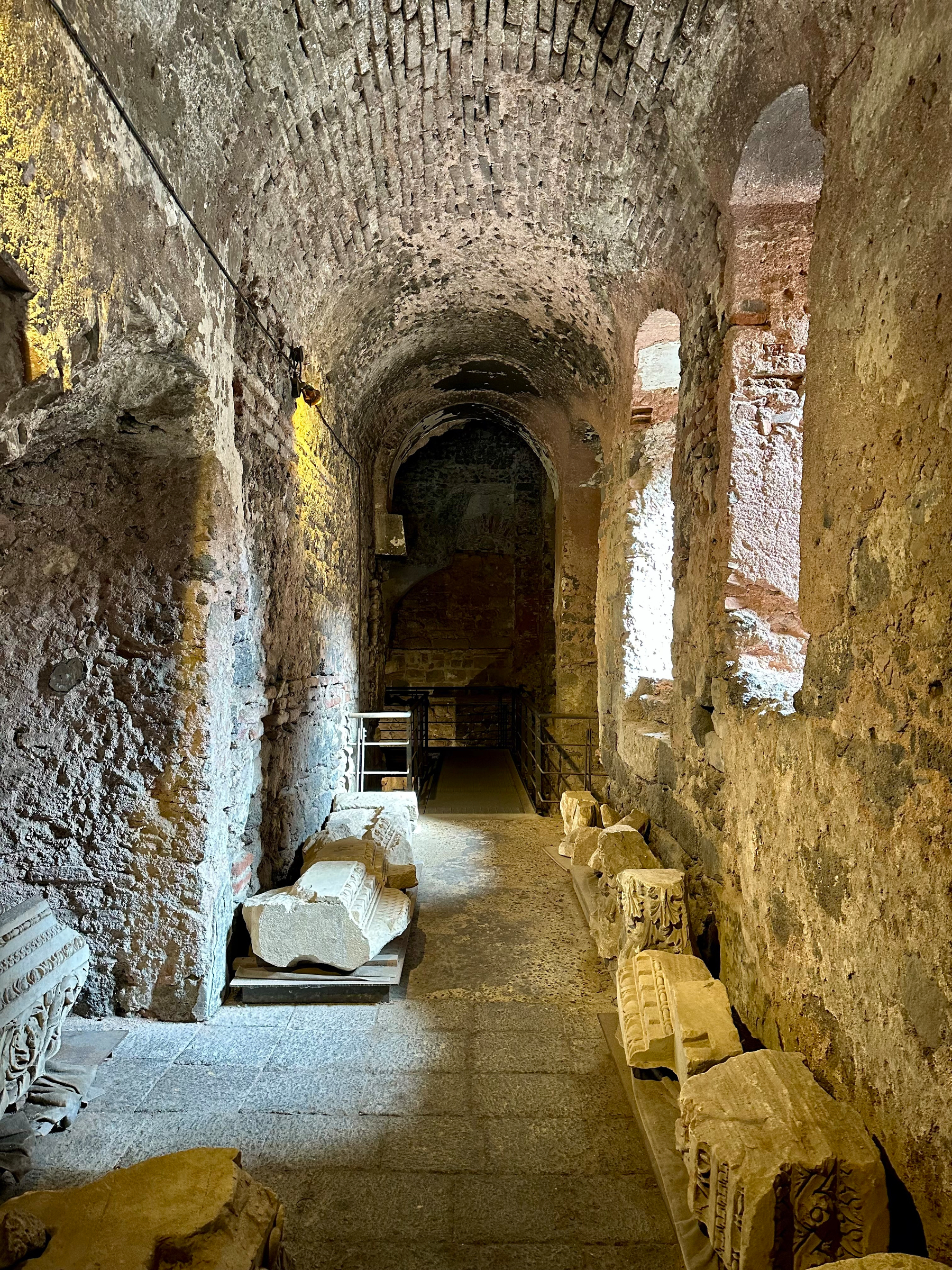
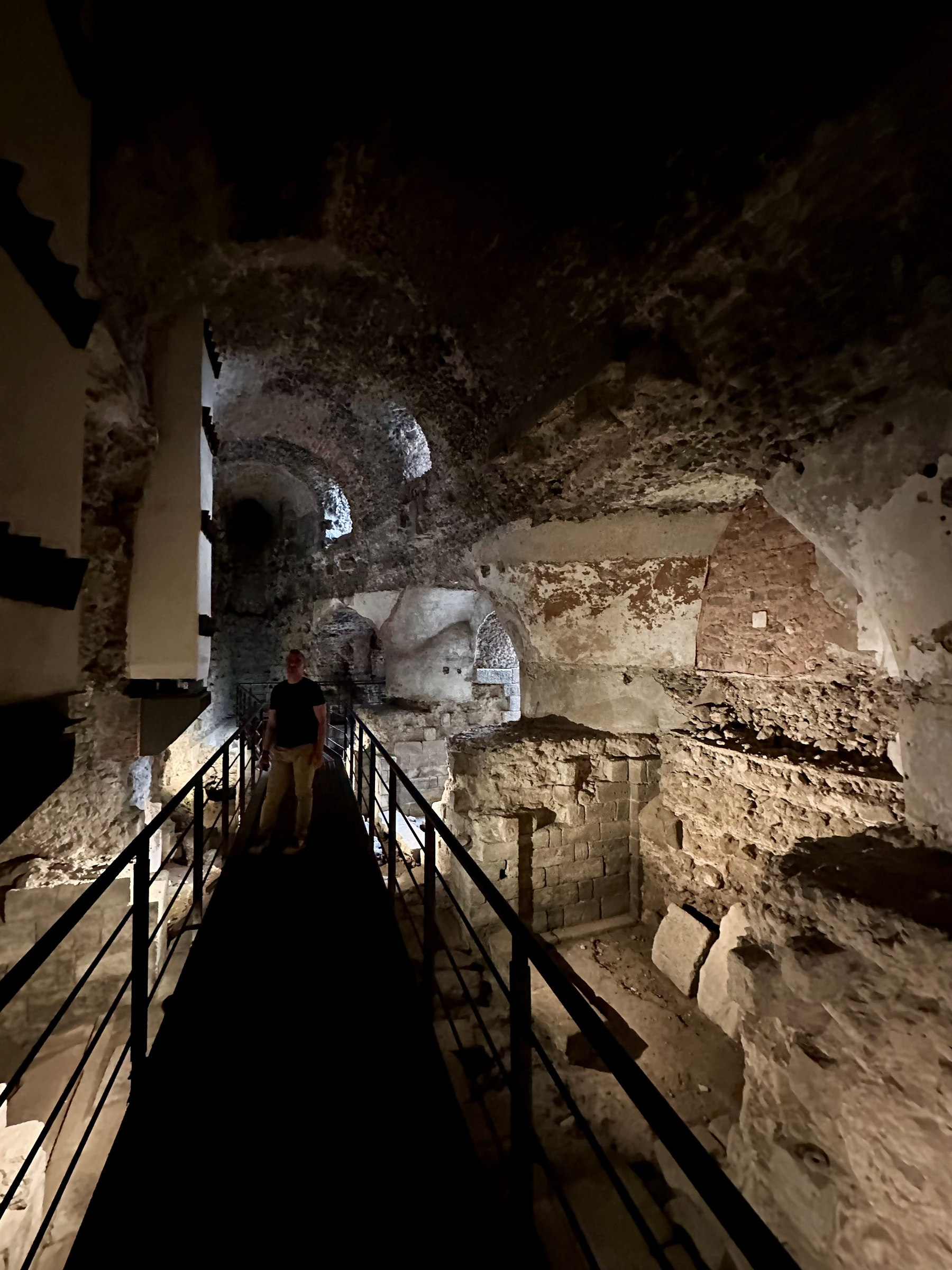
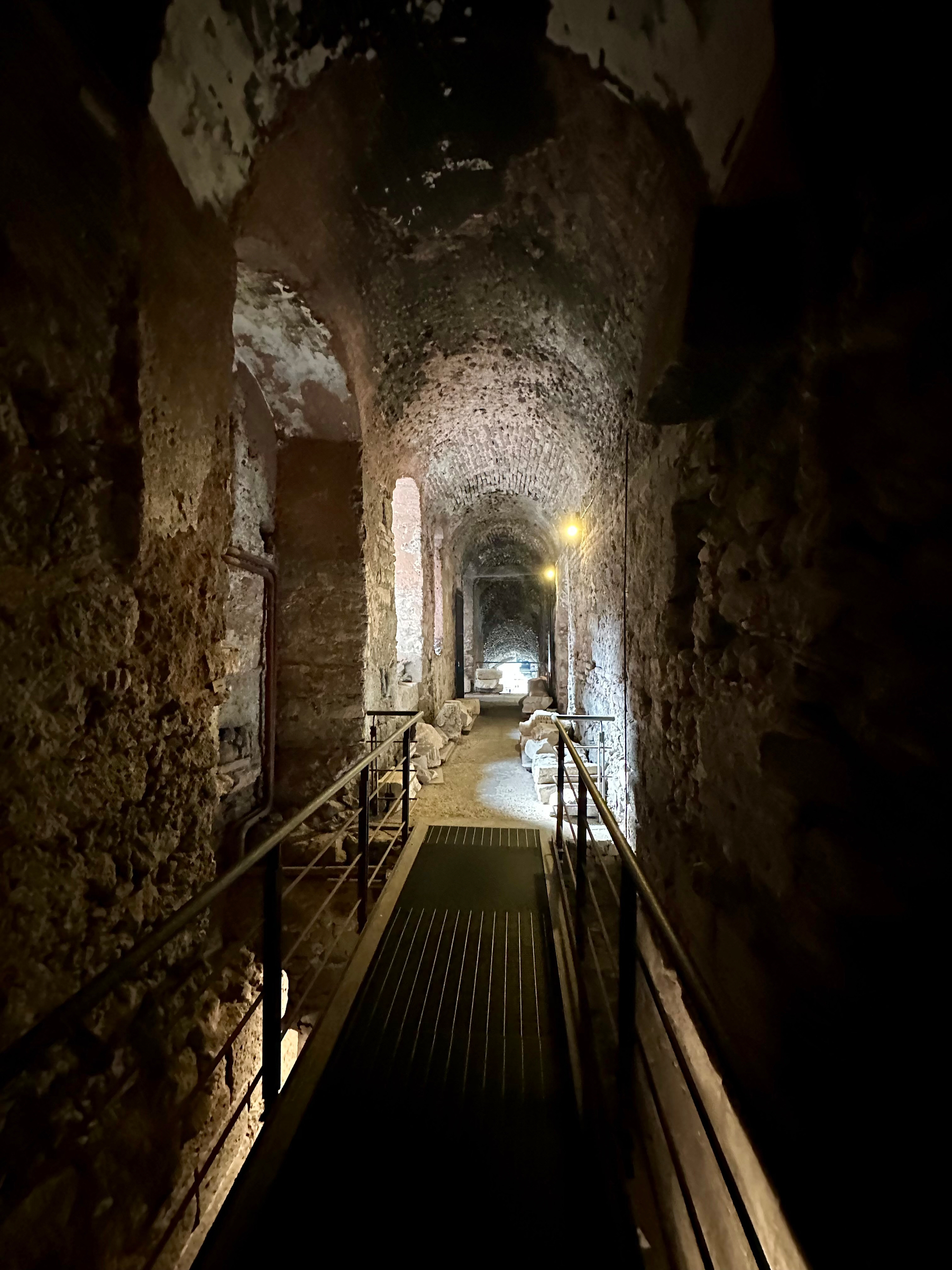
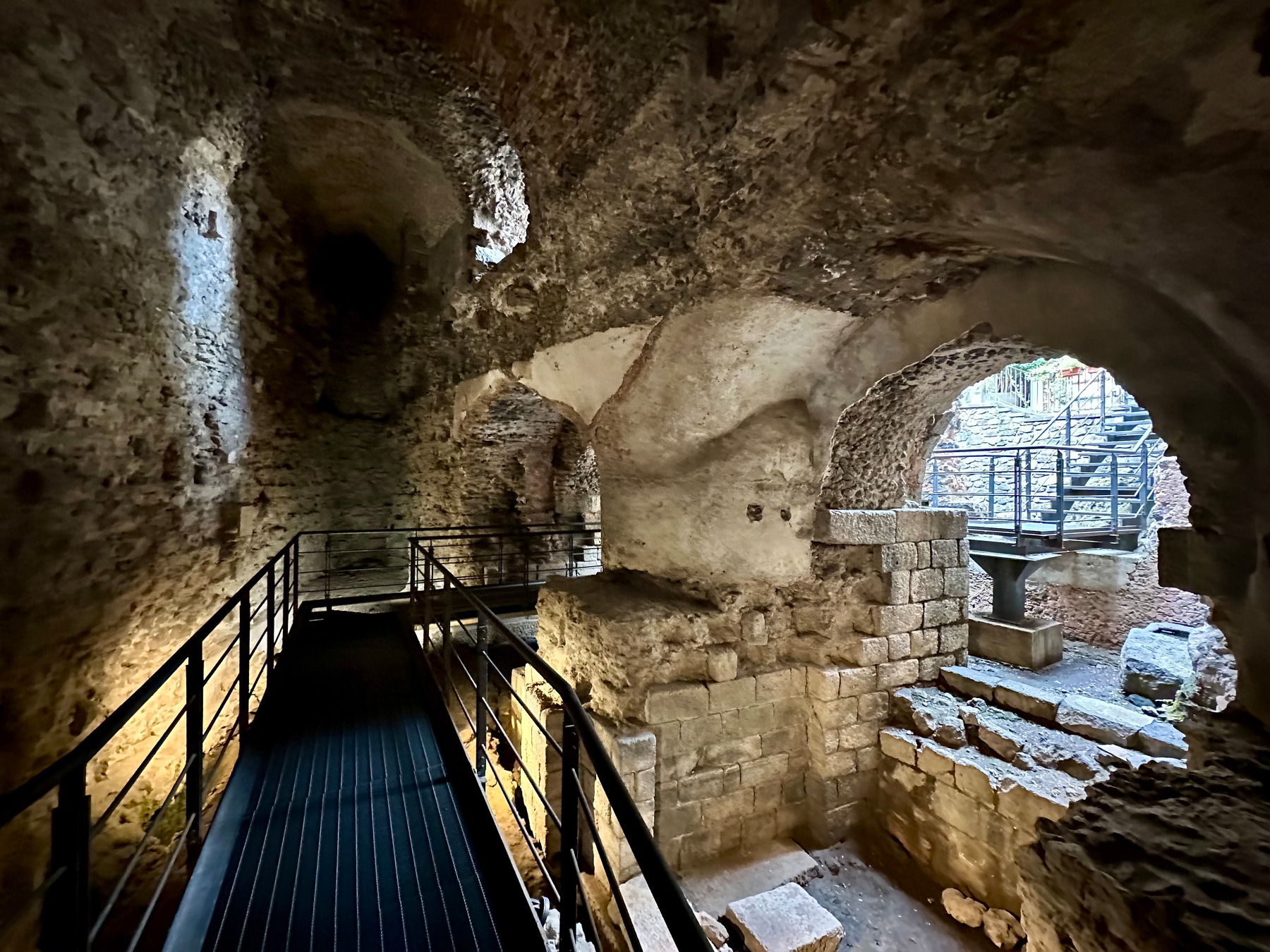
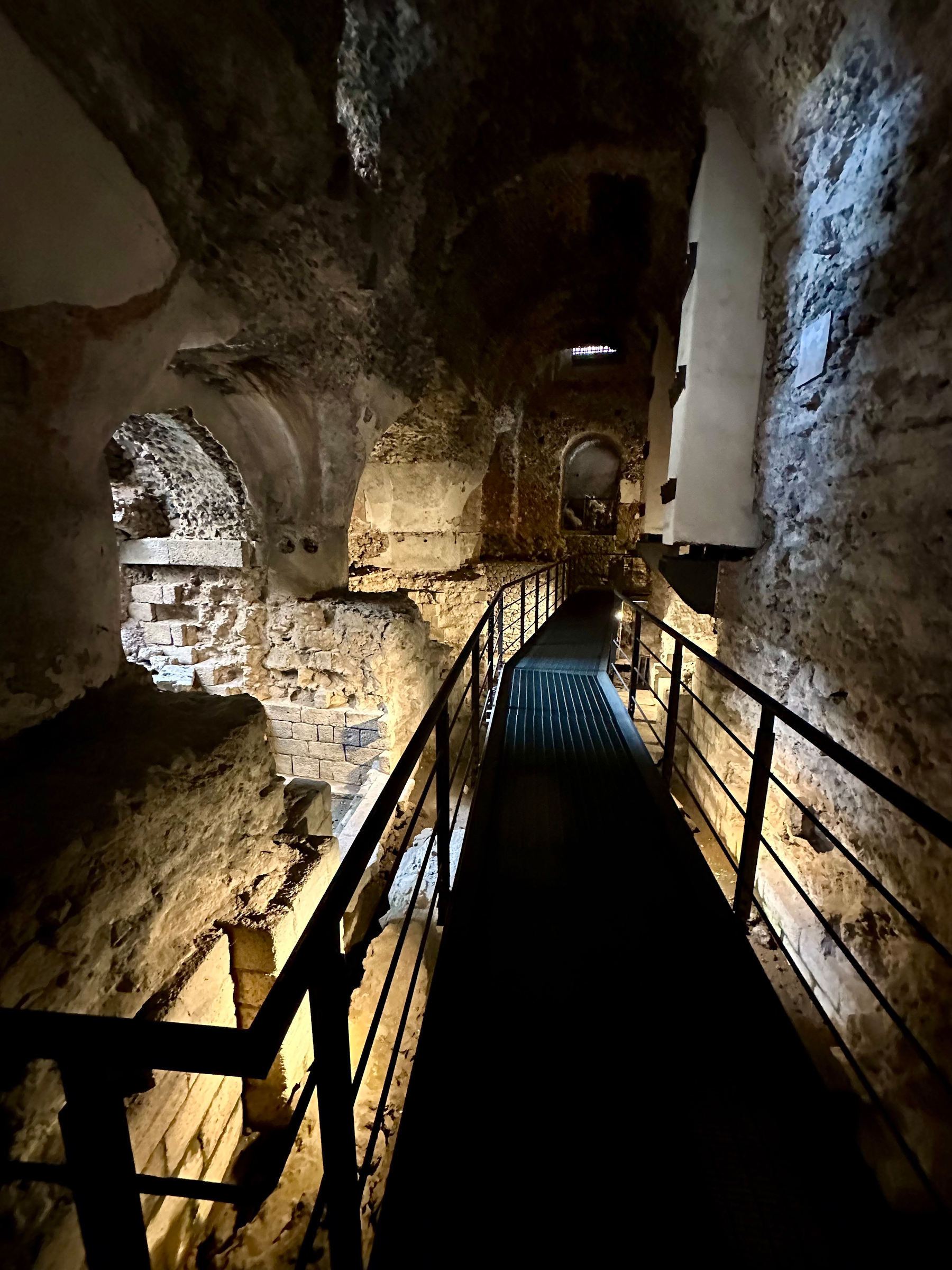
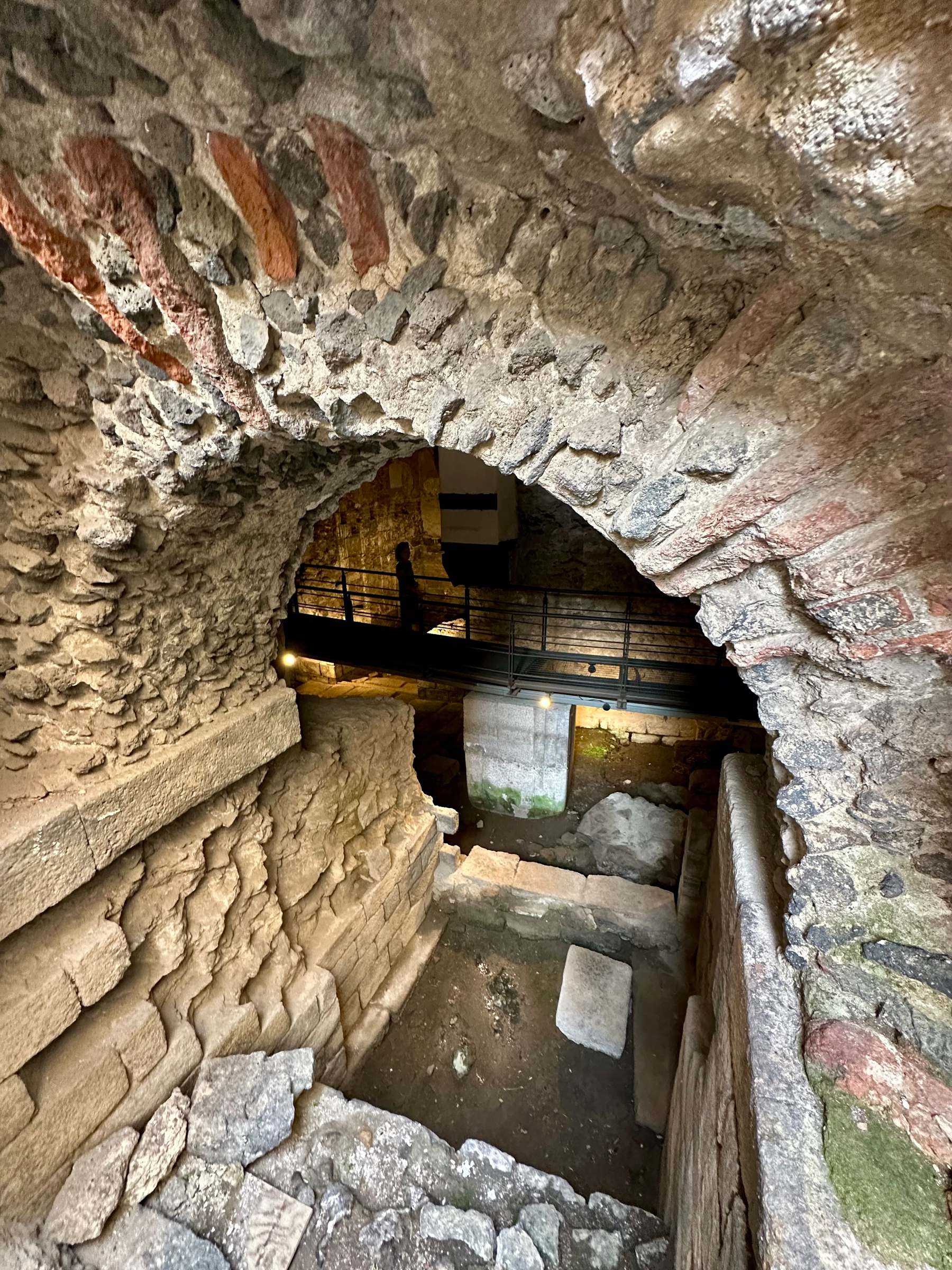
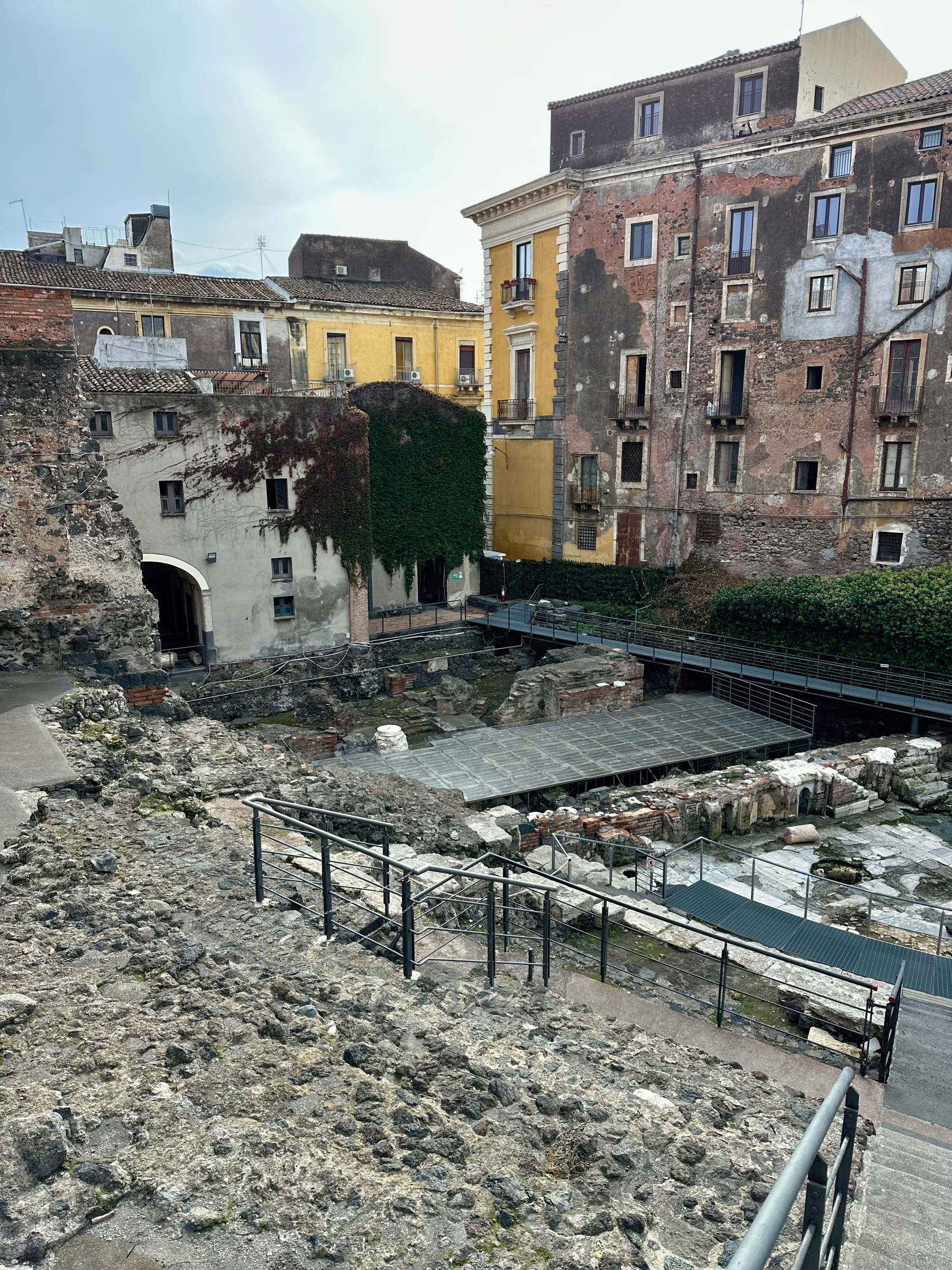
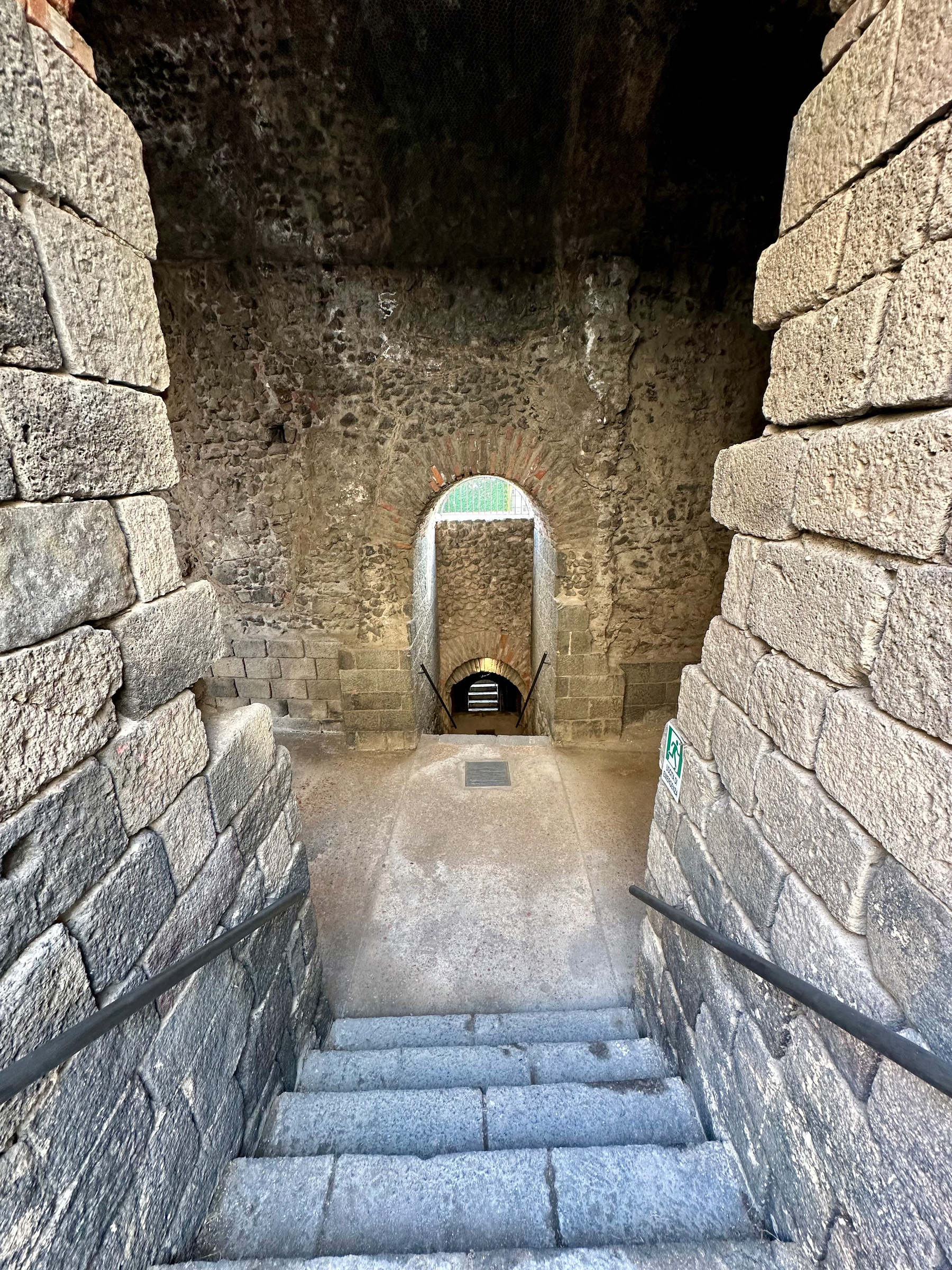
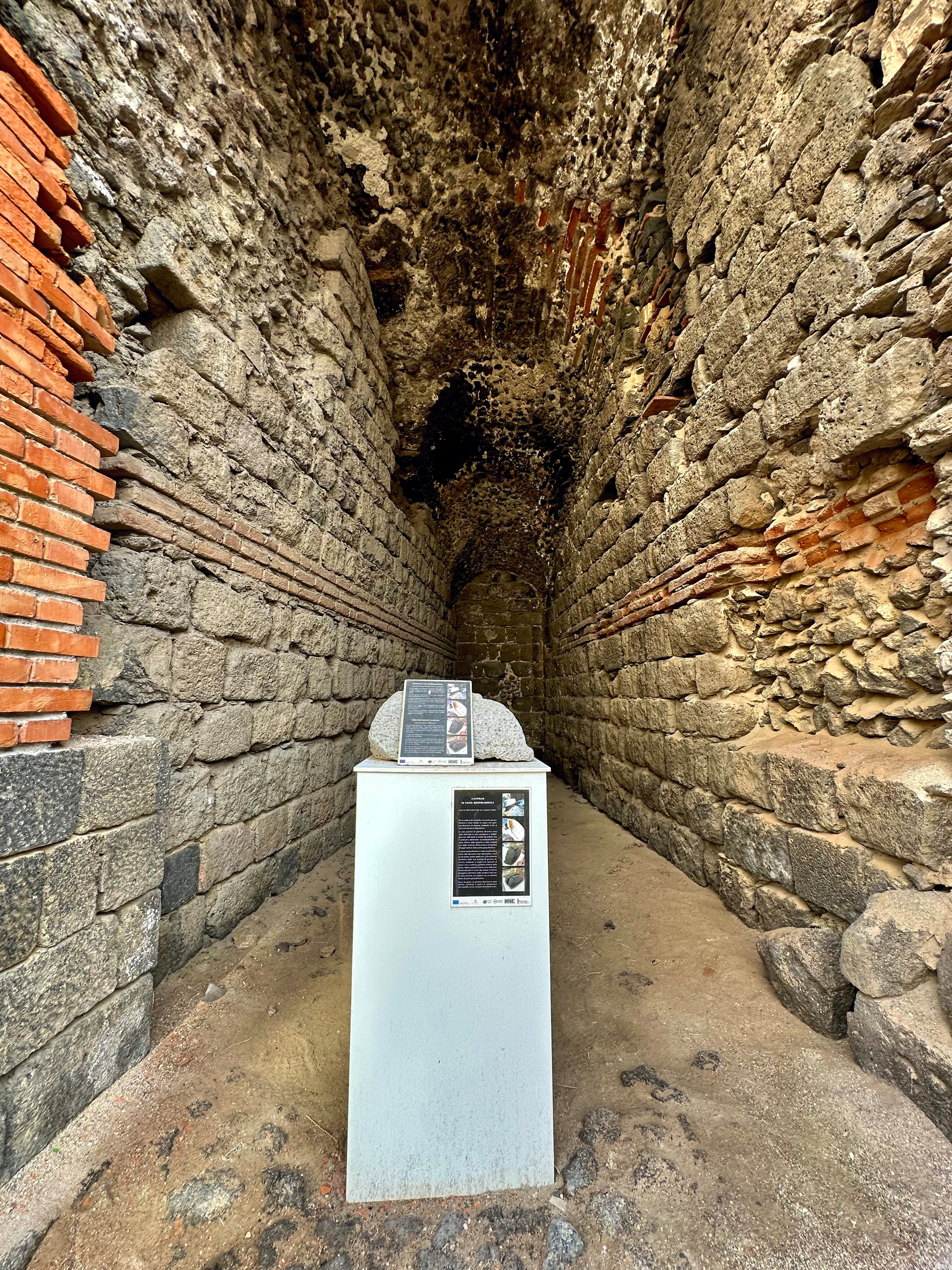
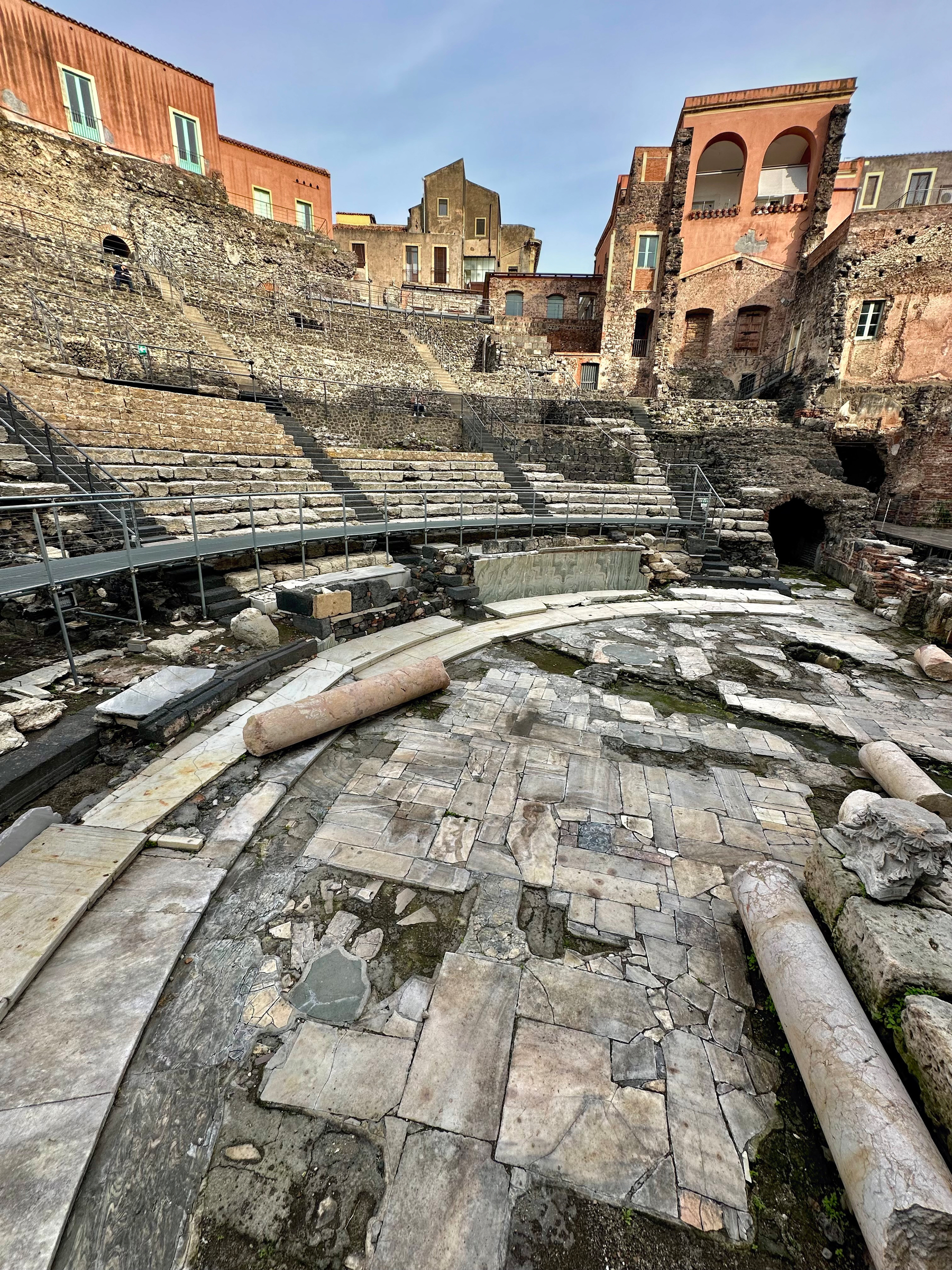
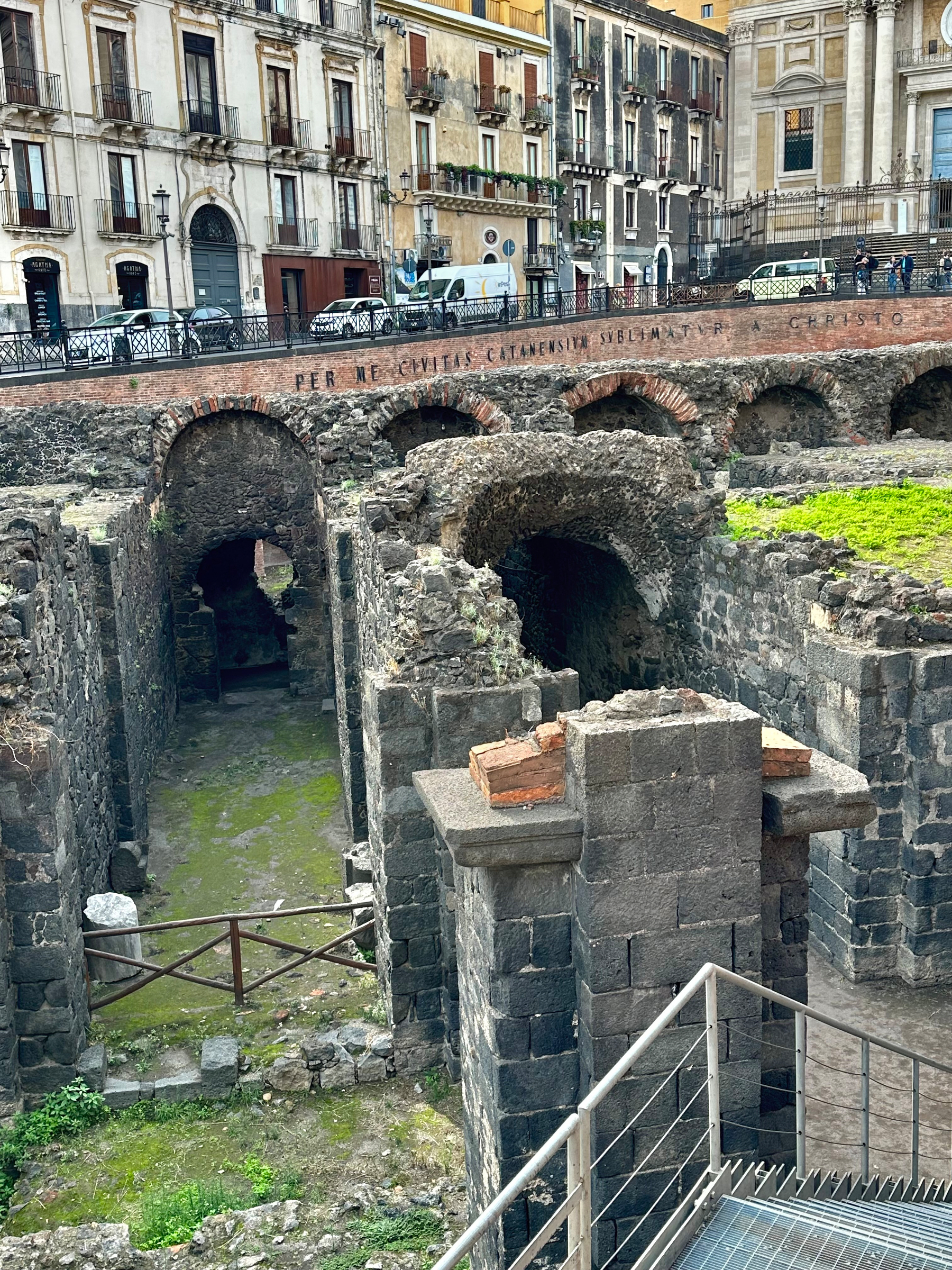
One of the most magical details to encounter while walking through the lower corridors, the parodoi, and looking into the orchestra is the water mirror resting at its base. During antiquity, Roman engineers diverted the Amenano River, a subterranean freshwater stream fed by Etna’s snowmelt, directly beneath the theatrical stage. In ancient times, this allowed them to flood the orchestra for aquatic displays and power mechanical stage lifts. Following the devastating 1669 eruption of Mount Etna that buried the river underground, the water continues to seep upward into the orchestra today, creating shimmering reflections on the dark basalt stones. Just uphill from the main theatre stands its smaller sister structure, the Odeon. Holding approximately 1,300 spectators across 17 vaulted seating bays, this intimate venue was dedicated to musical audition recitals, poetry competitions, and theatrical rehearsals. Unlike the open-air main theater, the Odeon was originally enclosed by a majestic wooden roof to create flawless acoustic amplification.
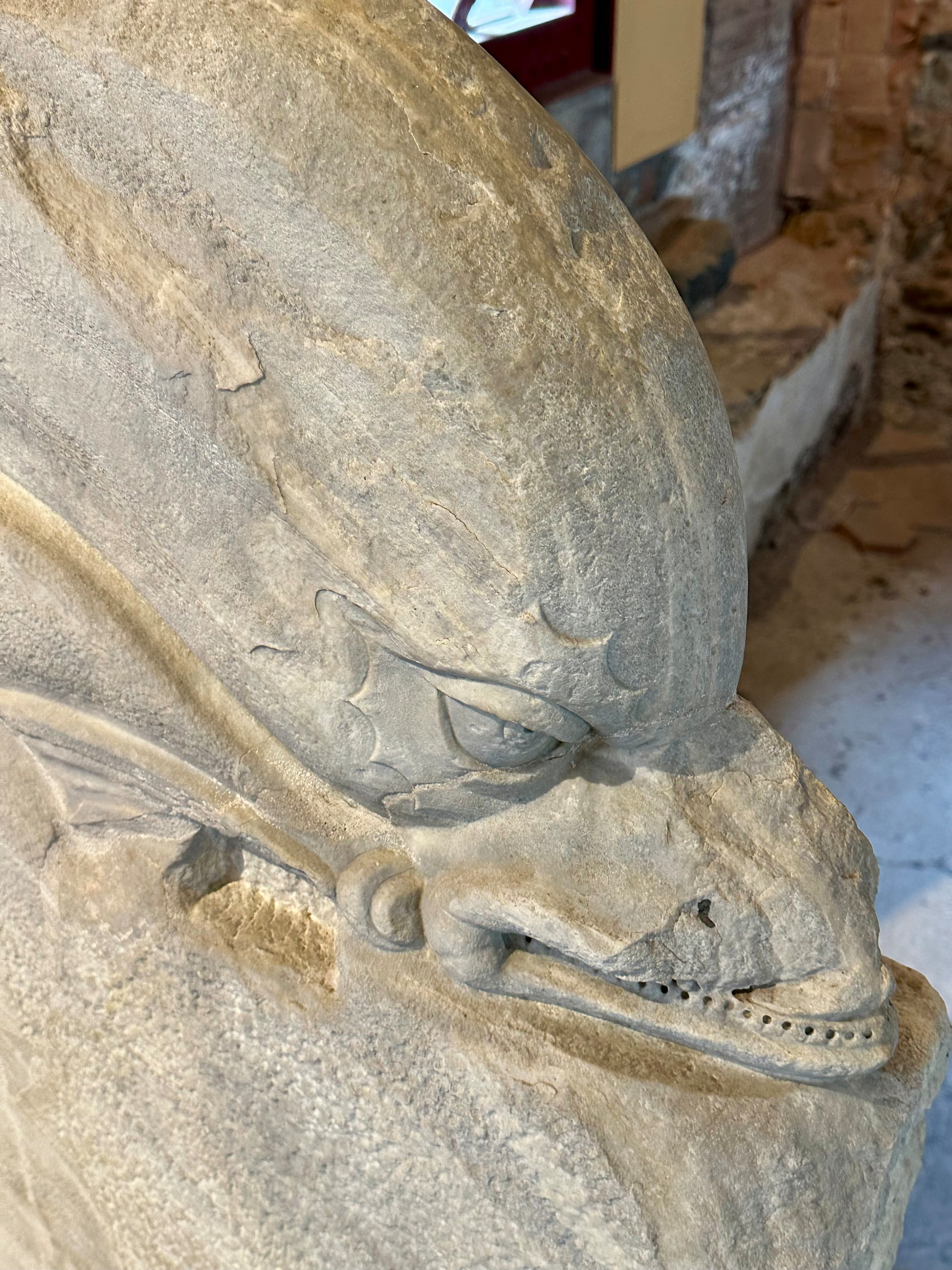
After the fall of Rome, the complex fell into disuse. In 1098, Count Roger I stripped its fine white marble facades to construct the Catania Cathedral. Over subsequent centuries, a crowded residential neighborhood called Quartiere Grotte grew directly over the cavea, building family homes right onto the ancient arches. It was only after the devastating 1693 Val di Noto earthquake damaged these overlying buildings that 19th-century archaeologists began excavating the forgotten site. Today, walking through the site and exploring the on-site museum in Casa Liberti offers an incredible view of urban stratification, where ancient Roman vaults seamlessly blend into 18th-century Sicilian townhouses. Exploring this hidden world of volcanic stone, flowing groundwater, and ancient performing arts right in the heart of Sicily was a true highlight of the day.
#TeatroRomanoCatania #OdeonCatania #Catania #Sicily #SicilyTravel #AncientRome #Archaeology #Travel #Photography #LavaStoneArchitecture #AmenanoRiver #HistoricSicily #Photoblog #Blog