Palermo Architecture Grandeur of Banco di Sicilia
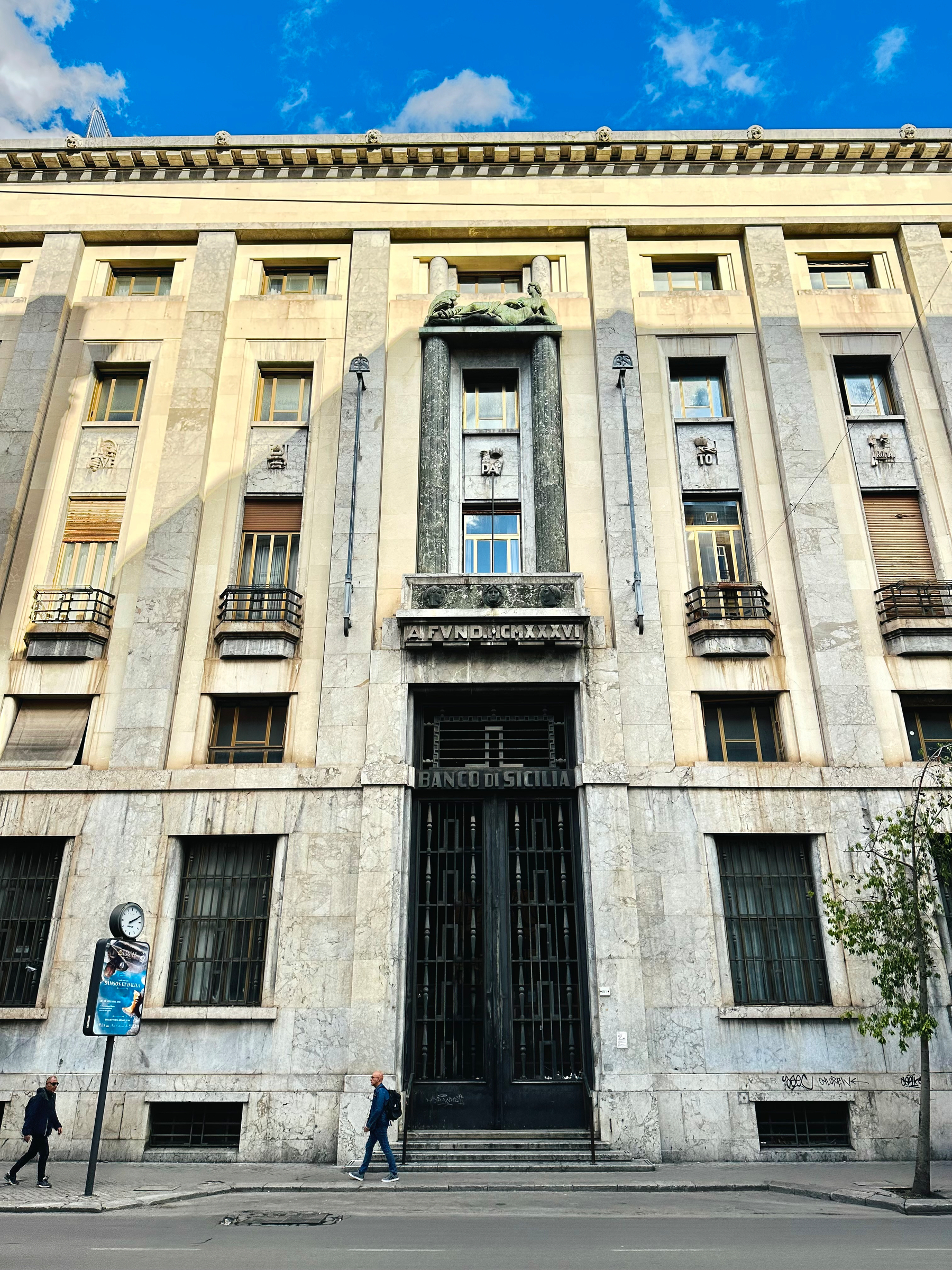
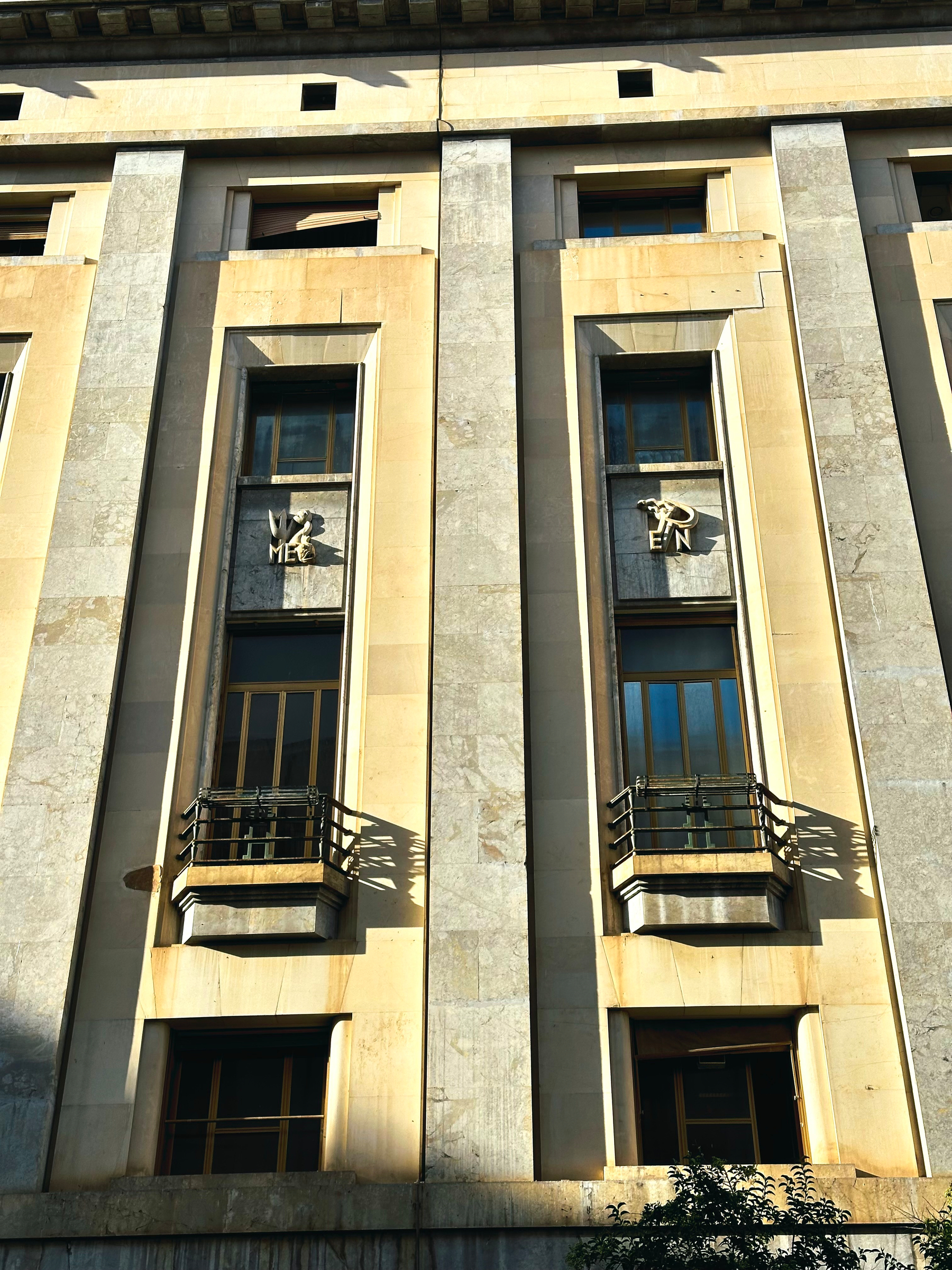
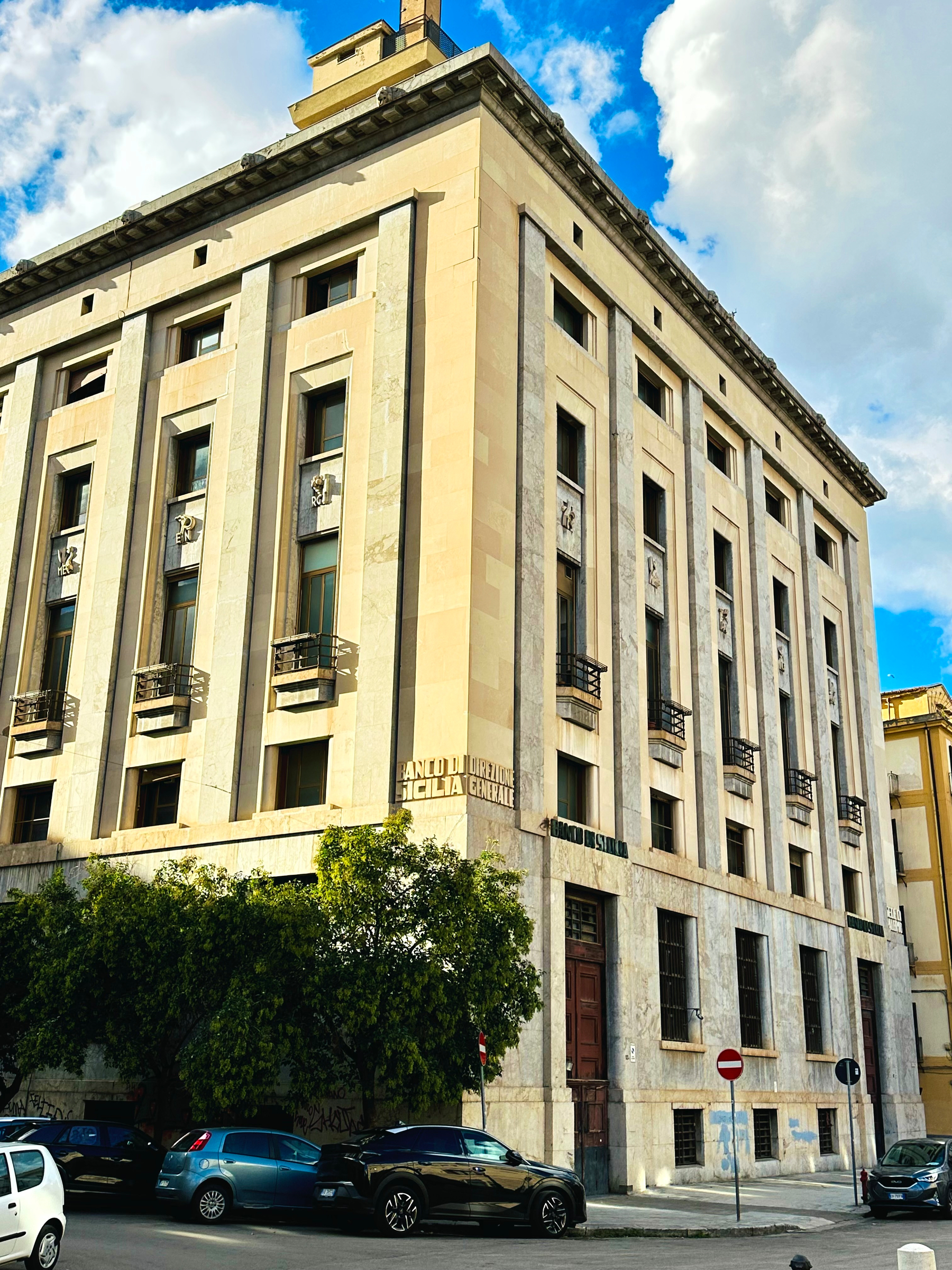
Walking down Via Roma in Palermo, it is impossible not to stop and marvel at the striking presence of the former Banco di Sicilia Direzione Generale building. Designed by Sicilian architect Salvatore Caronia Roberti and built between 1932 and 1938, this monumental structure stands as a prime example of Fascist-era architecture (Stile Littorio), blending Italian Rationalism with Art Deco details.
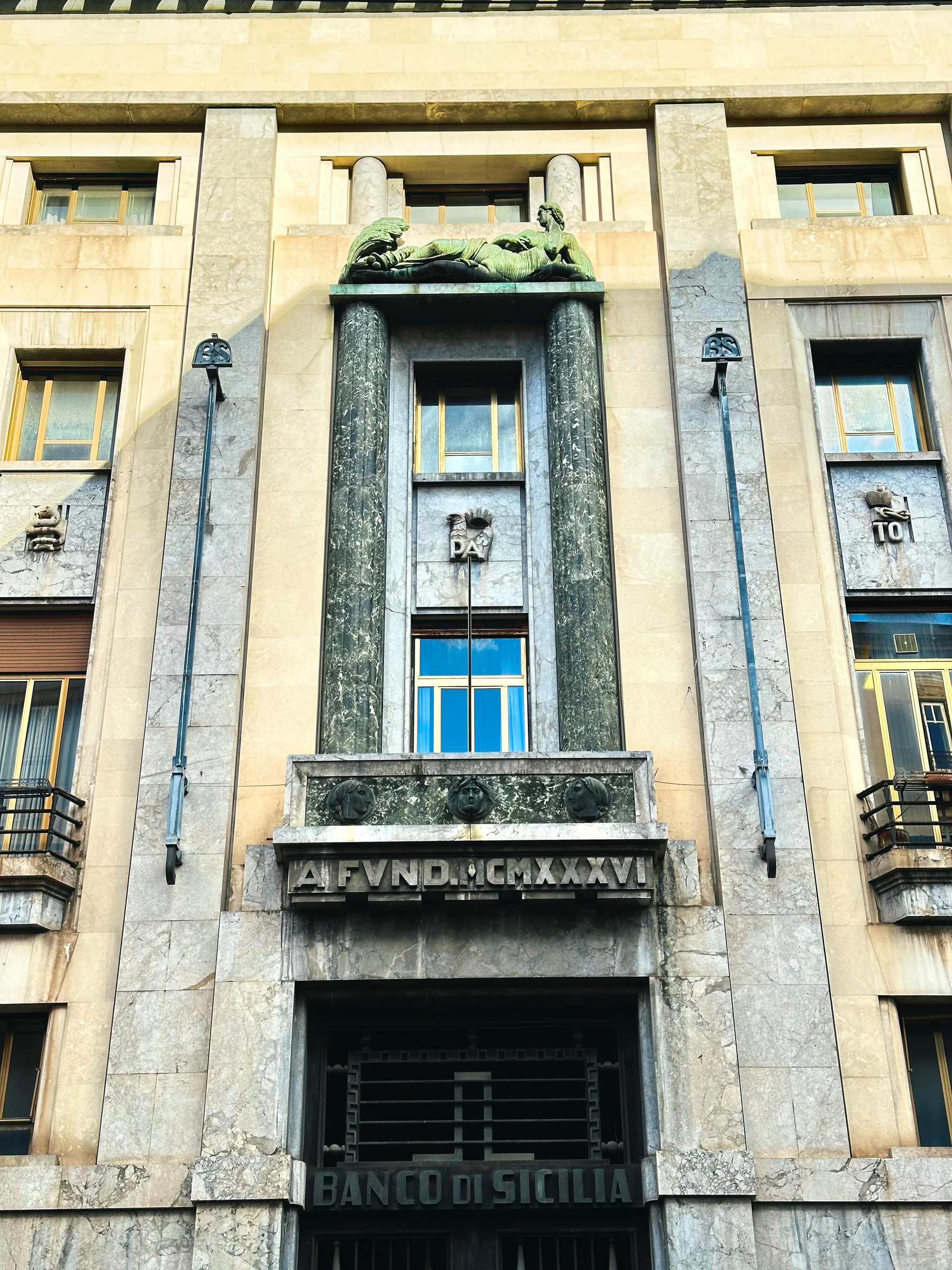
The exterior demands attention from every angle, designed during Benito Mussolini’s regime to project power, authority, and permanence. The lower levels are wrapped in rich, grey-veined marble panels, contrasting sharply with the warm stone facade above. High above the main entrance sits a bronze sculpture depicting the Allegory of Sicily by artist Archimede Campini, executing the idealized figurative style championed by interwar civic art.
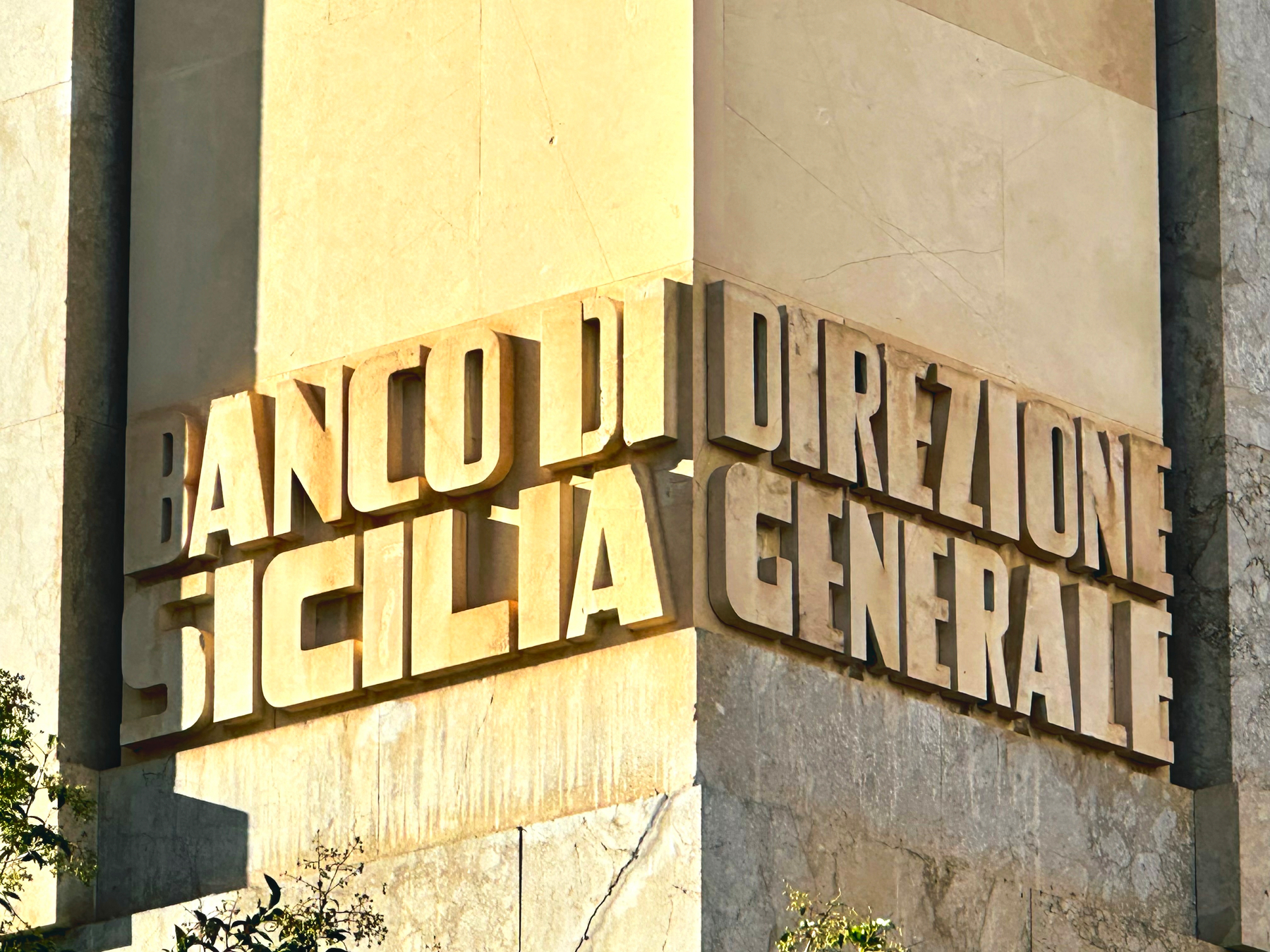
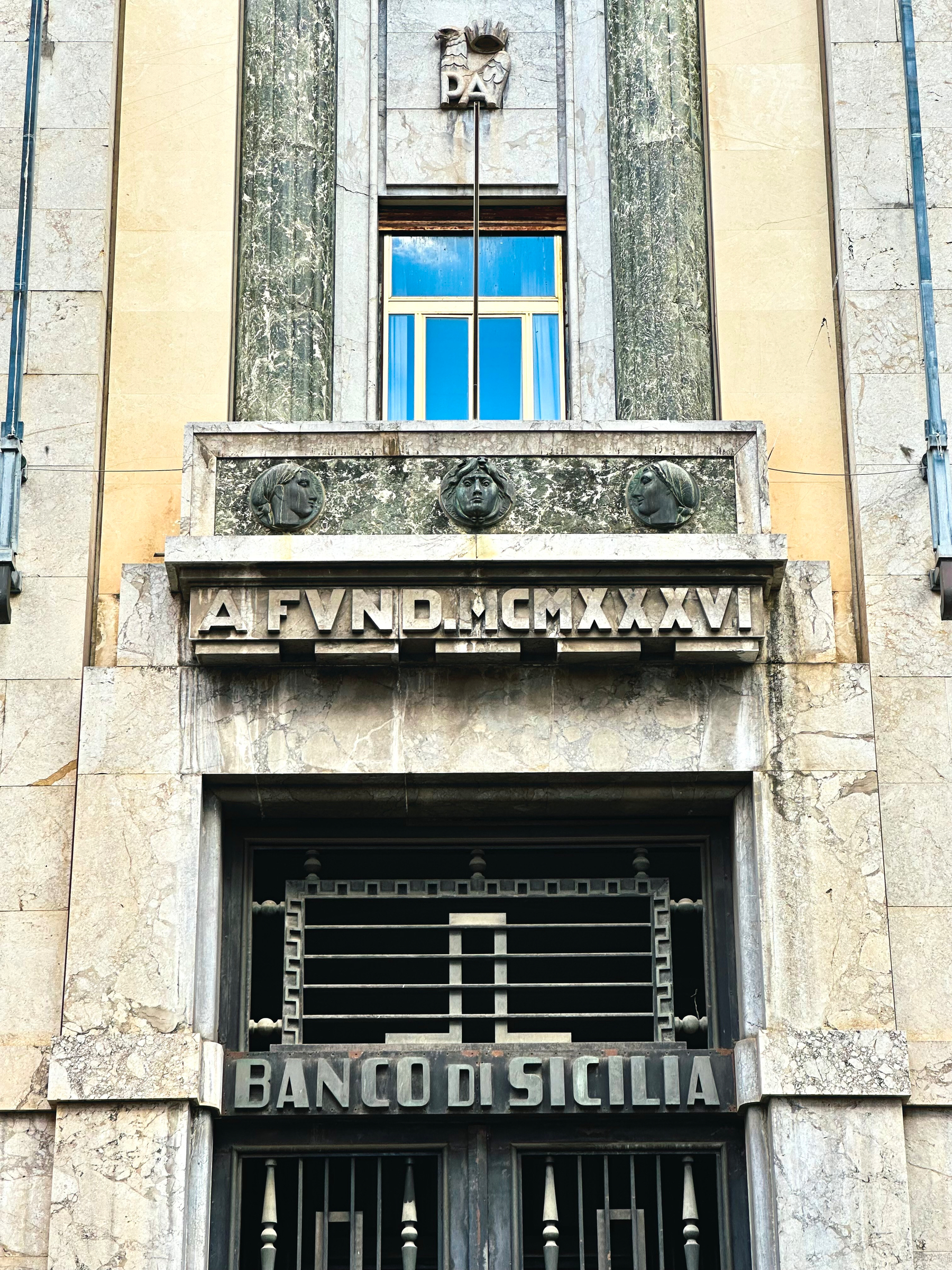
Directly below the sculpture, the facade displays the Latin inscription A. FVND. MCMXXXVI (Year of Foundation 1936). The use of Latin script and Roman numerals was a intentional hallmark of the regime’s imperial aesthetic, linking modern financial institutions to the legacy of ancient Rome. Around the corner, the dramatic 3D carved lettering reading BANCO DI SICILIA DIREZIONE GENERALE showcases how heavy modern typography was integrated into state-backed masonry.
Although the building is currently closed to the public and unused, its historic facade continues to tell the complex story of Palermo’s 1930s urban transformation along Via Roma. It remains a captivating architectural artifact quietly watching over the street below.
#Palermo #Sicily #Architecture #ArtDeco #Rationalism #FascistArchitecture #StileLittorio #BancoDiSicilia #ViaRoma #ItalianArchitecture #Travel #Photography