Monreale Cathedral Travel Essay UNESCO World Heritage Site Sicily Historic Mosaics
The climb up to Monreale on the slopes of Monte Caputo rewards visitors with a sweeping view across the fertile Conca d’Oro valley toward Palermo, but nothing on the outside prepares you for what waits inside the Duomo di Monreale. Stepping through its heavy doors, the immediate sensation is one of being bathed in warm, golden light reflected from thousands of square meters of glass mosaics.
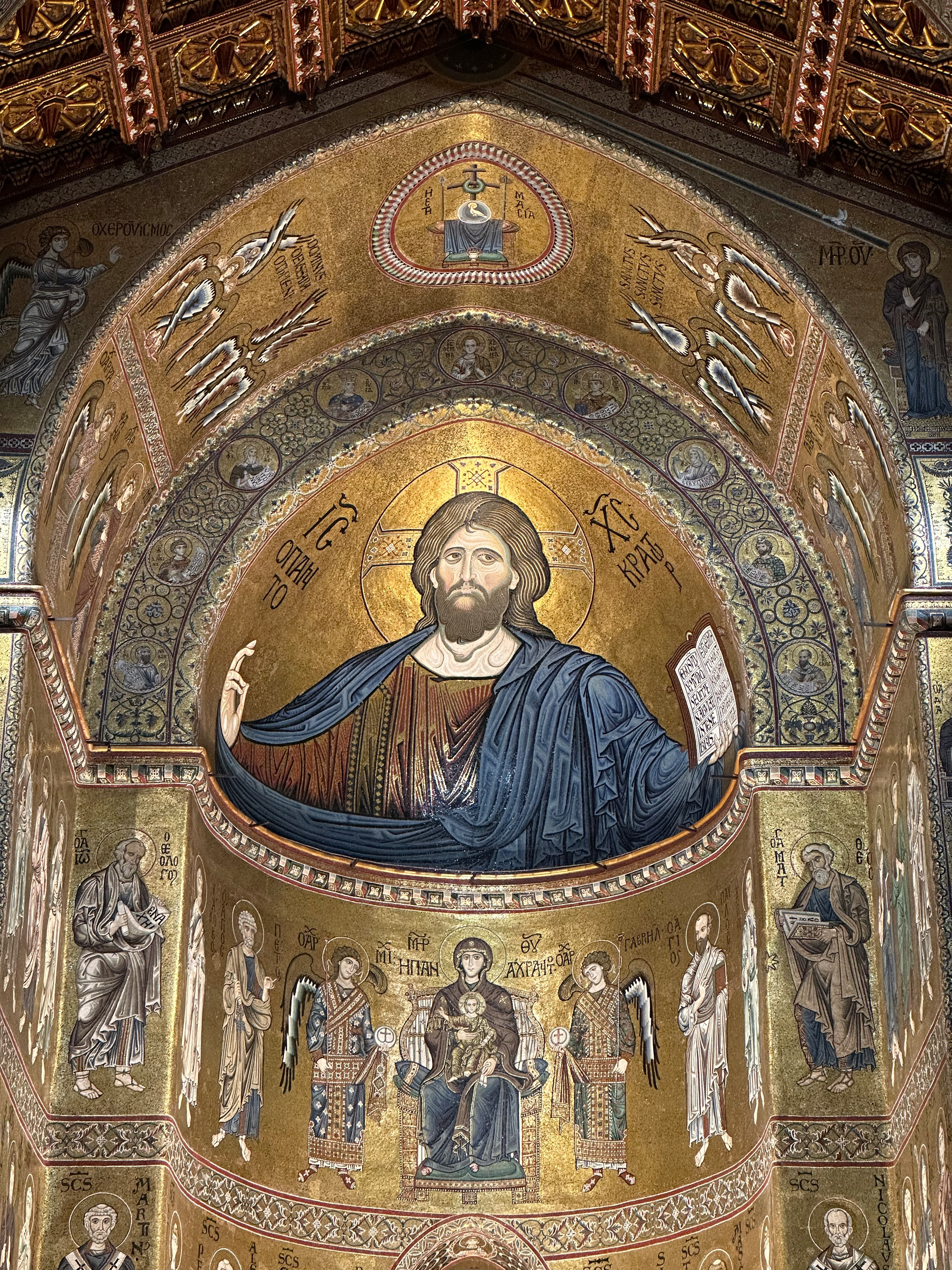
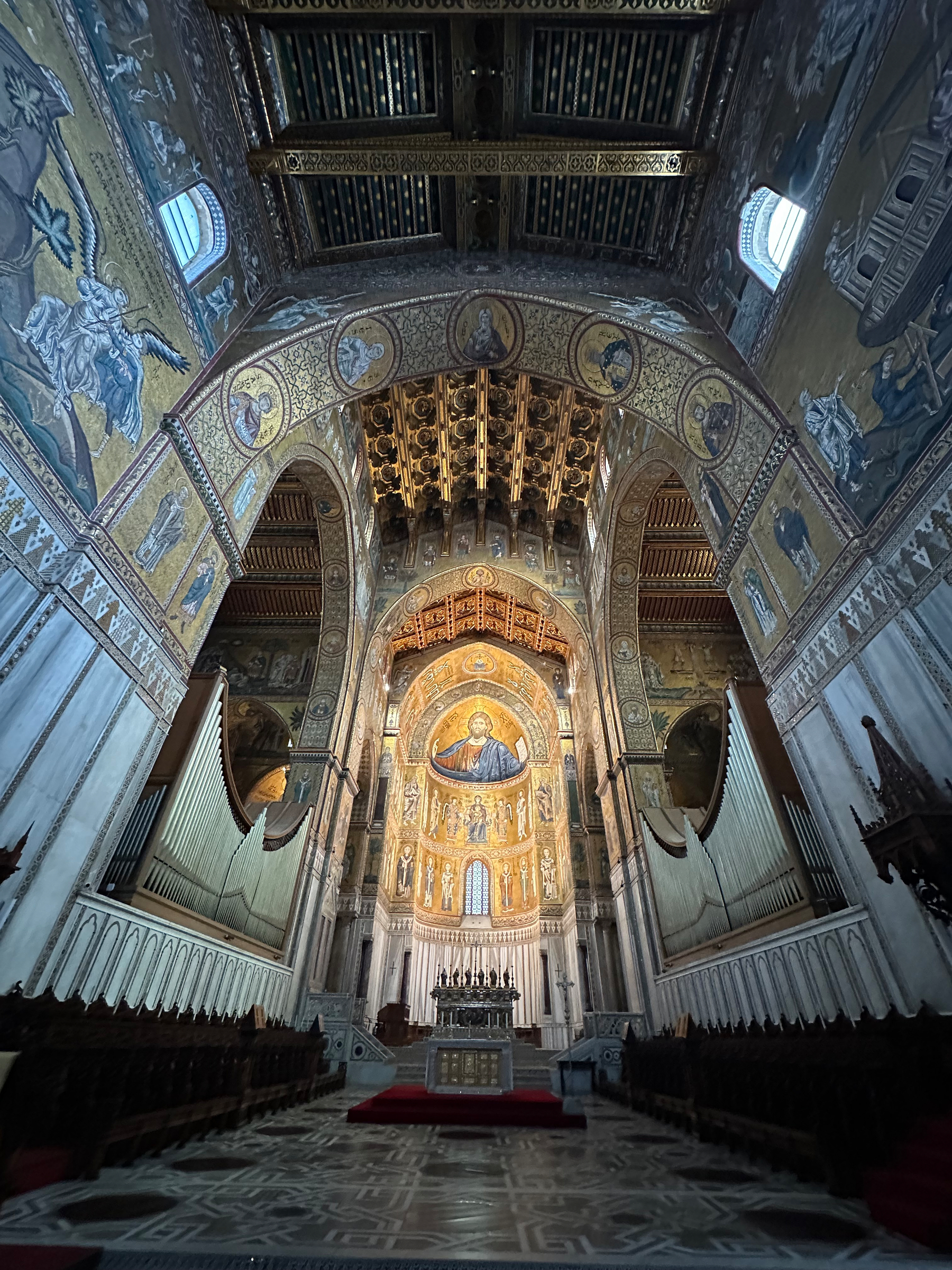
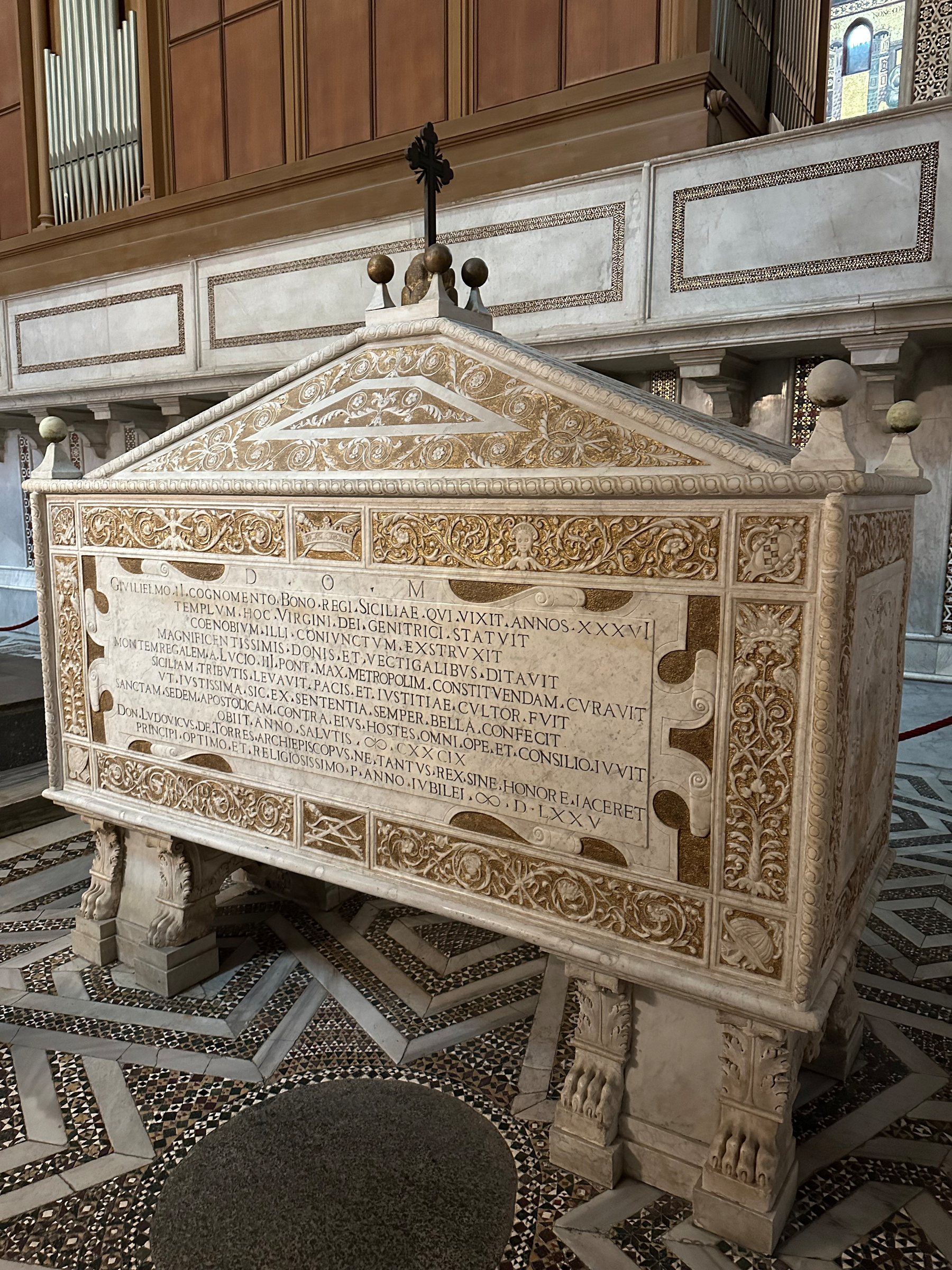
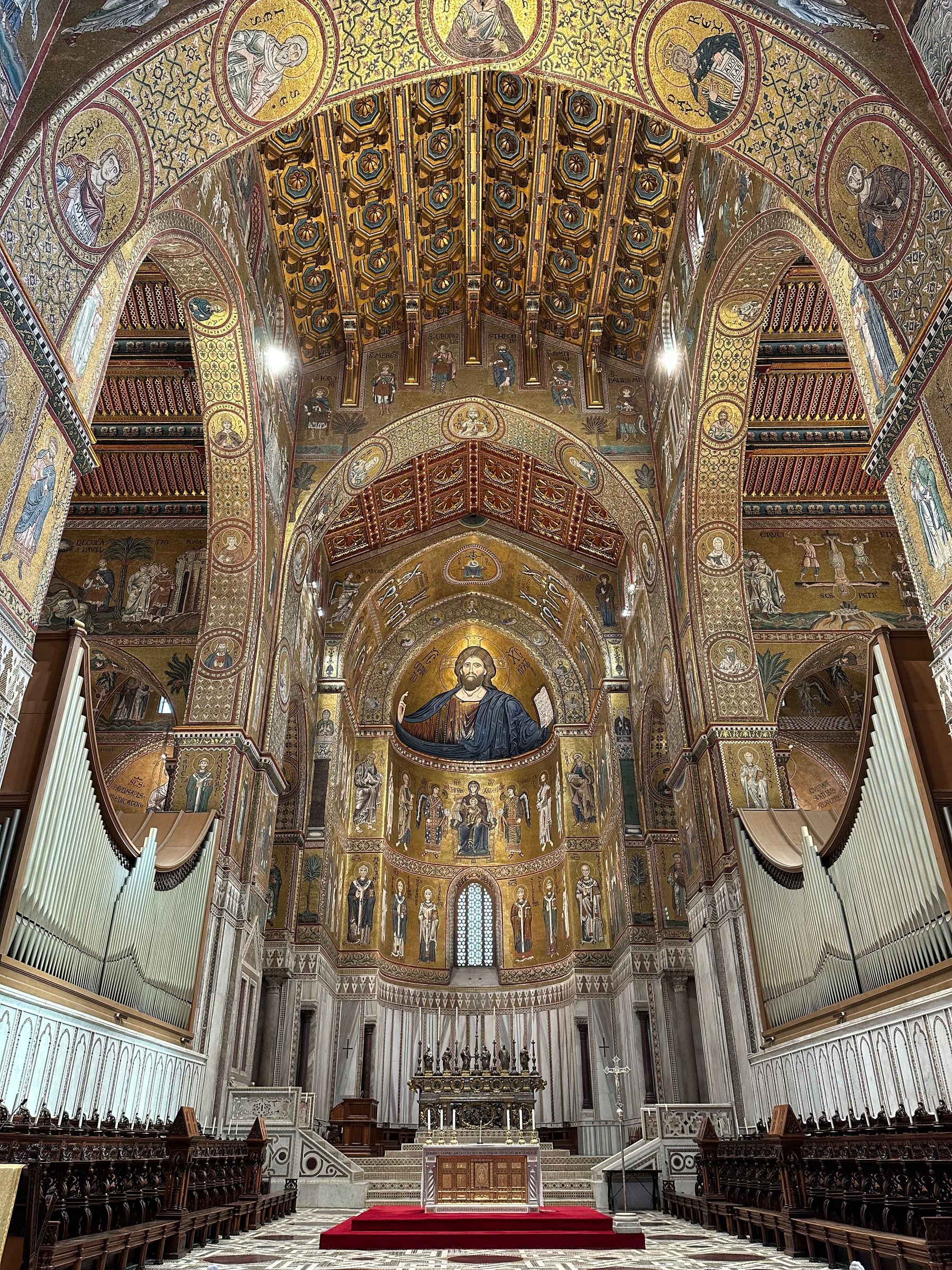
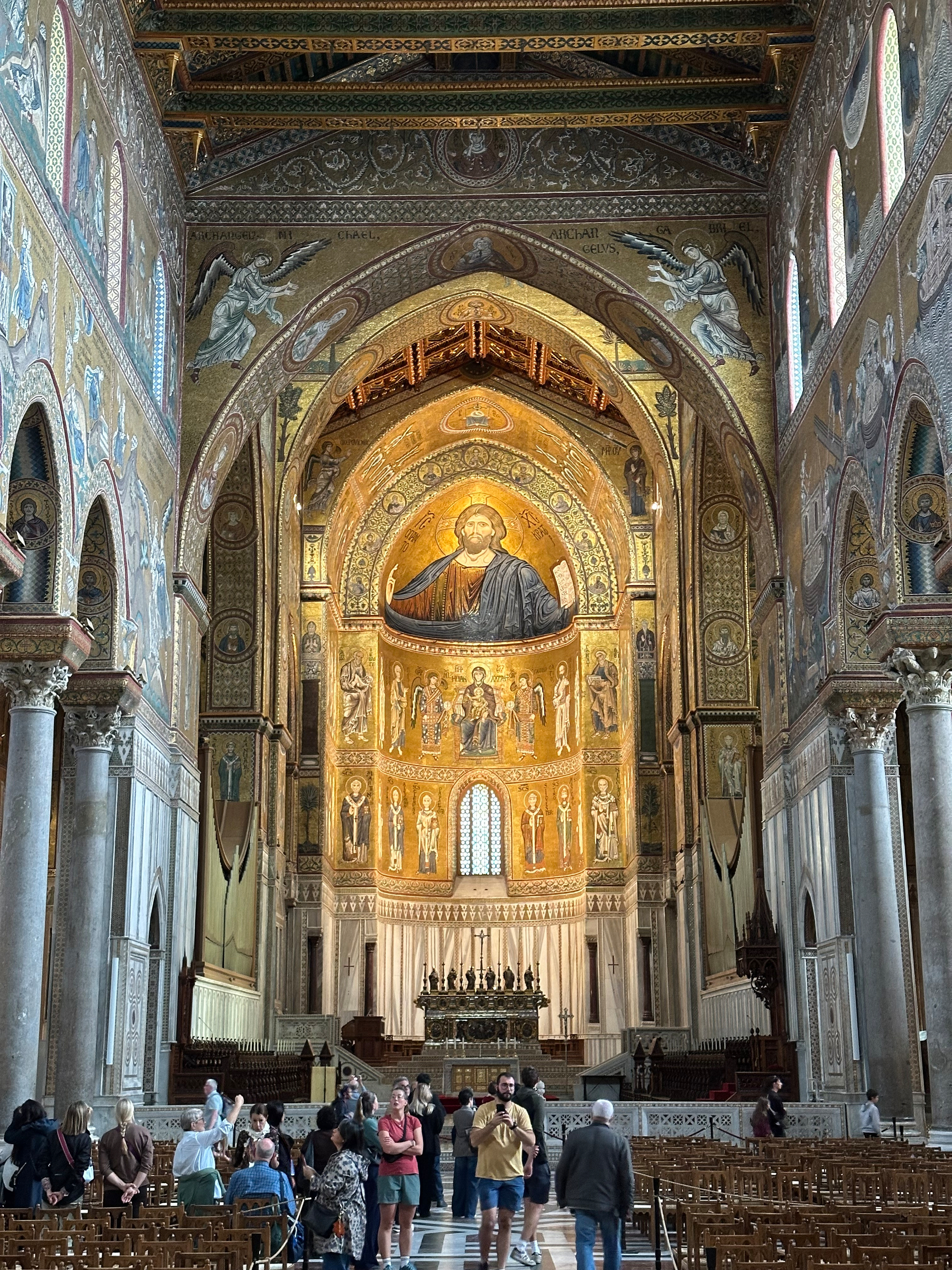
Commissioned in 1174 by King William II of Sicily, the cathedral stands as a testament to the extraordinary cultural synthesis of medieval Sicily. In the twelfth century, the island served as a vibrant crossroads of Western Europe, Byzantium, and the Islamic Mediterranean. William II aimed to construct a monument that would serve both as a royal mausoleum and as an architectural masterpiece capable of surpassing the Palatine Chapel built by his grandfather, Roger II. To achieve this ambitious vision, Norman rulers gathered the finest master artisans of the region. Byzantine mosaic masters worked alongside Arab woodworkers, stone carvers, and Western European stonemasons, giving birth to the distinctive Arab-Norman architectural style. The eye is pulled immediately up into the central apse, where the massive figure of Christ Pantocrator looks out over the entire sanctuary. Depicted with His right hand raised in blessing and holding an open Gospel bearing Greek and Latin inscriptions, the icon radiates quiet authority and immense scale. Below Christ, the Virgin Mary sits enthroned with the Infant Jesus, flanked by archangels and apostles in a strict hierarchy of divine order.
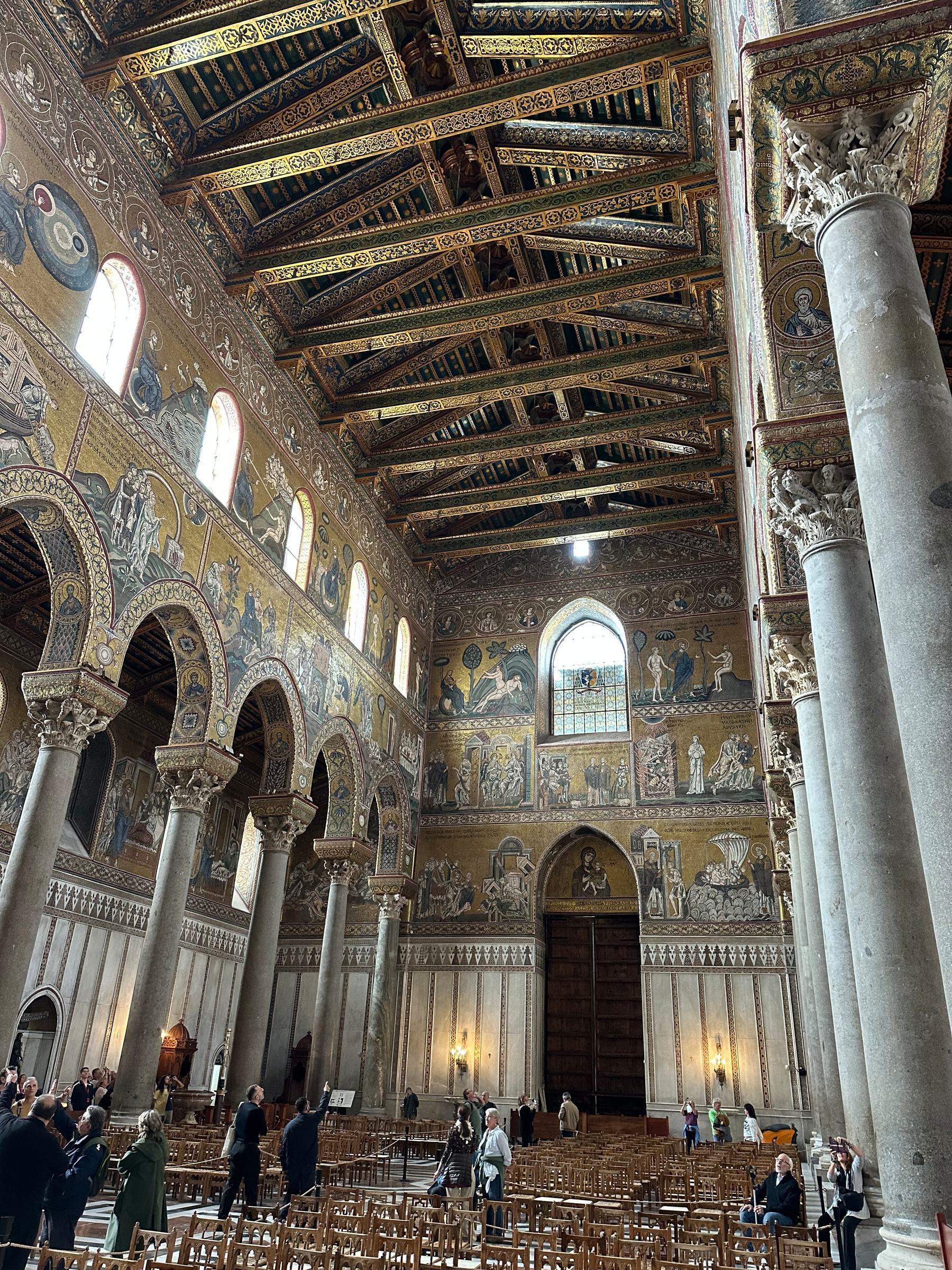
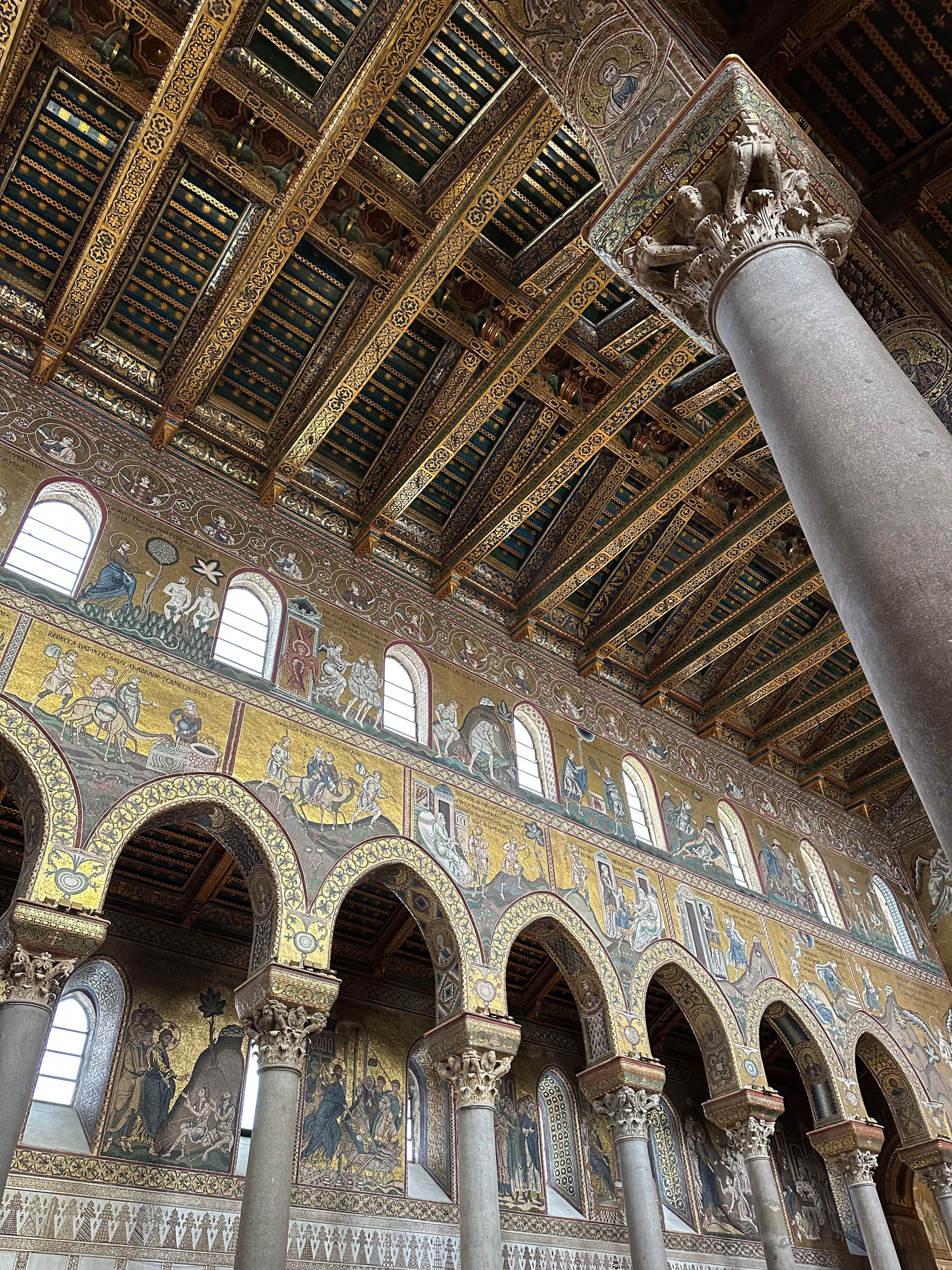
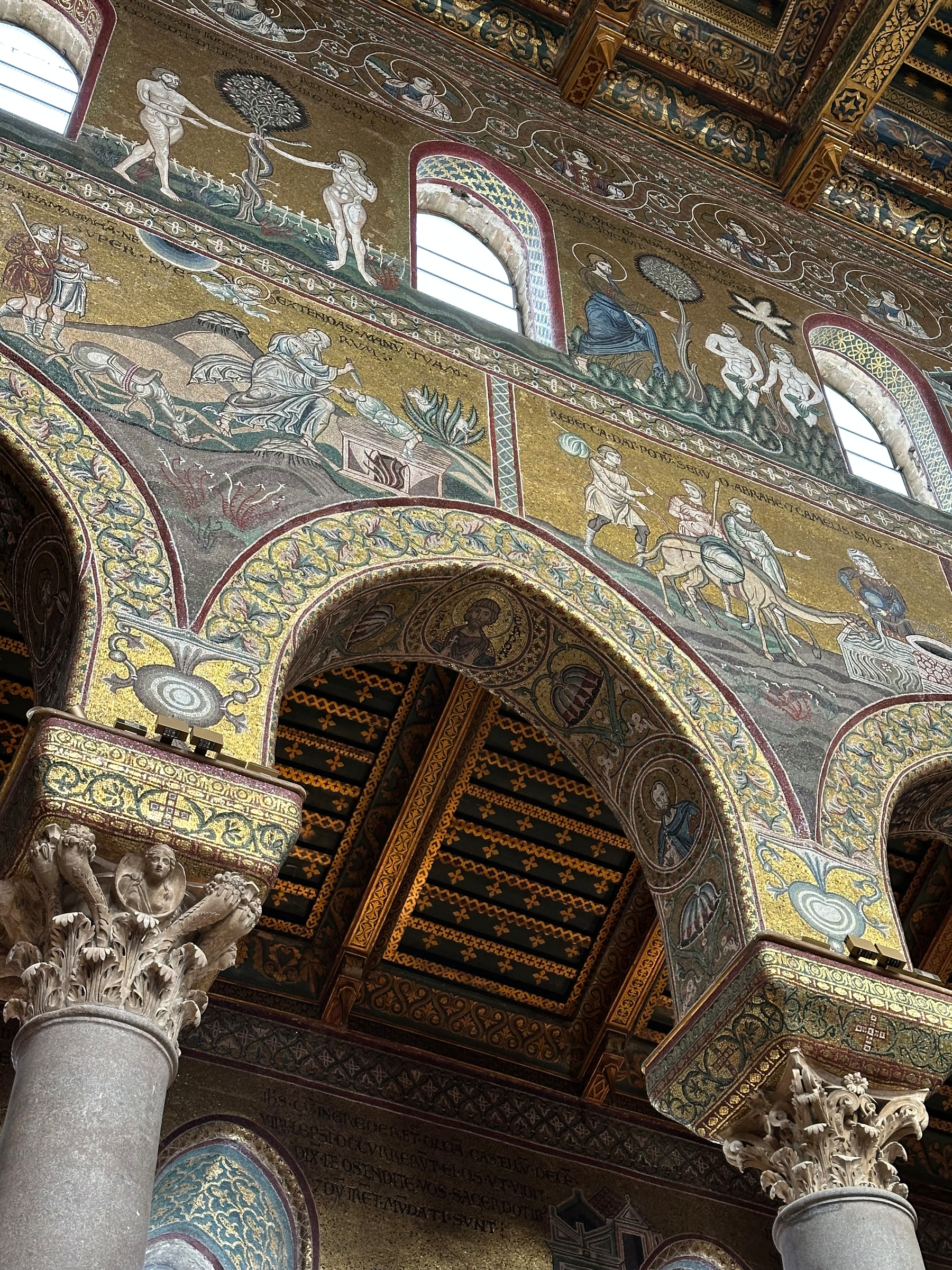
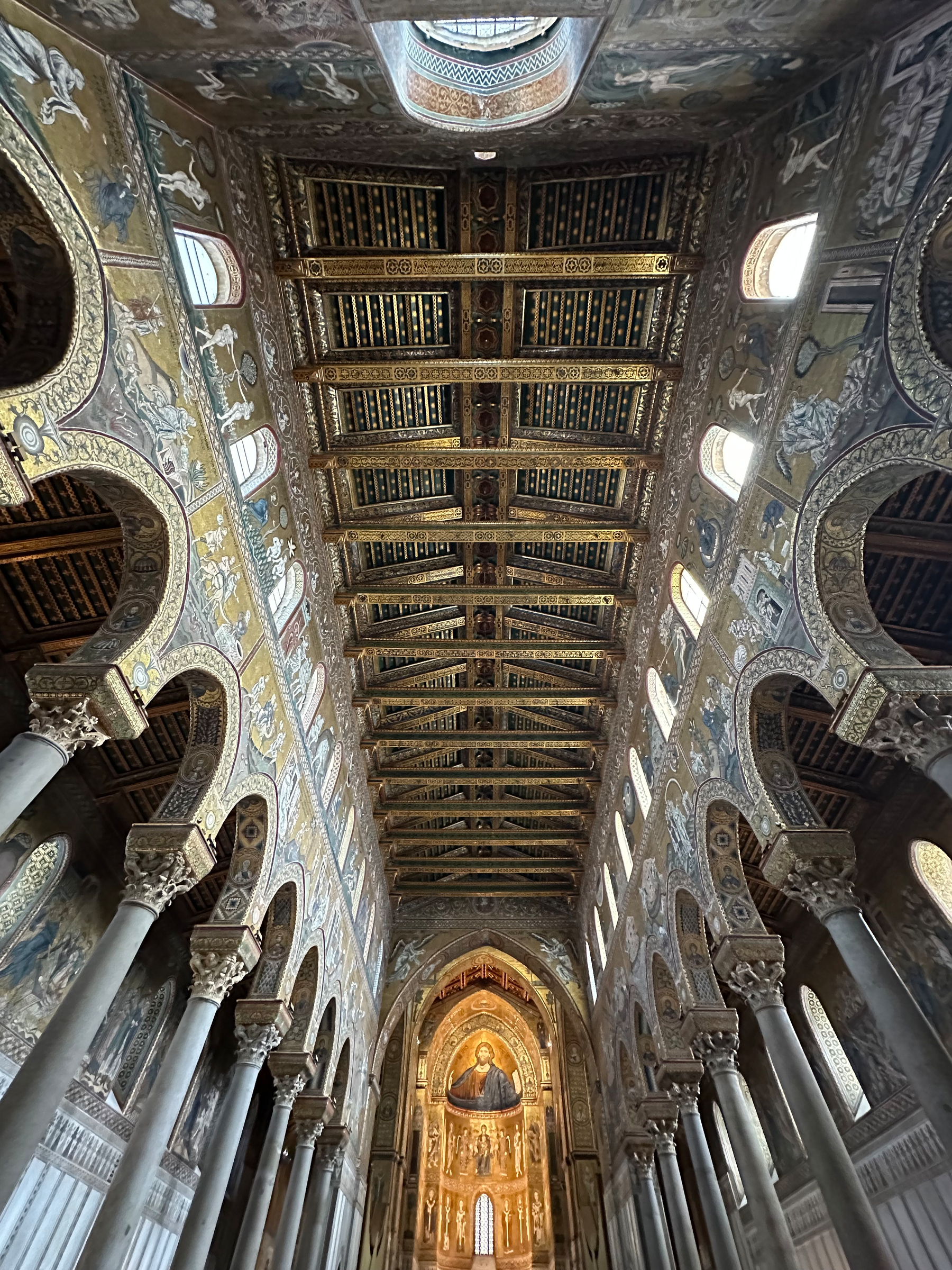
Beyond the central apse, the walls tell a continuous narrative through over six thousand square meters of gold-ground mosaics. The nave walls depict the stories of Genesis, from the creation of light to Noah’s Ark and the Tower of Babel, while the transept details the life, miracles, and Passion of Christ. High above the sanctuary, the intricate carved wooden ceiling exhibits strong Islamic structural and decorative influences, reminding visitors of the diverse hands that crafted this sacred space. Standing near the choir beneath the towering organ pipes and surrounded by geometric Cosmatesque marble floor inlays, one gets a profound sense of how artistic traditions that were so different elsewhere could come together in complete harmony under the Sicilian sky.
#MonrealeCathedral #Monreale #Sicily #VisitSicily #Palermo #UNESCOWorldHeritage #ArabNormanArchitecture #ChristPantocrator #ByzantineMosaics #MedievalArt #TravelEssay #ArchitecturePhotography #HistoricArchitecture