
Where Japan’s Fiery Mountain Meets the Sea, Sakurajima -Living in the Shadow of Fire
As I leaned against the rail of the ferry, the steady vibration of the engine beneath my feet seemed to become part of the rhythm of the journey. A salty breeze swept across Kagoshima Bay, carrying the scent of the sea as the boat moved steadily toward the enormous silhouette ahead. Sakurajima was already dominating the horizon, rising from the water like something ancient that had been waiting there long before people arrived. I had come expecting a volcano. What I found was something much more fascinating: an entire landscape, culture, and way of life shaped by one. From the ferry, Sakurajima looked almost impossibly close to Kagoshima. Its slopes rise dramatically from the surrounding bay, with the highest peak reaching about 1,117 meters above sea level. Smoke and steam often drift from the summit area, sometimes forming a plume that catches the light, sometimes barely noticeable against the clouds. There is something strangely reassuring about seeing it from the water. It is beautiful, almost serene—but you never completely forget that this mountain is active.
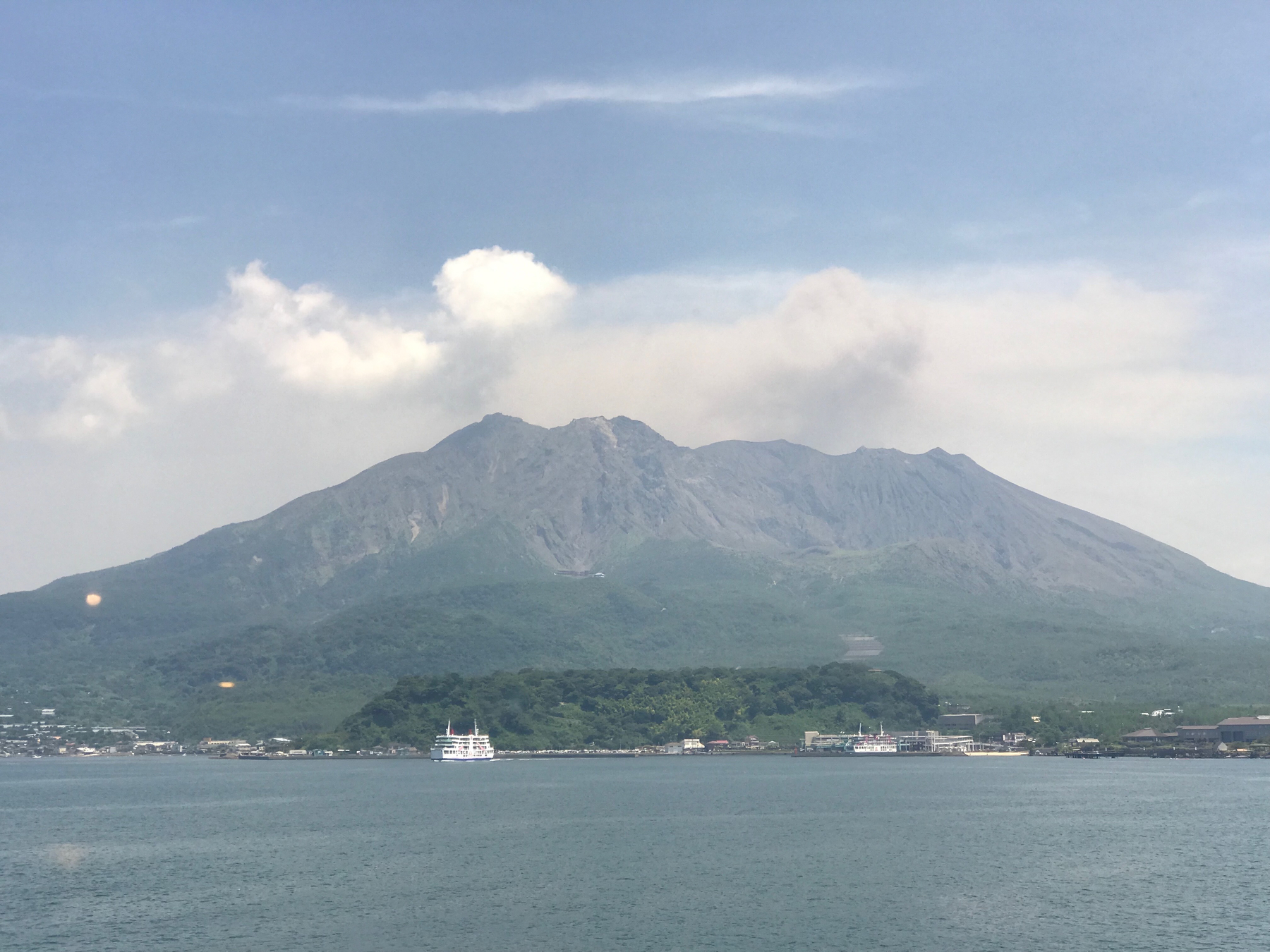
The name Sakurajima translates roughly as “Cherry Blossom Island,” although there is an irony in the name when you see the landscape for the first time. This is not a soft, idyllic island of flowering trees and gentle hills. It is a rugged volcanic world of black rock, steep slopes, mineral-rich soil, steaming vents, and enormous geological forces. Yet the contrast is part of its character. Beauty and danger have existed side by side here for centuries. What makes Sakurajima particularly remarkable is that it wasn’t always connected to the mainland. The volcano was historically an island in Kagoshima Bay, but that changed dramatically during the 1914 Taishō eruption, one of Japan’s most significant volcanic eruptions of the twentieth century. Lava poured from the volcano for weeks, eventually filling the channel between Sakurajima and the Ōsumi Peninsula. The eruption effectively transformed the island into a peninsula.
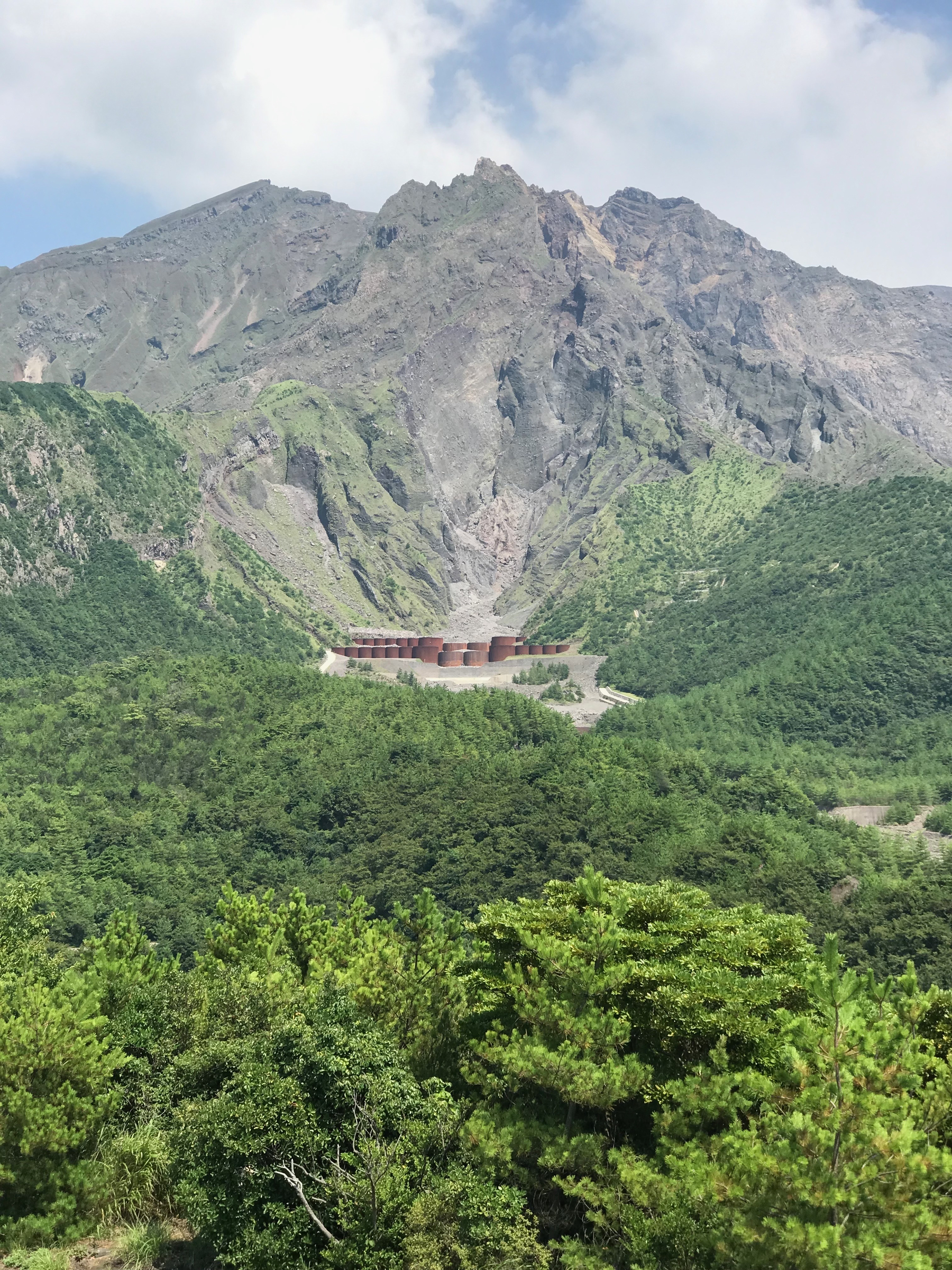
Standing there, I found myself thinking about how extraordinary that must have been to witness. A landscape that seems permanent can suddenly become something entirely different. Mountains can grow, coastlines can move, and islands can become connected to continents. Sakurajima makes geological time feel surprisingly immediate. The volcano’s activity is part of the everyday reality of the region. Sakurajima remains one of Japan’s most active volcanoes, and small eruptions and ash emissions are not unusual. From Kagoshima City, residents can sometimes see volcanic plumes rising above the bay. When ash falls over the city, people simply deal with it. Special volcanic-ash bags are provided for collecting the material, and residents are accustomed to cleaning ash from cars, streets, balconies, and rooftops. I was fascinated by the local expression “Sakurajima snow.” Volcanic ash falling from the sky may sound romantic when given a poetic name, but living with it is another matter entirely. It is one of those details that reveals how deeply the volcano has become woven into everyday life. For visitors, ash can feel like an extraordinary curiosity. For residents, it is simply another part of living here.

And yet the volcanic soil also gives something back. Sakurajima is famous for its unusually large agricultural produce, particularly Sakurajima daikon, a giant Japanese radish that can grow to extraordinary proportions. There is something almost humorous about the idea of producing enormous vegetables beneath an active volcano, but it also demonstrates the complicated relationship between destruction and renewal. Volcanic landscapes can be harsh, yet the minerals released by volcanic activity can eventually contribute to fertile soils. As I explored the island, the landscape seemed to change constantly. Dark volcanic rocks contrasted with patches of vegetation, while steam rose from areas where heat still lingered beneath the surface. The smell of sulfur occasionally became noticeable, a reminder that this was not simply a scenic mountain but an active geological system. One of the most memorable things about Sakurajima is how close you can get to the volcanic landscape without forgetting its power. Roads circle portions of the peninsula, viewpoints offer dramatic perspectives toward the summit and across Kagoshima Bay, and trails lead visitors through landscapes created by earlier eruptions. At places such as the Kurokami Shrine, the evidence of past eruptions becomes particularly striking. The shrine’s torii gate was almost completely buried by volcanic ash during the 1914 eruption, leaving only the upper portion visible.
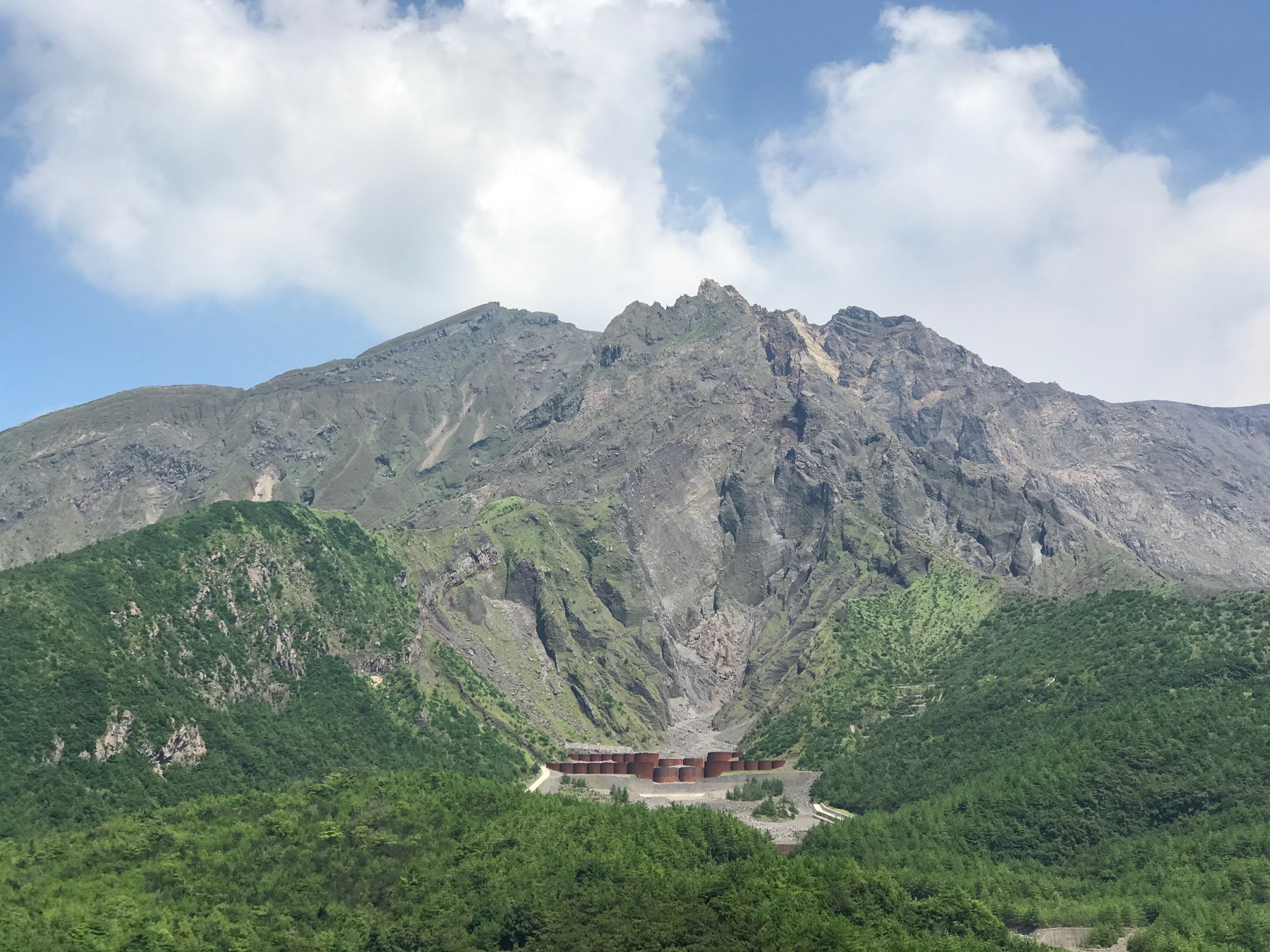
That partially buried torii became, for me, one of the most powerful symbols of Sakurajima. It is easy to think of nature as something permanent when looking at an old shrine or historic structure. But here, the volcano literally changed the scale of the landscape around it. Human history continued, but the mountain had written its own chapter directly over the top of it. Sakurajima also changed the way I thought about the word “danger.” In many places, danger is something we try to eliminate from everyday life. Here, it has been incorporated into the community. Monitoring systems track earthquakes, volcanic activity, deformation, and other signs of change. Evacuation routes and shelters exist throughout the area, and residents grow up understanding what it means to live near an active volcano. That doesn’t mean people live in constant fear. What struck me most, in fact, was how ordinary life continues beneath the mountain. Ferries cross the bay. Cars move along the roads. Farms produce crops. Children go to school. People work, shop, eat, and go about their daily routines while an active volcano dominates the skyline. There is a remarkable resilience in that normality. As afternoon faded, I found myself looking back toward Kagoshima. The bay had become calmer, reflecting the changing colors of the sky. Sakurajima stood behind me like a giant sentry, its upper slopes catching the last light. The occasional plume of smoke made the mountain appear almost alive, as if it were quietly breathing.
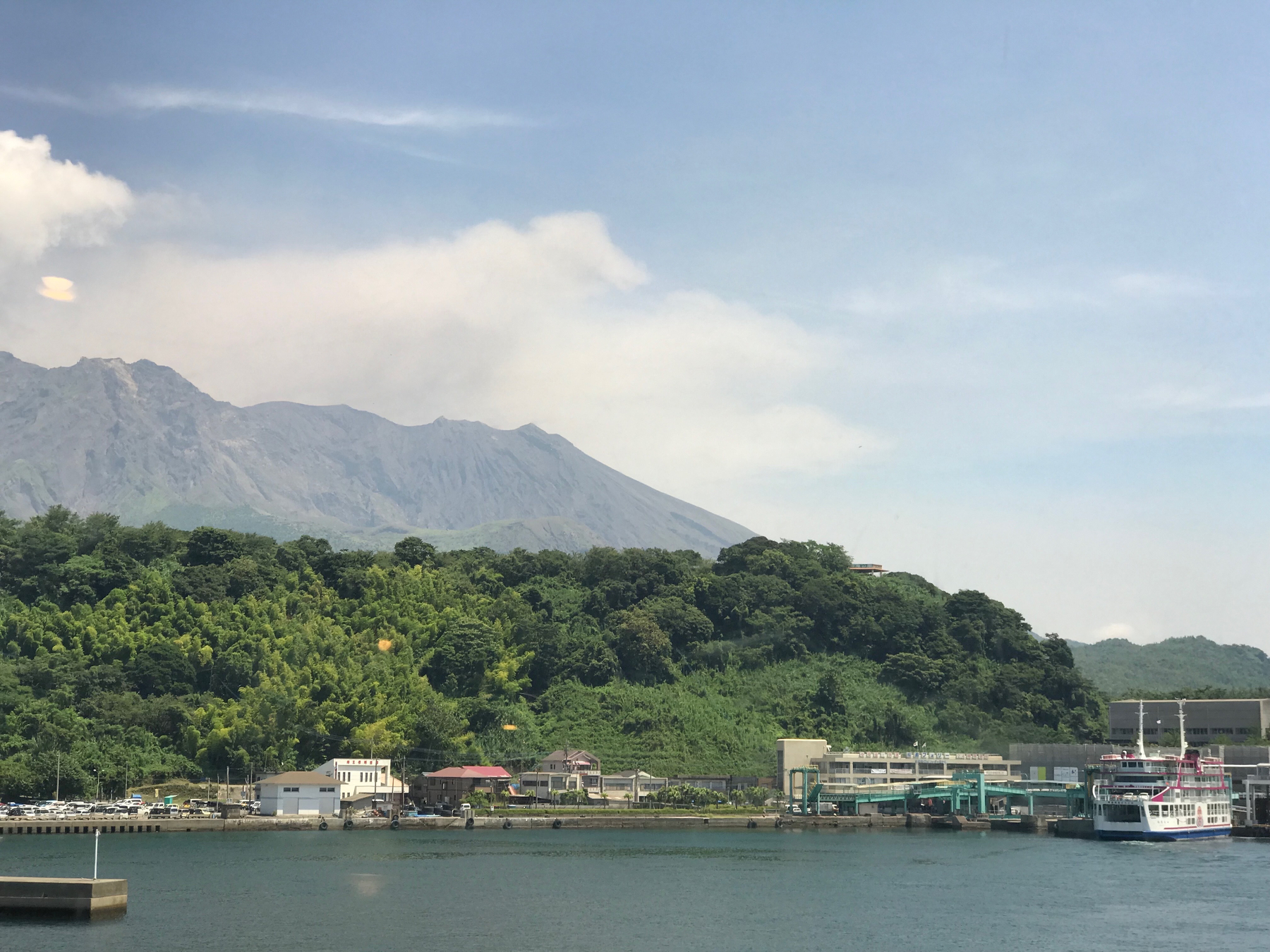
The ferry ride back gave me a different perspective. From the water, Kagoshima and Sakurajima seemed inseparable. The city exists because of the bay, and the bay is defined by the volcanoes that surround it. Sakurajima isn’t simply a landmark that happens to be near Kagoshima. It is part of the city’s identity, its landscape, its agriculture, its history, and even its daily vocabulary. What stayed with me most was not the spectacle of an eruption or some dramatic volcanic event. It was the quieter lesson of the place. Sakurajima reminded me that humans don’t always conquer nature, control it, or overcome it. Sometimes we simply learn how to live alongside it.
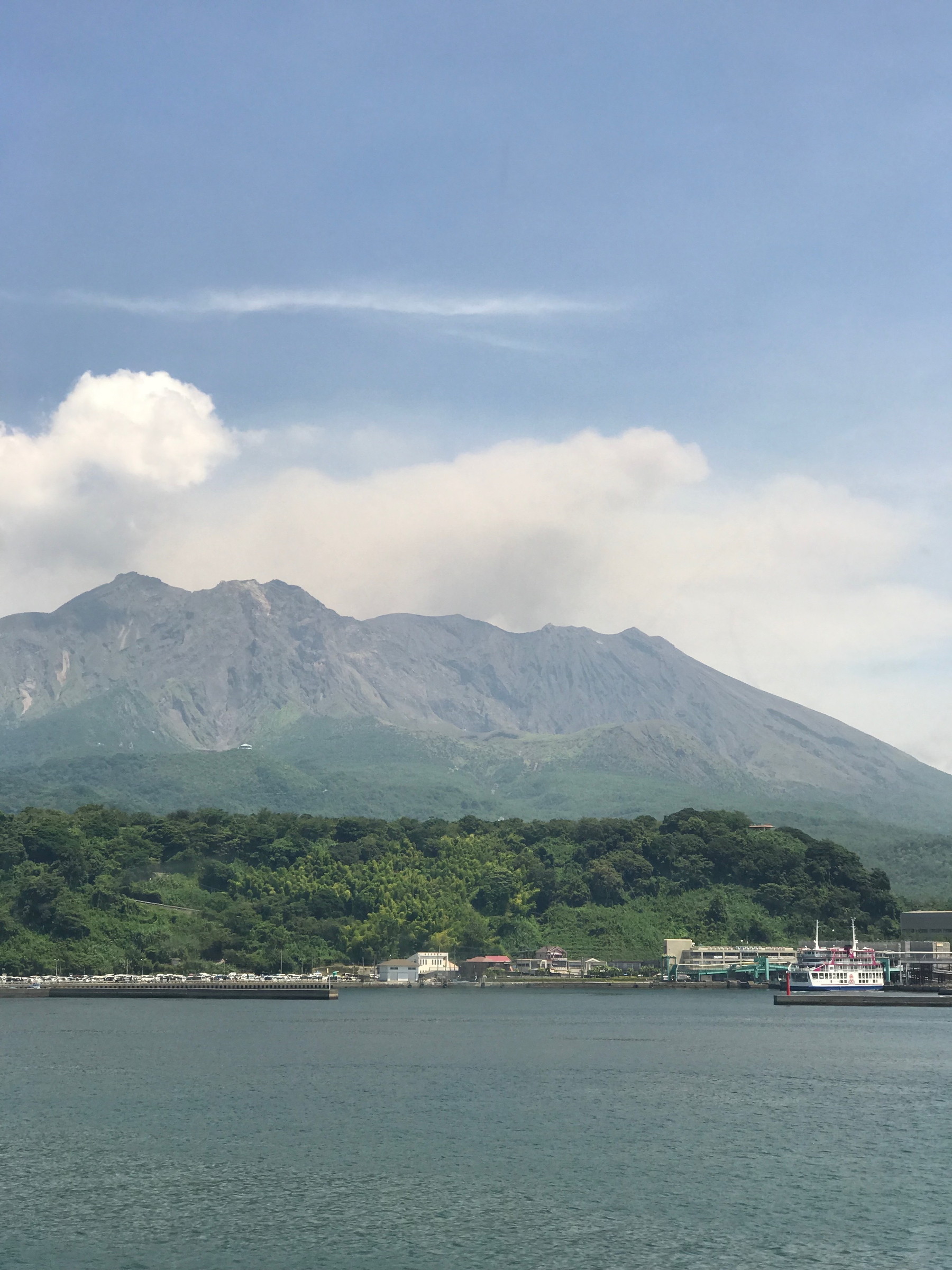
Standing beneath that enormous mountain, I felt a mixture of awe and humility. The volcano was older than every road, shrine, building, and story surrounding it, and it would almost certainly outlast them all. Yet people continue to build their lives here, adapting rather than surrendering. As the final light disappeared over Kagoshima Bay, Sakurajima faded into the evening darkness. I knew I was leaving with more than photographs. I was leaving with a different understanding of resilience—one shaped not by defeating nature, but by respecting its power, adapting to its unpredictability, and finding beauty even in the shadow of fire.
#Photography #Photos #Blog #Photoblog #Sakurajima #volcano #Kagoshima #Japan #Kagoshima #Bay #Japantravel #ActivevolcanoJapan #Sakurajimaferry #Sakurajimaeruption #1914Sakurajimaeruption #Kyushutravel #volcanicJapan #Sakurajimadaikon #Kagoshimatravel #Japanadventure #Japanphotography