
New York’s Triangular Masterpiece, The Flatiron Building

Standing at the intersection of Fifth Avenue and Broadway, I found myself looking at one of those New York buildings that somehow seems familiar even before you’ve ever visited it. The Flatiron Building rises from its impossibly narrow triangular plot like a giant stone ship frozen in the middle of Manhattan. Around it, modern skyscrapers compete for attention, yet somehow this old building still wins my gaze. Perhaps it is the shape. Perhaps it is the history. Or perhaps it is simply that rare quality some buildings possess: personality. When the Flatiron Building was completed in 1902, New York looked dramatically different. The city was already growing at an extraordinary pace, but the modern skyscraper was still in its infancy. Electricity, steel construction, elevators, and new engineering techniques were transforming the urban landscape. The Flatiron arrived at exactly the right moment, becoming a striking symbol of a city discovering how to build upward.
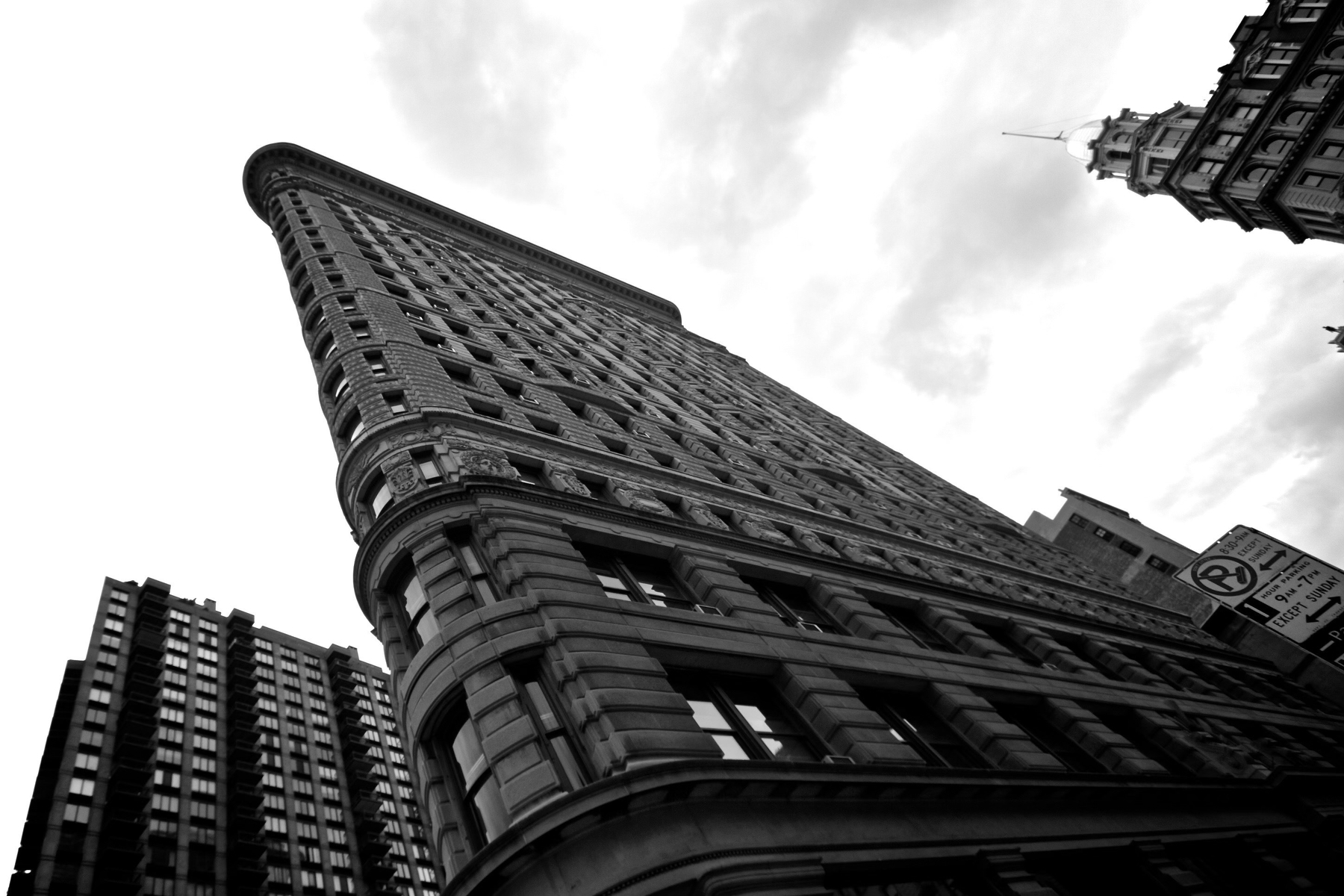
The building was designed by architect Daniel H. Burnham and his Chicago-based firm, D. H. Burnham & Company. Its official name was originally the Fuller Building, after George A. Fuller, the construction magnate whose company developed the project. New Yorkers, however, quickly gave it a nickname based on its resemblance to a household clothes iron. “Flatiron” proved far more memorable, and eventually became the name by which the world knew it. Its unusual triangular shape was dictated by the property itself. The building occupies a wedge-shaped block created by the intersection of Broadway, Fifth Avenue, and East 22nd Street. Broadway’s diagonal path through Manhattan created the peculiar geometry, and Burnham turned what could have been an architectural problem into the building’s defining characteristic.
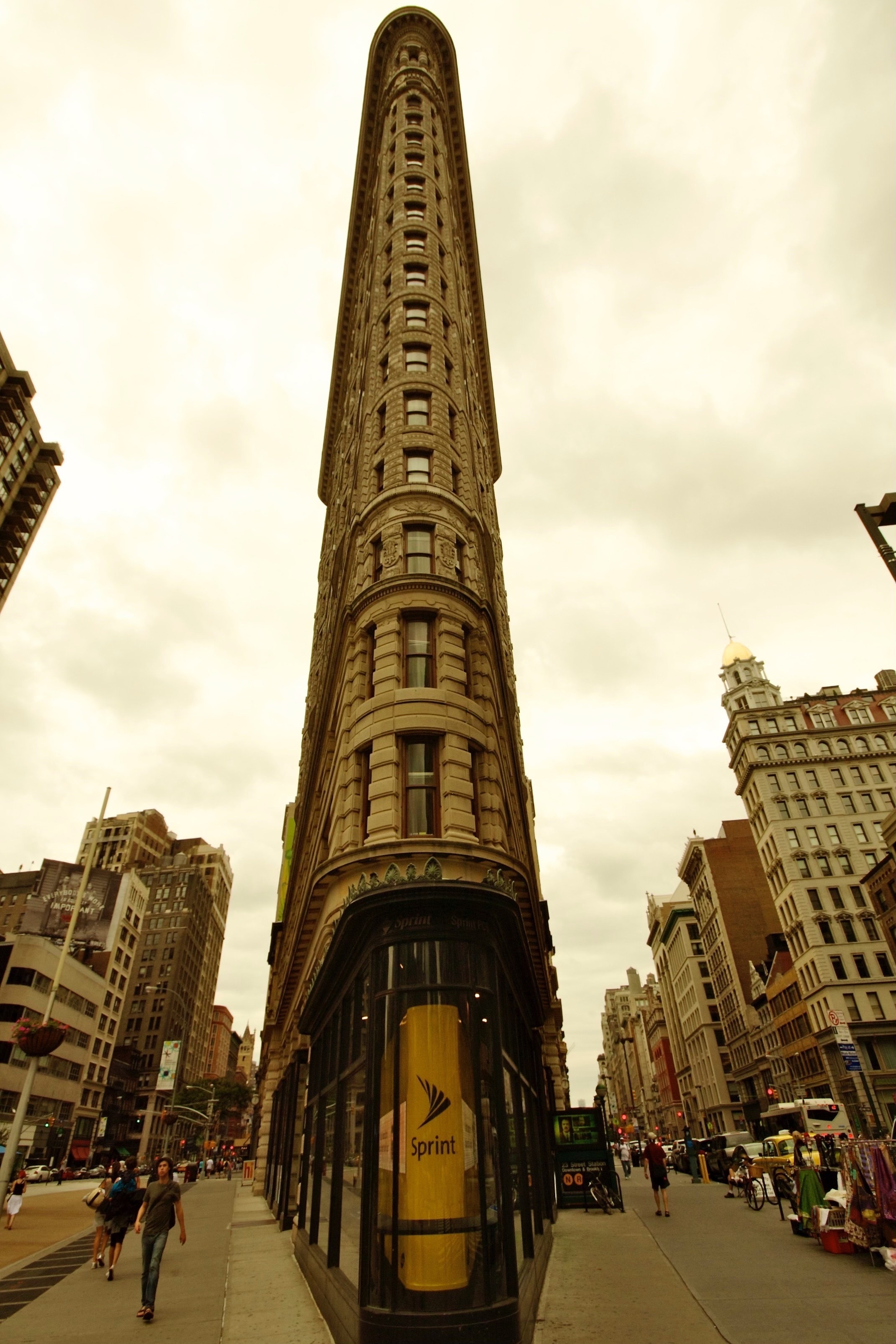
From street level, the effect is extraordinary. The structure appears to become impossibly narrow as it approaches its pointed northern end. At its sharpest point, the building is only about six feet wide. Looking directly toward that end, I understood why early photographs of the Flatiron often make it appear almost unreal. It seems less like a conventional building and more like an enormous architectural wedge slicing through the city. The engineering behind it was just as remarkable as its appearance. The Flatiron used a steel skeleton, allowing its walls to rise much higher than traditional masonry construction would have comfortably permitted. Steel-frame construction was helping change American cities, and buildings such as the Flatiron demonstrated what could happen when architects and engineers combined structural innovation with ambitious design. Yet Burnham didn’t leave the steel frame exposed. Instead, he wrapped the building in an elaborate limestone and terra-cotta façade inspired by Renaissance architecture and Beaux-Arts design. Decorative elements include columns, arches, classical ornamentation, flowers, geometric patterns, and sculptural details. Standing beneath it, I found myself looking upward repeatedly, discovering something different each time.
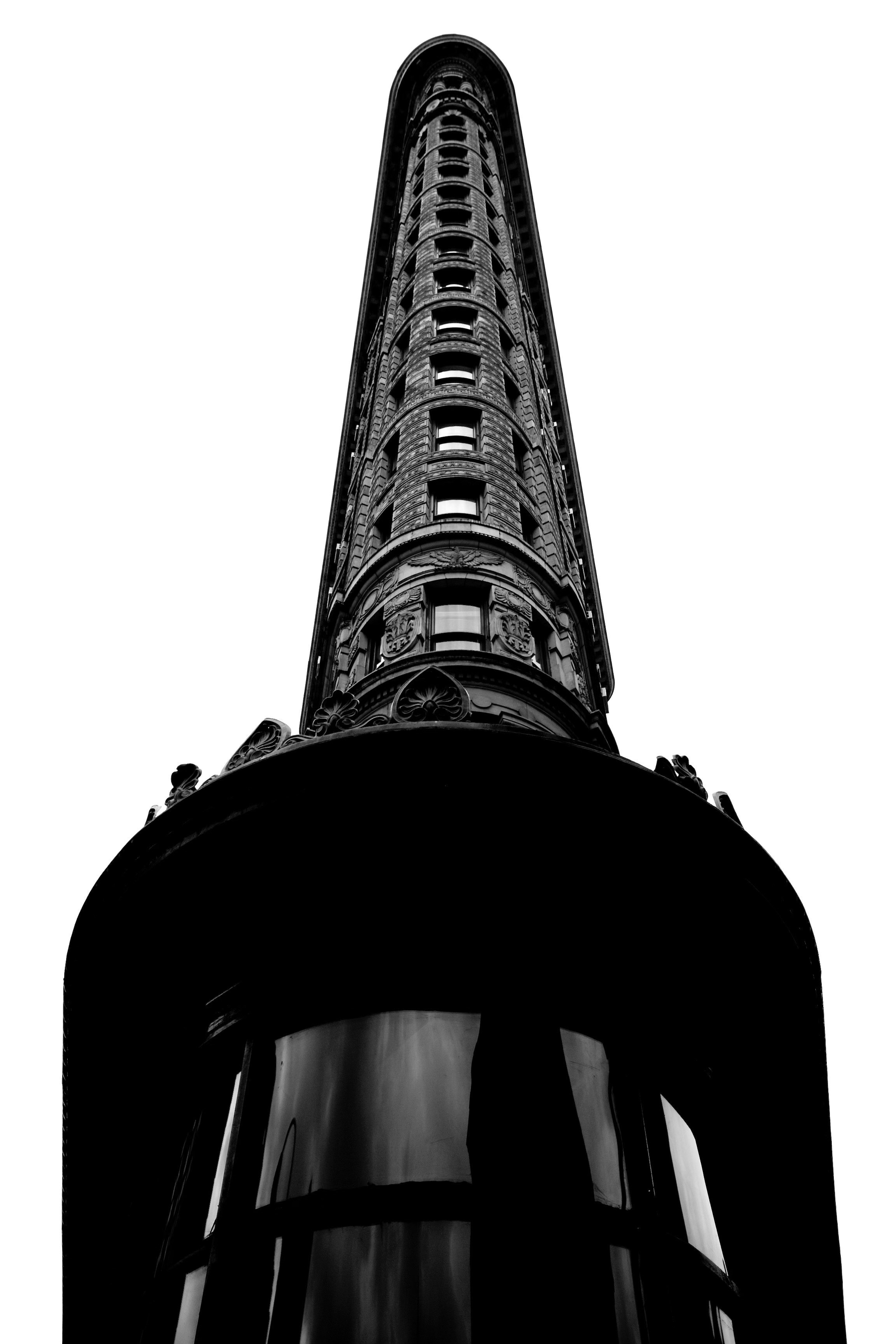
The building’s construction was remarkably fast for such an ambitious project. Work began in 1901, and the Flatiron was completed in 1902. At 22 stories and approximately 285 feet tall, it became one of the most prominent structures in Manhattan. It was not the tallest building in the world, but its unusual appearance made it far more memorable than many of its taller contemporaries. The Flatiron also changed the character of the surrounding neighbourhood. At the time, the area was becoming increasingly commercial, and Madison Square was developing into an important urban centre. The arrival of such a dramatic skyscraper helped transform the district into one of Manhattan’s most fashionable business areas. The building ultimately gave its name to the neighbourhood we now know as the Flatiron District.
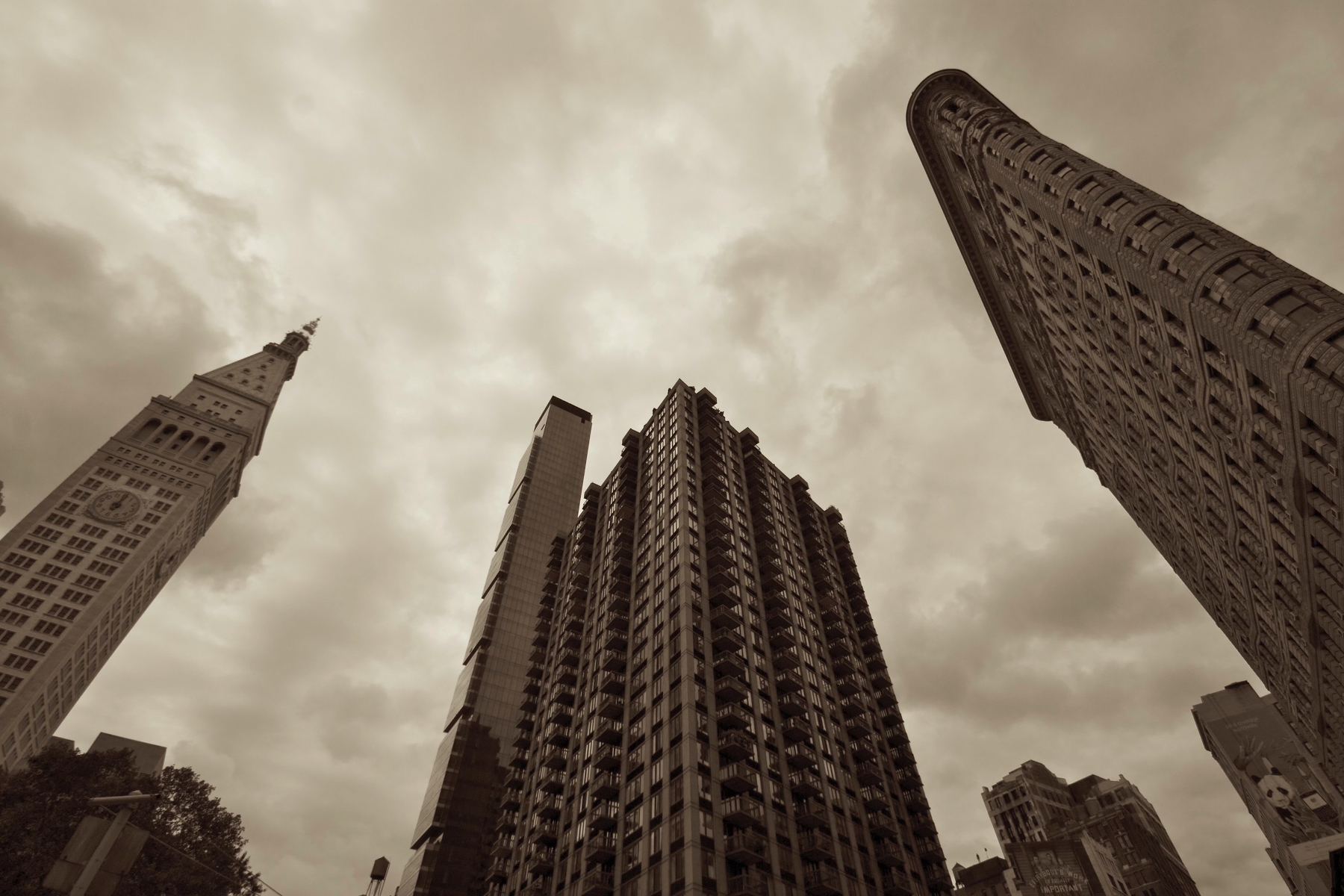
The building’s shape created practical complications, too. Office interiors contained unusual angles, narrow spaces, and walls that refused to behave like those in conventional rectangular buildings. But perhaps that is part of the Flatiron’s charm. The awkward geometry that might have frustrated office workers became one of the building’s most memorable characteristics. There was also a very practical reason why people were fascinated by the building from the beginning: wind. The shape of the structure and the surrounding streets could create powerful gusts around its pointed corner. At the start of the twentieth century, the area became notorious for swirling winds that could catch women’s skirts. Crowds of curious men reportedly gathered nearby hoping for an accidental glimpse, leading police officers to chase them away with the expression “23 skidoo.” The phrase became part of New York slang and eventually entered American popular culture.

The Flatiron quickly became more than an office building. Newspapers, photographers, artists, and filmmakers were fascinated by it. Its distinctive silhouette became one of the visual symbols of modern Manhattan, appearing in postcards and photographs that were circulated far beyond New York. At a time when cities around the world were beginning to embrace skyscrapers, the Flatiron offered a particularly elegant version of the new urban architecture. I also found myself thinking about the building’s relationship with the changing Manhattan skyline. When the Flatiron was completed, it towered over much of its surroundings. Today, it is dwarfed by dozens of much taller buildings. Yet the contrast somehow makes it more interesting. The Flatiron represents an earlier generation of skyscrapers, when height was impressive but architectural personality mattered just as much.
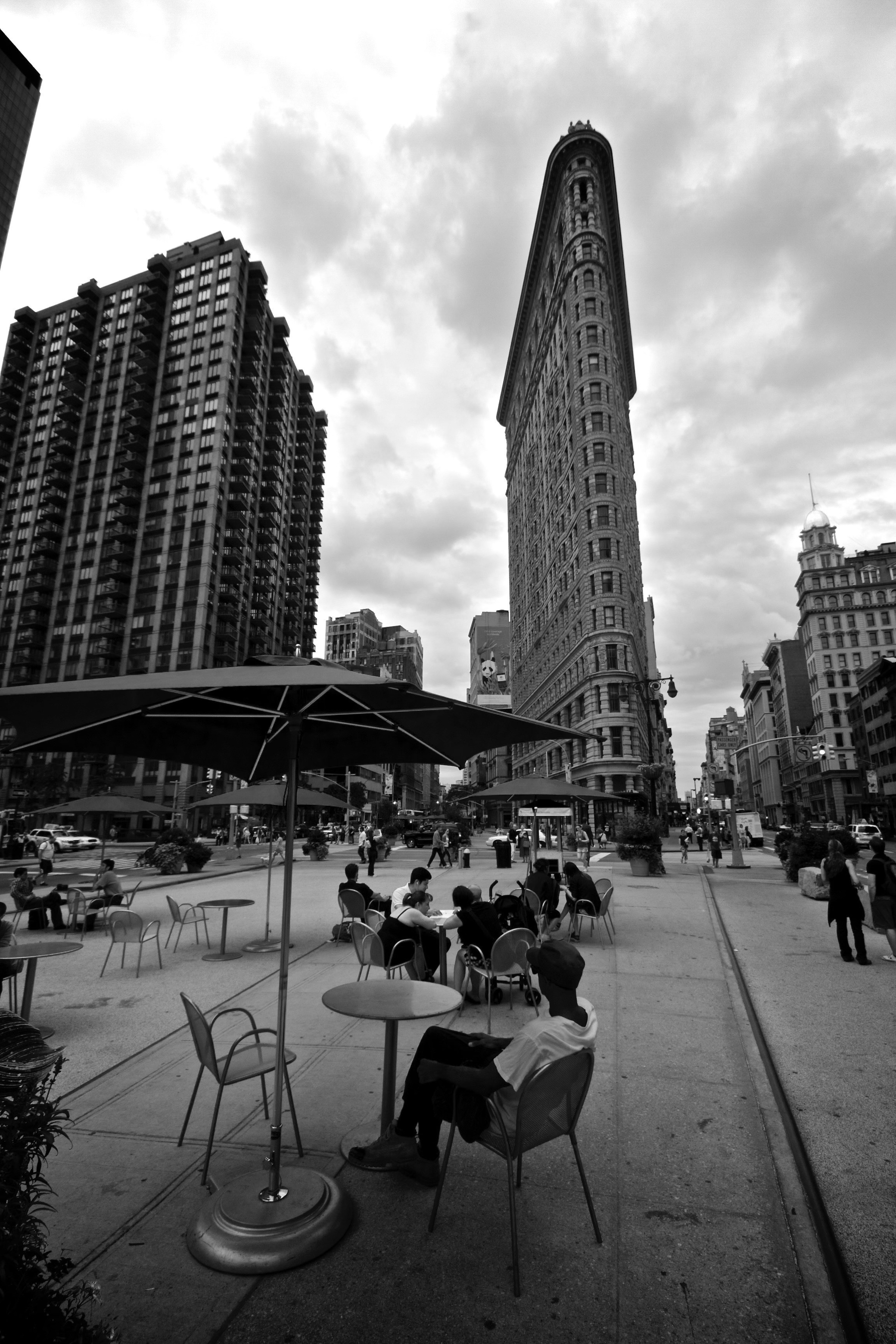
Its survival is another part of its story. Manhattan has never been shy about replacing old buildings with new ones, particularly when valuable real estate is involved. The Flatiron, however, became too important architecturally and culturally to disappear unnoticed. Its distinctive design helped secure its place among New York’s most recognisable landmarks, and it was designated a New York City landmark in 1966 and later listed on the National Register of Historic Places. Over the decades, the building changed ownership and use, while the neighbourhood around it evolved repeatedly. Restaurants, shops, offices, hotels, and public spaces replaced earlier businesses. Madison Square Park became an important green refuge in the surrounding urban landscape, giving visitors an excellent place from which to appreciate the Flatiron’s unusual silhouette.
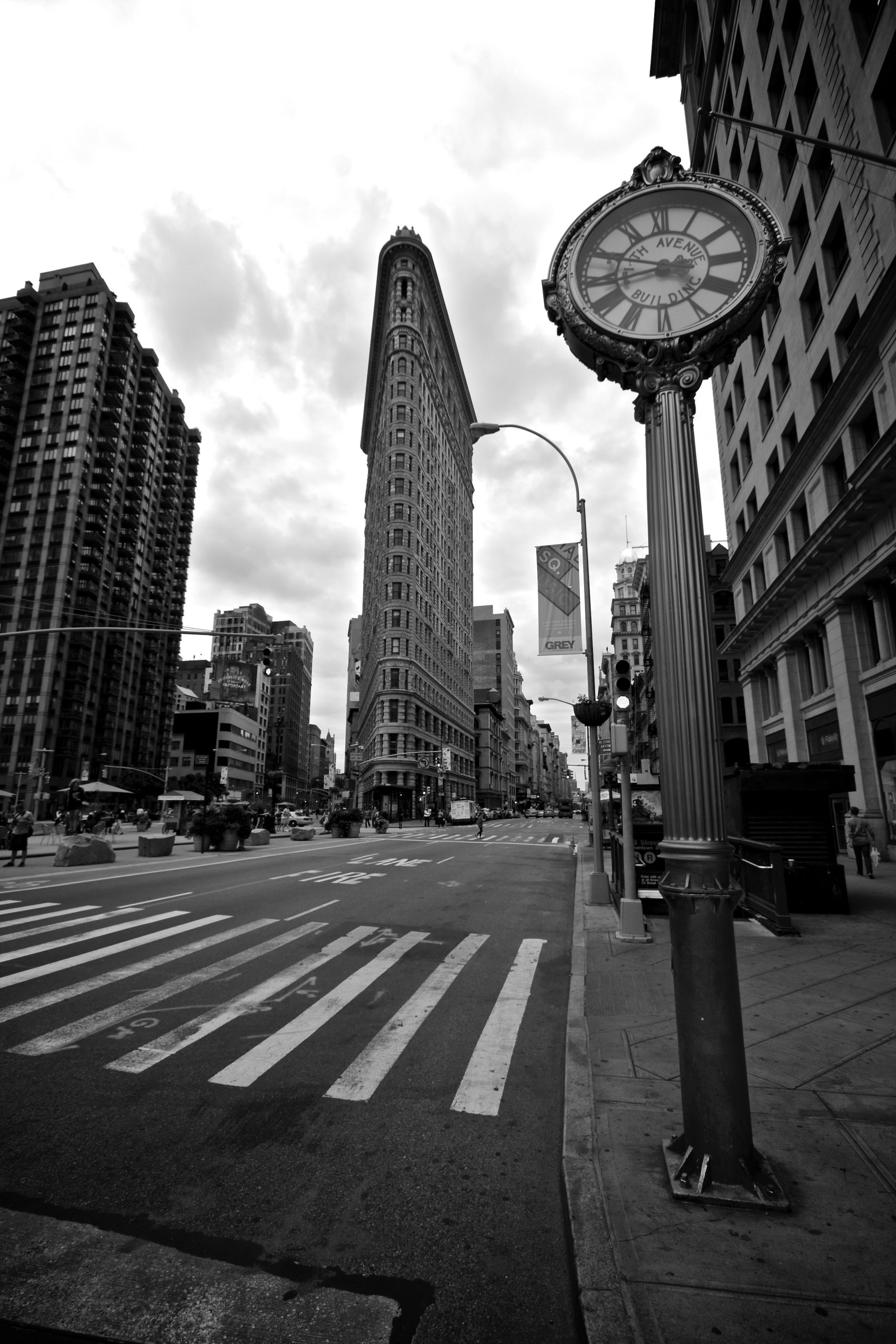
There is something almost poetic about standing in the park and watching the building rise above the traffic. The city constantly moves around it—taxis, cyclists, pedestrians, delivery trucks, tourists, and office workers—but the Flatiron remains remarkably composed. It has survived economic crises, changing architectural fashions, technological revolutions, and generations of New Yorkers. Today, perhaps its greatest achievement is that it doesn’t need to be the tallest building to command attention. In a city famous for skyscrapers, the Flatiron wins through proportion, detail, and character. Its narrow point, curved corners, ornamented façade, and distinctive silhouette make it instantly recognizable even among Manhattan’s enormous forest of glass and steel.
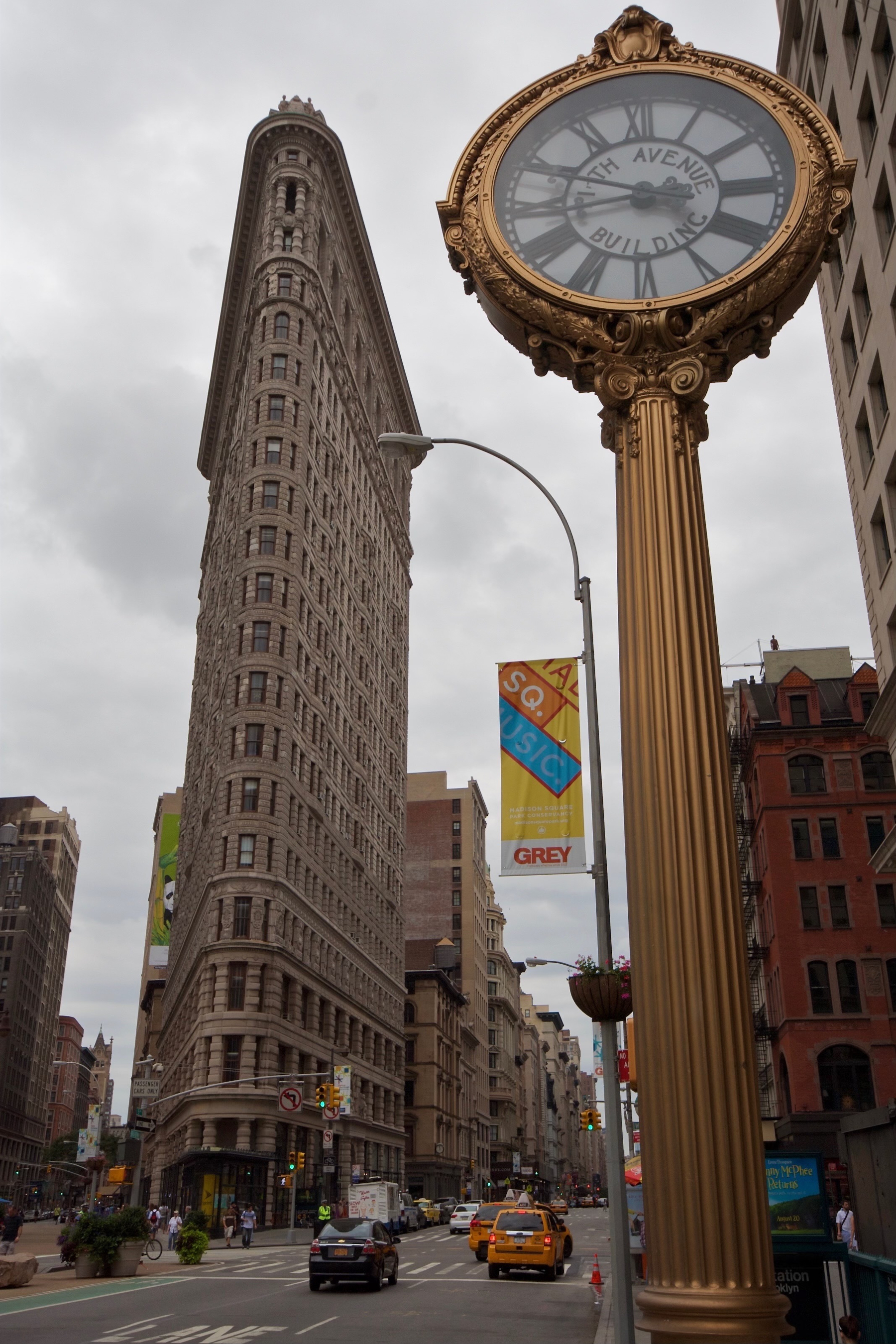
As I stood there, I realised that the Flatiron tells an important story about New York itself. It represents the moment when technology made the vertical city possible, but also a period when architects still believed that a skyscraper could be both an engineering achievement and a work of art. It is practical and theatrical, unusual and elegant, stubbornly old-fashioned and surprisingly modern. I took one last look before continuing down Broadway. The Flatiron was no longer simply an unusual building to photograph. It had become a kind of architectural time capsule—a reminder of the extraordinary ambition that transformed Manhattan at the beginning of the twentieth century. New York will undoubtedly continue to build higher, faster, and stranger structures, but the Flatiron has already achieved something that height alone cannot provide. More than a century after its completion, it still makes people stop, look up, and wonder how something so improbable ever came to stand here.
#Photography #Photos #Blog #Photoblog #FlatironBuilding #FlatironDistrict #NewYorkCity #NewYork #Manhattan #NYCArchitecture #NewYorkHistory #DanielBurnham #BeauxArtsArchitecture #SkyscraperHistory #HistoricNewYork #MadisonSquare #FifthAvenue #BroadwayNYC #AmericanArchitecture #NYCLandmarks #NewYorkPhotography #NYCTravel #ManhattanArchitecture #UrbanHistory #TravelEssay #TravelPhotography #NewYorkTravel