
Bridging the 19th and 21st Centuries at the Sagrada Familia in Barcelona
Technological Synergy - Part 1 of 3
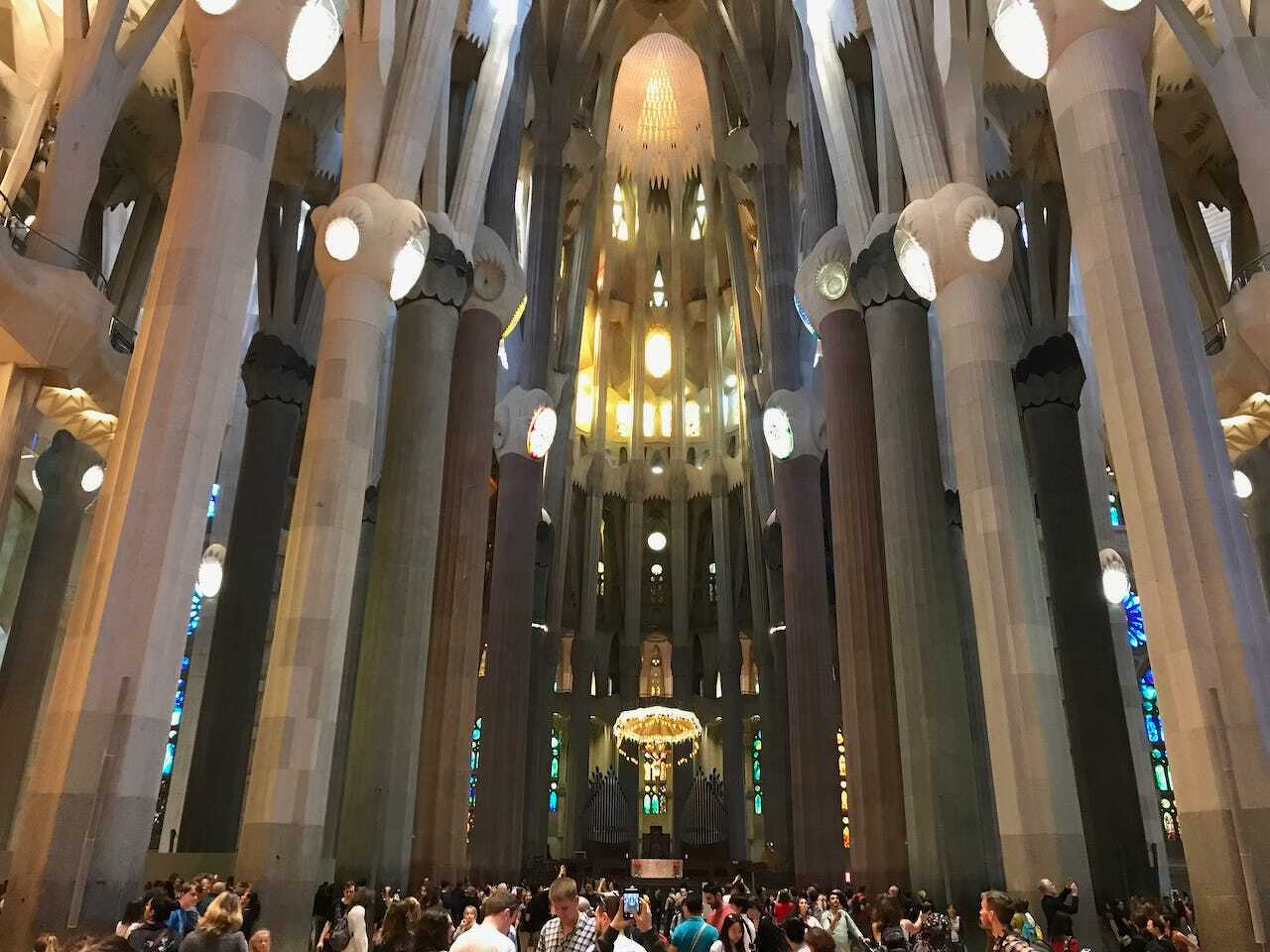
The completion of the Sagrada Família in Barcelona represents one of the most significant architectural achievements in modern history, not merely for its scale, but for the unprecedented bridge it built between the naturalistic intuition of the 19th century and the computational power of the 21st. When construction began on March 19, 1882, the world was a vastly different place; the Eiffel Tower had not yet been built, the first skyscraper was a future concept, and the industrial use of reinforced concrete was nonexistent. Antoni Gaudí, who took over the project in 1883, envisioned a structure that defied the conventional neo-Gothic standards of his time, opting instead for a “hyperbolic paraboloid” geometry that wouldn’t be fully realisable until the advent of aerospace technology a century later.
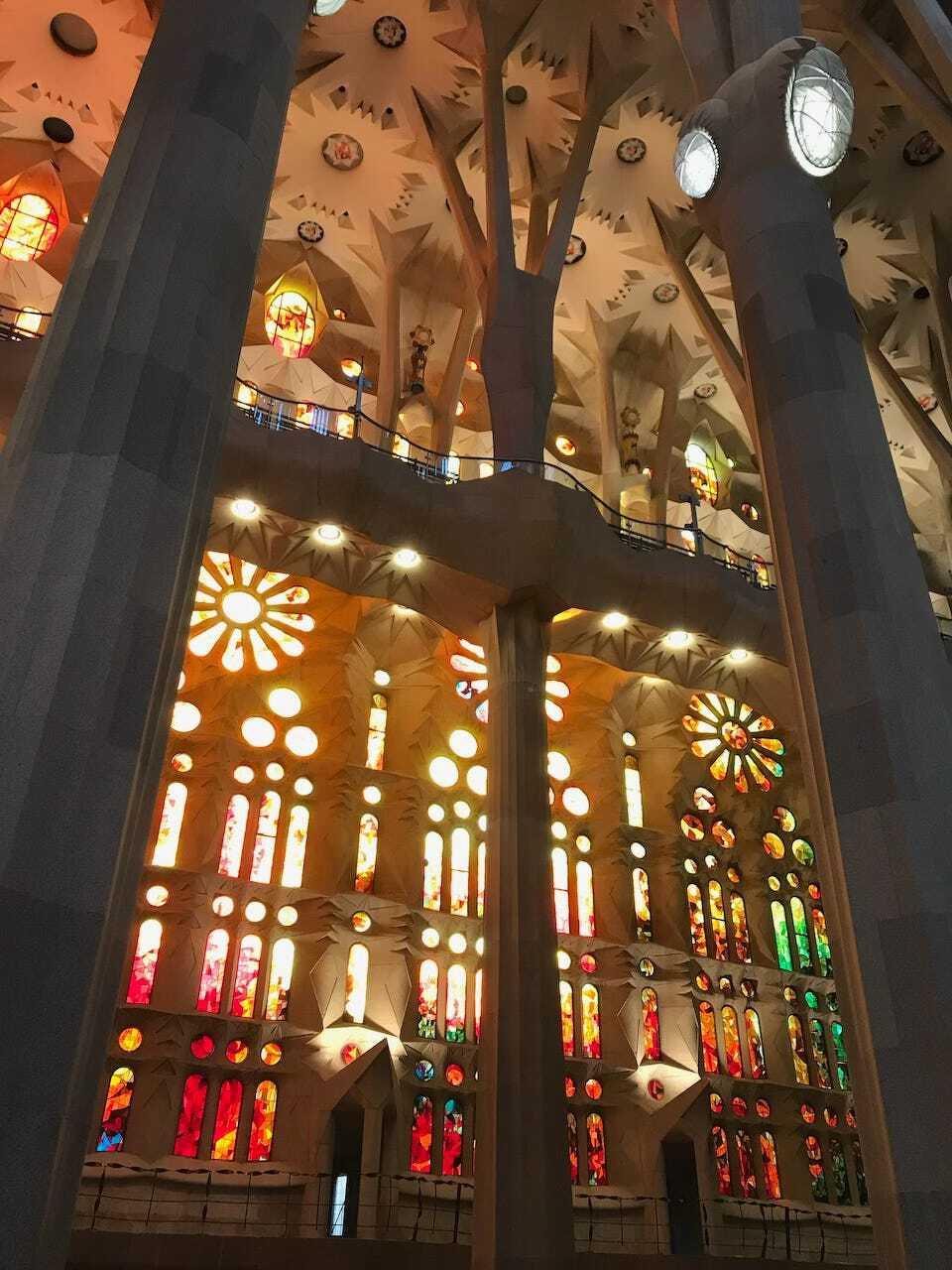
Gaudí’s fundamental philosophy was that human creation should never exceed the work of God, a belief that dictated the final height of the basilica to be exactly 172.5 meters—one meter shorter than Montjuïc Hill, Barcelona’s highest natural point. This spiritual humility was paired with a radical architectural departure: the rejection of flat surfaces and right angles. Gaudí looked to nature as his primary blueprint, studying the structural efficiency of trees, bones, mountains, and seashells.
He translated these organic forms into a complex system of 36 interior columns that support the roof. Unlike traditional cathedrals, such as Notre Dame in Paris, which relies on a few primary columns, Gaudí’s design utilised unique, branching pillars. Each column starts at the base as a specific geometric shape—a hexagon, octagon, or 12-sided figure—and as it rises, it twists and transforms. This was not a purely aesthetic choice; it was a sophisticated method of load distribution. One column at the crossing, for example, must support approximately 6,000 tons. Instead of a single massive pillar, Gaudí designed the column to branch into four smaller supports, spreading the stress across the foundation in a way that mimicked the canopy of a forest.
The central challenge of the project was that Gaudí knew he would not live to see it finished. He devoted the final years of his life, from 1914 until he died in 1926, to refining plaster models and complex calculations intended to guide his successors. However, the Spanish Civil War in 1936 brought a catastrophic interruption. Anarchists stormed the site, torched Gaudí’s workshop, and destroyed the majority of his detailed plans, drawings, and models.
For decades after the war, architects led by Francesc de Paula Quintana were forced into a painstaking process of “reconstructive archaeology”. They gathered thousands of smashed plaster fragments, attempting to reassemble them like a massive three-dimensional jigsaw puzzle to recover the original geometries. While photographs and memory provided the broad strokes of Gaudí’s intent, the precise mathematical “twist rates” of the columns and the exact angles of the branching connections remained elusive. There were massive gaps in the data for entire columns, making it nearly impossible to guarantee that any new construction would accurately reflect Gaudí’s vision or, more importantly, hold the weight of the massive towers.
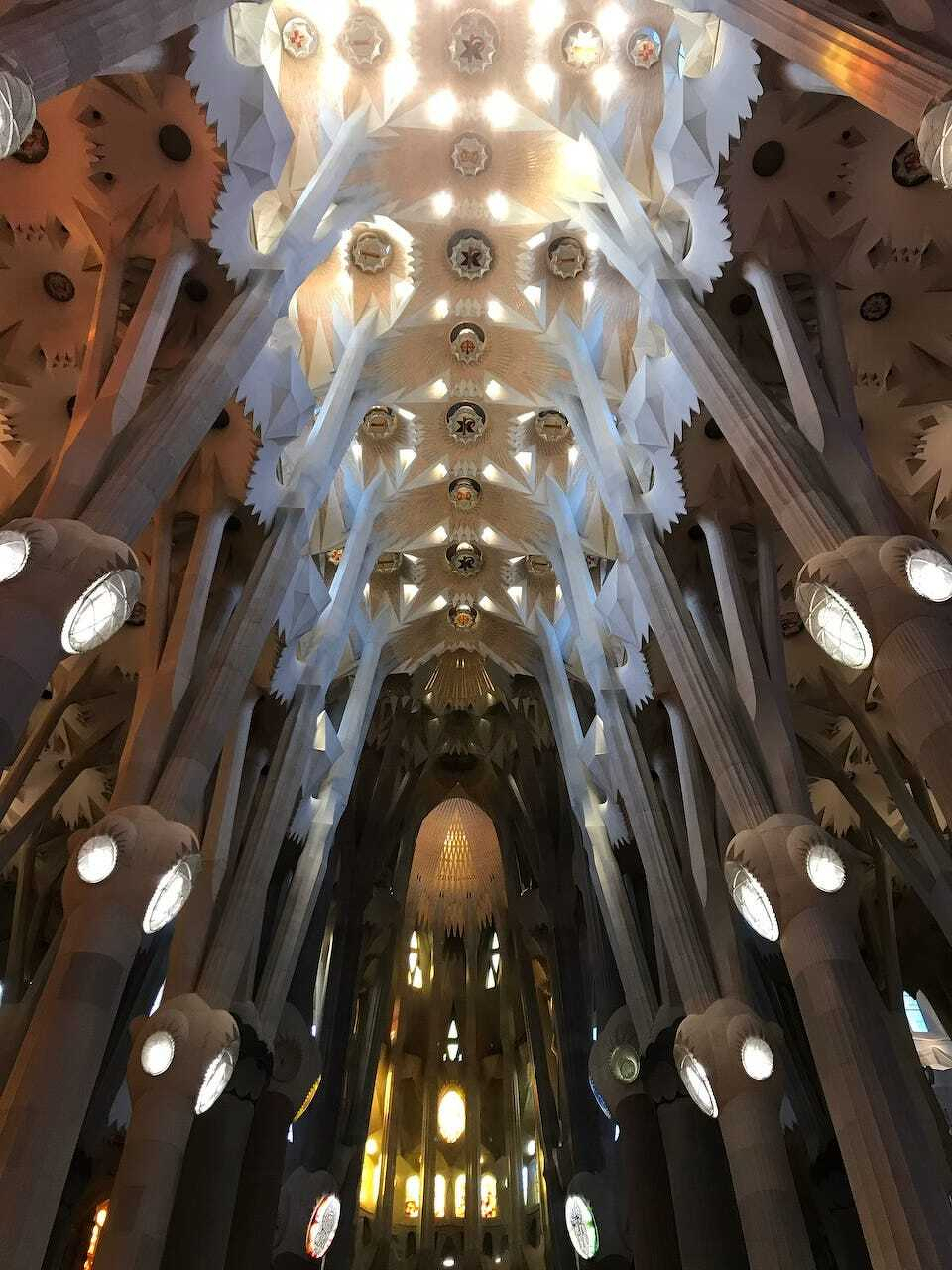
The turning point that made the 2026 completion possible arrived in the 1980s with the introduction of advanced software by architect Mark Burry. To solve the problem of the “missing geometries,” Burry turned to software originally designed for aeronautical stress analysis—the same technology used to design aeroplane wings. Unlike traditional architectural software of the era, which struggled with the double-curved surfaces of hyperbolic paraboloids, this aeronautical software could process incomplete data from Gaudí’s surviving fragments to calculate the missing mathematical curves.
This technology allowed architects to verify, for the first time, whether the reconstructed shapes were structurally sound. It bridged the gap between Gaudí’s hand-sculpted models and the rigorous demands of modern engineering. However, verifying the math was only half the battle; the physical construction of these shapes remained a logistical nightmare. Each of the unique columns requires between 800 and 1,200 individual stone blocks, each carved with millimetre precision to account for the shifting curvature and the exact point where branches split.
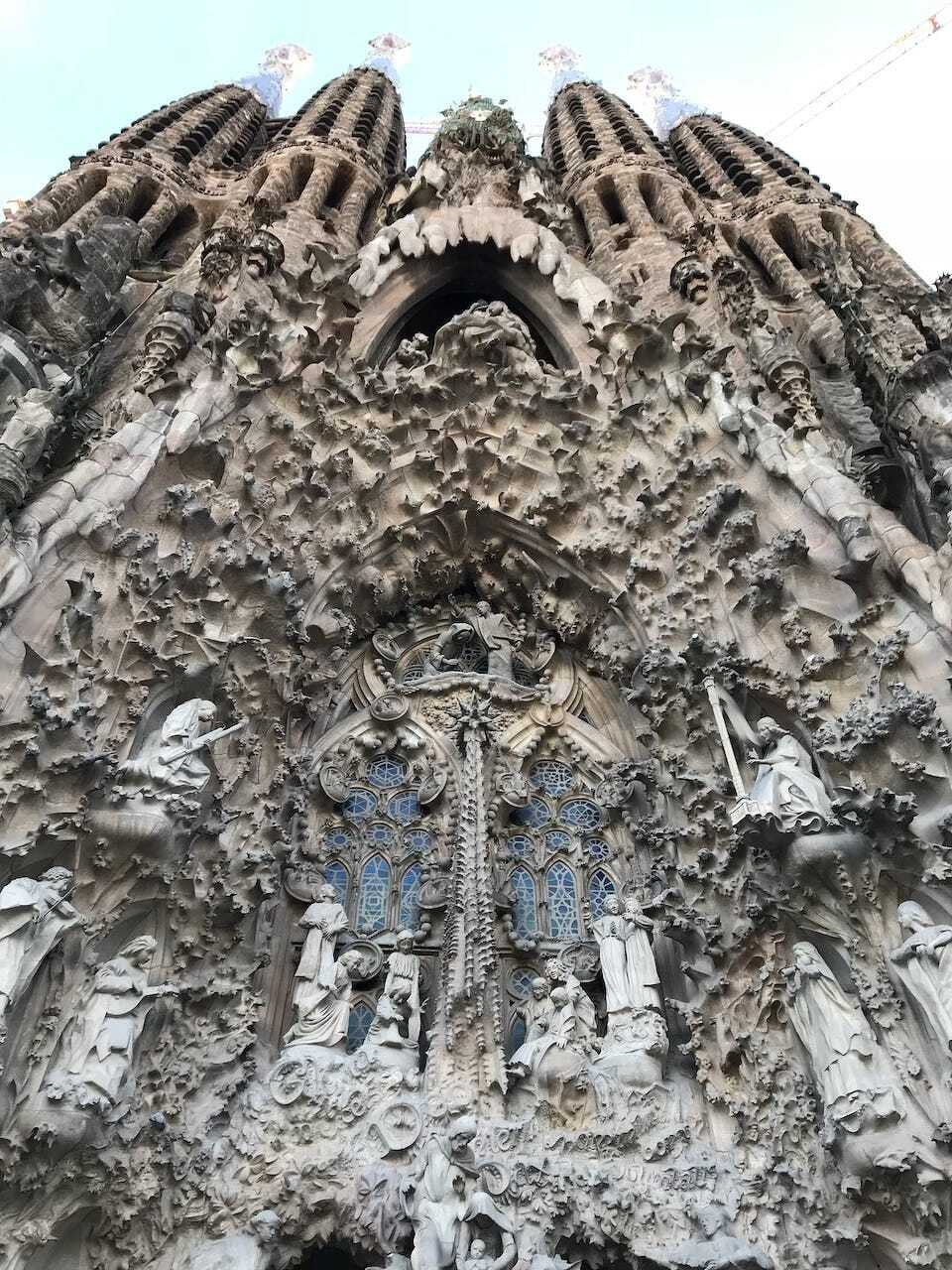
If the software provided the “brain” for the completion, the development of CNC (Computer Numerical Control) milling machines provided the “hands”. Originally utilising 4-axis machines and eventually progressing to 7-axis robotic arms, Dutch engineers created a custom system for the Sagrada Família. These robots can rotate and tilt a cutting bit in multiple directions simultaneously, following the digital blueprints derived from Burry’s software.
The impact of this technology on the construction timeline cannot be overstated. A master stone carver using traditional hand tools would typically take three weeks to carve a single complex block, and even then, human error would result in a variance of 2 to 3 millimetres. In a structure as complex as the Sagrada Família, where 1,200 blocks are stacked to form a 20-meter column, such small errors compound. An error of just 3 millimetres at the base would result in a column being half a meter out of alignment by the time it reaches the ceiling, preventing the vaults from connecting.
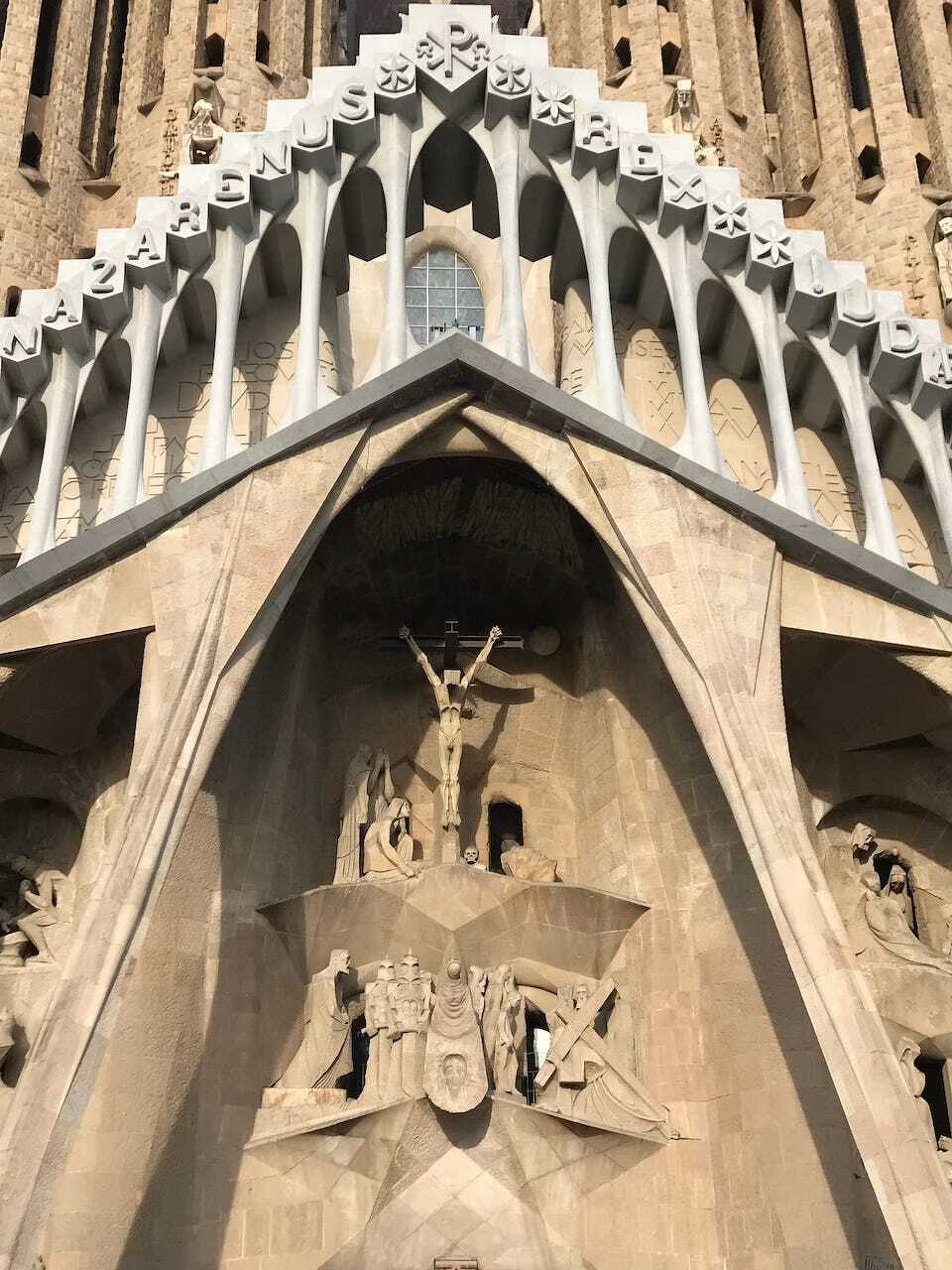
The CNC milling machines eliminated this risk, achieving a precision of 0.1 millimetres. Furthermore, the machine can complete in just six hours what once took three weeks of manual labour. This technological synergy—robotic precision meeting 19th-century organic design—is the primary reason the project has advanced more in the last few decades than in the previous century.
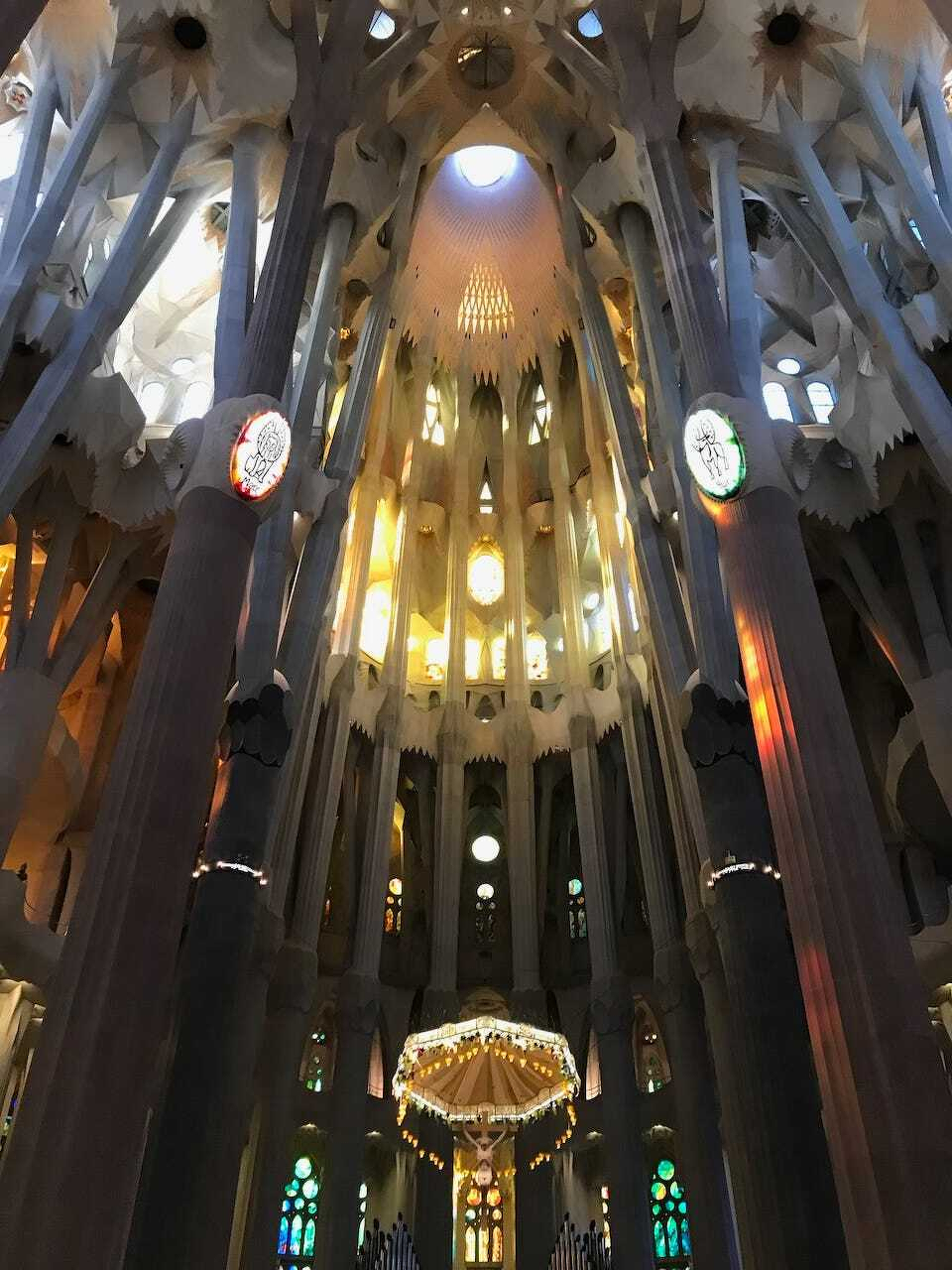
The culmination of this 144-year journey is the Tower of Jesus Christ, the central spire that will make the Sagrada Família the tallest church in the world. On February 20, 2026, the final arm of a 17-meter cross was lifted into place, marking the symbolic completion of Gaudí’s spiritual vision. This tower represents the peak of the 18 towers envisioned by Gaudí to represent the apostles, the evangelists, the Virgin Mary, and Christ.
While the structural completion of all towers is expected by 2033, and final decorative work by 2035, the 2026 milestone carries the most weight as it coincides with the centenary of Gaudí’s death. This timeline was made possible not only by technological innovation but by the economic engine of modern tourism, which generated 44.7 million euros in 2024 alone to fund the specialised machinery and materials required for the build.
The Sagrada Família stands as a monument to the idea that a visionary’s dream can be realised by future generations using tools the original architect could never have imagined. It proves that the “natural” architecture of the 19th century—inspired by trees and bones—was actually a precursor to the digital architecture of the 21st. By combining aeronautical software, robotic milling, and the persistent dedication of architects who treated smashed plaster like a sacred puzzle, the builders have ensured that Gaudí’s 19th-century dream finally meets its 21st-century reality. As the cranes eventually come down and the scaffolding disappears, the world will finally see a unified structure built by a century of different hands, all guided by a single, complex geometric truth. Thanks for reading! Until next time… this is a three-part essay; two more are coming soon, so stay tuned (subscribed).
#SagradaFamilia #AntoniGaudi #Barcelona #Catalonia #Architecture #Technology #CNC #Engineering #SpainTravel